
Backrooms, 2026. A24
Backrooms — Mapping Is the Prison
Movie Review
The scariest thing in the Backrooms is a floor plan.
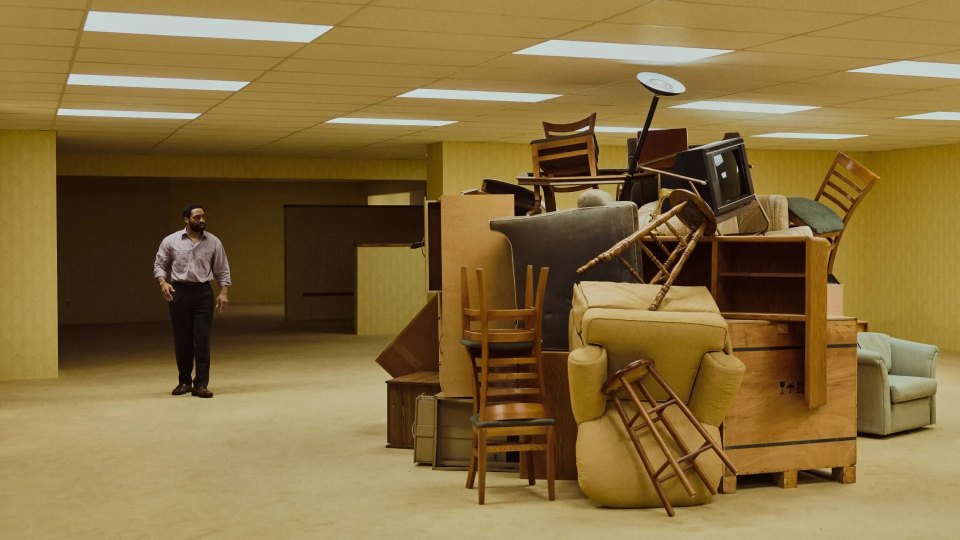
The hum starts before there is anything to be afraid of. That is the first choice Kane Parsons makes in Backrooms, and it is the right one: the building gets to be smarter than anybody standing in it. Parsons does not shoot these endless yellow rooms like a set someone has to survive. He shoots them like a mind, one that once learned how rooms are supposed to behave and has since decided to remember them wrong. Every corridor is almost a corridor you know. Every abandoned chair sits there like evidence somebody left behind when they gave up on the idea of sitting. So by the time Clark, a ruined furniture-store owner who has been sleeping among his own bedroom displays, walks through a basement wall into the impossible, the movie has already told you what it believes. There is a door. There is a map. The trap is thinking those are two different things.
You should know where this thing comes from, because the origin is the whole bet. The Backrooms were never a monster first. They were a feeling first: one yellowed photograph of an empty office, fluorescent light the color of mild illness, a place nobody can remember visiting and everybody somehow recognizes. Parsons built his online series out of that false memory, and the feature works best when it protects the shiver of recognition instead of burying it under lore. If you have never seen a frame of the internet version, the film hands you enough to stand in the room. Clark finds the space. His therapist, Dr. Mary Kline, follows him in to bring him back. A presence called Async, or something wearing that shape, watches from the institutional edge of the frame. But the real adaptation here is not plot. It is translation, an internet chill rebuilt as a two-hour sentence, and for long stretches Parsons actually pulls it off. The sentence is blunt. Every attempt to understand the space hands the space a new way to hold you.
Chiwetel Ejiofor plays Clark as a man whose dignity has gone bad the way milk does, slowly and then all at once. He runs Cap’n Clark’s Ottoman Empire, sleeps on the merchandise he cannot sell, and keeps insisting on a life that has already evicted him, speaking in the flattened, careful cadence of a man who has rehearsed his own humiliation until it sounds like procedure. Ejiofor never plays the collapse big. He plays it small, which hurts more: the body of a man trying not to be seen while standing in the middle of a showroom built for display. Renate Reinsve gives Mary a calm so thin you keep waiting to hear it split. Her whole profession is guided openings, role-play, the gentle self-help fiction that if you can name the room you are trapped in, you have already started to leave it. Clark maps furniture. Mary maps wounds. The Backrooms map both of them right back, and that is the movie’s cruel governing joke: mapping is the prison. The rooms keep arranging themselves around memory and failure. A chamber the red of Christmas. Office chairs breeding up out of carpet. A kitchen Mary half-remembers. A moldy sandwich. Medication bottles set out with the force of an accusation. None of it behaves like a puzzle, because a puzzle flatters the person solving it. This place wants problem-solving to feel like progress while it quietly moves the wall behind you.
The dinner table is the movie. After Mary follows Clark in to rescue him, he chokes her unconscious and rebuilds her inside a staged domestic scene, the same therapeutic role-play they once practiced in her office, now run by the patient. The guests are wrong in the exact way Parsons understands wrongness: a man in blue check with extra heads stacked above his jaw, a figure in a wheelchair whose hand produces another hand, a woman in the corner whose face looks like it was remembered by something that has never actually seen one. Clark tells Mary that every place that has ever existed is in here. Then he proves the bodies feel nothing, opens one, and the inside is grain and ash. Then he asks her to play his wife in the scene he cannot stop living, and when her hair is not right, he lifts the scalp from the many-faced woman and lays it gently across his therapist’s head. That gentleness is the horror. Not the mutilation, the tenderness of the adjustment, the patience of a man trying to get the picture correct. The method Mary used to walk Clark out of a loop has become the device that locks her inside his. Therapy becomes staging. Empathy becomes costume. The Backrooms did not invent his violence. They gave it production design.
Reinsve is why Mary’s half of the film holds. She has always been good at women whose insides will not stay arranged, and here the genre gets to weaponize that gift. Mary carries an actual block of cement from childhood, stamped with a handprint she has never said out loud, and Reinsve moves around it like it has weight from offscreen. The easy complaint would be that the flashbacks drag. They do not. They are the wiring. When Mary finally swings that cement block at the thing coming for her, the movie is not cashing a trauma token; it is letting an object finish what it started. Wound, relic, map, weapon. The climax was sitting in plain sight the whole time.
Where the film does sag is the layer that explains too much. Mark Duplass shows up in the back half as a friendly researcher tied to a company that used to make MRIs and now studies doorways it cannot understand. His first appearance works precisely because it is oblique, a man watching footage while children nearby watch something brighter and safer, a larger apparatus humming just past the frame. Then the movie keeps going back to him, and his later scenes brief Mary, and us, on a system that was terrifying exactly because nobody had systematized it. Metaphysical contamination becomes an onboarding deck. The problem is not that Backrooms makes psychology literal; the film earns that move honestly. The problem is that it sometimes stops to explain the literalization, which is worse.
Even so, Parsons knows where the air is. The camera hangs back far enough to let the room threaten you before anything in it does. Bodies get blocked onto planes that should never connect, and then they connect. Jeremy Cox’s cinematography and Danny Vermette’s production design turn down the luxury version of dread; the carpet, the ceiling tiles, the lamps, the dead yellow light stay ugly in a way you have personally stood inside. The sound never announces terror, it just maintains it, until fluorescent hum is simply the weather. And when the film finally goes big — the pirate version of Clark, the showroom chambers, a dog-door cut into a shaft that seems to drop forever — it lands, because Parsons has spent the whole running time denying spectacle the comfort of arrival.
The final shot is not an answer. It is an inventory. Every room Mary has been dragged through appears in cross-section: the cement block, the childhood kitchen, the therapy office, the dinner table, the showroom she will not leave. Then the image reverses, and the rooms come back in the order they were taken from her, and at the bottom a version of Mary looks up, two hands folded inside a single hand. The dog has been drawn. The map exists. Mary is inside it. That is not ambiguity posing as depth. It is the movie keeping its cruelest promise. Some horror films end by opening a door. Backrooms ends by proving the drawing was the door all along.
Lunara Film Debrief
- Score:★★★★
- Year:2026
- Where to Watch:
Theme Echo
What is this film really about — and who else has said it?
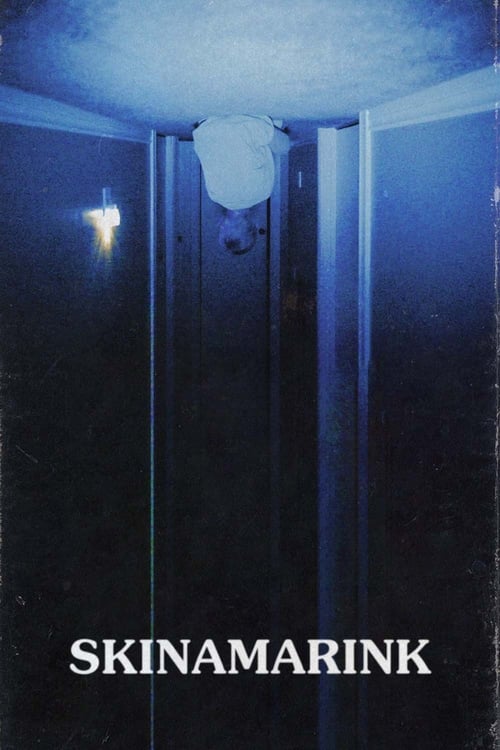
Skinamarink (2022)
Kyle Edward Ball's film proved that liminal horror could hold a feature without traditional narrative furniture; Backrooms is the studio-scale answer to the same dare. One film traps childhood in a house that will not behave. The other traps adult damage in a world that keeps producing rooms for it. Together, they show the difference between refusing explanation and nearly refusing it.
Counter Program
What is the strongest argument against it?
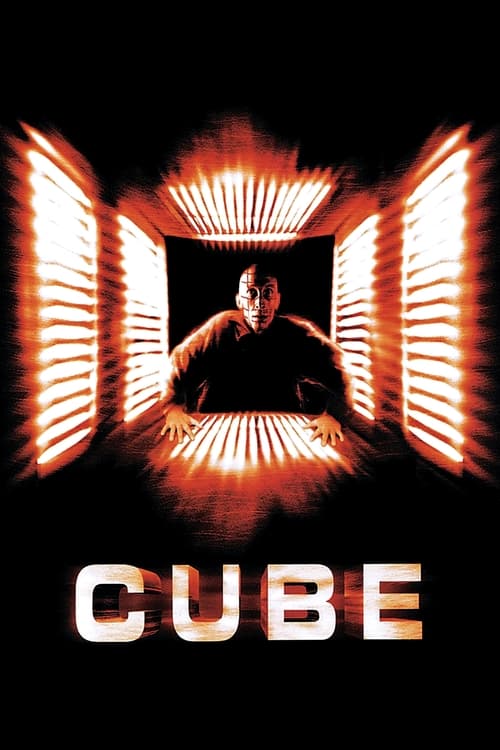
Cube (1997)
Vincenzo Natali's geometry-puzzle trap strips interiority down to function: bodies, rooms, rules, panic. Backrooms takes the opposite wager, making the maze less interesting as a system than as a projection of damage. Watched together, they clarify what Parsons adds to the impossible-room movie and what Natali was right to withhold.

Career Context
Where does this sit in the artist's story?
The Backrooms (2022)
Before expanding into a studio feature, Parsons first masterfully built this universe across his viral YouTube anthology series. It remains an essential, deeply unsettling companion piece that proves just how far his grasp of liminal dread stretches.
More Lunara Film Criticism
Further Reading
 ★★★
Lunara Film Review
The Social Reckoning – A Procedural Without a Pulse
Aaron Sorkin's The Social Reckoning trades Fincher's kinetic tragedy for a dry, well-acted Facebook procedural that informs rather than shatters.
 ★★½
Lunara Film Review
Misty Green – The Price of Second Acts
Chris Rock's Misty Green is an ambitious, tonally fractured Hollywood satire rescued only by Rosalind Eleazar's smoldering musical defiance.
 ★★★★½
Lunara Film Review
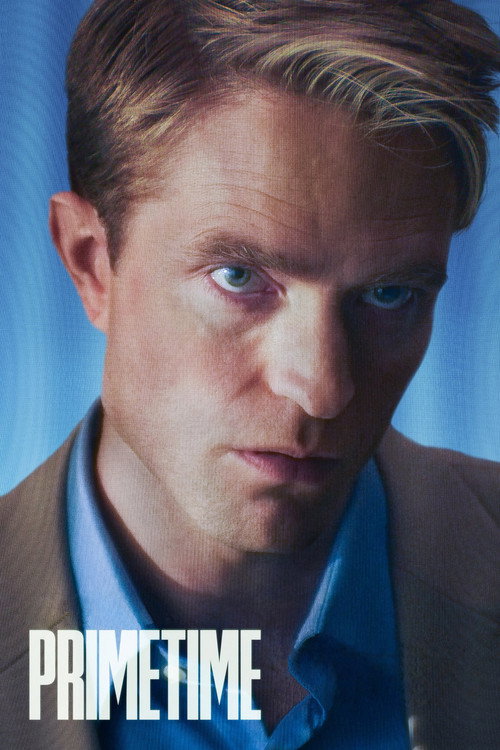
Primetime — The Sordid Theater of Our Friday Night Bloodsport
Lance Oppenheim turns To Catch a Predator into a horror movie, with Robert Pattinson's Chris Hansen in the kitchen and all of us watching from home.
 ★★½
Lunara Film Review
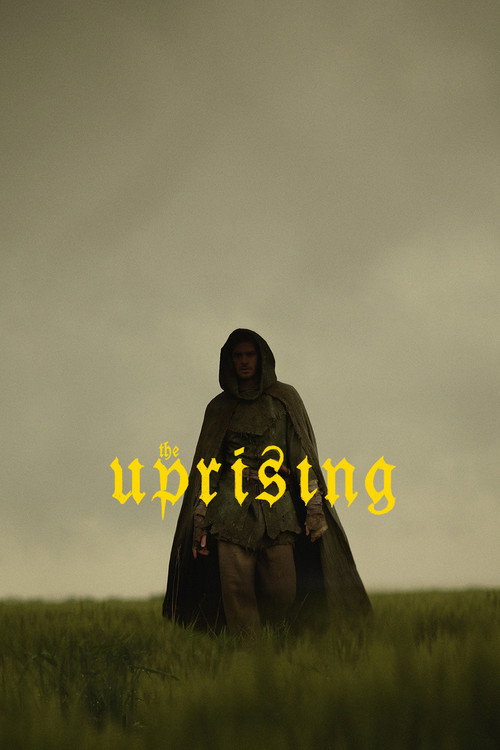
The Uprising What Could Have Been
Paul Greengrass files a searing report from the mud of 1381, then spends his final stretch turning a real tragedy into a Robin Hood origin story.
 ★★★
Lunara Film Review
Hope — The First Hour Is the Movie
Na Hong-jin's first film in ten years wins its opening hour outright, then spends the rest of itself building a franchise nobody asked for.