

Being John Malkovich, 1999
Being John Malkovich — Souls for Rent
Movie Review
Fifteen minutes out of your own head, and the bill arrives in somebody else’s name.
The first thing Being John Malkovich shows you is a puppet falling apart. Craig Schwartz calls the piece his “Dance of Despair and Disillusionment,” and it is beautiful in a way that catches you off guard: a wooden figure flinging itself around a miniature room until the wood seems to remember it once wanted to be flesh. And for this, Craig gets nothing. A street crowd drifts off. A child looks bored. A father punches him in the face for staging Abelard and Heloise where a little girl could see it. The whole movie is folded into that opening. Craig is a genuinely gifted artist who has mixed up craftsmanship with intimacy and possession with love, and Spike Jonze and Charlie Kaufman are about to hand him the cruelest gift imaginable: a chance to make that mistake with a living human being instead of a marionette.
Home offers him nothing to push against. The apartment he shares with Lotte is a pet-store triage unit, affection carried on the smell of cedar chips and compromise, a household where the hamsters seem to be running an ethics seminar nobody signed up for. So Craig takes his nimble fingers to a filing job at Lestercorp, on the 7 1/2th floor of a Manhattan office building, where grown adults spend their working lives stooped under a ceiling built for no one. It is a great sight gag, and it is also the movie’s whole case in one image: contort yourself far enough and you can belong. On that floor he meets Maxine, who enters his life the way a market correction enters a portfolio. Catherine Keener plays her with eyes that price out desire the moment it walks in. She sees Craig’s hunger instantly, and she quotes him a rate.
Then comes the door. Behind a filing cabinet there is a small, damp passage, and the passage leads into the mind of John Malkovich. You get fifteen minutes of borrowed consciousness, his coffee, his cab ride, the private weather of another person’s ordinary morning, and then the New Jersey Turnpike spits you out like gristle. People remember the premise as a celebrity gag, and the movie is both funnier and harder on us than that. The joke cuts two ways. Fame is ridiculous, sure. But look at the line of tourists forming at midnight, ordinary people paying cash to occupy a stranger and walk away clean. Malkovich himself is the film’s quiet marvel, lending his own name and face to the experiment with a precision that never once begs for sympathy. The famous sequence where he crawls through his own portal, into a restaurant where every face is his and the only word anyone speaks is “Malkovich,” plays like a stunt and lands like a nightmare. It is existential slapstick, the specific dread of watching your name turn into merchandise while you are still using it.
The story turns the moment Maxine smells money. Curiosity becomes commerce, commerce becomes possession, and Kaufman’s true subject steps into the light. This was never really a film about fame. It is a film about ownership: of a body, of a story, of a self. Lotte’s awakening inside Malkovich is written with surprising gentleness, and Cameron Diaz, every trace of glamour sanded away, lets you see the ache underneath the shock. Maxine’s appetite is capitalism with perfect posture. And Craig, the artist, commits the picture’s one unforgivable act: he turns his puppeteer’s gift on a man’s interior life and moves in. Art, the thing he loved, becomes the crowbar. Jonze’s slyest decision is to film all of this calmly, in clean, level, unhysterical frames, so the violations register as behavior rather than spectacle. Nobody on screen ever seems aware they are in a surreal comedy, which is exactly why the surrealism holds.
The tenderest scene in the film has no human faces in it. Two puppets, one carved in Craig’s image and one in Maxine’s, play a love scene of real delicacy while the people who made them scheme in the next room. It is a small miracle and a small indictment at once, art finding honesty at the exact spot where life loses its nerve. The movie knows the difference between that scene and everything Craig does after it. The difference is consent.
Where the film falls short of its own reach is Dr. Lester and his cronies, immortality run like a rideshare, a conspiracy subplot that crowds the tunnel with bit players and lets a chill settle over the last act; the ending has less shape than a movie this precise deserves. Yet even the wobble sharpens the diagnosis. In a culture this eager to monetize transcendence, we will franchise anything that moves: identity, intimacy, wonder itself, as long as the receipt prints clean.
A quarter century on, the premise has stopped being surreal and become a product category. We ride along inside other people’s heads by the quarter hour now, on feeds and streams built for precisely the transaction this movie invented as a joke: borrowed consciousness, no consequence, out the door before the check lands. That is why the film keeps getting sharper instead of quainter. Kaufman named the narcotic exactly. For nine hundred seconds, your own biography stops arguing back. And he named the sin, too. Control without consent is theft with better lighting. What stays with you is not the novelty but the ethics, the way the movie quietly reclassifies your own habits on the drive home. Jonze and Kaufman never ask whether we want to be someone else. They ask why we believe we are entitled to be.
Lunara Film Debrief
- Score:★★★★½
- Oscar Ledger3 nominations • 0 wins
- Year:1999
- Where to Watch:DigitalFind Digital OptionsAvailabilityCriterion disc
Theme Echo
What is this film really about — and who else has said it?
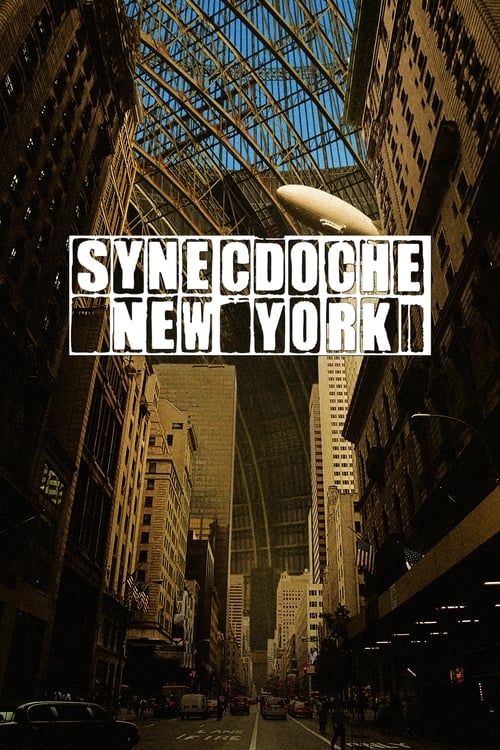
Synecdoche, New York (2008)
Kaufman a decade later, working the same wound at cathedral scale: a man who can only love people by building replicas of them, regret blown up to the size of a city.
Counter Program
What is the strongest argument against it?
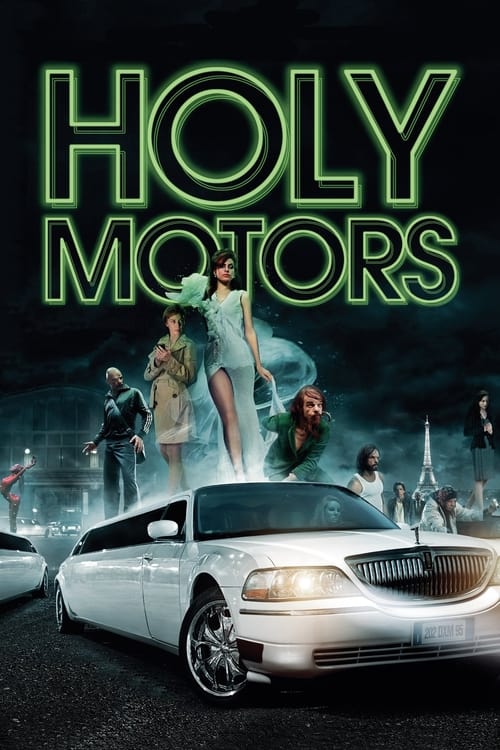
Holy Motors (2012)
The inversion. Carax's limousine pilgrimage rents out selves willingly, even joyfully, performance as organism instead of theft, and the contrast shows you exactly what consent changes.

Career Context
Where does this sit in the artist's story?
Adaptation (2002)
Jonze and Kaufman's next collaboration turns the interrogation inward: authorship itself put under the lamp until it sweats. The portal, aimed at the writer's own skull.
More Lunara Film Criticism
Further Reading
 ★★★
Lunara Film Review
The Social Reckoning – A Procedural Without a Pulse
Aaron Sorkin's The Social Reckoning trades Fincher's kinetic tragedy for a dry, well-acted Facebook procedural that informs rather than shatters.
 ★★½
Lunara Film Review
Misty Green – The Price of Second Acts
Chris Rock's Misty Green is an ambitious, tonally fractured Hollywood satire rescued only by Rosalind Eleazar's smoldering musical defiance.
 ★★★★½
Lunara Film Review
Primetime — The Sordid Theater of Our Friday Night Bloodsport
Lance Oppenheim turns To Catch a Predator into a horror movie, with Robert Pattinson's Chris Hansen in the kitchen and all of us watching from home.
 ★★½
Lunara Film Review
The Uprising What Could Have Been
Paul Greengrass files a searing report from the mud of 1381, then spends his final stretch turning a real tragedy into a Robin Hood origin story.
 ★★★
Lunara Film Review
Hope — The First Hour Is the Movie
Na Hong-jin's first film in ten years wins its opening hour outright, then spends the rest of itself building a franchise nobody asked for.