
Captain America: The First Avenger — Sincerity as a Dare
Movie Review

Captain America: The First Avenger, 2011
In 2011, the most radical thing a superhero movie could do was mean it.
A colonel lobs a grenade into a yard full of soldiers, and every trained man in the frame runs. The one who doesn’t is the smallest one there, the asthmatic kid from Brooklyn who has flunked every physical requirement the Army keeps, and he throws his whole insufficient body on top of the thing and waves everybody else back. The grenade is a dummy. The test is not. And what Erskine learns in that instant, what we learn with him, is that courage for this particular man is not a decision. It is a reflex. It fires before the part of him that weighs options even gets consulted. Steve Rogers passed before the serum existed, and the whole movie lives inside that fact: the power comes second. The person comes first.
You have to remember what Joe Johnston was walking into. By 2011, a decade of post-9/11 movies had trained us to put patriotism in quotation marks, to demand psychological damage as the price of admission for any hero, to assume that a man who sincerely wants to do the right thing must be taken apart before he can be taken seriously. Johnston looks at that entire framework and walks past it. He makes a film that takes Steve Rogers at his word, unironic, uncomplicated, almost out of its own time, and then dares you to call it naive. The dare pays off in the most emotionally coherent origin story this franchise ever managed, and understand how big the bet actually is. Irony has a safety net; it can always claim it was kidding. Sincerity has to land or it dies in the open, and this one lands.
The best sustained stretch of the picture is everything before the serum, and Chris Evans is doing harder work there than anyone gives him credit for. The digital shrinking of his body means he has to perform smallness while radiating the thing that makes Erskine choose him, and he builds it out of posture. The shoulders squared over a frame that cannot support the squaring. The jaw setting before every alley fight he already knows he will lose. The flat, almost bored unwillingness to stay on the ground. What comes through is a man for whom fear is present but beside the point, because calculating odds was never installed in him. Evans plays all of it in stillness instead of speeches, and that restraint is the only thing standing between this character and insufferable self-righteousness. Steve’s goodness reads as constitutional, not performed. That is why it survives the serum, and the franchise, and everything that comes after.
The strangest, richest minute in the film arrives right after the pod opens. The body that steps out is not Steve improved; physically, it is Steve replaced, and Evans plays the aftermath as dislocation, a man operating a machine that no longer matches the map he carries of himself. Johnston backs away from that idea almost immediately, and the loss is real. But the retreat lands somewhere genuinely clever: the USO montage, Captain America in tights hawking war bonds, socking a stage Hitler eight shows a week while actual soldiers die overseas. It is sharp structural satire, propaganda held up to the light by a movie honest enough to include the joke at its own expense. You can also see, in that same frame, exactly where the film stops short of what it reached for. It is smart enough to raise the question and not quite brave enough to sit with it. Both retreats, from the body and from the satire, trade insight for momentum, and the trade shows.
Stanley Tucci carries the moral weight of the whole thing in about four scenes. His Erskine knows what his serum actually does, that it amplifies whatever is already there, good becomes great, bad becomes worse, and Tucci lets that knowledge sit behind every line like a stone in his pocket. The night-before scene, two men sharing a drink while Erskine explains why he chose a weak man over a strong one, is the emotional core not just of this movie but of the character’s entire decade to come, and Tucci delivers it with the warmth of someone who has decided, against the full evidence of his own century, to keep believing in something fragile.
The villain is where the design breaks. Schmidt is built to be Steve’s mirror, the serum’s other answer, and that job demands a conviction as deep as Steve’s aimed the other direction. The screenplay hands Hugo Weaving a pulp caricature instead. Weaving commits to the theatricality with real professional precision, and there is nothing inside it. No belief more specific than wanting everything, no single moment where ten years of fanatical purpose becomes legible as an actual worldview. A Red Skull who believed in something as hard as Steve does would have completed the movie’s own claim, that character decides what power becomes. Instead the claim gets argued from one side only, and the villain exists to be defeated, which makes him the one truly disposable thing in the picture.
Hayley Atwell, meanwhile, quietly pulls off something this franchise would not manage again for years: a romance built on witness. Peggy Carter saw the man before the transformation, and Atwell plays the attraction as recognition, not infatuation, a competent woman inside a structure that keeps underestimating her, drawn to the one man whose courage she watched arrive before his capability did. That is why the ending guts you. The radio conversation, Steve putting the plane in the water while Peggy keeps her voice level and schedules a dance neither of them believes in, earns every ounce of its grief, because the relationship was assembled from specific observed detail and not from narrative obligation. She loved the small one. The movie never forgets that, and neither do you.
Johnston shoots the 1940s with open affection and stops short of interrogation. This is an idealized America, warm-toned and morally stable, and the idealization is both the charm and the ceiling. World War II is the one historical setting where American heroism needs no asterisk, and the film banks that clarity without ever asking what Captain America means outside it. The sequels take up that question with more complexity and considerably less warmth. But as an origin, this is the proof that sincerity works as a dramatic mode, and the proof has only appreciated. After a decade of deconstruction and grimdark revision, a movie that treats a good man as a premise rather than a problem plays less like nostalgia and more like a dare nobody has answered yet.
Lunara Film Debrief
- Score:★★★½
- Year:2011
- Where to Watch:

Donner's founding case that superhero sincerity is a deliberate artistic choice, not a failure of sophistication. Johnston's film is its most direct heir, and the two make the same bet forty years apart: that an audience is starving for a hero the movie itself believes in.
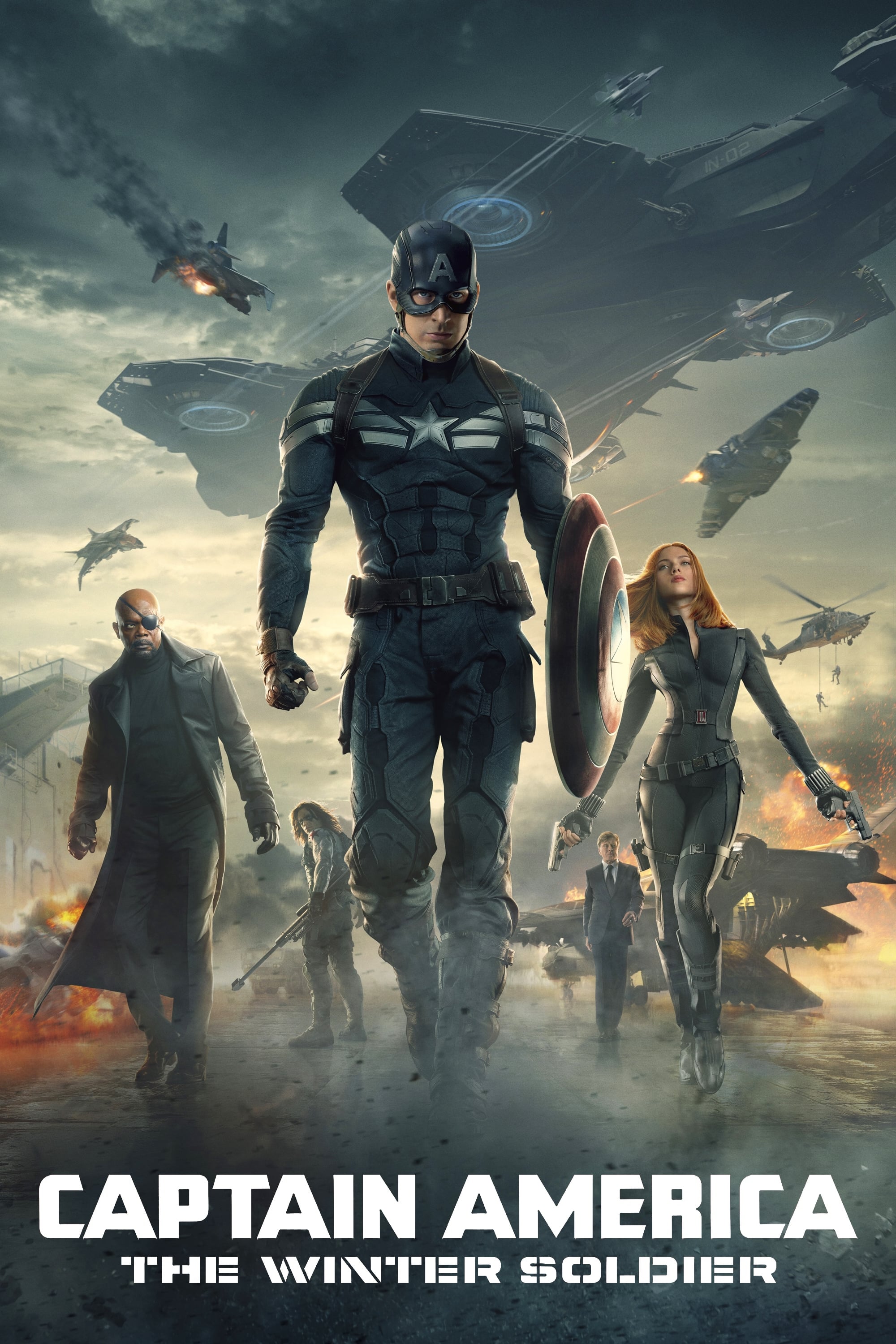
The same man dropped into paranoia, where every question about American power this film politely sets aside gets asked at gunpoint. The pivot only works because the sincerity came first; watch them in order and the second film plays like the bill coming due.
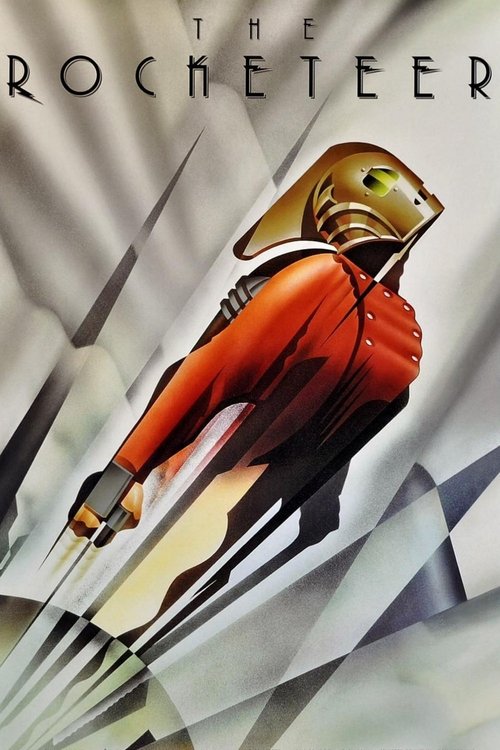
Johnston's earlier 1940s adventure, same affection for period Americana, same instinct that a decent man in the air is spectacle enough. It is the twenty-year rehearsal for this film, and the reason Marvel knew exactly who to call.
More Lunara Film Criticism
Further Reading
 ★★★
Lunara Film Review
Thor — Two Movies Stitched at the Seam
Half dynastic tragedy, half pet-store comedy, and the seam between them is the most interesting thing Phase One ever produced.
Updated September 23, 2026
 ★★★
Lunara Film Review
The Social Reckoning – A Procedural Without a Pulse
Aaron Sorkin's The Social Reckoning trades Fincher's kinetic tragedy for a dry, well-acted Facebook procedural that informs rather than shatters.
 ★★½
Lunara Film Review
Misty Green – The Price of Second Acts
Chris Rock's Misty Green is an ambitious, tonally fractured Hollywood satire rescued only by Rosalind Eleazar's smoldering musical defiance.
 ★★★★½
Lunara Film Review
Primetime — The Sordid Theater of Our Friday Night Bloodsport
Lance Oppenheim turns To Catch a Predator into a horror movie, with Robert Pattinson's Chris Hansen in the kitchen and all of us watching from home.
 ★★½
Lunara Film Review
The Uprising What Could Have Been
Paul Greengrass files a searing report from the mud of 1381, then spends his final stretch turning a real tragedy into a Robin Hood origin story.