
Thor — Two Movies Stitched at the Seam
Movie Review

Thor, 2011
Two movies share one runtime here, and the seam where they meet is more alive than either half alone.
The best scene in Thor is a father taking things away from his son. Odin stands at the mouth of the Bifrost and strips Thor down piece by piece: the discs torn off the armor, the title revoked, the hammer flung after him like a sentence still being served. And Anthony Hopkins, who could have played it as thunder, plays it as exhaustion instead. His voice drops into a register older and more tired than anything we usually get from him, a king who has confused authority with wisdom for so long that he can no longer tell the two apart, a father punishing his boy because he has run out of other ideas. Watch what the scene actually is: language as action. A decree gets spoken and reality rearranges itself around the words. It gives the movie an inciting event with real gravity, the kind of weight most films in this genre never even attempt. It also sets a bar the next ninety minutes keep jumping at and keep missing.
Kenneth Branagh directing a Marvel picture is a hiring decision that only makes sense in retrospect, and even then only halfway. But what he brought was the one thing nobody expected a 2011 comic book movie to carry: a genuine belief that family dysfunction could be the dramatic spine. The result is two separate films stitched together at a seam, and one of them is considerably better than the other. The Asgard half is the franchise’s only honest attempt at dynastic tragedy. Branagh blocks Odin’s court like a man who has spent decades staging royal betrayal, bodies arranged in triangles so you can read the power in the room before anyone speaks, the camera tilted so all that gold verticality presses down on you instead of lifting you up. The Earth half is directed by someone who does not entirely trust the material he has been asked to make entertaining. You can feel the mistrust. It gets into the frame.
The film’s most durable export is Tom Hiddleston. His Loki stands on a single psychological foundation, the discovery that your identity is a lie told by the people who were supposed to love you without conditions, and every choice in the performance flows downhill from that revelation. Watch the physical change the moment he learns what he is: the posture tightens, the jaw sets, the eyes stop seeking and start calculating. The villainy never reads as evil. It reads as grief reorganized into strategy, the pain still visible underneath the performance of control, and that is why you can look at him across a crowded scene and know exactly what he is feeling. The franchise spent the following decade trying to grow another villain like him and never managed it. Most of its antagonists want things ideologically. Loki wants his father to look at him. There is no contest.
Chris Hemsworth’s achievement is quieter, and easier to walk past. He builds charisma out of pure physical intelligence in a role the screenplay treats mostly as a delivery system for plot. On Asgard his body does the work the script skips: the proprietary stride of inherited power, shoulders squared, every gesture assuming the room will comply. On Earth the same body becomes the comedy. The man who commanded a throne walks into a pet store and asks for a horse. He drains a mug of diner coffee, loves it, and smashes the mug on the floor demanding another. It lands because Hemsworth never winks. His Thor is not being funny; he is being himself in a context that makes his normalcy absurd, and playing the confusion as completely genuine is the only choice that could have worked.
The Earth half is also where the movie’s real failures live, and they deserve exact names. Jane Foster is the weakest structural position in the picture, a love interest whose whole job is to humanize the god, and Natalie Portman plays her with professional competence that never catches fire. The romance covers roughly thirty-six hours of story time, and neither the script nor the direction supplies the observed, specific detail that turns attraction into something you invest in. Jane exists to give Thor a reason to care about Earth, and you can see the function through the character the way you can see wiring through thin plaster. She never becomes a person whose own wants bend the story. Then there are the canted angles. Branagh tilts the frame all through the New Mexico scenes to make a displaced god’s world feel off its axis, which is defensible on paper, and in practice the tilting piles up into visual noise exactly where the comedy and the intimacy need a level floor. The Destroyer climax caps it all: a small dusty town, a big empty suit of armor, and stakes that evaporate the second you touch them.
So the two halves never fuse, and the film is better in its parts than in its assembly. That is a real flaw. It is also, honestly, more interesting than the smooth consistency a safer director would have handed in. Thor was Phase One’s proof of concept for a specific gamble: that an audience would follow this franchise into cosmic mythology as long as the stakes stayed familial. The gamble half-works. And the half that works, Hopkins’s tired king, Hiddleston’s grieving schemer, a throne room blocked like theater, is the half every cosmic entry since has quietly leaned on. Branagh found a tonal register, sincere myth played at full scale, that he could not hold steady across a single film, and then he left. The franchise spent three more Thor movies looking for that register, found comedy instead, and never quite got the tragedy back. What remains is a film worth your evening for its first act and its villain, a half-great movie wearing a whole movie’s clothes.
Lunara Film Debrief
- Score:★★★
- Year:2011
- Where to Watch:

Branagh's own four-hour Shakespeare, where the machinery of court, the poisoned inheritance, and the son wrecked by a father's secrets get the running time Thor compresses into a prologue. One director, one obsession, and in the long version you can finally see what the short one was reaching for.
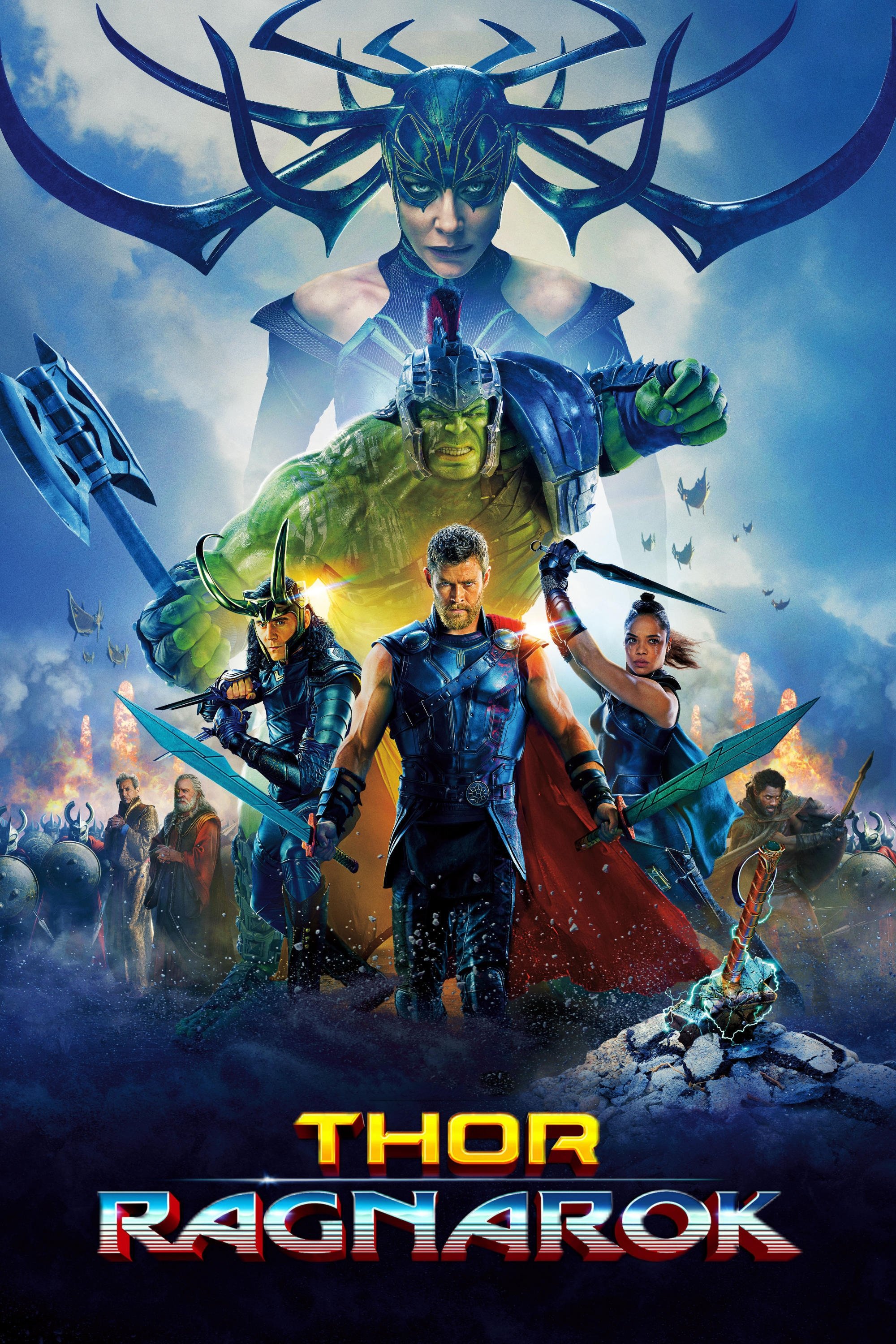
Waititi's reinvention solves Branagh's Earth-comedy problem by throwing out dramatic sincerity altogether, and the trade is instructive: everything gets funnier, and the banishment scene could never happen in it. Watch them back to back and you can price out precisely what the joke costs.

Branagh's debut, royal mythology translated into mud and grief and a young king growing into the weight of the crown. It is the audition reel Marvel was hiring off of, and the film that explains why they thought a god's coming-of-age needed a Shakespearean.
More Lunara Film Criticism
Further Reading
 ★★★½
Lunara Film Review
Belfast — The Street Only Exists in the Boy Who Left
A childhood remembered in black and white, with the movies, only the movies, in color.
Updated September 23, 2026
 ★★★½
Lunara Film Review
Captain America: The First Avenger — Sincerity as a Dare
In 2011 the most radical thing a superhero movie could do was mean it.
Updated September 23, 2026
 ★★★
Lunara Film Review
The Social Reckoning – A Procedural Without a Pulse
Aaron Sorkin's The Social Reckoning trades Fincher's kinetic tragedy for a dry, well-acted Facebook procedural that informs rather than shatters.
 ★★½
Lunara Film Review
Misty Green – The Price of Second Acts
Chris Rock's Misty Green is an ambitious, tonally fractured Hollywood satire rescued only by Rosalind Eleazar's smoldering musical defiance.
 ★★★★½
Lunara Film Review
Primetime — The Sordid Theater of Our Friday Night Bloodsport
Lance Oppenheim turns To Catch a Predator into a horror movie, with Robert Pattinson's Chris Hansen in the kitchen and all of us watching from home.