

Thor: Ragnarok, 2017
Thor: Ragnarok — Laughing a Beat Too Long
Movie Review
Waititi torches Asgard to free its god, then keeps laughing so nobody has to feel the fire.
Thor hangs in chains in a fire demon’s cave, and Surtur, the being prophesied to end the world, starts delivering his doom speech. Mid-sentence, the chain rotates. Thor drifts slowly away from his captor, asks him, politely, to hold that thought until he swings back around, and the end of all things stands there, visibly annoyed, waiting for its audience to face front. That is the first scene of Thor: Ragnarok, and it is the whole strategy compressed into ninety seconds: after two solo films of dutiful solemnity, nothing in this one gets to finish a serious sentence. The gag is funny. I laughed. It is also a mission statement, and by the time the credits roll you will have seen exactly what the mission rescued and exactly what it charged for the rescue.
What Taika Waititi is doing here is demolition, and he does not pretend otherwise. Two Thor pictures of diminishing returns sit behind this one, and his answer is to strip the property for parts. The hammer shatters in the first act. The hair goes. The supporting cast gets written off. The Shakespearean register is carried out with the trash. And under all that rubble he finds the franchise’s best-kept secret: Chris Hemsworth is funny. Not funny for a leading man, the way handsome actors get graded on a curve. Genuinely, structurally funny, with the timing of a comic who spent five years locked inside a character forbidden to use it. His new Thor runs on bemused resilience, a god who has lost everything and cannot quite believe the universe’s commitment to the bit, and the comedy lands because the capability underneath is never in doubt. This is not a buffoon in a cape. It is a hero who has finally noticed how ridiculous his life is, played by a man visibly relieved to say so out loud.
The film’s one radical idea arrives, of all places, as production design. Cate Blanchett’s Hela strides home to claim her throne, walks into the palace vault, and tears down the golden ceiling fresco of peaceful, benevolent Asgard to reveal the older mural underneath: herself and Odin on the march, realms drowning, the empire’s wealth extracted at the point of a spear. The gold was paint over conquest. The official memory was a renovation. It is the most politically pointed image this franchise has ever put on screen, colonial history as a literal ceiling job, and Waititi, an Indigenous filmmaker whose perspective is not incidental to any of this, follows the idea to its honest end: Asgard is not saved, it is surrendered, the homeland destroyed on purpose because the people matter and the empire never did. Blanchett, for her part, plays Hela with zero interior conflict and total physical relish, a villain having the time of her life, and the shallowness is the point. She is what the ceiling says the family always was, come home wearing antlers.
The long middle stretch on Sakaar belongs to the supporting cast, and they earn every minute of it. Jeff Goldblum’s Grandmaster runs a gladiator empire like a cocktail party host who genuinely cannot tell suffering from programming, cruelty served up as content curation, and that improvisational stammer makes him funnier and worse at the same time. Tessa Thompson’s Valkyrie enters drunk, disarms Thor without bothering to stand up straight, and carries the film’s only real wound: the flashback of her sisters falling in slow motion is the most emotionally concentrated sequence in the picture, and Thompson plays the aftermath as a woman whose running became her whole identity, heroism rebuilt eventually out of obligation rather than hope. Mark Ruffalo, handed a talking Hulk at last, finds something quietly touching in a creature who only achieved selfhood on a planet where nobody asked him to change back. Around all of them the palette goes full Kirby, saturated cosmic pinks and golds where this series used to keep its gray, and the Immigrant Song riff gets deployed as the theme music of divine violence. As pure entertainment, the movie is close to irresistible.
Now the cost, stated as fairly as I can. The best case for the wall-to-wall comedy goes like this: irreverence is the honest response to gods, solemnity was exactly what was killing this character, and the joke reflex is the rescue working as designed. For the character, that case wins. For the film, it does not, because the reflex has no off switch. The Warriors Three, loyal companions across three movies, are dispatched in seconds as throwaway beats. Odin dissolves into golden dust between punchlines. And the ceiling, the one genuinely radical thing this franchise has ever said about itself, is raised, shown, and never spoken of again. The movie discovers that its golden kingdom was built on erased conquest and cannot sit with that discovery for sixty consecutive seconds without discharging the tension through a gag. Even the ending, an entire civilization annihilated, lands as setup and a consolation slogan. The deflation is the design, and the design has a ceiling of its own: a film this committed to puncturing weight can rescue a franchise, but it cannot quite be a great movie, because greatness means letting at least one thing stay heavy. You can already feel what this reflex becomes once it is the only move left, and the seed of that failure is right here, laughing.
So: a complete success as demolition, a real success as comedy, a self-limiting one as cinema. Ragnarok clears the ground, frees its star, hands Blanchett the antlers, and paints the franchise’s true history across a ceiling. Then it keeps juggling on the cleared ground, because stopping would mean feeling the thing it just revealed. Worth your evening, no hesitation. Worth more than that only in the ninety seconds when the fresco comes down and nobody is joking.
Lunara Film Debrief
- Score:★★★
- Year:2017
- Where to Watch:
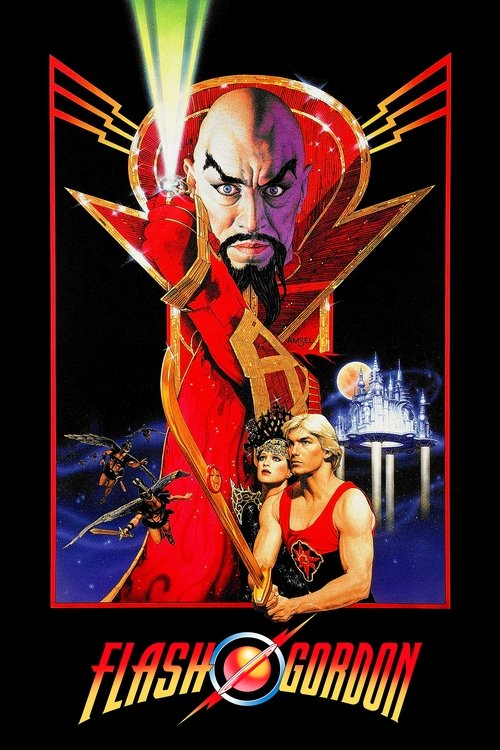
The last cosmic opera this happy to be ridiculous: camp played at full sincerity, a villain enjoying every minute, a rock band as the score's entire personality. Watch it and you see exactly the register Waititi revived, and exactly what that register has always traded away in menace.

The film this one exists to repudiate: somber, competent, permitted nothing. Back to back, the two make a controlled experiment in directorial permission, and the sequence shows both why the demolition was necessary and what got demolished along with the gloom.
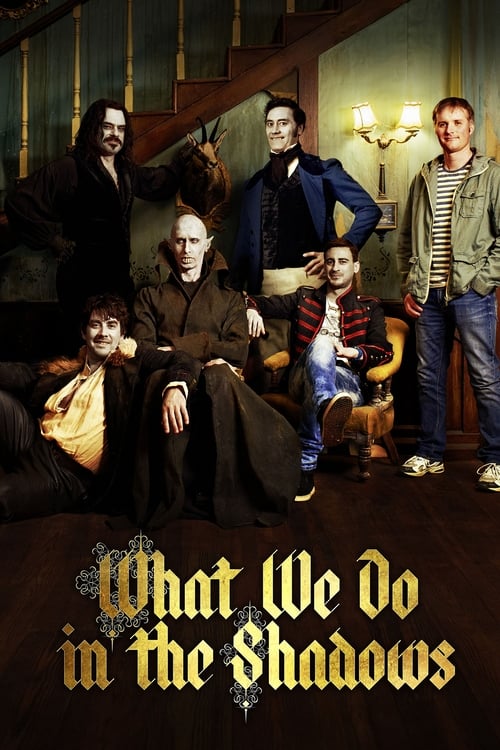
Waititi's blueprint: supernatural beings deflated into flatmates, sincerity hiding inside absurdity, the joke as a delivery system for loneliness. Ragnarok is that method scaled to a franchise, and the scaling is where the delivery system starts overrunning the cargo.
More Lunara Film Criticism
Further Reading
 ★★
Lunara Film Review
Thor: Love and Thunder — A Tone Is Not a Formula
A father buries his daughter, a god laughs in his face, and then a goat screams: the sequel that could not pick a movie and lost...
Updated September 23, 2026
 ★★★★★
Lunara Film Review
The Florida Project — Summer Is a Feral God
A sunburn of a movie, beautiful and stinging, set in the pastel shadow of the promise machine.
Updated September 23, 2026
 ★★★½
Lunara Film Review
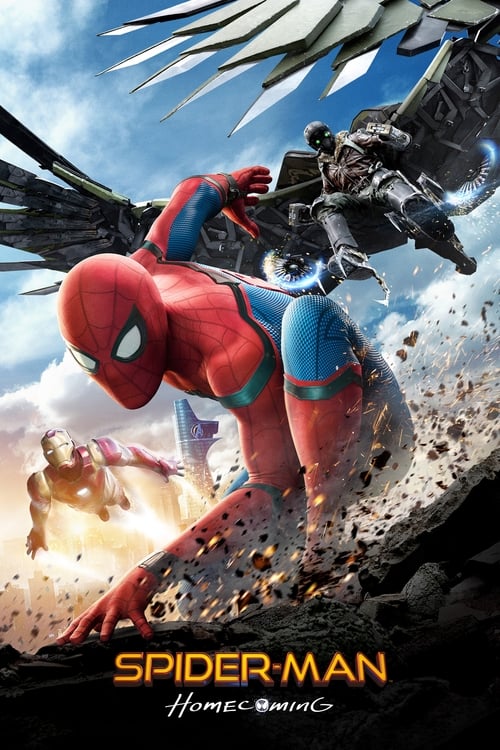
Spider-Man: Homecoming — Smallness Is the Point
The most dangerous scene Marvel ever staged is a dad driving two kids to a school dance.
Updated September 23, 2026
 ★★★★★
Lunara Film Review
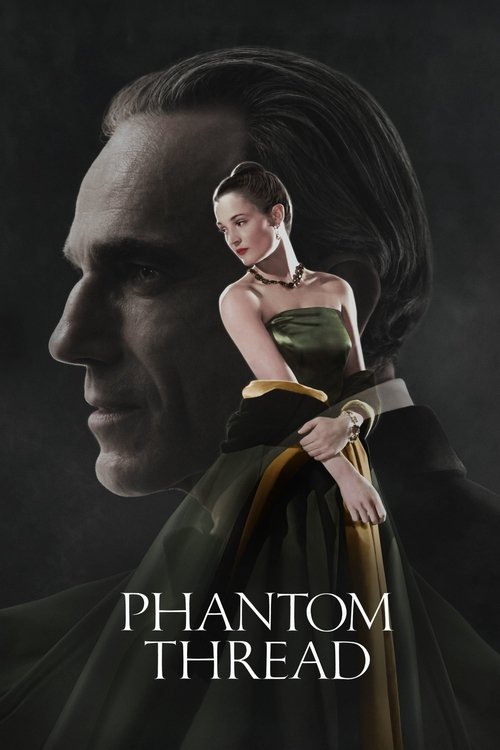
Phantom Thread — The Fine Print of the Vow
Nine years on, Anderson's couture romance stands as the truest film we have about long coupledom: love as a treaty, negotiated in a private language, signed...
Updated September 23, 2026
 ★★★★
Lunara Film Review
Guardians of the Galaxy Vol. 2 — Your Father Wasn’t Your Daddy
The monster fight plays out of focus behind a dancing tree, and that is the whole movie announcing itself.
Updated September 23, 2026