

Phantom Thread, 2017
Phantom Thread — The Fine Print of the Vow
Movie Review
Every wedding vow contains this whole movie. Phantom Thread just reads the fine print out loud.
The loudest scene in Phantom Thread is a woman buttering toast. Morning in the House of Woodcock, the tall Georgian townhouse where duchesses buy gowns downstairs and genius lives at the top, and Reynolds Woodcock is sketching at the breakfast table when Alma, his new lover, starts to eat. The knife drags across the bread like a saw. Tea pours with the roar of a burst main. A spoon rings off porcelain. Anderson records the meal close and mixes it enormous, so that eating at ordinary human volume lands on the soundtrack as demolition, and Daniel Day-Lewis winces through every stroke until the complaint arrives, spoken with the wounded exactness of a man reporting a crime: it is as if she just rode a horse across the room. You can play the scene as comedy about a fussy man, and it is that. It is also the whole film showing up early. In this house, attention is the only money there is, and Alma has just found out that breakfast is where the exchange rate gets set.
Anderson has said where the picture came from. He was sick in bed, flattened and useless, and he caught his wife looking at him with a tenderness he had not seen in a while, and a thought arrived, half joke, half seed: she might like to keep me this way. Phantom Thread is that thought grown to full height and dressed by hand. We are in London couture in the mid-fifties. Reynolds sits at the top of the trade, dressmaker to heiresses and royalty, a confirmed bachelor whose sister Cyril runs the house, the books, and the quiet removal of the lovers he tires of. Then a country hotel, and a waitress who blushes while writing down the most famous breakfast order in modern movies, Welsh rarebit with a poached egg, bacon, scones, butter, cream, jam but not strawberry, a pot of Lapsang souchong tea and some sausages, and who hands back the ticket with one line across the bottom: for the hungry boy. She has his number before the eggs hit the pan. Everything after is the two of them working out what the number is worth.
It is one of the best-looking films of its century, and famously nobody is credited with shooting it. Anderson split the camera with his own crew, his longtime gaffer Michael Bauman chief among them, working on 35mm through older glass, letting window light and practical lamps carry the rooms, and the collective result has a quality one credited eye might never have risked: softness without prettiness. White satin blooms and halates. Wool keeps its itch right into the grain. The fittings play like portrait sittings from another century, hushed, lit from the north, and the camera studies the house the way Reynolds studies women, from the gray-smocked seamstresses winding up the staircase each morning to the workroom where the film hides its real love scenes. Chalk, pins, muslin, four hands on one hem. Day-Lewis spent the better part of a year learning couture before a frame was shot, apprenticed to the costume chief of the New York City Ballet, and eventually rebuilt a Balenciaga gown from nothing. You can see the labor in every insert. The film believes love is a thing done with hands, and the hands are never faking.
The other half of its body is Jonny Greenwood’s score, nearly ninety minutes of music for a picture that barely clears two hours, piano laid over strings, lush to the edge of a swoon, played with a sincerity that should not work and is exactly why everything does. Listen to what the music does during the poisonings. Nothing. No minor-key warning, no ironic curdle. It keeps believing. The story is framed as Alma’s testimony, given to a young doctor by firelight while Reynolds lies sick upstairs, and Greenwood scores that testimony taken at her word. This is not the film a prosecutor would hear. It is the film she remembers, a love story from the first frame, and the whole picture lives in the gap between those two hearings.
Day-Lewis announced his retirement on this performance, and for eight years it stood as the last word, until his son coaxed him back in front of a camera for Anemone. If it had stayed the farewell, it would have been the right one. A career of volcanic men closes on the quietest tyrant he ever built, a man whose violence is conducted entirely in etiquette. Watch him at the surprise dinner Alma stages, faced with asparagus dressed in butter instead of his oil and salt, announcing that he is admiring his own gallantry for eating it the way she prepared it. The line is a slap performed as a courtesy, and he serves it with such silken self-regard that the laugh and the flinch land together. Opposite him Anderson cast a near-unknown from Luxembourg, found on an audition tape, and the film’s central miracle is that Vicky Krieps holds the frame against the most decorated actor alive by never once speeding up. She watches him at her own tempo. She lets a blush happen and does not apologize for it. When the talk turns to staring contests, Alma tells him that if he wants one, he will lose, and Krieps says it not as flirtation but as a fact she is politely early in disclosing. Above them both sits Lesley Manville’s Cyril, the house’s supreme court, who informs her brother, without raising her voice or setting down her teacup, that if he starts a fight with her he will not come out alive, she will go right through him and it is he who will end up on the floor. It is the best joke in a film full of them. The most frightening person in this story about a tyrant is his sister.
The fights sharpen, the house tightens, and Alma, about to be cycled out like the girl before her, goes picking mushrooms. The first poisoning is a secret. His tea comes up wrong, he collapses onto the wedding gown commissioned for a Belgian princess, and while Alma and the seamstresses repair the damage overnight, Reynolds burns through a fever in which his dead mother stands silent in the doorway, wearing the wedding dress he sewed for her at sixteen. The film has been handing you his clockwork the whole time. Here is a man who stitches locks of hair into the canvas of his jackets, who hides the words never cursed inside a royal hem, who has spent a working lifetime sewing his mother into other women’s clothes. What he wants, and can no more ask for than fly, is to be small again. Weak, tended, mothered by someone with total authority and no agenda. Alma’s poison turns out to be a skeleton key. It opens the one door in him nothing else could, and when his strength returns he does the single most rational thing this supremely irrational man ever does. He proposes.
Marriage does not fix them. It concentrates them. So when the misery returns, so does the kitchen. This time she chooses the mushrooms without hiding. Butter foams in the pan. She slices, folds, plates the omelette, pours the water, and Reynolds watches every second from the table, and the film goes nearly silent while they look at each other over the plate with everything understood and nothing denied. He eats. He chews, swallows, and says: kiss me, my girl, before I’m sick. Her terms are the plainest wedding vows in movies. She wants him flat on his back, helpless, tender, open, with only her to help, and then she wants him strong again. The lazy reading calls this abuse with nice wallpaper, and the scene takes that reading apart in real time, because abuse requires one party who does not know the terms, and the entire drama here is watching two people who know everything sign anyway. That is what the film found out about long love, and no other romance has put it on screen with this much nerve: a marriage is a negotiated exchange of power, the negotiation never ends, and being cared for at your weakest is the treaty’s sacrament. The omelette is only the signing.
What the Woodcocks have built by the end is a private grammar, and the film is honest about how strange every such grammar looks from outside. The hungry boy. My girl. The scrape of a knife across toast as a referendum on the state of the union. Every durable couple keeps a version of this, a code of nicknames, treaties, and scheduled surrenders that no outsider could parse and no insider needs explained. Phantom Thread has become a shared language for my wife and me, which maybe says more about our relationship than I wanted, but I’m nothing if not honest. And the adoption matters more than the confession. Couples do not quote a movie at each other because the tailoring is handsome. A film gets taken into a marriage only when the marriage recognizes itself there, and this one keeps being recognized because it says the thing almost no romance will say out loud: the war and the tenderness are the same climate.
The fair case against the picture lives in a single blank. Reynolds gets a complete inner history, a mother, a dress sewn at sixteen, a superstition, a curse. Alma gets a first name and an accent the film never places. Between the waitress who blushes at a breakfast order and the wife who slices mushrooms with a surgeon’s calm there is a becoming, and the film does not shoot it. You can defend the blank as design, and I mostly do. The story is her testimony, nobody narrates their own becoming, and her lack of provenance is exactly what makes her the one thing in Reynolds’s life he did not commission. But the defense does not cover everything. The film’s curiosity, so total about him, stops at her border, and her iron arrives as a given rather than an earning. Krieps closes most of the gap in posture alone, playing a woman who has plainly survived something she sees no reason to discuss. The film is great enough that the blank usually reads as mystery. It is honest to say it does not always.
The film ends inside Alma’s imagined futures, children and gardens and ordinary Sundays, then folds back into the kitchen, where the omelette is always just about to be eaten, because the future she is describing is the treaty, renewed for as long as they both shall live. Every wedding already contains this film’s whole plot. The vow says in sickness and in health, and everybody recites it as poetry. Phantom Thread reads it as fine print, out loud, in full, and then shows two people signing with their eyes open. Nine years on, it stands as the most perfect thing Anderson has made, and the most useful. A masterpiece you can keep in the kitchen.
Lunara Film Debrief
- Score:★★★★★
- Oscar Ledger6 nominations • 1 wins
- Year:2017
- Where to Watch:DigitalFind Digital OptionsAvailability4K UHD disc [Universal]

The other great American romance about power exchanged by consent. Both films watch two people who can only say take care of me in code, and both end in ritual, the omelette and the desk. Each makes the other's ending legible as a signature instead of a surrender.

The bad-faith mirror. Fincher's marriage runs on the same discovery, that a couple is a power arrangement, and removes the consent: Amy drafts the terms alone and serves them cold. The two films agree on what a marriage is and disagree about whether both parties get to read the contract.

Anderson's first romance about a damaged man armored in routine and the woman who walks in unafraid. Barry's rage and Reynolds's fussiness are the same fortress with different upholstery, and both films score courtship as threat before letting it become rescue. Fifteen years apart, the same finding: love does not calm Anderson's men. It matches them.
More Lunara Film Criticism
Further Reading
 ★★★★★
Lunara Film Review
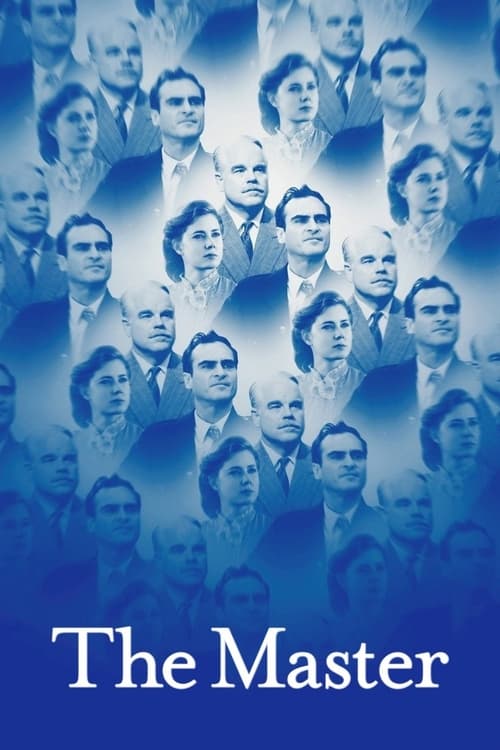
The Master — The Portrait That Will Not Hold Still
A drifter, a prophet, and the question neither survives: can anyone live without serving a master?
Updated September 23, 2026
 ★★★★½
Lunara Film Review
One Battle After Another — The Revolution Calls Back
Paul Thomas Anderson's tenth film argues that fatherhood and revolution are the same loyalty at different scales, then floors it. The...
Updated September 23, 2026
 ★★★
Lunara Film Review
Thor: Ragnarok — Laughing a Beat Too Long
Waititi rescues the franchise's dullest god by burning his world down, then laughs a beat too long at the flames.
Updated September 23, 2026
 ★★★★★
Lunara Film Review
The Florida Project — Summer Is a Feral God
A sunburn of a movie, beautiful and stinging, set in the pastel shadow of the promise machine.
Updated September 23, 2026
 ★★★½
Lunara Film Review
Spider-Man: Homecoming — Smallness Is the Point
The most dangerous scene Marvel ever staged is a dad driving two kids to a school dance.
Updated September 23, 2026