

The Master, 2012
The Master — The Portrait That Will Not Hold Still
Movie Review
Nobody in this movie is free, and the only love scene in it is an interrogation.
Freddie Quell will drink anything that burns. Torpedo fuel, drained off a Navy boat in the Pacific. Darkroom chemicals, siphoned at the department store where he lands after the war. Paint thinner cut with whatever the field hands are carrying. Anderson held onto a story Jason Robards told him on the set of Magnolia, about wartime sailors tapping the torpedoes for their alcohol, and he grew an entire human being out of it: a Navy veteran shipped home with a body full of nerves and a chemistry set where his conscience should be. The opening movement walks Freddie through the Navy’s psychiatric intake, past Rorschach cards in which he sees nothing but sex, past gentle interviewers asking what he plans to do with himself now, and the staging quietly restates Let There Be Light, John Huston’s documentary about broken veterans that the Army locked away for thirty-five years. The borrowing is not decoration. It is the whole premise. The men came home unfixed. Nobody official wanted to look. And America at mid-century was about to become a marketplace of fixes.
So Freddie stows away, blind drunk, on a yacht easing out of San Francisco harbor, and wakes up in the custody of Lancaster Dodd, who introduces himself as a writer, a doctor, a nuclear physicist, and a theoretical philosopher, but above all a man, a hopelessly inquisitive man, just like Freddie. Philip Seymour Hoffman gives the speech so much warmth that you can miss what it is: a con and a confession delivered in the same breath. Then comes the moment the whole picture folds out of. Dodd has already gotten into Freddie’s flask, and the first thing the master asks of the animal is more poison. Make me some more. Sit with that. The prophet of self-mastery wants the wild man’s drink, and the wild man, asked for the one thing he actually knows how to make, finally has somewhere to put himself. Everything the next two hours do is already inside that request.
When it opened in 2012, it wore the label of the Scientology picture, and the label was not wrong, only small. Dodd tracks the founder of that church closely enough to make lawyers sweat: the seagoing headquarters, the processing sessions, the past lives running back past the age of the Earth itself, the son who mutters that his father is making it all up as he goes along. But fourteen years later the expose everyone braced for still has not shown up, because Anderson was never investigating a church. He was after the appetite that fills one. The last spoken idea in the film is Dodd telling Freddie that if he ever finds a way to live without serving a master, any master, he should let the rest of us know, because he would be the first person in the history of the world. The entire movie is that sentence tested at full scale, in both directions. Freddie unmastered is feral, poisoned, unemployable, a danger to himself and to every crowd he wanders into. Dodd enthroned is owned outright: by his wife, by his believers’ need, by an invention he can no longer step out of without the sky coming down. Anderson holds the two men up side by side for two hours and lets you do the arithmetic yourself. Nobody in the film is free. The only free thing in it is the wake boiling off the stern of the ship, and even the wake goes where the hull points.
Then the movie sits down at a table and becomes one of the great two-handers in American film. Below decks, one lamp, informal processing. The rules sound like a party game and land like a trapdoor: answer everything, and do not blink. Do your past failures bother you? Have you ever had sexual intercourse with a member of your family? Have you killed anyone? The questions cycle and return wearing different clothes, and Freddie, who has lied his way across an entire country, answers every single one of them true. The aunt. The father dead of drink, the mother put away. Doris, the girl back in Lynn, sixteen when he promised to come back for her and did not. Joaquin Phoenix plays it in held close-ups, unblinking until his eyes stream, and Hoffman keeps his voice at the pitch of a bedtime story, and what you are watching is an interrogation built to feel like intimacy, which is the business model of every cult there has ever been. Here is the film’s most unnerving honesty: it works. Processing is quackery, and processing is also the only moment in the movie where one human being is seen entirely by another. Freddie walks out emptied and comes back begging for more, because confession is real even when the church is not. The processing scene is the love scene. There is no other candidate in the picture.
Anderson shot most of it in 65mm, the first American drama to take the format seriously since the mid-nineties, and then did the perverse, perfect thing: he pointed the widest negative in the business at faces. Mihai Malaimare Jr.’s photography spends all that resolution not on landscapes but on portraiture, pore-level, shallow-focused, close enough to watch a thought arrive. The movie even explains itself. Freddie’s post-war job is portrait photography in a department store, posing citizens under hot lights into their composed best selves until the composure cracks and he attacks a customer mid-sitting. The Master is that same job at higher magnification: a portrait of a subject who cannot hold the pose, made by a director who keeps the shutter open anyway. Underneath, Jonny Greenwood’s score lurches along on woodblocks and seasick strings, music that walks the way Phoenix walks, one shoulder high, nothing in a straight line. And the film keeps returning to its first image, the churned wake going nowhere, beautiful, the past turned over and over behind a vessel that cannot stop moving.
Phoenix builds Freddie from the outside in. The wrenched stance. The hands riding his hips like a man handcuffed to himself. The mouth working sideways around words as if speech were a borrowed tool. There is almost no vanity in the performance and no bottom that anyone has located since. After an arrest he detonates in a holding cell, and the production kept the take in which Phoenix genuinely tore the toilet off the wall; Anderson films it in one fixed two-shot, two cells side by side, Freddie destroying his half while Dodd stands motionless in his, reciting calm. It is the whole movie in a single setup, the animal and the act behind identical bars, and the camera holds because cutting would mean picking a side. Hoffman, in the great sustained charm performance of his career, engineers the charm to fail on schedule: at a Manhattan party, a polite skeptic keeps asking reasonable questions, and Dodd purrs, parries, quotes his own book, and then splits straight down the middle into a bellowed pig fuck. The flash lasts one second. You spend the rest of the film watching for it under the paint. And Amy Adams does the quietest and maybe the scariest work in the picture as Peggy, the wife everyone underestimates, who at a bathroom sink takes her husband in hand and dictates policy while she does it. The org chart rewrites itself in ninety seconds. The master has a master, and she is the only person in the film who is never once afraid.
The strongest case against The Master has never changed: it is a stalemate. Two of the best performances of their era circle each other for two hours and the movie converts none of it into change. After the desert game, where Freddie points the motorcycle at a spot on the horizon and simply keeps riding, the drama is effectively over, and the film takes another half hour to say goodbye. Put it that plainly and it sounds damning, and it must be said that the England passage really does run at lower pressure than everything before it. But the charge is accurate as description and wrong as verdict. Portraits do not have third acts. A portrait’s only drama is whether the subject can hold the pose, and this film’s finding is that neither man can. Freddie cannot hold the servant’s pose; his body keeps voting for riot. Dodd cannot hold the master’s pose in front of the one man his methods never touched, and when the mask finally moves, it moves musically. Across a desk, at their last meeting, he sings Slow Boat to China to the man he could not fix, and Hoffman lets the song wobble among seduction, farewell, and grief until it is all three at once. The stalemate was never a failure to invent an ending. It is the finding itself: some people cannot be governed and cannot be saved, and love shows up anyway. The film carries the sag of that slow last act on purpose, because without the long approach the song would play as a number instead of a wound.
There is one more tenderness. In an English pub, Freddie murmurs the processing questions to a woman between laughs, the liturgy repurposed as pillow talk, the only inheritance he takes from his master. And then the movie returns him to the beach. Back in the Pacific, in the war, the sailors had sculpted a woman out of sand, and the final image is Freddie lying down beside her again, arm across the place where a body would be warm. Take it literally first: a man holding a woman he helped make himself, out of the one material the tide is guaranteed to reclaim. She is the only master who asks nothing of him, and the only love whose terms he gets to set. Fourteen years on, The Master stands as the deepest thing Anderson has attempted, and its answer to its own last question is the saddest yes in American movies. You can live without serving a master. The film just makes you look, in 65mm, at what that life costs and what it holds: a man on an empty beach with his arm around the sand.
Lunara Film Debrief
- Score:★★★★★
- Oscar Ledger3 nominations • 0 wins
- Year:2012
- Where to Watch:DigitalFind Digital OptionsAvailabilityBlu-ray disc
Theme Echo
What is this film really about — and who else has said it?
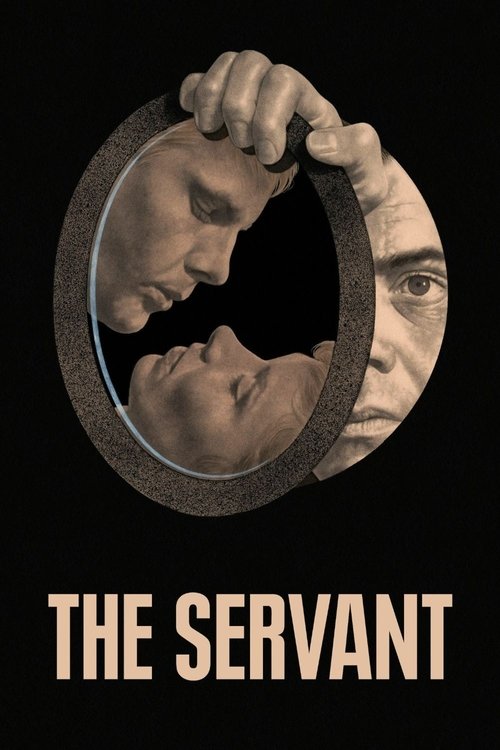
The Servant (1963)
Losey's chamber study of a master and a servant trading places one drink at a time. Strip the ideology out of Dodd and Freddie and this is what is left: dominance as appetite, service as seduction. Losey plays the bond as rot, Anderson plays it as grief, and each film exposes the hunger the other one dresses up.

Counter Program
What is the strongest argument against it?
Sound of Metal (2019)
The other side of surrender. Ruben hands himself to a community with rules and a firm master, and it saves his life. Everything The Master cannot bring itself to believe about giving yourself over, this film believes completely, and the double bill leaves the question exactly as hard as it should be.

Career Context
Where does this sit in the artist's story?
There Will Be Blood (2007)
The prior two-man war. Plainview and Eli fight over oil and God with the tenderness removed; Freddie and Dodd are the same collision run as a love story. The final scenes rhyme on purpose: one man across a room from another, naming what the bond always was, and only one of them walking away.
More Lunara Film Criticism
Further Reading
 ★★★★★
Lunara Film Review
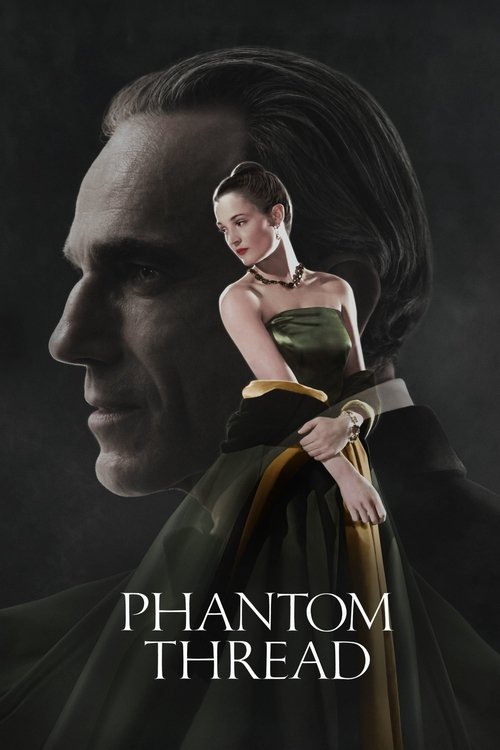
Phantom Thread — The Fine Print of the Vow
Nine years on, Anderson's couture romance stands as the truest film we have about long coupledom: love as a treaty, negotiated in a private language, signed...
Updated September 23, 2026
 ★★★★½
Lunara Film Review
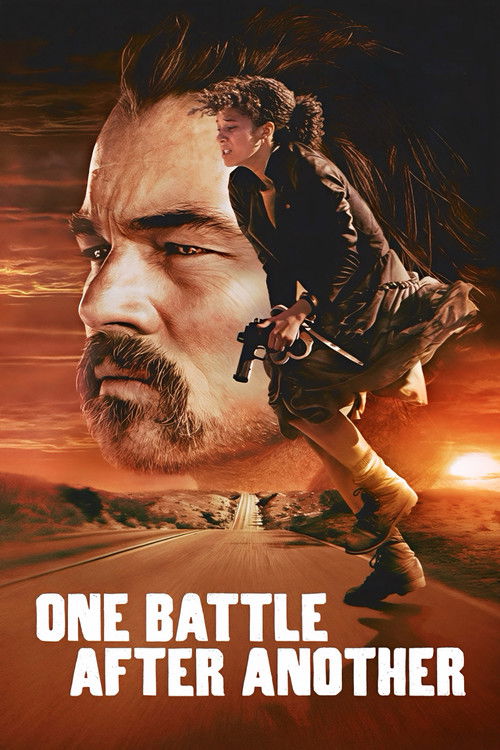
One Battle After Another — The Revolution Calls Back
Paul Thomas Anderson's tenth film argues that fatherhood and revolution are the same loyalty at different scales, then floors it. The...
Updated September 23, 2026
 ★★★★½
Lunara Film Review
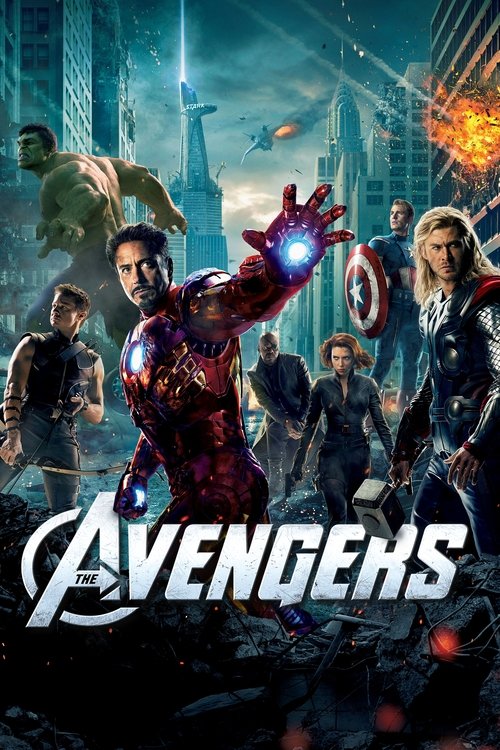
The Avengers — The Night the Movies Changed
The action is the reward; the movie is the meeting.
Updated September 23, 2026
 ★★★½
Lunara Film Review
The Dark Knight Rises — Following a Shooting Star
No sequel in modern movies inherited a harder assignment: follow the film that changed everything, without the shooting star who changed...
Updated September 23, 2026
 ★★★
Lunara Film Review
The Social Reckoning – A Procedural Without a Pulse
Aaron Sorkin's The Social Reckoning trades Fincher's kinetic tragedy for a dry, well-acted Facebook procedural that informs rather than shatters.