
Lunara Review
The Avengers — The Night the Movies Changed
The action is the reward; the movie is the meeting.

The fights are the receipts. The meeting is the movie.
Halfway through the Battle of New York, the camera does something no superhero picture had earned before: it refuses to cut. One continuous shot threads across midtown, Iron Man carving down an avenue and handing the frame to Thor and Cap holding an intersection, then up the spine of a Leviathan where the Hulk is taking it apart with his hands, then banking off toward Black Widow and the next alien wave rolling in. It is choreographed like dance and phrased like music, and the point of it is not spectacle. The point is proof. For ninety minutes the film has been making one claim, patiently, scene by scene: these people, who could not sit through a meeting without drawing blood, can hold a city together. When the team finally clicks, the feeling in the theater is not an action beat landing. It is the last movement of a symphony arriving on time. Fourteen years of imitations have chased that feeling. Not one of them has caught it.
It takes some effort now to remember that before May 2012 the crossover event film did not exist as a thing you could actually buy a ticket to. Characters from separate franchises walking into one story was a comic-book idea, and everyone assumed it would die in translation. After this film, it became the only idea Hollywood wanted. Every shared universe, every corporate mandate to interconnect, every bloated launch built to sell you a movie by promising a different one traces straight back to this opening weekend. So hold two true things at once, because both are true and neither cancels the other. The Avengers is one of the most purely enjoyable blockbusters of this century. It is also the single most destructive influence on how the industry has spent its money since. This review is about the first thing. The second stands in the doorway the whole time, and I am not going to pretend it left.
What Joss Whedon actually pulled off is structural before it is anything else. Six protagonists, each introduced in a separate film, each dragging a different tonal register behind them like luggage, all owed screen time and purpose inside 143 minutes. His solution sounds simple and was nearly impossible to do: make it a character film that eventually produces action, not an action film with characters stuffed inside. So the first two acts play as an ensemble comedy of friction, personality deployed as obstacle. Stark needles Banner. Rogers goes straight at Stark’s cynicism. Thor looks at the entire human species the way a king looks at a village that has not heard of him. The pleasure is the specific crackle of talented people locked in a room and declining to get along, and when the fights come, they are just that friction handed a physics.
Robert Downey Jr. recalibrates for the ensemble, and it is some of the smartest work he has done in the suit. The mania of the solo films pulls back. Wit becomes a social tool, a way of holding the floor in a room full of people who could break him in half. His best scene never leaves the ground: the verbal sparring with Loki in the tower, a man who knows he is outmatched filing that fact under irrelevant. And the performance peaks the moment the jokes stop. Steering a nuclear warhead through the portal, expecting to die, Stark reaches for his phone to call Pepper. She does not pick up. That silence is the most exposed Downey has ever been in this role, a man measuring his life not in what he built but in the one voice he needed to hear one more time.
Mark Ruffalo inherits the Hulk and solves him in a single stroke: play Banner’s condition as chronic illness, not action premise. The hunched shoulders, the voice kept deliberately low and even, the half-smile that steers attention away from the constant monitoring going on behind his eyes. That is not fear. That is management, and anyone who has lived with a body that requires daily negotiation will recognize it on sight. His confession about the secret to staying calm lands with the offhand precision of a line rehearsed silently for years, and it rewrites the character in one sentence. The Hulk finally works on screen because Banner works first. Across from him, Tom Hiddleston plays Loki’s megalomania as a costume pulled on over grief, the declarations of godhood pitched slightly too loud, the cruelty enjoyed slightly too much, conviction turned up to drown out the doubt underneath it. His tower confrontation with Stark is the hinge of the whole picture, two constructed personas recognizing each other, and it quietly states the film’s real subject: the line between hero and villain here is not courage against cowardice. It is connection against isolation.
Chris Evans takes the biggest risk in the cast, which is playing simplicity in a room this loud, and the choice is exactly right. Rogers is not the strongest person on this team. He is the only one thinking about the team, and Evans carries that authority in vocal clarity and physical directness instead of volume. The moment mid-battle when he starts issuing assignments, each Avenger handed the exact job shaped to what they are, is the film setting its last piece into place, and you can feel the room lean forward when it happens.
Whedon’s most underrated gift here is legibility. He blocks action like dialogue. At every second you know who is where, doing what, in relation to whom, a television director’s spatial discipline scaled up to blockbuster size. That is why the Battle of New York remains the most coherent large-scale sequence this franchise has produced: the human figures never dissolve into the wreckage, a standard the later entries surrendered once effects houses started dictating the shots. The fair knocks are real, and at this altitude they are small. Loki’s scheme does not fully parse if you press on the middle of it. Hawkeye spends most of the runtime as a mind-wiped errand rather than a person. The S.H.I.E.L.D. corridor stretch of act one is dutiful assembly work, screws going into holes. You notice every bit of it on the fourth viewing and none of it on the first, and that split is its own verdict.
The longer shadow belongs to the aftermath. The film succeeded so completely that it built the conditions of its own diminishment, an industry spending a decade photocopying the crossover without understanding that the click depended on four years of individual investment, not on a corporate calendar. That is a cautionary tale, and it is the studios’ tale, not the picture’s. Strip away everything that came after and what is left is a machine of earned payoff, the one time the event film delivered every promise its marketing made. In a packed theater on opening weekend it felt like the movies had just done something genuinely new. Put it on tonight and the shot still will not cut. The team still clicks. The symphony still lands.
LUNARA DEBRIEF
- Score:★★★★½
- Oscar Ledger1 nominations • 0 wins
- Year:2012
- Where to Watch:
Theme Echo
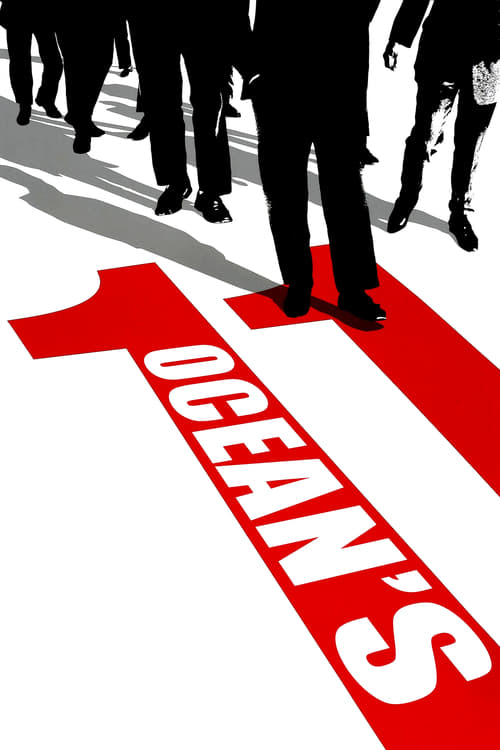
Ocean's Eleven (2001)
The same fundamental pleasure run through a heist instead of an invasion: charismatic professionals with incompatible temperaments finding out they work better together than apart. Soderbergh proves the formula needs no aliens. Whedon proves it scales to them.

Counter-Program
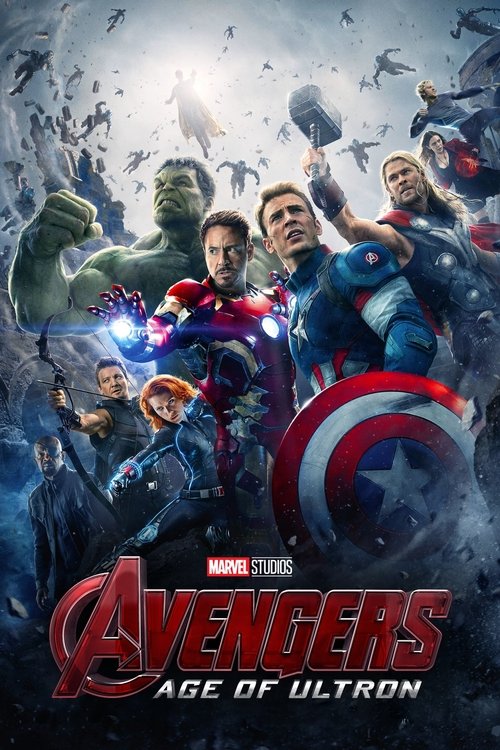
Avengers: Age of Ultron (2015)
Whedon's own sequel, visibly buckling under the franchise obligations the first film was still free to ignore. It is the clearest measurement you will ever get of what changed between 2012 and 2015: same director, same team, and the meeting has become a shareholder call.
Career Context
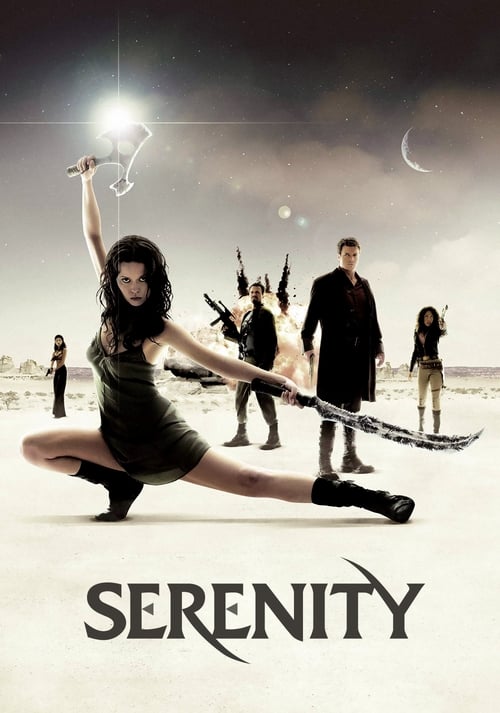
Serenity (2005)
Whedon rehearsing every structural instinct this film deploys at scale: the bickering ensemble as family, action blocked like conversation, the television discipline of never losing a body in the frame. The proving ground, seven years early and at a fraction of the budget.
Further Reading
More Lunara Criticism
 ★★★
★★★
Lunara Review
Avengers: Age of Ultron — The Franchise Wins
The blockbuster whose true subject is the thing that was crushing it while it was being made.
Updated September 23, 2026
 ★★★★★
★★★★★
Lunara Review
The Master — The Portrait That Will Not Hold Still
A drifter, a prophet, and the question neither survives: can anyone live without serving a master?
Updated September 23, 2026
 ★★★½
★★★½
Lunara Review
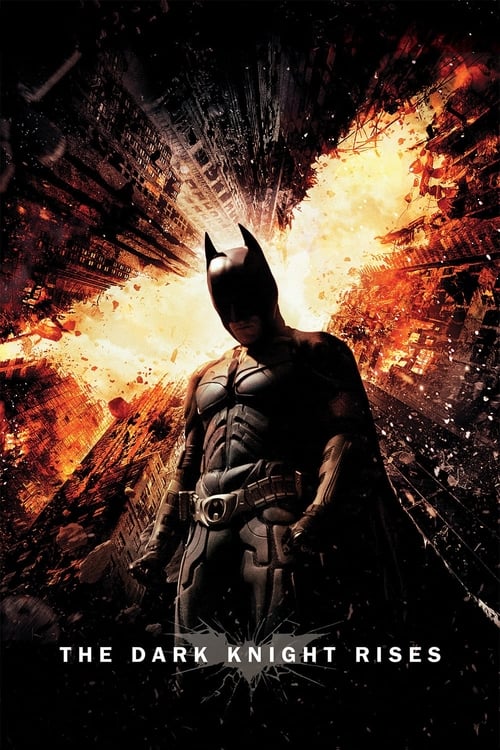
The Dark Knight Rises — Following a Shooting Star
No sequel in modern movies inherited a harder assignment: follow the film that changed everything, without the shooting star who changed...
Updated September 23, 2026
 ★★★★
★★★★
Lunara Review
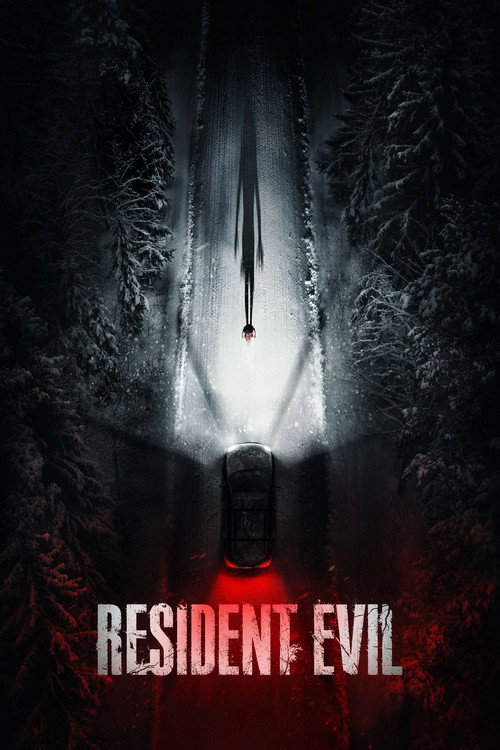
Resident Evil — The Worst Night of His Life
Resident Evil - Zach Cregger trades dread for velocity, and Austin Abrams gives a video game movie the most believable panic in years. Then it goes...
Updated September 22, 2026
 ★★
★★
Lunara Review
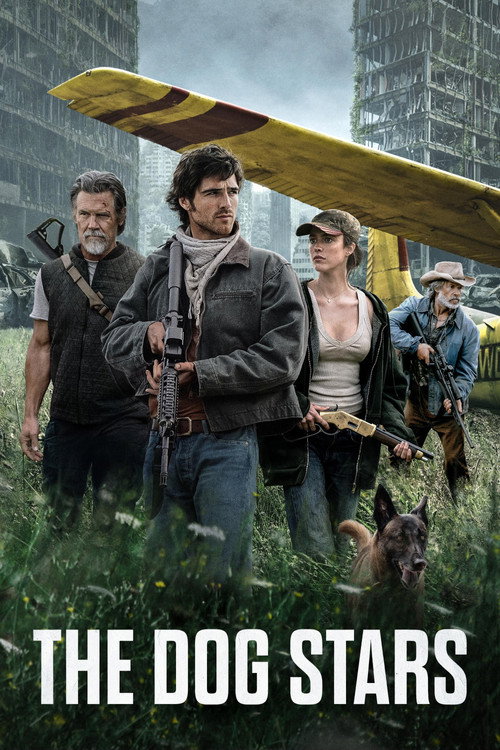
The Dog Stars — Going Nowhere Beautifully
Ridley Scott makes the end of the world look expensive and feel like nothing at all, and outsources the only honest emotion to a very good...
Updated September 10, 2026