
Lunara Review
Avengers: Age of Ultron — The Franchise Wins
The blockbuster whose true subject is the thing that was crushing it while it was being made.

The blockbuster whose true subject is the thing that was crushing it while it was being made.
Halfway through Avengers: Age of Ultron, the most powerful beings on Earth walk into a farmhouse. There are children’s drawings on the refrigerator. There is a pregnant woman who greets her husband’s co-workers, a god and two billionaires among them, the way you greet people from the office: politely, warily, doing arithmetic about the sleeping arrangements. Thor ducks under a beam and steps on a Lego. For about ten minutes the biggest franchise in film history stops to watch a man stack firewood and listen to his wife tell him, gently, that the team needs him more than the mission does. It is the best sustained stretch of human behavior in any Avengers movie, and it exists because Joss Whedon fought for it, in a negotiation that tells you everything about the finished film: the studio wanted the farm cut, Whedon wanted the dream sequences kept, and the deal that emerged traded a mystical cave scene the studio needed for the farmhouse the movie needed. The cave sets up a film that came out three years later. The farm is the only reason this one has a pulse.
Whedon has said making this picture broke him, and the breakage is visible on screen. This is not a bad film. It is an exhausted one, and the distinction matters: bad implies nobody cared, and the trouble here is that one man cared enormously and was granted less and less room to care in. Age of Ultron is a movie at war with its own franchise, and the franchise wins.
You can count the wounds. The film is asked to be connective tissue for roughly six other movies at once. Thor’s cave pool exists to point at Infinity War. Klaue’s introduction exists to point at Black Panther. The team’s fractures exist to point at Civil War. The Banner and Romanoff romance develops characters whose own films did not exist to develop them. The first Avengers worked because it had exactly one job, put these people in a room; the sequel stalls because it has a dozen jobs and full authority over none of them. Every time the story builds momentum, it pulls over to lay pipe for somebody else’s picture.
The villain is the clearest case of the reach and the fall. On conception, Ultron is the best idea Marvel had yet had: an artificial mind that inherits Tony Stark’s speech patterns along with his damage, a creature that cracks jokes not because the world amuses it but because joking is the coping mechanism it was born already using. James Spader plays the voice as wounded intelligence, and in the quiet stretches, the church conversation with the Maximoff twins, the Old Testament cadences about extinction, you can hear the terrifying movie this could have been. Then the house tone reasserts itself, the quips resume on schedule, and the dread bleeds out. Ultron should be the scariest thing the franchise ever built. He is intermittently entertaining instead, and the gap between those two words is the review.
What survives the crush is the small stuff, which is not a coincidence; the small stuff was cheapest to defend. Jeremy Renner’s Hawkeye, the one Avenger with no powers, no mythology, and no solo franchise waiting, becomes the film’s most grounded presence precisely because he has nothing to protect except a mortgage and a family. Renner plays him as a man who knows he is the least impressive person in every room and has made peace with it, and in a franchise built on exceptionalism, that humility reads as almost radical. Linda Cardellini gets maybe fifteen minutes as Laura Barton and builds the only fully functional marriage in three phases of this universe: a woman who structured a whole life around the fact that her husband might die at work, whose every touch treats an ordinary moment as possibly the last one. And Elizabeth Olsen’s Wanda arrives playing power as affliction, hands moving tentatively, as if the energy costs her something each time, and her fear-visions crack open more character interiority in four short sequences than most of these films manage in two hours.
Then Sokovia lifts off, and the movie hands itself back to the assembly line. A city in the sky is the grandest image the franchise had attempted, and the film spends it on twenty minutes of interchangeable robot-smashing with no legible geography and stakes that dissolve into volume. The honest measure of the climax is that its best moment is its smallest: Hawkeye crouched behind rubble telling Wanda that none of this makes sense, he fights robots with a bow and arrow, and the door is right there, and stepping through it makes her an Avenger. The scene works because it admits what the surrounding spectacle will not: that at this scale, more stops meaning anything.
Whedon left Marvel when the film was done, and the departure is not a footnote to the movie; it is the meaning of it. He poured in everything he had, the farm, the dreams, a villain with a worldview, a team fracturing along real personality lines, and the pipeline took what it could route into future product and left the rest on the floor. The studio drew its lesson from the experience, and the lesson was the wrong one: not give the filmmaker room, but next time, less filmmaker. Age of Ultron remains watchable, frequently sharp, and intermittently moving: a three-star movie with a five-star tragedy running underneath it, visible in every frame where you can watch him losing. Fair is fair: the failures here are the system’s. The best ten minutes belong entirely to him, and they happen in a kitchen.
LUNARA DEBRIEF
- Score: 3 / 5
- Year: 2015
- Where to Watch: Streaming (Disney+) | VOD (major platforms)
- Theme Echo: Apocalypse Now (1979) tt0078788. The other famous film whose production damage became inseparable from the finished work. Coppola’s jungle and Whedon’s pipeline are different furnaces, but both movies are documents of a creator being consumed by the thing he is making.
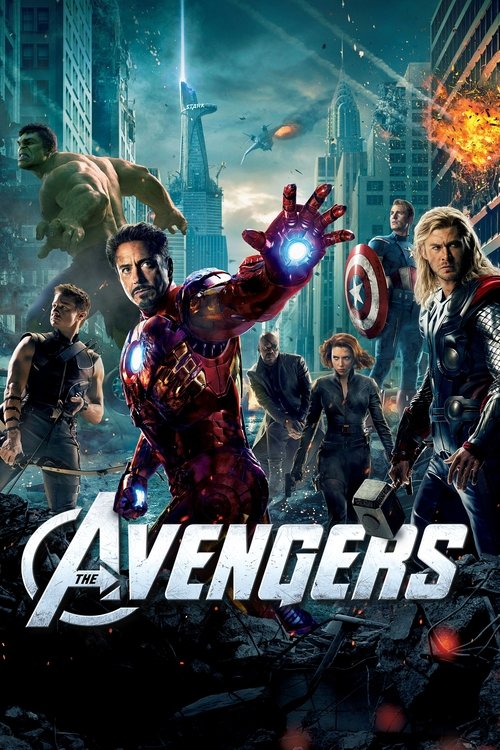
- Counter-Program: The Avengers (2012) tt0848228. Whedon’s first pass, back when the assignment was single and achievable. Watch them consecutively and the sequel’s exhaustion becomes measurable: same director, same cast, one job versus twelve.
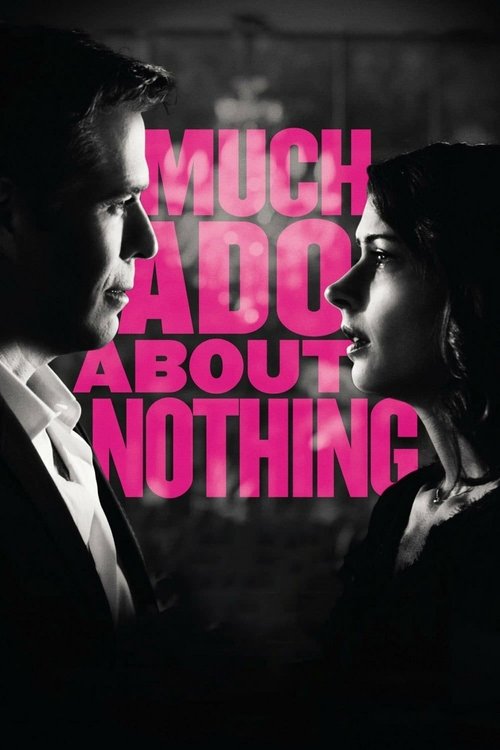
- Career Context: Much Ado About Nothing (2012) tt2094064. The micro-budget Shakespeare he shot at his own house while cutting the first Avengers: friends, wine, black and white, total freedom. It is the exact inverse of this film’s working conditions, and the two together map the whole trade he made.
LUNARA DEBRIEF
- Score:★★★
- Year:2015
- Where to Watch:
Pair It With
Three films in conversation with this one.

Theme Echo
Apocalypse Now (1979)
The other famous film whose production damage became inseparable from the finished work. Coppola's jungle and Whedon's pipeline are different furnaces, but both movies are documents of a creator being consumed by the thing he is making.

Counter-Program
The Avengers (2012)
Whedon's first pass, back when the assignment was single and achievable. Watch them consecutively and the sequel's exhaustion becomes measurable: same director, same cast, one job versus twelve.
Career Context
Much Ado About Nothing (2012)
The micro-budget Shakespeare he shot at his own house while cutting the first Avengers: friends, wine, black and white, total freedom. It is the exact inverse of this film's working conditions, and the two together map the whole trade he made.
Further Reading
More Lunara Criticism
 ★★★★½
★★★★½
Lunara Review
The Avengers — The Night the Movies Changed
The action is the reward; the movie is the meeting.
Updated July 25, 2026
 ★★★★★
★★★★★
Lunara Review
Sicario — The Land of Wolves
The law is a bedtime story; the borderlands are where somebody has to stay awake.
Updated July 25, 2026
 ★★★
★★★
Lunara Review
Ant-Man — Pleasant Is the Problem
A perfectly pleasant heist comedy standing in the footprint of the movie it replaced.
Updated July 25, 2026
 ★★★★★
★★★★★
Lunara Review
The Witch — The Best Deal Anyone Offers Her
Every human institution fails her first; the Devil just gets the last bid.
Updated July 25, 2026
 ★★★★
★★★★
Lunara Review
Resident Evil — The Worst Night of His Life
Resident Evil - Zach Cregger trades dread for velocity, and Austin Abrams gives a video game movie the most believable panic in years. Then it goes...
Updated September 22, 2026