
Lunara Review
Resident Evil — The Worst Night of His Life
Resident Evil - Zach Cregger trades dread for velocity, and Austin Abrams gives a video game movie the most believable panic in years. Then it goes all the way.

Zach Cregger trades dread for velocity and makes the rare studio horror movie with the nerve to go all the way.
Zach Cregger’s Resident Evil understands that the assignment was never fidelity. It was helplessness. Its hero, Bryan, is a medical courier sent out on a snowy night toward the edge of Raccoon City, and the film’s central discipline, held for nearly all of its brisk ninety-odd minutes, is that it never promotes him. He does not become competent. He does not find a reserve of nerve he didn’t know he had. He ends most encounters as barely equipped as he began them, and the pleasure is watching that hold while the pressure keeps doubling.
The film opens on a phone call, and the call is the movie in miniature. His girlfriend has just told him she’s pregnant, and his first instinct is to bargain: is she sure, maybe take another test, these things can have false positives. It isn’t cruelty. It’s the stammering panic of someone watching adulthood arrive early and grabbing for a margin of error. He spends the rest of the night being told, at considerable volume, that the first reading was correct.
Austin Abrams plays him as a man talking through his own catastrophe as it happens, which is what people do when they are terrified and alone. He keeps up a running commentary, counts what he has left, and when he finally gets a gun he confesses that he knows firearms from games, not from life. The movie takes him at his word. He also has a scream that belongs in a museum of honest reactions: not a trailer scream, but the noise you make when the thing you were sure was dead stands back up. I recognized it the way you recognize your own voice on a recording, with a small wince. These are a real person’s reactions, not a movie person’s, and the closest thing I can name is Michael J. Fox as Marty McFly in Back to the Future, a regular guy dropped into an impossible situation, the panic always a half-beat ahead of the plan. That is as high as I know how to praise an actor, and Abrams earns it. He’s the film’s secret weapon.
When Bryan finally has company, the comedy gets drier. Paul Walter Hauser plays an Umbrella man completely straight, reciting lines out of a 1998 cutscene with the conviction of someone who has never once suspected he’s in a video game. “I work for the Umbrella Corporation. Do you know what that is?” Every person in the theater does. When he starts explaining the work they do there, Maxine cuts him off before he can clear his throat. Kali Reis plays her commanding the wheel and severing the monologues, carrying herself like the only person in the car who already knows how this night ends. The banter plays like the worst carpool of all time, and a fumbling rifle-magazine reload becomes one of the funniest bits in the film. Later, Zach Cherry and Griffin Newman make the most of small roles. The dryness sharpens the horror rather than dulling it, because you’re laughing a second before the gore arrives.
What Cregger has built is less a haunted house than a tightening corridor, and at one stretch the image turns literal: alleys that narrow as Bryan moves through them, every solved problem revealing a smaller one behind it. The game grammar is played as character rather than fan service. Drawers get yanked open and left that way, because who has the presence of mind to shut them. A magazine gets pulled and counted again, because panic wrecks memory. A brief first-person passage puts the gun in your hands and reminds you how little you’d do with it. I do not close drawers either, and I would miss every time.
The scares are startle, not dread. The man who made Barbarian and Weapons built his name on the slow sour feeling of something wrong in the house; this is a rollercoaster, built on purpose, and a very good one. I jumped more times than I’d like to admit, and every one felt earned. The creatures, mostly digital whatever the press tour says, absorb each other and grow, and they recall the wet biological grandiosity of Ridley Scott’s Prometheus more than Carpenter. The film keeps setting Bryan’s small shape against something enormous, and the mismatch is the point. Under all of it, the score by Hays and Ryan Holladay does more of the tension work than the jump scares get credit for.
Then comes the final stretch, and Cregger swings for the fences. I won’t say where it goes. The film has laid its track carefully from that first phone call, and when the moment arrives it doesn’t flinch or leave itself a way back. For most of its runtime this is the story of a man with nothing; in its last minutes it becomes, unapologetically, a Resident Evil movie, and that turn is the thrill. Modern studio horror almost never does this. It sands the ending down and saves the big idea for the sequel. Cregger spends it all right here. It also hurts: Abrams has made Bryan so completely a person that the ending lands as tragedy as much as spectacle, and he plays that register all the way through.
This is a film that insists its hero is a person rather than a protagonist, and the insistence is the achievement. Cregger has made the first video game movie for those of us who threw the controller: the players who never made it up the stairs, who would have opened every drawer and still come up short, and who would have screamed exactly like that.
LUNARA DEBRIEF
- Score:★★★★
- Year:2026
- Where to Watch:
Pair It With
Three films in conversation with this one.

Theme Echo
Evil Dead II (1987)
One man, one terrible night, and a body of horror built on slapstick physics. Raimi's film is the grandfather of everything Cregger does best here: the screaming as a form of comedy, the dread converted into momentum, the hero whose only real skill is refusing to die. Watch them back to back and the lineage is unmistakable.

Counter-Program
Pontypool (2008)
An outbreak movie that never leaves a radio booth, where everything terrible happens off screen and arrives as sound. It is the opposite engine entirely: all dread, no rollercoaster, and proof that the outbreak genre can make you sick with what you don't see.
Career Context
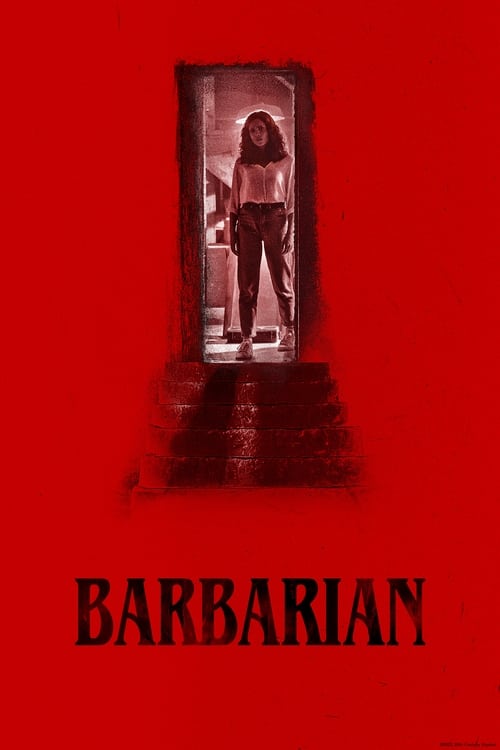
Barbarian (2022)
The obvious pull, but for a reason. Cregger's debut is a haunted house built on a rug-pull; Resident Evil is a corridor with no rug at all. Seeing the two together shows a filmmaker proving he can do dread and then deliberately choosing speed.
Further Reading
More Lunara Criticism
 ★★★★½
★★★★½
Lunara Review
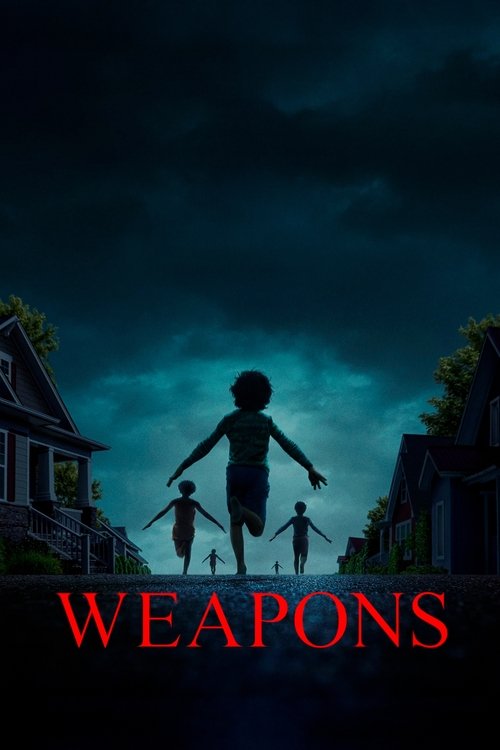
Weapons — A Boy, a Bowl of Soup
A boy, a bowl of soup, and the people who were supposed to save him. There is a moment in Zach Cregger's Weapons that does not feel staged...
Updated July 19, 2026
 ★★
★★
Lunara Review
The Dog Stars — Going Nowhere Beautifully
Ridley Scott makes the end of the world look expensive and feel like nothing at all, and outsources the only honest emotion to a very good...
Updated September 10, 2026
 ★★½
★★½
Lunara Review
One Night Only — All Invitation, No Appetite
Two movie stars with real chemistry go looking for love inside a dystopian premise the movie never once has the nerve to interrogate at all.
Updated September 10, 2026
 ★★★½
★★★½
Lunara Review
Spider-Man: Brand New Day — Never Allowed to Stay on the Block
Destin Daniel Cretton finds a real movie in Peter Parker's empty apartment, and then the franchise calendar arrives and fills every inch of it.
Updated September 10, 2026
 ★★★★
★★★★
Lunara Review
The Invite — The Predators Wear Nice Sweaters
Olivia Wilde puts four very good actors in one apartment for an evening and delivers the funniest, most purely enjoyable comedy of the year.
Updated September 10, 2026