
Lunara Review
Weapons — A Boy, a Bowl of Soup
The scariest thing in Zach Cregger's Weapons is not being hunted. It is being needed by the people who were supposed to save you.

A boy, a bowl of soup, and the people who were supposed to save him.
There is a moment in Zach Cregger’s Weapons that does not feel staged so much as remembered. It arrives quietly, without gore, without the mercy of a jump scare, without the release valve horror usually offers when the body finally has something obvious to fear. A young boy stands in a kitchen holding a bowl of soup. His parents are there, technically. They occupy the room. They breathe. They stare. But whatever made them his parents has gone somewhere he cannot follow.
That is when Weapons shows its real face.
Not in the missing children. Not in the witchcraft. Not in the nightmare geometry of a town trying to explain the impossible before it has the courage to name its own rot. The film’s deepest terror is domestic, almost unbearable in its simplicity: a child needing care from adults who have become furniture. Something evil has not entered the home from outside. It is already there, and it has learned how to sit at the table.
Cregger’s film has the shape of a mystery, the propulsion of a nightmare, and the emotional logic of an old family wound being reopened in the dark. It begins with an image that feels instantly mythic: children leaving their houses in the middle of the night, arms outstretched, running toward whatever has called them. That image is terrifying because it reverses the basic promise of childhood. Home is supposed to keep children in. Parents are supposed to hear the door. The world is supposed to become dangerous only after the threshold has been crossed. In Weapons, the threshold has already failed.
The town responds the way towns respond when grief arrives without instructions. It accuses. It gossips. It looks for a person to blame because blame is easier than helplessness. Julia Garner’s Justine becomes the face of that helplessness, a teacher left standing in the ruin of other people’s children. Parents look at her as if rage can turn absence into evidence. Cregger understands that grief does not make people noble first. It makes them desperate. It makes them stupid. It makes them cruel in the direction of whoever is still standing.
Weapons is not finally about the children who disappear. Its most painful child never gets to vanish.
Alex stays.
This is the film’s awful, beautiful inversion. While the town mourns the missing, Alex remains trapped inside a house where the adults have disappeared without leaving. His parents are alive and unreachable, bodies emptied of response after their encounter with the force that has entered the story. They sit at the table. They stare through him. They require him. They do not protect him or comfort him. They do not even grant him the clean grief of death.
Cregger turns that arrangement into the film’s deepest horror image: the parentified child as final girl, caretaker, witness, and orphan all at once. Alex does not scream his way through these scenes. Cary Christopher plays him with something more devastating than fear. He plays competence. Alex moves through the house with the terrible efficiency of a child who has learned that panic wastes energy. He feeds. He cleans. He watches. He keeps the machinery of the home alive because no one else is capable of noticing that the home has already died.
That is where the film becomes almost too sad to look at directly.
The kitchen scenes carry the charge of autobiography, or at least the unmistakable pressure of lived knowledge. Cregger is not using parental absence as a decorative metaphor. He understands the specific horror of a childhood shaped by dependency, by alcoholism, by the parasite that enters a family and rearranges every role around itself. The father does not need to become a monster in the theatrical sense. He can be worse: a need so large it turns everyone else into support staff, a sickness with a chair at the table.
In Alex, Weapons finds the cruelest shape a monster can take. It is not the thing that breaks down the door. It is the thing that makes a child pick up the spoon.
The film’s supernatural logic makes the parents’ vacancy visible, but what hurts is how ordinary the image feels beneath the genre. Addiction can make a parent vanish without removing the body. Depression can do it. Grief can do it. Narcissism can do it. The child does not receive a diagnosis. He receives a house, learns the routes through it, learns the tone of the silence, learns which needs can be postponed and which ones will punish him if ignored.
Christopher’s restraint is what makes Alex devastating. He does not sentimentalize the boy or reach for the easy performance of innocence. His face has already passed through innocence and landed somewhere harder to name. He looks like a child who has mistaken endurance for maturity because every adult around him has rewarded the mistake. When he tends to his parents, there is no grand speech, no swelling music asking the audience to applaud his strength. There is only the unbearable smallness of the task. Bowl. Spoon. Mouth. Blank stare. Again.
The heartbreak is procedural.
Cregger films these moments with a stillness that feels almost cruel. Elsewhere, Weapons whips itself into chaos, paranoia, violence, and absurdity. Here the camera holds. It lets the kitchen become a crime scene without blood. It lets the bowl of soup become the last evidence that a family lived here. Alex is not only feeding his parents. He is feeding the void where his parents used to be.
Then there is Gladys.
Amy Madigan’s performance is pitched somewhere between fairy-tale grotesque and family-system infection, and the brilliance of Gladys is that she does not feel like an outside invader so much as a name finally given to what was already poisoning the house. She is ridiculous, frightening, needy, comic, and parasitic in the same breath. She enters rooms like a bad idea that has learned posture. Her power is not merely supernatural. It is relational. She attaches. She drains. She turns other people into instruments of her appetite.
Gladys matters beyond the mechanics of plot because she literalizes the thing the film has been circling from the beginning: the dependent presence that enters a home and makes everyone else smaller. She is funny because she is absurd. She is frightening because she is recognizable. Every family ruined by one person’s bottomless need knows some version of Gladys. Maybe not the witch in the wig. Maybe not the theatrical monster. But the gravitational force, yes. The person whose hunger becomes the weather. The person everyone else learns to survive.
This is where Cregger’s comedy becomes inseparable from his grief.
The comedy in Weapons does not keep the film from becoming sad. It keeps the sadness honest. Trauma does not maintain a consistent tone for the convenience of critics. It lets horrible things become funny for half a second and then turns the light back on. It makes room for stupid jokes in rooms where nobody should be laughing. It lets memory arrive wearing the wrong clothes.
That is where Trevor Moore enters the movie, not as a footnote, but as a ghost in the wiring.
Cregger wrote Weapons in the aftermath of Moore’s death, after his best friend and longtime creative partner died in the kind of senseless accident that leaves grief without a villain. There is no clean shape for that kind of loss. No moral. No lesson. No one to defeat. Just the obscene fact of absence. The person who helped build your comic language is suddenly gone, and the jokes remain behind like furniture in a house nobody can enter the same way again.
So when the film pauses for the bizarre, almost stupidly specific image of seven hot dogs, it lands as more than absurdity. It is a secret handshake with the dead, a piece of shared comic DNA smuggled into the middle of a horror epic. The reference does not ask the audience to understand it in order for the moment to work, but for anyone who knows the history, it opens a small trapdoor beneath the gag. The joke becomes a memorial. The ridiculous becomes sacred. It is Cregger saying goodbye in the only language that could still belong to both of them.
That is why the tonal whiplash in Weapons feels personal rather than decorative. The film is not alternating between horror and comedy because Cregger cannot choose a register. It does so because grief itself is indecent. It interrupts itself. It lets you laugh at the wrong thing and then punishes you for being alive enough to laugh. One second you are staring into the void; the next, some dumb private bit comes back with such force that it hurts worse than silence.
Austin Abrams’ James, a drug-addled squatter moving through the film with the instincts of a raccoon who has seen too much, becomes the clearest expression of that tonal nerve. He treats the supernatural not as cosmic revelation but as another logistical problem in an already degraded life. His comedy works because it is not relief from the apocalypse. It is a survival tic, the part of the movie still trying to steal silverware while the universe collapses.
That should not work as well as it does. It works in part because Austin Abrams is just fantastic, finding the exact frequency where James feels both ridiculous and strangely indispensable. But it also works because Cregger understands that laughter is not the opposite of grief. Sometimes it is grief refusing to kneel. Sometimes it is the last living trace of the person who taught you how to be funny in the first place.
This is also why the film’s sprawl feels, at its best, emotionally honest. Weapons is not as clean as Barbarian, and it is not trying to be. Barbarian had the pleasure of a trapdoor. It kept changing shape because Cregger understood how to make structure feel like threat. Weapons is larger, messier, more wounded. It moves through chapters and perspectives as if circling an injury no single person can explain. Some sections hit harder than others. Some tonal shifts bruise instead of cut. But the unevenness belongs to the emotional weather of the thing. Grief is not elegant. Panic does not storyboard itself.
The film’s title sharpens around Alex. A weapon is not only a gun, a spell, a blade, or a curse. A weapon can be an illness no one names honestly. A weapon can be dependency. A weapon can be a father who turns need into weather. A weapon can be the family system that teaches a child to confuse endurance with love.
What makes Weapons so sad is that Cregger does not treat Alex as a symbol first. He treats him as a boy. That is the difference. The metaphor comes later, after the soup has gone cold, after the parents have failed to answer, after the child has done the work and nobody has thanked him because nobody in the room is capable of seeing what has been taken from him.
The missing children give the town its nightmare. Alex gives the film its soul.
By the time Weapons reaches its final movements, the horror has changed shape. The question is no longer only what took the children, or how the curse works, or whether the town can be restored to itself. The question is what restoration would even mean for a child who has already learned the truth too early. You can stop a monster. You can expose a secret. You can bring bodies home. But no spell can return the years a child spent being useful when he should have been held.
That is the wound Cregger leaves open.
Weapons earns its scares because it understands what fear is before the genre gets involved. Fear is not always pursuit. It is not always blood. Sometimes fear is the sound of a quiet house where everyone needs something from a child. Sometimes it is the knowledge that no adult is coming because the adults are the problem. Sometimes it is standing in a kitchen with soup in your hands, learning that love and obligation can look identical when nobody has taught you the difference.
The scariest thing in Weapons is not being hunted.
It is being needed by the people who were supposed to save you.
LUNARA DEBRIEF
- Score: 4.5 / 5
- Year: 2025
- Where to Watch: VOD [major platforms] | Streaming [HBO Max]
- Theme Echo: The Babadook (2014) tt2321549. The other great horror film about a child managing a parent the monster has hollowed out. Kent watches the dependency from the mother’s side, Cregger from the child’s, and each film supplies the interior the other cannot reach.
- Counter-Program: The Florida Project (2017) tt5649144. The same wound with the genre armor removed: a child orbiting a parent’s chaos, rendered in sunlight and play instead of curses. Moonee does not yet know what Alex knows, and the gap between those two children is the whole cost of time.
- Career Context: Barbarian (2022) tt15791034. Cregger’s previous film made structure itself the threat, a trapdoor picture that kept changing shape. Weapons trades that cleanness for sprawl and wound, and reading them together shows a director deciding that grief matters more to him than the trick.
LUNARA DEBRIEF
- Score:★★★★½
- Oscar Ledger1 nominations • 1 wins
- Year:2025
- Where to Watch:
Pair It With
Three films in conversation with this one.

Theme Echo
The Babadook (2014)
The other great horror film about a child managing a parent the monster has hollowed out. Kent watches the dependency from the mother's side, Cregger from the child's, and each film supplies the interior the other cannot reach.

Counter-Program
The Florida Project (2017)
The same wound with the genre armor removed: a child orbiting a parent's chaos, rendered in sunlight and play instead of curses. Moonee does not yet know what Alex knows, and the gap between those two children is the whole cost of time.
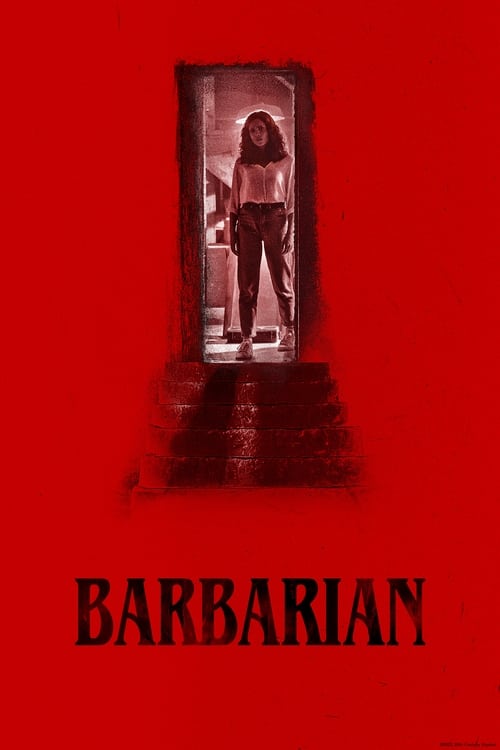
Career Context
Barbarian (2022)
Cregger's previous film made structure itself the threat, a trapdoor picture that kept changing shape. Weapons trades that cleanness for sprawl and wound, and reading them together shows a director deciding that grief matters more to him than the trick.
Further Reading
More Lunara Criticism
 ★★★½
★★★½
Lunara Review
Den of Thieves 2: Pantera — Burn the Blueprints
The first one wanted to be Heat; this one would rather be drunk, and it turns out drunk is the more honest condition.
Updated July 25, 2026
 ★★½
★★½
Lunara Review
Out of Order! — The Reunion the Movie Doesn’t Know It Has
Superman and Jimmy Olsen share frames again after nineteen years, a Broadway scene-stealer plays the farce all by herself, and the screenplay never shows up to...
Updated July 25, 2026
 ★★½
★★½
Lunara Review
The Gorge — The Distance Was the Movie
Scott Derrickson's two-hander has one of the best premises of the year and the saddest relationship to it -- a film that treats the very...
Updated July 14, 2026
 ★★★
★★★
Lunara Review
The Monkey — Laughing at the Funeral
Osgood Perkins follows the dread of Longlegs with something that looks like its opposite -- a gleeful splatter comedy about a cursed toy...
Updated August 12, 2026
 ★★★★
★★★★
Lunara Review
Eephus — The Pitch Is the Form
Carson Lund's debut spends one long afternoon watching a meaningless recreational baseball game on a field that is about to be demolished...
Updated July 14, 2026