
Lunara Review
The Monkey — Laughing at the Funeral
Osgood Perkins follows Longlegs with a gleeful splatter comedy about a cursed toy -- the same grief from the other side of the room. The question is whether a joke this good survives being told sixty times.
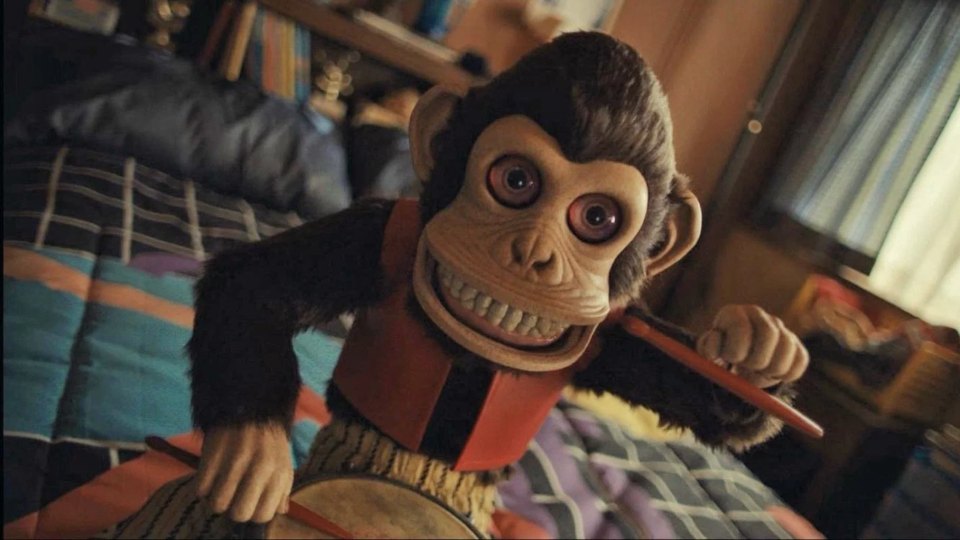
Osgood Perkins follows the dread of Longlegs with something that looks like its opposite — a gleeful splatter comedy about a cursed toy that kills at random. It is not the opposite. It is the same grief from the other side of the room, and the question is whether a joke this good can survive being told sixty times.
A wind-up monkey bangs a drum, and somewhere a person dies, hideously, arbitrarily, in a manner no one could have predicted or prevented. That is the engine of The Monkey, and Osgood Perkins runs it the way a kid runs a new toy — over and over, faster, looking for the limit. The deaths are the draw. They arrive as elaborate, escalating, Rube-Goldberg catastrophes, each one a small gory vaudeville act, each one engineered for a laugh more than a scream. If you came to this expecting the slow, sick, creeping dread of Longlegs, the film Perkins made just before, you came to the wrong window. This is splatstick. This is a cartoon about mortality. And the swerve has confused people, because it looks like a director abandoning the mode that made him interesting for a broad gross-out crowd-pleaser.
It is not that, and the misread is worth correcting, because what Perkins is actually doing here is the same thing he has always done — he has just changed the lighting. Both films are about death and family. Both are about the thing a parent leaves behind in a child. Perkins has been open, in a way that reframes the whole movie, about where this comes from: his father, Anthony Perkins, died when Oz was eighteen; his mother died on one of the planes on September 11th. He has said that everything he makes in the creative space is about family, and that death and humor are, to him, intimately linked. The Monkey is a film about a cursed inheritance that kills the people around you whether you want it to or not, made by a man who knows precisely what it is to inherit a death you did not ask for and cannot give back. The line that lands hardest in the whole picture — a character’s offhand reference to “evil stuff from my dad” — is the autobiography poking through the splatter. The monkey is the thing the father left behind. The film is about being the kid who has to keep it in a box.
Here is where I will say the one personal thing this review earns, because the film is built on a mechanism I happen to know from the inside. Sixteen years sober, I know the exact texture of the joke you crack at the worst possible moment — the laugh and the wound arriving on the same beat, not because the wound is funny but because the laugh is the only thing that keeps the wound survivable, the pressure valve that lets you stay in the room with the unbearable thing. That is the frequency Perkins is broadcasting on, and when the film is working, it is working there: in the place where grief and the gag are not opposites but the same gesture, where you laugh at the funeral precisely because the alternative is to stop functioning. The tonal whiplash that some audiences read as a flaw — the way the film lurches from genuine loss to slapstick carnage and back — is, at its best, the truest thing about it. That lurch is what grief actually feels like from the inside. The discomfort it has generated in some crowds is the discomfort of a movie that refuses to let you settle into either mourning or comedy, because the person who made it has never been allowed to settle into either one.
Theo James is the film’s secret weapon, playing twin brothers across a lifetime — one of them eaten alive by the curse, the other trying to outrun it — and he gives the two of them genuinely distinct nervous systems, a real performance underneath a movie that is mostly interested in detonating its supporting cast. He is the human ballast in a film that otherwise treats people as elaborate ways to deploy a death gag, and he keeps the thing tethered to feeling even as the bodies pile up with increasing absurdity.
And yet. Here is where I have to be honest about where this lands, because the thesis — death and the joke are the same gesture — is a brilliant idea for a movie, and a brilliant idea is not the same as a brilliant movie, and the gap between them is exactly the gap The Monkey keeps falling into. The problem is repetition without development. The film discovers its one extraordinary note in the first twenty minutes — the death-as-punchline, the grief-as-gag — and then it plays that note, and plays it, and plays it, and the law of diminishing returns is merciless. The fifth elaborate death lands less than the first. The tenth lands less than the fifth. By the back half, the gag that once carried real grief underneath it has started to feel like a machine producing gags, the wound sanded off by sheer frequency until what is left is just the splatter and the punchline and the wink. A grief comedy has to do more than insist that grief and comedy rhyme; it has to take you somewhere across its runtime, has to let the rhyme deepen, complicate, cost something more by the end than it did at the start. The Monkey mostly just repeats its thesis louder. The swing is the point, yes — but a point made forty times is not an argument, it is a tic, and the film never quite figures out the difference.
So I am divided, and I am going to be honest that I am divided, because I walked out on instinct loving this — the nerve of it, the autobiography under the gore, the sheer confidence of a filmmaker who looks at the worst thing that ever happened to him and turns it into a cartoon. On reflection, the love has cooled into respect with a real reservation attached. Perkins is one of the most genuinely interesting filmmakers working in the genre, a man making personal films inside a form that mostly resists the personal, and even his wobbles are more interesting than most directors’ triumphs. The Monkey is a wobble. It is a great twenty-minute idea stretched to feature length, a profound joke told until it stops being profound, a film that knows exactly what grief feels like and then mistakes saying so repeatedly for exploring it. The toy keeps banging the drum. Somebody keeps dying. After a while you stop laughing, and not because it got too dark — because it stopped finding anything new in the dark. The wound is real. The film just runs out of ways to keep it open.
LUNARA DEBRIEF
- Score:★★★
- Year:2025
- Where to Watch:
Pair It With
Three films in conversation with this one.
Theme Echo
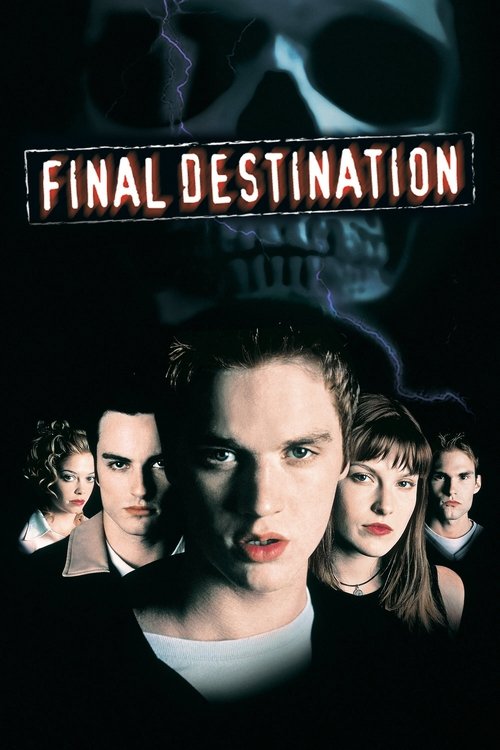
Final Destination (2000)
The death-as-elaborate-set-piece engine The Monkey runs on -- arbitrary, mechanical, gleeful mortality as spectacle; the lineage of the Rube-Goldberg kill.
Counter-Program
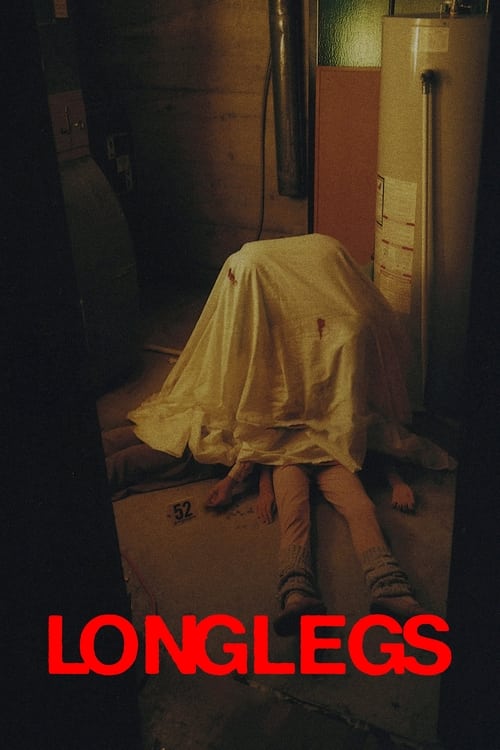
Longlegs (2024)
Perkins's dread-mode immediately prior -- the slow, sick, serious register this film looks like a swerve away from; pair them and you see one filmmaker working the same grief from opposite tonal poles, which is exactly his point.

Career Context
The Blackcoat's Daughter (2015)
Perkins's debut, where the family / grief / inherited-dread DNA first showed -- proof that the autobiography under The Monkey has been the throughline all along, splatter or no.
Further Reading
More Lunara Criticism
 ★★★½
★★★½
Lunara Review
Den of Thieves 2: Pantera — Burn the Blueprints
The first one wanted to be Heat; this one would rather be drunk, and it turns out drunk is the more honest condition.
Updated July 25, 2026
 ★★½
★★½
Lunara Review
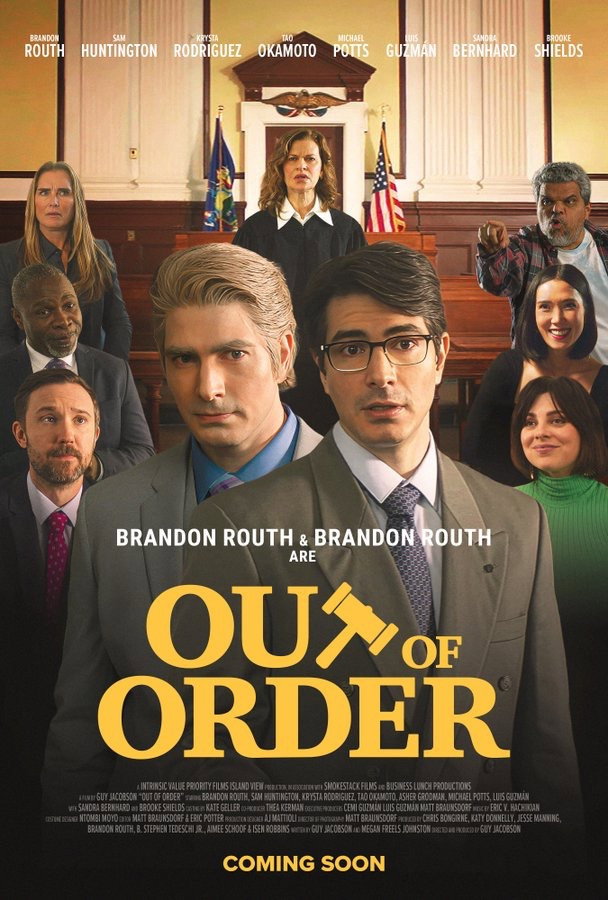
Out of Order! — The Reunion the Movie Doesn’t Know It Has
Superman and Jimmy Olsen share frames again after nineteen years, a Broadway scene-stealer plays the farce all by herself, and the screenplay never shows up to...
Updated July 25, 2026
 ★★½
★★½
Lunara Review
The Gorge — The Distance Was the Movie
Scott Derrickson's two-hander has one of the best premises of the year and the saddest relationship to it -- a film that treats the very...
Updated July 14, 2026
 ★★★★
★★★★
Lunara Review
Eephus — The Pitch Is the Form
Carson Lund's debut spends one long afternoon watching a meaningless recreational baseball game on a field that is about to be demolished...
Updated July 14, 2026
 ★★★★
★★★★
Lunara Review
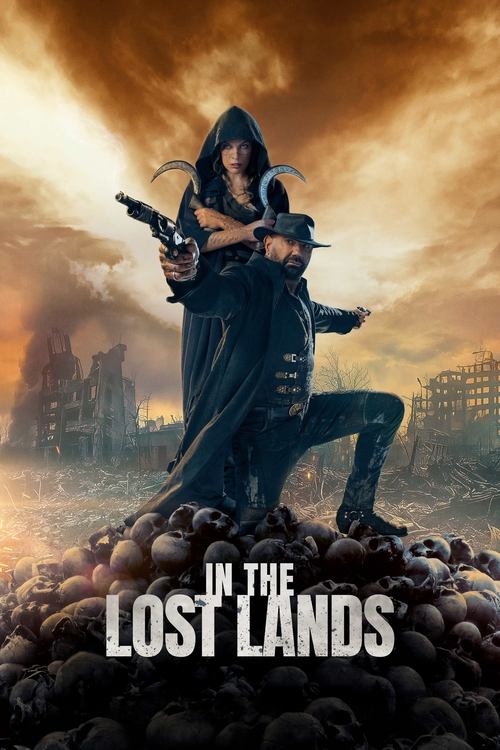
In the Lost Lands — Nobody Is Doing It Like This
Paul W.S. Anderson's dark-fantasy Western is being dismissed this week as cheap-looking digital slop. It is not slop. It is a deliberately...
Updated July 14, 2026