
Lunara Review
The Florida Project — Summer Is a Feral God
A sunburn of a movie, beautiful and stinging, set in the pastel shadow of the promise machine.

A sunburn of a movie, beautiful and stinging, set in the pastel shadow of the promise machine.
Summer is a feral god. It feeds kids Popsicles and dares adults to pretend everything is fine, and The Florida Project understands this perfectly: it is a sunburn of a movie, beautiful and stinging, set along the highway strip outside Disney World where every motel is named like a wish and smells like a compromise. Our hero is Moonee, six years old, small and volcanic, sovereign of the Magic Castle Motel by right of eminent mischief. She spits from balconies, invents crimes, laughs with all her teeth, and leads her best friends on sugar-fueled raids of the gift shop next door. Childhood here is not innocence. It is weather. It arrives, it soaks you, it moves on. And the film never once points at the frame and says poverty; it just shows you the cracked paint the exact color of cotton candy, the air conditioners coughing themselves to death, the knock-knock-knock of rent due every week like a drumline in the walls.
Halley, Moonee’s mother, is a neon flare of a person, defensive and defiant, someone who will not be domesticated by circumstance. Bria Vinaite plays her, discovered on Instagram and acting for the first time, and the rawness is the fit: Halley hustles in a dozen meanings of the word, sells knockoff perfume outside nicer hotels, runs scams that are not clever so much as necessary. It would be easy to judge her, and the movie declines, every single time the opening appears. Sean Baker’s camera sits at the height of a kid and lets the adults be tall weather systems, full of thunder and short on forecasts, so you absorb the morality of this world the way Moonee does: by osmosis. Not a code. A coping mechanism.
And in the middle of the carnival, because this is still a carnival even if the prizes are pawned, there is Bobby. Willem Dafoe, in the performance that finally sent him back to the Oscars, plays the motel manager as a man who has a key to everything and none of the answers. He swaps light bulbs, evicts mold, chases wandering cranes off the walkway, and in the film’s most quietly gallant sequence he spots a predator circling the kids and walks him off the property with a calm that has clearly been rehearsed by a lifetime of handling worse. Dafoe gives the performance no display case. It is all use. His eyes keep paying attention even when he is pretending not to, and the film is exact about what he is: not a savior, a caretaker. The difference matters, because saviors fix things and Bobby can only maintain them, and the gap between those two verbs is where the whole movie lives. I teared up watching the man fix a fuse. He is waging an intimate war against entropy with a screwdriver, and he knows he is losing.
Here is where I confess: I grew up orbiting places like this. Not the Magic Castle itself, but its spiritual cousins, the transient buildings where people live on the wrong side of a weekly lease and the right side of their wits. The smell is always the same, freon and old sugar. The adults are triage nurses of their own lives. The kids are sovereign the way only kids can be when the grown-ups are busy bartering with survival, and watching Moonee lead her crew across vacant lots and into abandoned condos, cathedrals of somebody else’s failed dream, gave me the kind of joy that scares you, because it is pure and because you know the bill is coming.
Baker shoots on 35mm, with Alexis Zabe finding frames in colors the corporation up the road tried to patent, purples and pinks engineered to sell fantasy, except the film will not accept the fantasy’s terms. The compositions keep locating dignity in the small and the battered: a flip-flop drying on a windowsill like a proud flag, a breakfast of plain bread stacked with ceremony, kids passing a single soft-serve cone around like communion. The kids themselves are anarchists with impeccable timing. They weaponize boredom, convert a derelict building into a kingdom and a diner table into a banquet hall; their insults are poetry and their alliances are brutal and forgiving in the same breath. Brooklynn Prince does thing after thing you cannot teach, her face opening like a window mid-scream-laugh, her eyes tracking adults the way adults track weather apps. You can watch the data gathering. You can watch a future being planned badly, then better, then badly again.
And Halley, God, Halley. You want her to be better, then you feel dirty for wanting it, then you watch her make beauty out of nothing and wonder whether better is just a classist synonym for more convenient. She loves Moonee real, loud, and dumb, reckless in a way that reads as freedom from the balcony and as danger from the motel office. When the system finally arrives, and it always arrives, polite as a clipboard, she does not become a villain. She becomes small. That is the cruelty the film has been saving: institutions do not need fangs when they have forms.
There is an afternoon when rain detonates the parking lot into a party, kids shrieking under the downpour, thunder rolling like a drum solo, adults leaning out of doorways with that precarious smile that says, for five minutes, we all get to be alive without paying for it. The film lives in those minutes. It counts them, stacks them, builds a house out of them, and then admits that houses like that do not pass inspection. Joy as resistance; consequence as gravity. Both true, neither blinking.
The ending is the pivot that sends people into boxing matches with themselves, so state the objection at full strength: the film has been realist to the point of bruise for 111 minutes, then breaks its own contract, snatching up an iPhone and sprinting two kids through the gates toward the castle in a texture change you can feel on your skin. Call it a cheat if you need to. I call it mercy. The movie lets imagination do the one thing public policy will not, carry two little girls across a line the adult world keeps moving, and whether you read the sprint as fantasy, documentary audacity, or prayer, it lands with the soft thud of a heart surrendering to hope. It is not a solution. It is a last free refill.
What Baker builds here deserves its own file heading: tenderness without permission. No violins, no speeches, no savior arcs, no villain mustaches, just a lattice of choices, systemic and intimate, with the flashbang of childhood ricocheting through it. The film asks the adult in you to stop auditioning for judge and volunteer as witness; the child in you already knows what to do, which is make a kingdom out of whatever the adults forgot to lock. A motel-side masterpiece, sticky-fingered, sun-blasted, and holy. Bring quarters for the laundry. Bring patience for the world. Bring your softest part; it is the only ticket that works.
LUNARA DEBRIEF
- Score: 5 / 5
- Year: 2017
- Where to Watch: VOD (all major platforms) | Blu-ray (A24)
- Theme Echo: Moonlight (2016) tt4975722. The other American masterpiece about a childhood conducted at the economy’s edge, and the other one where the truest parent on offer is a stranger with no obligation: Juan teaching a boy to float is Bobby walking the fence line, love practiced by people the paperwork will never credit.
- Counter-Program: Mary Poppins (1964) tt0058331. The corporate fantasy of the magical caretaker who descends, repairs the family, and leaves. Bobby is the Poppins these kids actually get, a man with a master key and no magic, and the double bill shows exactly what the umbrella was covering.
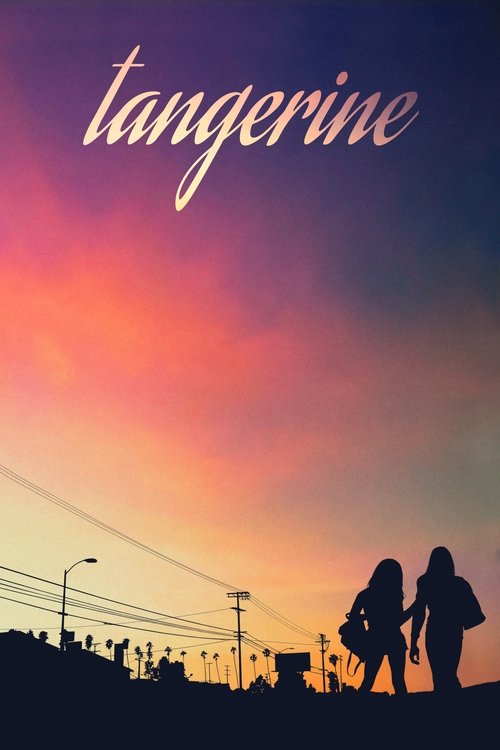
- Career Context: Tangerine (2015) tt3824458. Baker’s previous film, shot on iPhones across one Hollywood Christmas Eve: same method, same conviction that the people an economy treats as noise are the music. The Florida Project is that conviction handed 35mm, and the iPhone saved for the one moment realism cannot reach.
LUNARA DEBRIEF
- Score:★★★★★
- Oscar Ledger1 nominations • 0 wins
- Year:2017
- Where to Watch:DigitalFind Digital OptionsAvailabilityBlu-ray (A24)
Pair It With
Three films in conversation with this one.

Theme Echo
Moonlight (2016)
The other American masterpiece about a childhood conducted at the economy's edge, and the other one where the truest parent on offer is a stranger with no obligation: Juan teaching a boy to float is Bobby walking the fence line, love practiced by people the paperwork will never credit.

Counter-Program
Mary Poppins (1964)
The corporate fantasy of the magical caretaker who descends, repairs the family, and leaves. Bobby is the Poppins these kids actually get, a man with a master key and no magic, and the double bill shows exactly what the umbrella was covering.
Career Context
Tangerine (2015)
Baker's previous film, shot on iPhones across one Hollywood Christmas Eve: same method, same conviction that the people an economy treats as noise are the music. The Florida Project is that conviction handed 35mm, and the iPhone saved for the one moment realism cannot reach.
Further Reading
More Lunara Criticism
 ★★★
★★★
Lunara Review
Thor: Ragnarok — Laughing a Beat Too Long
Waititi rescues the franchise's dullest god by burning his world down, then laughs a beat too long at the flames.
Updated July 25, 2026
 ★★★½
★★★½
Lunara Review
Spider-Man: Homecoming — Smallness Is the Point
The most dangerous scene Marvel ever staged is a dad driving two kids to a school dance.
Updated July 25, 2026
 ★★★★★
★★★★★
Lunara Review
Phantom Thread — The Fine Print of the Vow
Nine years on, Anderson's couture romance stands as the truest film we have about long coupledom: love as a treaty, negotiated in a private language, signed...
Updated July 25, 2026
 ★★★★
★★★★
Lunara Review
Guardians of the Galaxy Vol. 2 — Your Father Wasn’t Your Daddy
The monster fight plays out of focus behind a dancing tree, and that is the whole movie announcing itself.
Updated July 25, 2026
 ★★★★
★★★★
Lunara Review
Good Time — The Rescue Is the Wreck
One night, one brother trying to save the other, and every rescue leaves a bigger hole than the emergency it answered.
Updated July 25, 2026