
Lunara Review
Good Time — The Rescue Is the Wreck
One night, one brother trying to save the other, and every rescue leaves a bigger hole than the emergency it answered.

One night, one brother trying to save the other, and every rescue leaves a bigger hole than the emergency it answered.
Good Time opens with a face. Nick Nikas sits in a therapist’s office, struggling to answer questions about his family, his feelings, the texture of his interior life. He has a developmental disability that makes communication difficult, and the camera holds him in uncomfortable close-up while a stranger pries at his psyche, one gentle question at a time. Then his brother Connie bursts through the door, pulls Nick out of the session, and the film detonates. What follows is one of the great nocturnal crime odysseys in American movies, a picture that moves like a hunted animal and leaves you gasping on the far side of its 101 minutes.
Robert Pattinson plays Connie with feral intelligence, and the performance runs on a precise contradiction: Connie is tactically brilliant in the moment and strategically disastrous over any timeline longer than an hour. He can talk his way into anywhere, convince almost anyone of almost anything, improvise a solution to a problem that would paralyze most people. But every improvisation creates a new problem, and the new problem demands a new improvisation, and the night spirals into a doom loop he is too busy surviving to recognize. He robs a bank with Nick to fund a fantasy, an escape, a farm somewhere, a life where nobody gets to evaluate his brother ever again. It sounds like delusion because it is delusion. What makes it lethal is that Connie believes it completely, and belief that complete does not read as a lie to the people who love the believer. The robbery goes wrong, Nick gets arrested, and Connie spends the rest of the film trying to pull him out of Rikers by any handle he can grab: a bail bondsman, a girlfriend’s mother’s credit card, a wounded man mistaken for his brother, a bottle of amusement-park acid worth enough to fix everything. Every handle comes off in his hand.
Pattinson got here by mail. He saw a still from the Safdies’ Heaven Knows What, wrote to the brothers cold, and asked to be in whatever came next; Good Time is what came next, and it announced the actor he had been quietly building toward through years of post-Twilight art films. His Connie is never not calculating, never not working an angle, and the film keeps a ledger of what the angles cost. He talks a sixteen-year-old girl into felonies with a boyfriend’s voice. He lets a security guard take the beating meant for him. He walks away from a man convulsing on a floor because the man has stopped being useful. Connie registers none of these as moral events. They are survival tactics, executed at a horizon of ten minutes, and the wreckage accumulating behind him never once enters the mirror.
The Safdies shoot the night as a neon fever, sodium-vapor orange and fluorescent green, Sean Price Williams’s long lenses pressing faces against the film’s surface until intimacy and surveillance become the same shot. This is a New York of desperate margins, filmed in working bodegas and actual emergency rooms and a real amusement park in the dead of winter, a city of check-cashing windows and predatory landlords and hospitals that process bodies rather than heal them. Daniel Lopatin’s score pulses through it all like a second nervous system, synths beautiful and slightly wrong, melodies that curdle into anxiety. The music never tells you how to feel. It tells you something is wrong and lets you find out what, and it carried enough of the film’s meaning to take the soundtrack prize at Cannes, where the picture premiered in competition. When Iggy Pop’s voice finally arrives over the ending, the film has earned the hymn.
Benny Safdie’s Nick is the movie’s anchor, played with heartbreaking specificity and zero symbolism. Nick wants to help his brother. Nick does not entirely understand what is happening. Nick gets hurt because Connie’s plans account for Connie’s idea of Nick and never for Nick. Around them the night fills with faces that feel found rather than cast: Jennifer Jason Leigh as a girlfriend too depleted to see she is being spent, Barkhad Abdi as a guard in the wrong place, Buddy Duress, an actual Rikers alum, as Ray, a parolee whose bad decisions somehow outrun even Connie’s. Every one of them has a whole life happening outside the frame, and Connie will damage it without noticing.
Name the cost of all this velocity, because there is one. A film locked to Connie’s ten-minute horizon ends up spending its bystanders the way he does: Leigh’s Corey is a sketch of depletion in two scenes, and the teenager Crystal simply vanishes from the movie the moment she stops being useful to it. You can defend the design, since Connie cannot see these people and the camera is Connie’s pulse. But the film catches him doing it without quite catching itself doing it, and a sliver of the night’s tragedy stays off the books. Uncut Gems would close that gap two years later by making the collateral damage look back. Here it just recedes in the mirror.
What stays is the question the last cut asks. The film ends by crossing between Connie in custody and Nick in a group session, catching a ball, crossing a room, finally receiving exactly the institutional help Connie burned the city down to save him from. Is this a better life? Is it what Nick would choose? The movie holds the question open, and the openness is its most uncomfortable gift. Good Time knows that you can love someone with your whole chest and still be the worst thing that keeps happening to them, and it has the nerve to suggest that the kindest act left, after a night like this, is to stop trying to save the person you love. The Safdies would get bigger. They never got purer.
LUNARA DEBRIEF
- Score: 4 / 5
- Year: 2017
- Where to Watch: VOD (all major platforms) | Blu-ray (A24)
- Theme Echo: Dog Day Afternoon (1975) tt0072890. The other bank robbery committed as an act of love, and the other movie that understands how fast devotion turns into hostage-taking. Sonny and Connie are forty years apart and share one delusion: that the score can buy somebody a life.
- Counter-Program: Rain Man (1988) tt0095953. The brother picture where the road heals and the disabled sibling redeems the hustler. Watch it against Good Time to see exactly which comforts the Safdies decline to sell, and what the genre looks like with the sugar left in.
- Career Context: Uncut Gems (2019) tt5727208. The refinement of everything prototyped here: the pressure, the self-authored catastrophe, the man who mistakes momentum for a plan. Howard wants the win where Connie wants the escape, and the two films together are the Safdies’ full case about American wanting.
LUNARA DEBRIEF
- Score:★★★★
- Year:2017
- Where to Watch:DigitalFind Digital OptionsAvailabilityBlu-ray (A24)
Pair It With
Three films in conversation with this one.

Theme Echo
Dog Day Afternoon (1975)
The other bank robbery committed as an act of love, and the other movie that understands how fast devotion turns into hostage-taking. Sonny and Connie are forty years apart and share one delusion: that the score can buy somebody a life.

Counter-Program
Rain Man (1988)
The brother picture where the road heals and the disabled sibling redeems the hustler. Watch it against Good Time to see exactly which comforts the Safdies decline to sell, and what the genre looks like with the sugar left in.

Career Context
Uncut Gems (2019)
The refinement of everything prototyped here: the pressure, the self-authored catastrophe, the man who mistakes momentum for a plan. Howard wants the win where Connie wants the escape, and the two films together are the Safdies' full case about American wanting.
Further Reading
More Lunara Criticism
 ★★★★★
★★★★★
Lunara Review
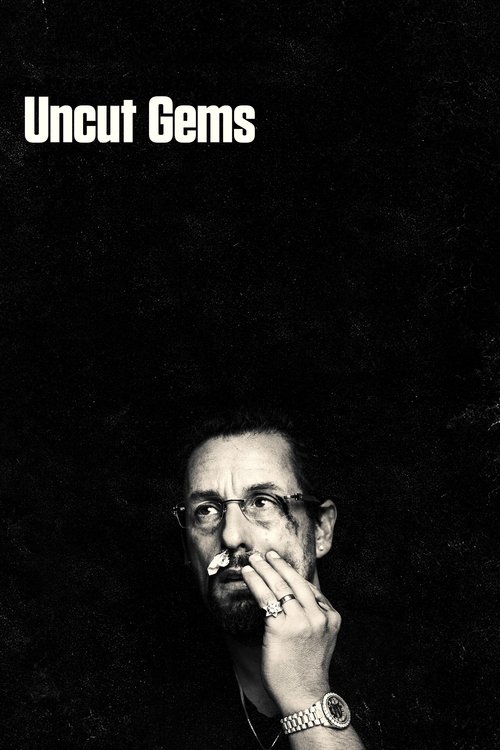
Uncut Gems — The Win That Was Always the Bullet
Adam Sandler plays a man allergic to his own good luck, and the movie gives you his pulse instead of a plot.
Updated July 25, 2026
 ★★★
★★★
Lunara Review
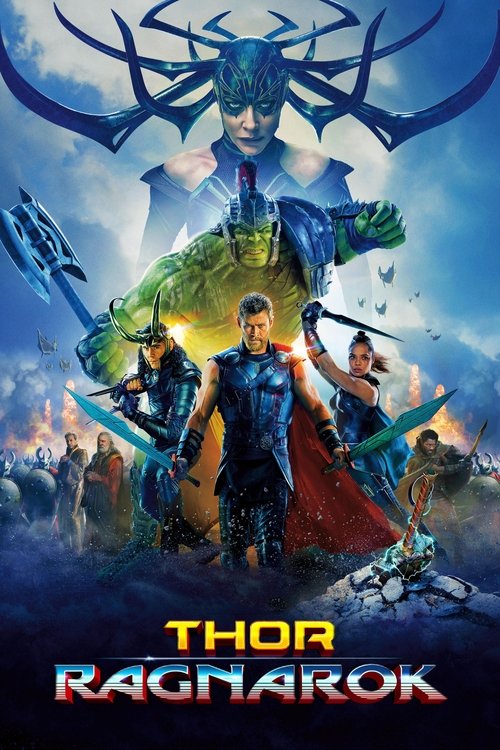
Thor: Ragnarok — Laughing a Beat Too Long
Waititi rescues the franchise's dullest god by burning his world down, then laughs a beat too long at the flames.
Updated July 25, 2026
 ★★★★★
★★★★★
Lunara Review
The Florida Project — Summer Is a Feral God
A sunburn of a movie, beautiful and stinging, set in the pastel shadow of the promise machine.
Updated July 25, 2026
 ★★★½
★★★½
Lunara Review
Spider-Man: Homecoming — Smallness Is the Point
The most dangerous scene Marvel ever staged is a dad driving two kids to a school dance.
Updated July 25, 2026
 ★★★★★
★★★★★
Lunara Review
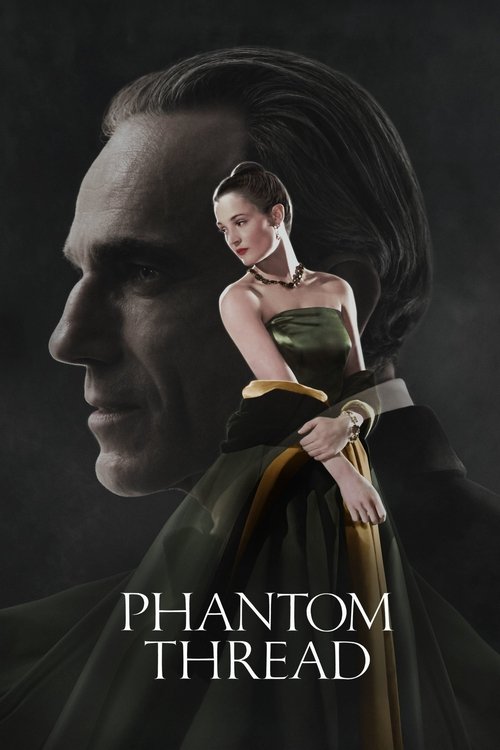
Phantom Thread — The Fine Print of the Vow
Nine years on, Anderson's couture romance stands as the truest film we have about long coupledom: love as a treaty, negotiated in a private language, signed...
Updated July 25, 2026