
Lunara Review
The Witch — The Best Deal Anyone Offers Her
Every human institution fails her first; the Devil just gets the last bid.

Every human institution fails her first; the Devil just gets the last bid.
Robert Eggers’ The Witch is not a horror film about a family destroyed by evil so much as a horror film about a family that makes evil feel like the only workable plan. They walk out of the settlement with God on their lips, and almost immediately they begin looking for someone to blame. In a story this old, it is the daughter who draws the short straw.
What matters is how patiently, and how completely, Eggers builds the Puritan mind from the inside. He has called the film “an inherited nightmare — a Puritan’s nightmare that you could upload into the mind’s eye,” and you can feel that inheritance in the language and the texture of the place. The dialogue borrows from the pamphlets and sermons that fed the Salem panic, and the authenticity carries a real cost, worth naming plainly: it takes the ear a while to tune, whole lines land only in retrospect, and a first viewing can lose the family’s exact accusations at the very moment the accusations are the plot. Eggers accepts that price on purpose, and once the ear tunes, the language becomes part of the spell. The homestead looks and sounds like it was raised by people who knew how to make a roof, not a set. The dread does not come from modern irony or winking genre tricks. It comes from watching belief turn into a trap: if you are certain the Devil is real, the world starts arranging itself to prove you right, and sooner or later you will find him.
Ralph Ineson’s William is the film’s slow-motion collapse in human form, and it lands because Ineson brings sincerity where a lesser film would reach for caricature. British viewers knew him as Finchy on the UK Office: boorish, loud, proudly oblivious. Fantasy audiences clocked him as a background predator on Game of Thrones. Here, Eggers asks him to do something harder: play a man whose conviction, real and trembling and absolute, is the instrument that ruins his family. Ineson has one of those voices you feel in your ribcage. It ought to sound like authority, and that is the problem. William believes exile will save his family; he believes prayer is leverage; he believes hard times are proof that God is paying attention. Ineson never plays those ideas as a pose. He plays them as a man’s whole spine. That is why William is frightening: not because he is lying, but because he is certain, and certainty, in this household, becomes a kind of wrecking ball.
Watch Ineson in the scene where he fails to split the log, a small domestic moment that contains the entire film. His body strains against the wood. The axe will not bite. He tries again. Fails again. His jaw sets, his breathing thickens, and shame moves through his frame like weather. William’s masculinity is defined by physical competence under God’s grace, and the wood will not cooperate. It is not an inconvenience; it feels like a verdict. If God favors him, the axe splits the wood. The wood does not split. Ineson lets the implication settle into his body without speaking it, and the silence is more devastating than any confession.
Anya Taylor-Joy’s Thomasin is the performance that announced a star: her first significant role, and the template everything since, from Split to The Queen’s Gambit to Furiosa, still echoes. What is striking on rewatch is how complete the work already is. Taylor-Joy plays Thomasin as a girl with intelligence and competence and nowhere sanctioned to put them, whose body becomes communal evidence simply because it is maturing, and whose face carries the weary knowledge that blame is coming whether she earns it or not. Her body language does half the storytelling. Early on, Thomasin moves like a kid who is used to working: shoulders back, hands busy, trying to be useful. As suspicion thickens, she folds inward. Her shoulders round. Her hands go still. It is the quiet, ordinary way people shrink when they realize they are being watched for evidence. The family needs a place to put its fear, and Thomasin, older, female, visibly changing, becomes the easiest place to store it.
The prayer scene, Katherine weeping, William rigid, the children’s eyes tracking Thomasin, is the film’s cruelest transaction. Thomasin kneels, and the camera holds on her face while her mother’s grief curdles into accusation. Taylor-Joy keeps her expression balanced on the edge between devotion and dread, and the balance is the character’s entire predicament: she must perform faith convincingly enough to survive while knowing that no performance will ever be sufficient, because the accusation is not about what she has done. It is about what she is.
Kate Dickie’s Katherine is often treated as the film’s shrieking engine, but she is doing something sadder and more recognizable. Dickie plays grief as a force that has to go somewhere. When the baby vanishes, Katherine cannot live with a random universe; her faith will not allow it. If God is good, then someone must be guilty. And in a family with a frightened mother and a proud father, the guilt travels downhill until it lands on Thomasin. Dickie’s vocal work shifts across the film from prayer to prosecution. Early scenes give Katherine a cadence of supplication, the rhythm of a woman addressing God on her knees. By the final act, the same voice has hardened into judicial certainty, the prayerful cadence repurposed for condemnation. The transformation is seamless because the mechanism is the same: Katherine is always appealing to authority. The only thing that changes is what she is asking for. First mercy. Then blood.
The film’s moral question narrows to the one Black Phillip asks in a whisper: “Wouldst thou like to live deliciously?” It is not poetic. It is practical. “Wouldst thou like the taste of butter? A pretty dress?” Food, warmth, a little softness: things Puritan life treats as suspect, and Thomasin barely gets to imagine. The temptation is almost absurd in its modesty, until you remember what her days look like: hunger, cold, chores, and a home that keeps turning its fear into accusation. The Devil offers butter. At the very least, he offers a choice.
The scene hits because of what comes before it. By the time Black Phillip speaks, William is dead in the mud with a goat’s horn in his ribs, Katherine has tried to strangle her daughter, and the infant brother was turned into flying ointment before the opening credits were cold. Every human institution on offer, family, church, community, has failed Thomasin, and several of them have actively sacrificed her to preserve their story about God. Signing the book is not corruption so much as departure: an exit from a system that was always going to kill her and call it providence.
Eggers builds this forest the way a historian builds a footnote: from sources, textures, and hard choices about what to leave in the dark. He shot in Kiosk, an abandoned lumber town in Northern Ontario so remote he described the nearest settlement as making “New Hampshire look like a metropolis.” Jarin Blaschke’s cinematography uses only natural light and flame, producing an image that looks less like cinema than like a memory of a world before electricity: dim, close, suffocating. The darkness at the edge of every frame is not a stylistic choice. It is the Puritan unconscious made visible. What lives in the trees is whatever the family cannot admit about itself. Mark Korven’s score replaces melody with friction, strings bowed past their breaking point, vocal textures that sit between chanting and screaming, and the sound design treats the forest as an acoustic body, breathing and creaking around the family’s prayers. The effect is claustrophobia without walls: the wilderness both infinite and intimate, pressing against the homestead like a living thing waiting to be invited in. The Puritans brought their nightmare with them across the Atlantic, and the forest simply gave it a home.
Thomasin’s ending is an ascent the Puritan world can only describe as damnation. She walks into the forest at dawn, naked, stripped of every garment that world put on her: the modest dress, the prayer cap, the posture of obedience. She reaches the clearing where the coven circles a fire. The witches are laughing. Thomasin joins them, and as the flames rise, her body lifts from the ground. She rises above the trees. She rises above the smoke. She is laughing. Eggers holds on the laughter long enough for it to register as something the movie has been starving us of. There is no precedent for it in the previous ninety minutes, because there has not been room for it. Thomasin’s freedom costs her everything she has been told matters: family, God, even the idea of her own soul as her parents understand it. The film does not pretend that is painless. It just suggests that the other option was worse. If the ending feels like a plunge, it is because we are still standing where the Puritans stand. For Thomasin, it is the first time the air belongs to her.
LUNARA DEBRIEF
- Score: 5 / 5
- Year: 2015
- Where to Watch: Streaming (availability varies) | Blu-ray (A24)
- Theme Echo: First Reformed (2017) tt6053438. Two portraits of belief that turns inward: sincere, punishing, and finally indistinguishable from despair. Toller and William are the same man, two centuries and one collar apart.
- Counter-Program: Midsommar (2019) tt8772262. Another folk-horror escape hatch, with the polarity reversed: Aster’s new family is the cage wearing flowers, while Eggers’ coven is the exit wearing horns. Watching them argue is the whole subgenre in two evenings.
- Career Context: The Lighthouse (2019) tt7984734. Eggers distills the same obsessions, faith, isolation, self-destruction, down to two men and a tower, and proves the period ear was never a gimmick. The Witch is the thesis; The Lighthouse is the pressure test.
LUNARA DEBRIEF
- Score:★★★★★
- Year:2015
- Where to Watch:AvailabilityStreaming (availability varies)AvailabilityBlu-ray (A24)
Pair It With
Three films in conversation with this one.

Theme Echo
First Reformed (2017)
Two portraits of belief that turns inward: sincere, punishing, and finally indistinguishable from despair. Toller and William are the same man, two centuries and one collar apart.

Counter-Program
Midsommar (2019)
Another folk-horror escape hatch, with the polarity reversed: Aster's new family is the cage wearing flowers, while Eggers' coven is the exit wearing horns. Watching them argue is the whole subgenre in two evenings.

Career Context
The Lighthouse (2019)
Eggers distills the same obsessions, faith, isolation, self-destruction, down to two men and a tower, and proves the period ear was never a gimmick. The Witch is the thesis; The Lighthouse is the pressure test.
Further Reading
More Lunara Criticism
 ★★★★★
★★★★★
Lunara Review
Sicario — The Land of Wolves
The law is a bedtime story; the borderlands are where somebody has to stay awake.
Updated July 25, 2026
 ★★★
★★★
Lunara Review
Avengers: Age of Ultron — The Franchise Wins
The blockbuster whose true subject is the thing that was crushing it while it was being made.
Updated July 25, 2026
 ★★★
★★★
Lunara Review
Ant-Man — Pleasant Is the Problem
A perfectly pleasant heist comedy standing in the footprint of the movie it replaced.
Updated July 25, 2026
 ★★★★
★★★★
Lunara Review
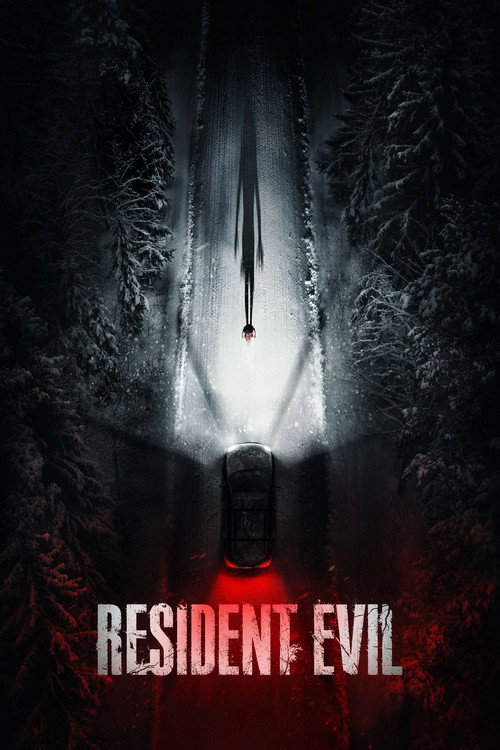
Resident Evil — The Worst Night of His Life
Resident Evil - Zach Cregger trades dread for velocity, and Austin Abrams gives a video game movie the most believable panic in years. Then it goes...
Updated September 22, 2026
 ★★
★★
Lunara Review
The Dog Stars — Going Nowhere Beautifully
Ridley Scott makes the end of the world look expensive and feel like nothing at all, and outsources the only honest emotion to a very good...
Updated September 10, 2026