
Lunara Review
The Dog Stars — Going Nowhere Beautifully
Ridley Scott makes the end of the world look expensive and feel like nothing at all, and outsources the only honest emotion to a very good dog.

Ridley Scott makes the end of the world look expensive and feel like nothing at all.
There is a shot early in The Dog Stars that tells you everything, and it is a beautiful shot, which is the problem. A 1956 Cessna crosses an emptied Colorado at golden hour, the grass moving in sheets below, the light doing that late-summer thing where the whole world seems lit from inside. It is postcard-perfect. It is also weightless. Nothing in the frame costs anything, fears anything, wants anything. Nine years after a flu ended civilization, a man flies the perimeter of his dead world, and the film photographs his grief the way a resort photographs its beaches. You keep waiting for the image to press down. It never does.
The reach here is visible, and it is not a stupid one. Peter Heller’s novel is a gentle apocalypse, a book about a man who survives the end of everything and insists on still loving things: his dog, his plane, trout streams, the memory of his wife. A version of this film that committed to that gentleness, that made stillness an act of defiance rather than a screensaver default, could have been late-period grace, the old maximalist finally sitting quietly with a garden and a grave. The film keeps gesturing at that movie. Jacob Elordi, who is genuinely good here, plays Hig as pure watchfulness, a big body trying to take up less room in the world out of respect for the dead. He listens. He grieves at the correct human speed. Whenever the film simply lets him occupy a frame with the dog, something true flickers.
The flickers never catch. What surrounds Elordi is a machine running at idle. Scott has always been an engineer of worlds, and the engineering is present and correct: the airfield fortified just so, the pantry economics worked out, the raider attacks arriving on schedule like weather. But engineering without appetite is just inventory. Every survival beat plays like a beat, something the screenplay knows an apocalypse movie contains rather than something these particular people would do. Josh Brolin’s Bangley, the paranoid gun-priest sharing Hig’s airfield, is a genuinely great character actor sealed inside a concept, all doctrine and no danger. And when the story lifts off toward a mystery radio transmission and finds Margaret Qualley on the other side of the mountains, the film swerves into a tenderness it has done nothing to fund. The romance is not bad. It is unbought. Two attractive survivors are placed in proximity and the movie assumes the end of the world will do the emotional labor.
Some of the hollowness has a paper trail. The part was built for a different actor, a different physicality, and the seams of the recasting are visible in a role that keeps asking Elordi to be smaller than the camera finds him. And this Colorado was manufactured an ocean away, on Italian soundstages and Adriatic hillsides, which would not matter at all, movies are lies told well, except that the film’s whole case rests on the sanctity of a particular landscape, and what we get is a gorgeous approximation of a place instead of the ache of one. A story about the last man who knows these specific rivers should not feel location-scouted. It is a small dishonesty that compounds, frame by frame, into the general anesthesia.
The dog is the tell. Jasper carries more interior life than any human in the picture, and the film knows it, cutting to him the way a struggling comic cuts to the bit that killed last night. Everything the movie wants us to feel about loss, loyalty, and the stubbornness of love has been outsourced to an animal performance, because an animal cannot be flattened by this screenplay. When the film finally asks the dog to break your heart, it works, and the working is almost offensive, because it proves everything downstream of the camera still works perfectly well. The failure was never capability. It was conviction.
That is the thing about late Scott that this film makes unavoidable. The man shoots more than any director of his generation, and somewhere in the volume the difference between making a film and completing one has dissolved. The Dog Stars is completed to the highest possible standard. It is graded, scored, dressed, and paced by people at the top of their craft, and it moves through its two hours with the frictionless competence of a film that was never once in trouble, never once alive on the table. An apocalypse story is a proposition about what matters when everything else is subtracted. This one subtracts everything and finds, underneath, a location package.
I wanted the elegy. I would have taken the pulp. What I got was a handsome idle, a movie about cherishing a diminished world that cannot be bothered to cherish its own minutes. The most honest emotion in it belongs to an animal, the most honest performance to a young actor holding still inside a film that mistakes his stillness for its own. Somewhere over Colorado that little plane is still circling, burning fuel nobody is making anymore, going nowhere beautifully.
LUNARA DEBRIEF
- Score:★★
- Year:2026
- Where to Watch:
Pair It With
Three films in conversation with this one.
Theme Echo
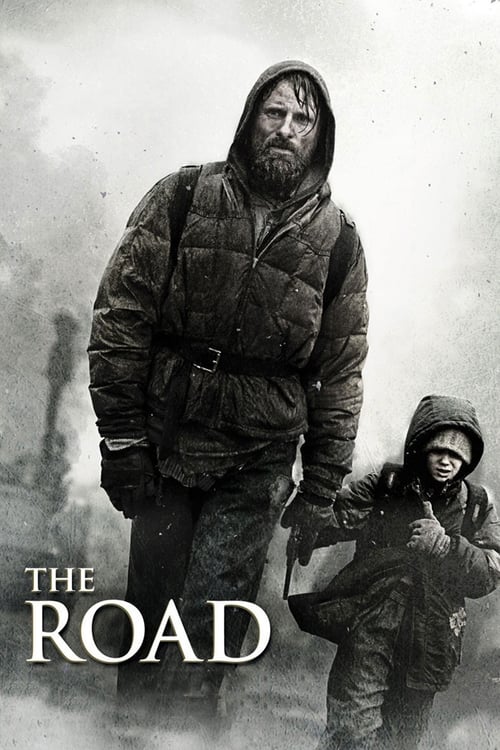
The Road (2009)
The same subtraction with the opposite temperature: gray, starved, and alive to the cost of every mile. Its bleakness is everything Dog Stars trades for handsomeness, and the trade explains both films.

Counter-Program
A Quiet Place (2018)
Proof that a family-scale apocalypse can be tender and still have a pulse: every quiet minute is purchased with dread. Gentleness as tension, not sedation.

Career Context
The Martian (2015)
Scott running the same survival arithmetic with appetite: process as joy, competence as character. Watch it after this one and you can measure exactly what went missing, because it is not skill.
Further Reading
More Lunara Criticism
 ★★½
★★½
Lunara Review
One Night Only — All Invitation, No Appetite
Two movie stars with real chemistry go looking for love inside a dystopian premise the movie never once has the nerve to interrogate at all.
Updated September 10, 2026
 ★★★½
★★★½
Lunara Review
Spider-Man: Brand New Day — Never Allowed to Stay on the Block
Destin Daniel Cretton finds a real movie in Peter Parker's empty apartment, and then the franchise calendar arrives and fills every inch of it.
Updated September 10, 2026
 ★★★★
★★★★
Lunara Review
The Invite — The Predators Wear Nice Sweaters
Olivia Wilde puts four very good actors in one apartment for an evening and delivers the funniest, most purely enjoyable comedy of the year.
Updated September 10, 2026
 ★★★★½
★★★★½
Lunara Review
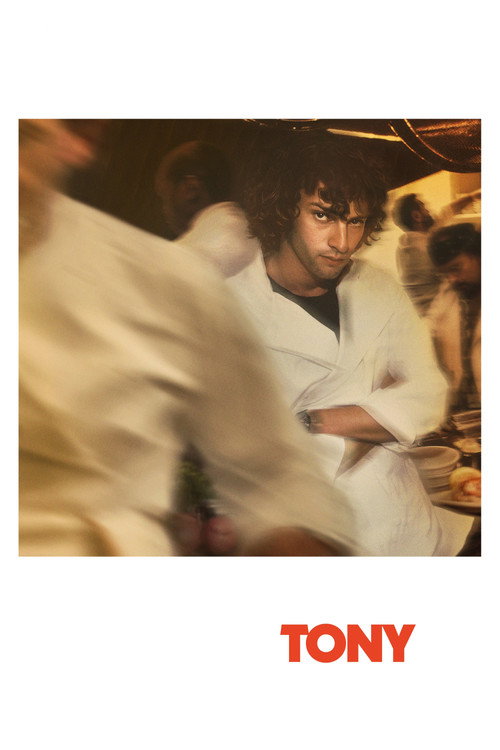
Tony — The Picture Stays With the Kid
Matt Johnson skips the whole life and films one single summer in a Provincetown kitchen, and Dominic Sessa builds a person out of spare parts.
Updated September 10, 2026
 ★★★★½
★★★★½
Lunara Review
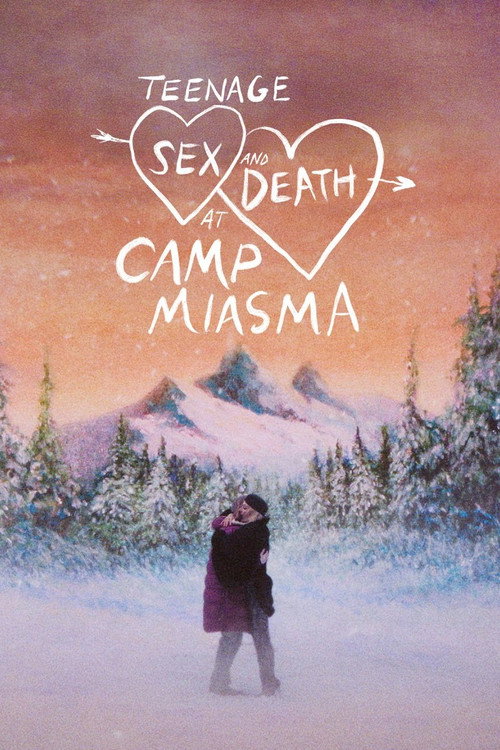
Teenage Sex and Death at Camp Miasma — The Head Loses
Jane Schoenbrun's meta-slasher preaches getting out of your head and into your body, and then actually does it, with blood and real tenderness.
Updated September 10, 2026