
Lunara Review
One Night Only — All Invitation, No Appetite
Two movie stars with real chemistry go looking for love inside a dystopian premise the movie never once has the nerve to interrogate at all.

Two movie stars with real chemistry go looking for love inside a premise that should have been arrested on sight.
There is an hour in the middle of One Night Only that I would defend against anybody. Two strangers walk a New York gone giddy and lawless, neon smearing on wet avenues, the score drifting past like a rooftop party two buildings over, and they talk. That is the entire sequence. They talk, and the talking turns out to be the intimacy, and Monica Barbaro and Callum Turner have enough between them to make an emptied city feel occupied. Barbaro plays guarded like a lawyer who has read her own depositions. Turner plays hopeful like a man who knows exactly how his face works and is faintly embarrassed about it. Their banter has rhythm, their silences have weight, and that is the entire currency of this genre, the one thing a production cannot fake or buy. For that hour I had no notes at all.
Then the movie remembers its premise. America has outlawed premarital sex, except for one legally sanctioned night a year, and our two strangers are spending the annual free-for-all trying to find something realer than the occasion. A concept like that is a loaded gun on the mantle in act one. This film never fires it, never checks whether it is loaded, never asks who put it there or what they wanted from us. It hangs fairy lights on the gun and throws a party underneath.
Notice what that best hour has in common with itself: none of it needs the law. Strip the dystopia out entirely and the walk still plays, because two people talking their way toward each other has never once required a statute to make it urgent. The finest sequence in this movie is the movie’s own evidence against itself, a quiet argument in favor of the smaller picture nobody made. When a concept romance is at its best in the stretches where the concept is offscreen, the concept was scaffolding, and scaffolding is supposed to come down before the opening. What we get instead is a film that keeps climbing back up onto it to wave.
Build a dystopia and you owe the audience a position on it, or at the absolute minimum some curiosity about it. Who passed this law. Who enforces it, and against whom, because a ban like this would not land evenly on anybody and the film’s entire idea of enforcement is sight gags with no teeth in them. What becomes of every person the law does not bother to imagine, a question dodged so completely that the dodging turns into the loudest sound in the theater. There is a version of this picture made by somebody with a colder eye and a nastier grin, where the outrage is the point and the romance has to survive it, which is precisely what would have made the romance worth something. Danger is what makes tenderness expensive. Remove the danger and you have two attractive people being charming on a night the state has pre-approved for charm.
What stings is that everyone on screen deserved the braver cut. Maya Hawke, handed the best-friend slot, keeps threatening to walk off with the whole thing, sharp and loose in a way the leads are never permitted to be. The supporting bench is stacked with faces you recognize and grin at on sight, every one of them deployed as texture instead of ammunition. The city itself is photographed with genuine affection, and the film clearly loves the idea of a night when the ordinary rules go soft. It simply will not ask why the rules exist. By the finale, which lands with a perfectly straight face on the most conventional arrangement available to it, you start to wonder whether the movie disagrees with its own dystopia at all, or whether it just wanted the poster. A comedy about forbidden sex this visibly nervous around sex is a strange contraption: all invitation, no appetite.
The director has run a star-chemistry engine before with far lighter feet, which is why the caution here reads as a decision rather than a limitation. Somebody chose this. Somebody looked at a premise with real acid in it and decided the acid was a marketing asset rather than a subject, and the result is a romance that asks almost nothing of itself while asking two very good actors to carry the whole load on charm.
So I land on a split decision, and lower rather than higher, because a picture cast this well and aimed this low is its own particular letdown. There is one lovely film inside this thing, two strangers and a city and a clock, and it needed no dystopia whatsoever, which may be the cruelest sentence I can write about a movie that leads with its dystopia. See it eventually, on a couch, for the leads, and sit with the specific sadness of watching two people this good hold hands across a premise somebody should have talked everybody out of. One night only turns out to be about right.
LUNARA DEBRIEF
- Score:★★½
- Year:2026
- Where to Watch:
Pair It With
Three films in conversation with this one.

Theme Echo
Demolition Man (1993)
The other American future where intimacy is sanitized by statute, and the useful embarrassment: a January-brained action comedy from thirty years ago pokes at its own sex ban with more mischief than this rom-com ever risks.

Counter-Program
Starship Troopers (1997)
The gold standard for smuggling a straight-faced genre picture inside a savage satire of its own premise. Everything this film needed and turned down: conviction, acid, and the nerve to let the audience be implicated.

Career Context
Easy A (2010)
The same director's best film, and the proof he can do this: a comedy about sex, rumor, and reputation with an actual point of view and a star turn it trusts completely. Sixteen years later the touch is smoother and the nerve is gone.
Further Reading
More Lunara Criticism
 ★★
★★
Lunara Review
The Dog Stars — Going Nowhere Beautifully
Ridley Scott makes the end of the world look expensive and feel like nothing at all, and outsources the only honest emotion to a very good...
Updated September 10, 2026
 ★★★½
★★★½
Lunara Review
Spider-Man: Brand New Day — Never Allowed to Stay on the Block
Destin Daniel Cretton finds a real movie in Peter Parker's empty apartment, and then the franchise calendar arrives and fills every inch of it.
Updated September 10, 2026
 ★★★★
★★★★
Lunara Review
The Invite — The Predators Wear Nice Sweaters
Olivia Wilde puts four very good actors in one apartment for an evening and delivers the funniest, most purely enjoyable comedy of the year.
Updated September 10, 2026
 ★★★★½
★★★★½
Lunara Review
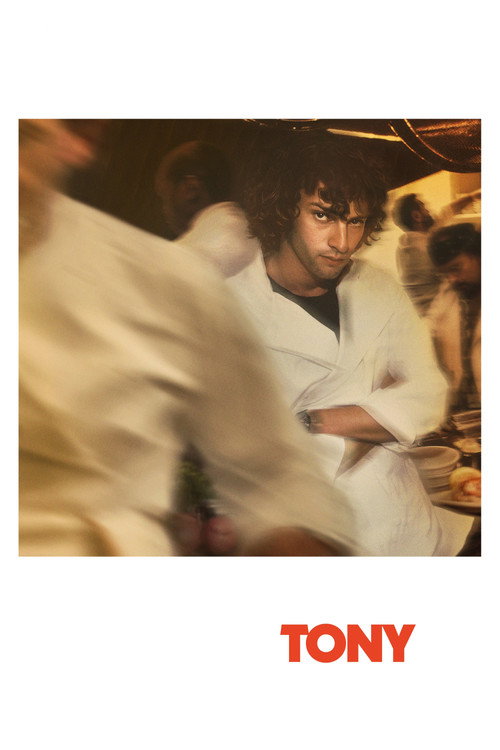
Tony — The Picture Stays With the Kid
Matt Johnson skips the whole life and films one single summer in a Provincetown kitchen, and Dominic Sessa builds a person out of spare parts.
Updated September 10, 2026
 ★★★★½
★★★★½
Lunara Review
Teenage Sex and Death at Camp Miasma — The Head Loses
Jane Schoenbrun's meta-slasher preaches getting out of your head and into your body, and then actually does it, with blood and real tenderness.
Updated September 10, 2026