
Lunara Review
The Invite — The Predators Wear Nice Sweaters
Olivia Wilde puts four very good actors in one apartment for an evening and delivers the funniest, most purely enjoyable comedy of the year.

Four people, one apartment, one evening, and the year’s most pleasurable proof that the mid-budget adult comedy still has a pulse.
They invite the neighbors up for a drink mostly to stop wondering about them. That is the whole inciting incident, and it is the most recognizable thing a movie has done to me this year: the small social itch that makes a person open his own door to people he has otherwise only nodded at in a hallway. Olivia Wilde knows the itch is the danger. Four people, one apartment, one evening, and every courtesy extended across the next hundred and seven minutes turns out to have a hook in it.
Joe and Angela are the hosts, Seth Rogen and Wilde, a marriage that has reached the stage where the shared jokes are doing structural work. The neighbors are Pina and Hawk, Penelope Cruz and Edward Norton, and they arrive the way certain couples arrive, as an event, as weather, as a mirror nobody asked to look into. The film comes from a Spanish chamber piece and the theatrical bones show in the best way, the unities holding pressure in like a lid on a pot. Nobody can leave without it meaning something, so nobody leaves, so the evening keeps having to find somewhere new to put its hostility. What the transposition adds is a very American strain of self-narration: people who have podcasts about their feelings and a vocabulary for their dysfunction and no working idea what they want. The comedy lives in that gap, and the film never once has to point at it.
All four are operating at a level that made me giddy. Rogen is the one everybody will talk about, and they should. He has hardened his usual warmth into something wounded and watchful, a man whose punchlines are load-bearing walls, and his readings carry years of backstory the script never states. Cruz takes the part that could have been the exotic free spirit and refuses the cliche outright, playing Pina as a woman whose openness is a discipline rather than a quirk. Wilde hands herself the least showy role and plays it with real intelligence, the host whose smile is working overtime, tracking the room even while she is the one talking. And Norton. It has been a long time since a movie knew what to do with Edward Norton, that specific gift for making superiority magnetic and then letting you catch the flop sweat underneath it, and this one deploys him like the instrument he is. Watching the four of them pass scenes around is the pleasure of the thing. It is a doubles match, and everybody holds serve.
Two things do go wrong, and neither is what the film keeps getting accused of. The score is busier than four actors this good require, underlining exchanges they had already scored themselves. And there is a stretch in the final movement where the knives get swapped for speeches and the picture goes misty in a way the first hour would have smirked at; I could have lived with one fewer monologue, and the film would be a half-step tighter for it. The accusation I keep hearing, though, is that these are joke delivery systems rather than people, and that one mistakes the subject for the flaw. Of course they are brittle and bitty and over-rehearsed. They are performing versions of themselves at each other all night, because that is what couples do in front of other couples, and the performance is the only thing any of them has practiced. The shtick is the characterization. The movie is about the moment it slips, and when it slips, in two late scenes I will not spoil, the faces underneath are recognizable enough that the sentiment lands as relief rather than surrender.
The direction was always going to be the referendum here, because I have never known which Olivia Wilde would show up: the one who trusts a room, or the one who is pleased with herself. This is the first, unmistakably. She shoots the apartment like a fifth character, all sightlines and escape routes, the kitchen a confessional, the balcony a demilitarized zone, the front door visible in just enough shots to keep reminding you that leaving is technically an option. And she has the confidence to hold a two-shot and let discomfort cook instead of cutting to safety, which is the whole ballgame in a picture like this. That is the filmmaker her debut promised and her second picture buried under discourse. There is no discourse here. There is craft, and appetite, and a room of adults being witty and cruel and eventually honest with each other, which turns out to be the most transgressive thing a comedy can put on screen in 2026.
A movie like this used to be the reason you went out on a Friday. Come for the ugly feathered spectacle elsewhere this summer; come here for the other kind of creature feature, the one where the predators wear nice sweaters and compliment your shelves. It is the funniest film of the year so far, it contains four performances I will still be arguing about in December, and it settles my Olivia Wilde question for the time being. When she is on, she is really on. Invite accepted.
LUNARA DEBRIEF
- Score:★★★★
- Year:2026
- Where to Watch:
Pair It With
Three films in conversation with this one.

Theme Echo
Carnage (2011)
The other two-couples-one-apartment pressure cooker, played faster and meaner. Set them side by side and you can see what The Invite adds to the formula, which is the possibility that these people might genuinely like each other, and what that possibility costs the comedy.

Counter-Program
Who's Afraid of Virginia Woolf? (1966)
The evening-from-hell chamber piece with the safety off, hosting as blood sport. The productive opposite: everything The Invite plays for laughter, this plays for keeps, and each film exposes what the other protects.

Career Context
Booksmart (2019)
The debut that made the promise this film finally keeps: generosity toward every character in the room, jokes that come from people instead of at them. The measure of the return to form is how directly this movie descends from that one.
Further Reading
More Lunara Criticism
 ★★
★★
Lunara Review
The Dog Stars — Going Nowhere Beautifully
Ridley Scott makes the end of the world look expensive and feel like nothing at all, and outsources the only honest emotion to a very good...
Updated September 10, 2026
 ★★½
★★½
Lunara Review
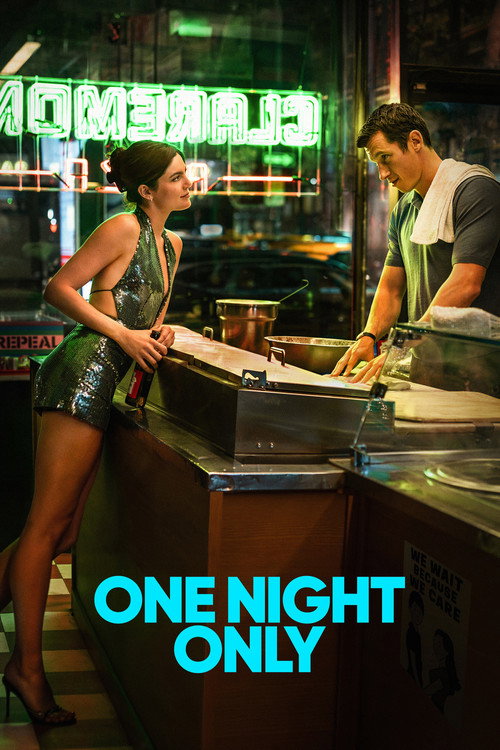
One Night Only — All Invitation, No Appetite
Two movie stars with real chemistry go looking for love inside a dystopian premise the movie never once has the nerve to interrogate at all.
Updated September 10, 2026
 ★★★½
★★★½
Lunara Review
Spider-Man: Brand New Day — Never Allowed to Stay on the Block
Destin Daniel Cretton finds a real movie in Peter Parker's empty apartment, and then the franchise calendar arrives and fills every inch of it.
Updated September 10, 2026
 ★★★★½
★★★★½
Lunara Review
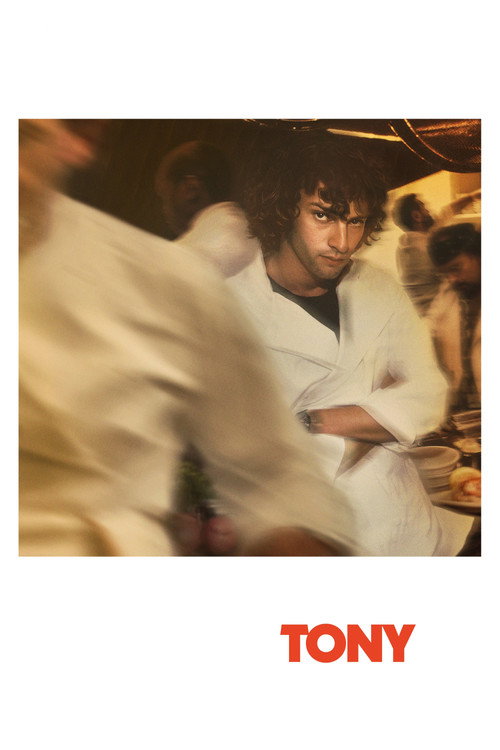
Tony — The Picture Stays With the Kid
Matt Johnson skips the whole life and films one single summer in a Provincetown kitchen, and Dominic Sessa builds a person out of spare parts.
Updated September 10, 2026
 ★★★★½
★★★★½
Lunara Review
Teenage Sex and Death at Camp Miasma — The Head Loses
Jane Schoenbrun's meta-slasher preaches getting out of your head and into your body, and then actually does it, with blood and real tenderness.
Updated September 10, 2026