
Thor: The Dark World — Content, Not Cinema
Movie Review

Thor: The Dark World, 2013
Nobody stopped Alan Taylor from making a movie here. The problem is that nobody asked him to.
For about ninety seconds, Thor: The Dark World is a real movie. A queen is dead, and Asgard buries her the old way: a burning boat pushed out onto black water, arrows of fire arcing after it, and then thousands of lanterns lifting off the edge of the world, the whole realm breathing out at once. The camera stops. It actually looks. It is the only moment in two hours when the picture is allowed to hold still and feel something, and it lands, because Rene Russo earned it. In a handful of scenes she plays Frigga as a woman who has spent centuries managing a family of gods and long ago figured out that the direct approach is for amateurs. Her death, defending Jane Foster, is the one action in the film that costs a character something they chose to pay. Ninety seconds of genuine sadness. Then the movie resumes, and the sadness has nowhere to live.
I want to be exact about the failure, because it is not incompetence, and calling it incompetence lets everyone off easy. This is the most anonymous film Marvel has ever released, and Taylor is not an anonymous director. He came off Game of Thrones knowing exactly how to stage political intrigue inside lived-in fantasy spaces, and you can see the skill on screen: the picture is competently blocked, professionally paced, handsomely gray. What failed was permission. Every element in the frame answers to a schedule instead of an intention. The Aether exists to become an Infinity Stone in some later film. Loki’s fake death exists to set up his next appearance. The mid-credits scene exists to advertise a different movie. And the film itself exists because November 2013 had a hole in it and something had to fill the hole. Sit in the theater long enough and you can hear it, a low hollowness under every scene, the sound of a picture with no reason to be a picture.
Start with the look, because the look gives the game away. Taylor shoots Asgard in the desaturated palette and restless handheld of prestige television, a style built for worlds where politics are the point and wonder is a liability. Asgard is the opposite case. It is supposed to dwarf you. It is supposed to feel like mythology, not like a location with foot traffic. Kenneth Branagh, whatever the flaws of the first film, understood that and staged the place like opera. Taylor’s camera keeps insisting this is reality while the story keeps insisting this is myth, and the two claims spend two hours canceling each other out, because the director was never allowed to pick one and mean it.
Then there is the villain, and the villain is the deepest hole in the film. Christopher Eccleston is an actor of volcanic specificity, and the production buries his face under prosthetics and his voice under a constructed language. They hired an instrument and then confiscated the instrument. What remains is Malekith, a dark elf who wants to unmake the universe because unmaking the universe is what dark elves want. Ask the simplest questions a character can be asked and watch them bounce off him. What does he grieve? What does he fear? What have ten thousand years in the dark actually cost him? The film has no answers because it never asked. A villain wants something and pays for it. Malekith is never permitted to want, only to oppose, and a being who wants nothing threatens nothing. So the climax spends its whole budget asking you to fear a threat the movie could not be bothered to make frightening.
The proof that this emptiness was a choice, not a ceiling, is standing right there in the cast. Tom Hiddleston plays Loki’s grief for his mother with a stillness that cuts through everything around it. No outburst. Just a man who stops moving, eyes gone flat, a manipulator meeting the one loss he cannot talk his way around. The prison-cell reveal, the illusion dropped to show the wreckage underneath, is the film’s second-best moment and its most honest one. And the mid-film stretch where the brothers ally, all mutual contempt and real wound, is the only sustained sequence with any tension in it, because it is the only one where two people want incompatible things and the wanting matters. Hiddleston gives a leading performance from a supporting cell, and the distance between his investment and the film’s is the cleanest measurement of what went wrong. There was a movie in here about a god learning what loss is. It got subordinated to a beam of red weather.
Everyone else is furniture with a salary. Chris Hemsworth is stranded between the gravity Branagh handed him and the comedy this script keeps groping toward, playing neither, physically commanding and emotionally parked at the curb. Natalie Portman delivers her lines in the unmistakable cadence of a contract being honored; the reunion slap that should be funny or wounding is neither, and the romance it restarts is two professionals standing on their marks. Idris Elba gets the film’s one other coherent character beat, Heimdall betraying his own duty for moral reasons, and the movie grants that choice about ninety seconds before hurrying back to the Convergence, a finale of characters tumbling through portals over Greenwich, too weightless to thrill and too dutiful to be funny, competent machine work from the first portal to the last.
In fairness to the thing, The Dark World is never offensive, never ugly, never even boring in the way that drives you out of your seat; it is watchable the way an airport is walkable, and if that sentence sounds like a defense, read it again. That is the indictment. A bad movie made by somebody who wanted something would at least tell you who they were. This one tells you only what quarter it shipped in. The lesson to draw is not cosmetic, punch up the jokes, brighten the palette. The lesson is structural: let somebody want to make it. Until then, this is what the franchise produces when continuity outranks intention. Content, not cinema. The lanterns rise, the boat burns, and for one minute you can see the movie nobody commissioned.
Lunara Film Debrief
- Score:★½
- Year:2013
- Where to Watch:

Theme Echo
What is this film really about — and who else has said it?
Hellboy II: The Golden Army (2008)
The premise this film wastes, done with a soul. Del Toro's elf prince wages the same doomed war against an indifferent world, except he grieves, hesitates, and dances with his sister first. Watch it to feel exactly what Malekith was denied.

Boorman shoots myth as myth: armor glowing green, a camera drunk on wonder, not one apology for scale. It is everything Taylor's prestige-TV Asgard was built to avoid, and it makes the case that mythology dies the moment you ground it.
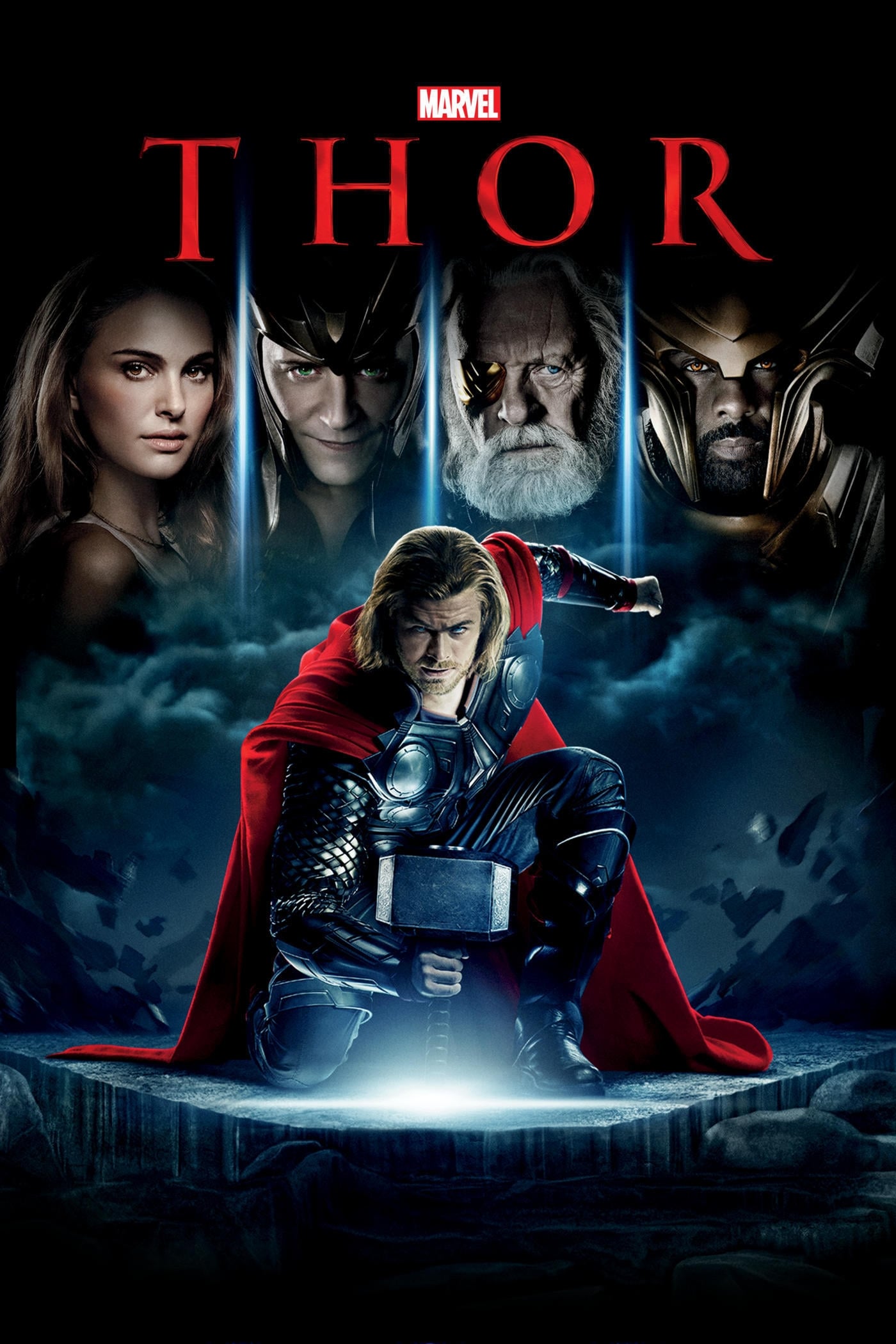
Branagh's original, canted angles and Shakespearean staging and all, looks better every year this sequel ages. Same character, same realm, one film directed by somebody with an idea about it. The comparison is the whole review in two evenings.
More Lunara Film Criticism
Further Reading
 ★★★½
Lunara Film Review
Iron Man 3 — The Flawed One You Think About
The one Iron Man movie with a director inside it, and the franchise never forgave either of them.
Updated September 23, 2026
 ★★★
Lunara Film Review
The Social Reckoning – A Procedural Without a Pulse
Aaron Sorkin's The Social Reckoning trades Fincher's kinetic tragedy for a dry, well-acted Facebook procedural that informs rather than shatters.
 ★★½
Lunara Film Review
Misty Green – The Price of Second Acts
Chris Rock's Misty Green is an ambitious, tonally fractured Hollywood satire rescued only by Rosalind Eleazar's smoldering musical defiance.
 ★★★★½
Lunara Film Review
Primetime — The Sordid Theater of Our Friday Night Bloodsport
Lance Oppenheim turns To Catch a Predator into a horror movie, with Robert Pattinson's Chris Hansen in the kitchen and all of us watching from home.
 ★★½
Lunara Film Review
The Uprising What Could Have Been
Paul Greengrass files a searing report from the mud of 1381, then spends his final stretch turning a real tragedy into a Robin Hood origin story.