
Lunara Review
Lost in Translation — Intimacy on a Tourist Visa
Two married Americans find the one person who can see them, at the exact end of the era when a person could still be unreachable.

Two married Americans find the one person who can see them, at the exact end of the era when a person could still be unreachable.
The most famous line in Lost in Translation is one nobody has ever heard. Tokyo, morning, the end of the week. Bob Harris is riding to the airport when he spots a blonde head moving through the crowd, stops the car, and goes after her on foot. He catches Charlotte, turns her around, holds her, and says something into her ear, and the sound mix lowers his voice under the noise of the street. Whatever was on the page, Bill Murray replaced it with something real, said once, never repeated for anyone, and Sofia Coppola decided the microphone had no business there. That decision is the entire movie in miniature. Lost in Translation believes there is a kind of closeness that stays alive only while it goes unrecorded, and it built its final scene, its shooting method, and its whole moral posture around protecting one sentence from us.
The setup is thin on purpose. Bob is a movie star gone gray at the edges, in Tokyo for a week to pocket two million dollars endorsing a whisky while a play goes unacted somewhere and a marriage goes unattended at home. Charlotte is fresh out of Yale and two years into marriage with a celebrity photographer who says “I gotta go” more warmly than he says anything to her. They are staying in the same tower hotel, both flattened by jet lag, both orbiting the bar at hours their bodies dispute, and the film’s real subject announces itself the first time they trade a look across the room: the mercy of being unknown. Each is invisible to the person they came with and legible to a stranger. At home, every sentence they say arrives pre-read. Here, at four in the morning, on the wrong side of the planet, they get to say the true ones first.
The production is a smuggler’s story, and it explains the film’s texture. Coppola wrote the part for Murray and spent the better part of a year chasing him through answering services and mutual friends; he agreed the way cats agree, without a contract, and she committed a chunk of the budget before knowing whether he would actually appear in Japan. He landed shortly before cameras rolled. They shot in twenty-seven days, Lance Acord catching rooms and streets in available light, stealing shots in the subway without permits, working the Park Hyatt’s corridors at night when the hotel would tolerate a crew. Even the whisky is a family heirloom: a generation earlier, Coppola’s father and Akira Kurosawa made real Suntory ads together, so the shoot where a Japanese director delivers a minute of impassioned instruction and the translator returns six words is not a tourist’s joke, it is a home movie replayed as comedy. All of it gives the film its distinctive pulse, underslept and alert at once. This is not a movie studying jet lag from a safe distance. It has jet lag, and it sees the way the sleepless see: surfaces too bright, feelings too close, the city reduced to weather made of neon.
The hinge is the karaoke box. Charlotte in a pink wig doing “Brass in Pocket,” aiming “I’m special” at Bob like a dare. Then Bob takes “More Than This” and half-talks it, and on the line about how it was fun for a while, something in his voice does a small controlled collapse, and the flirtation quietly admits what it has actually been all week: two people grieving their own lives in the same key. Later they sit in the corridor sharing a cigarette, her head finding his shoulder, and the film has the discipline to let that be the event. It is the same discipline everywhere. The night on the bed, when she says “I’m stuck” and he answers with the truth about children, that your old life goes and the new people turn out to be the most delightful you will ever meet, ends with his hand resting on her foot. That touch is the consummation. The movie understands that what these two need is not an affair, which either of them could get, but a witness, which neither of them has, and it holds that line to the end. Their official lobby goodbye is a botched handshake of a scene on purpose: public language failing them in public. The street corrects it.
Now the fair case against the film, which deserves its full weight. Its Tokyo is a hotel-window Tokyo, and nearly every Japanese character in it exists at the pitch of a gag: the fluttering commercial director, the exuberant talk-show host, the hired escort sent to Bob’s room whose accent is the entire joke. Charlotte’s itinerary treats Kyoto and temple Buddhism as treatments at a spa for a liberal-arts soul. The complaint that this movie uses a country as a backdrop is fair, and I will not argue it away. What I will argue is the distinction inside it. The untranslated tirade on the Suntory set is the theme working correctly: the joke is Bob’s incomprehension, the sealed bubble of the pampered Westerner, and the film knows the bubble is a failure, because escaping it with one other person is the whole story. But the escort scene laughs downward at somebody’s mouth, needs nothing from the laugh, and spends real compassion to get it. Those are the minutes where a film about insulation briefly becomes an insulated film. They cost it something. They do not cost it the verdict, because the subject was never Japan; the subject is the sealed capsule two lonely people are riding through it, and on that subject the movie remains close to perfect.
What the years did to it is the interesting part. For a while its influence looked like its legacy: two decades of imitations learned the shallow focus, the neon bokeh, the drifting pop-scored ennui, and proved that none of that was ever the point. The point was the restraint, and restraint did not travel. But the deeper change is technological. Look at what isolation is made of in 2003: faxes from Bob’s wife arriving at four in the morning, carpet samples by courier, a phone call home that lands like a wrong number into his actual life. These people are unreachable, and being unreachable is the film’s enabling condition. Nobody in a lobby stares at a phone; strangers’ eyes have nowhere to go but each other. Two years later the smartphone arrived and quietly made this story impossible. Bob and Charlotte would text their spouses, scroll the bar, and never meet. The film has become the last great record of a specific human state, elsewhere with no tether, and it gains power every year that state recedes.
Which returns us to the whisper. The camera holds close, his lips move, her face opens, she says “okay,” and they part smiling, and the Jesus and Mary Chain’s “Just Like Honey” comes up like weather finally breaking. People have spent twenty years trying to decode the audio, and the effort gets the film exactly backwards. The inaudibility is the meaning. Everything in their week existed outside the record: no photos, no messages, nothing their real lives could subpoena. The whisper is the film sealing the one thing they built where the world of faxes and junkets and marriages cannot reach it, and letting us watch the sealing is the most intimate thing it could have done, far more than letting us hear. Nothing in this movie survives contact with daylight, and the movie knows it, and that knowledge is why what happens on that sidewalk lasts. It is a five-star film about a feeling with a seven-day visa, and it walks away before the expiration, which is the only reason the feeling never expires.
LUNARA DEBRIEF
- Score: 5 / 5
- Year: 2003
- Where to Watch: VOD [all major platforms] | 4K UHD disc
- Theme Echo: In the Mood for Love (2000) tt0246578. Two people made eligible for each other by their spouses’ absences, and a love kept alive by never being spoken in daylight. Wong’s ending whispers into a temple wall what Coppola’s whispers into an ear: some feelings can only be stored, not kept.
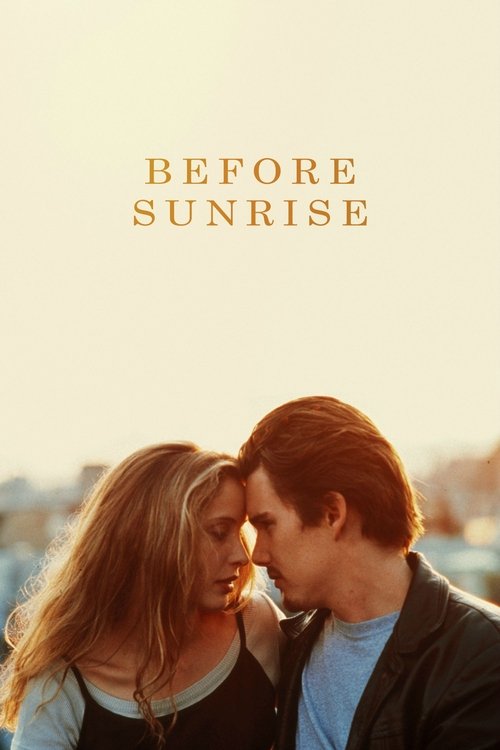
- Counter-Program: Before Sunrise (1995) tt0112471. The talking cure. Linklater’s strangers build intimacy out of language, sentence by sentence, and believe saying everything is the romance; Coppola believes the romance begins exactly where the sentences give out. Each film considers the other charmingly wrong, and both are right for their couples.
- Career Context: The Virgin Suicides (1999) tt0159097. Coppola’s debut watched girls through windows and made the glass the subject. Charlotte is a Lisbon sister who got out of the house and discovered the world is also a window; the Tokyo hotel is the suburban bedroom with a better view.
LUNARA DEBRIEF
- Score:★★★★★
- Oscar Ledger4 nominations • 1 wins
- Year:2003
- Where to Watch:DigitalFind Digital OptionsAvailability4K UHD disc
Pair It With
Three films in conversation with this one.

Theme Echo
In the Mood for Love (2000)
Two people made eligible for each other by their spouses' absences, and a love kept alive by never being spoken in daylight. Wong's ending whispers into a temple wall what Coppola's whispers into an ear: some feelings can only be stored, not kept.
Counter-Program
Before Sunrise (1995)
The talking cure. Linklater's strangers build intimacy out of language, sentence by sentence, and believe saying everything is the romance; Coppola believes the romance begins exactly where the sentences give out. Each film considers the other charmingly wrong, and both are right for their couples.

Career Context
The Virgin Suicides (1999)
Coppola's debut watched girls through windows and made the glass the subject. Charlotte is a Lisbon sister who got out of the house and discovered the world is also a window; the Tokyo hotel is the suburban bedroom with a better view.
Further Reading
More Lunara Criticism
 ★★★★★
★★★★★
Lunara Review
Marie Antoinette — Girlhood Under Glass
The film they booed for ignoring the Revolution is exact about the only country its queen was ever allowed to govern.
Updated July 25, 2026
 ★★★★★
★★★★★
Lunara Review
Dogville — The Walls Were the Alibi
Von Trier draws the town in chalk so that nobody in it, and nobody watching it, can claim they did not see.
Updated July 25, 2026
 ★★★★★
★★★★★
Lunara Review
Watch trailerA.I. Artificial Intelligence
A.I. Artificial Intelligence is a fairy tale about a machine engineered to love a mother who can return that love only on her species' terms, and…
Updated August 12, 2026
 ★★★★★
★★★★★
Lunara Review
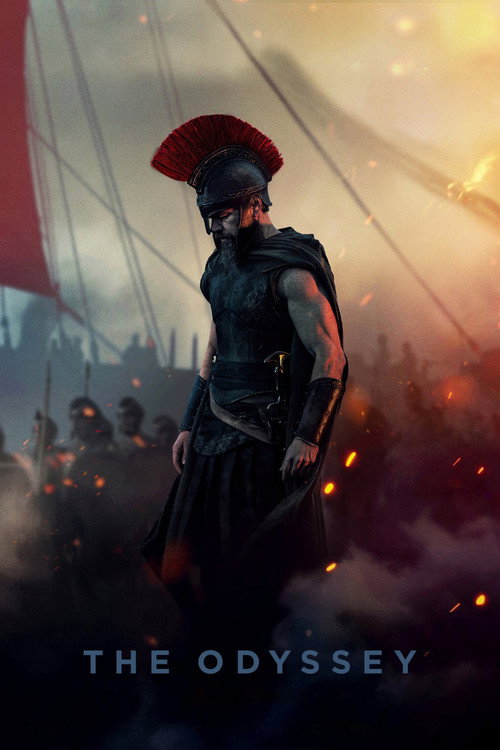
Watch trailerThe Odyssey — I Walked Right Back In
Nolan aimed the biggest camera on earth at the oldest story about going home -- and I walked out of the 70mm IMAX and bought a ticket to...
Updated July 28, 2026
 ★★★★½
★★★★½
Lunara Review
Guardians of the Galaxy Vol. 3 — The Wound Under the Fur
The last MCU film made by somebody who loved the characters more than the franchise, and it is about a raccoon, and it wrecked me.
Updated July 26, 2026