
Lunara Review
Marie Antoinette — Girlhood Under Glass
The film they booed for ignoring the Revolution is exact about the only country its queen was ever allowed to govern.

The film they booed for ignoring the Revolution is exact about the only country its queen was ever allowed to govern.
The first thing Marie Antoinette does is get caught. Under the opening credits, Kirsten Dunst reclines in a slate-blue dressing room while a maid fits slippers to her feet, towers of cake within reach. She drags a finger through the icing, tastes it, and then turns and looks directly into the lens: level, unhurried, a little amused, holding the stare of every person who bought a ticket to disapprove of her. Gang of Four’s “Natural’s Not in It” is already playing, and its opening line is the whole film handed over in advance: the problem of leisure, what to do for pleasure. When the picture premiered at Cannes, a portion of the press screening booed it, and the story wrote itself, a Hollywood daughter defending a Bourbon daughter, frivolity about frivolity. The film had answered at frame one. It knew exactly what it looked like. It looked back.
Strip the wigs off the plot and here is what happens: a fourteen-year-old is mailed to a foreign country as the physical form of a treaty. At the border she is stripped in a tent, of her clothes, her attendants, her name’s pronunciation, and her pug, and told she can have as many French dogs as she likes. She is delivered to Versailles, married to a boy who cannot look at her, and given one job, the production of an heir, which requires the participation of a husband the film renders as a locked door in a hunting coat. Seven years pass before the marriage is consummated, and for those seven years her failure is a public fact, discussed at dinners she must smile through, itemized in her mother’s letters, which arrive from Austria like performance reviews from a corporation that can neither fire nor promote her. Coppola’s committed idea is to hold the camera inside the girl’s insulation the entire time. No ministers’ councils, no pamphleteers’ garrets, no starving countryside. If it does not reach Marie Antoinette, it does not reach us. The film was attacked for that omission as if it were an oversight. It is the design, and it has a sharp point: Versailles was engineered so that from inside it the country could not be seen. The movie locks you into that engineering until the silence where France should be becomes the loudest thing in it.
What can be seen from inside is ritual, and the film’s best scene is pure procedure. The morning dressing: the queen stands naked and shivering while her shift is passed, by protocol, to the highest-ranking woman in the room, and every arriving duchess triggers a re-sort, the garment traveling hand to hand while the goosebumps rise. “This is ridiculous,” she says, and the Comtesse de Noailles delivers the film’s thesis without blinking: “This, Madame, is Versailles.” That exchange is the entire institution in one transaction: an etiquette that converts a person into a station. Everything else in her circumscribed world follows the same rule. Meals are performed before an audience. The marriage bed is blessed by a crowd. Childbirth happens with courtiers craning for a view. Gossip is the palace’s ambient sound, whispers layered under the harpsichords like a hiss off tape, and the film’s single most political act by its heroine is one sentence to a mistress she has been ordered to acknowledge: “There are a lot of people at Versailles today.” A sentence as a treaty. It is the only legislation she will ever pass.
The style everyone argued about is a set of precise decisions doing exact work. Coppola shot at Versailles itself, on the Mondays it closed, and then set inside those authentic rooms every anachronism she could carry: the cast keeping their own accents, California and London mumbling under the chandeliers; the post-punk needle drops; the lavender Converse sitting in plain sight among the silk shoes of the “I Want Candy” montage. The complaints called this laziness, and the complaints had it backwards. Period diction is what lets us file the past away as a museum; the flat American voices and the bass lines dissolve the glass case, and suddenly you are not observing an eighteenth-century queen, you are watching a teenager at a sleepover in a building she cannot leave. The montage itself is the film’s most quoted and most misread minute. Shoes, silks, champagne, pastry from Laduree stacked like ammunition: it plays as celebration only if you ignore where it sits, immediately after the marriage’s public failure has become unbearable. It is a sequence about sedation. Shopping is what the palace gives her instead of a life, and the film knows the difference even when she cannot afford to.
The reappraisal has already happened; the record just needs updating. The boos aged into embarrassment as an entire generation of films about the interior weather of girlhood grew from this one’s pastel soil. But the years sharpened something more specific. Marie Antoinette is a film about a public adolescence: a girl consumed as an image before she has finished assembling a self, performing luxury for an audience she cannot see, blamed by pamphlet for a sentence she never said. The film even stages the correction, letting her read the cake libel aloud and deny it flatly. Two decades of image-fed girlhood later, that predicament has stopped being historical. Every teenager with an audience now lives a version of the queen’s arrangement, adored and indicted by strangers on the strength of a feed, and Coppola’s insistence on staying inside the bubble, showing the mob only when it reaches the gates, has come to look less like evasion and more like reporting.
Three charges stick. Jason Schwartzman’s Louis is a blackout sketch of a man, funny in every scene and absent as a person, so when the film asks his late tenderness to carry weight, it is drawing on an account it never opened. The Fersen affair is worse: for a few minutes the film cuts its one romance like the perfume commercial its enemies accused the whole picture of being, soft-lit cavalry fantasy included, and the satire, if it is satire, is indistinguishable from the product. And the final act spends in minutes what the middle spent in hours, so the ending must borrow gravity from the audience’s textbook knowledge of the guillotine the film declines to show. Fair is fair: the shape of the last reel is a debt the rest of the movie pays off. Because the closing movement, on its own terms, is close to perfect. The mob arrives at Versailles as pure sound, torches in the dark, and the queen answers it by stepping onto the balcony and bowing her head to the crowd that wants it: her one flawless performance of the job, given at the moment the job becomes a death sentence. Then the carriage in the blue dawn, her husband asking if she is admiring her lime avenue, and her answer, “I’m saying goodbye,” a line that closes the film’s short inventory of things she was permitted to own. The last image is not a queen at all. It is the state bedroom, ransacked, a chandelier down, daylight on the wreckage. The palace was her whole country. The film ends on the invasion of it, which for her, and for the movie’s unbroken point of view, is the only ending there is.
The verdict is not a provocation. Shallowness rendered this exactly is not shallow; it is testimony from inside the terrarium the eighteenth century built for one girl and the twenty-first century has built for millions. The film was never too small for its subject. The subject was a life kept deliberately small, and no one has filmed that condition better.
LUNARA DEBRIEF
- Score: 5 / 5
- Year: 2006
- Where to Watch: VOD [all major platforms] | Blu-ray [Sony]
- Theme Echo: Spencer (2021) tt12536294. Another woman rattling inside a royal enclosure while protocol eats her alive: food as battlefield, wardrobe as scheduling, executed queens in the wallpaper. Larrain’s Diana is Coppola’s Antoinette with the pastel stripped off, and each film certifies that the other’s palace is a working trap, not a metaphor.
- Counter-Program: Danton (1983) tt0083789. The view from the far side of the gates: Wajda’s Revolution is all breath, spit, and committee rooms, precisely the politics Coppola holds offscreen. Watch them together and each film supplies the half of the era the other deliberately starves.
- Career Context: Lost in Translation (2003) tt0335266. Coppola’s previous girl in a gilded enclosure. Charlotte’s hotel and Antoinette’s palace are the same habitat at different price points: a young woman installed in luxury as decor, waking up inside the display case, and the director’s sympathy pressed to the glass both times.
LUNARA DEBRIEF
- Score:★★★★★
- Oscar Ledger1 nominations • 1 wins
- Year:2006
- Where to Watch:DigitalFind Digital OptionsAvailabilityBlu-ray [Sony]
Pair It With
Three films in conversation with this one.

Theme Echo
Spencer (2021)
Another woman rattling inside a royal enclosure while protocol eats her alive: food as battlefield, wardrobe as scheduling, executed queens in the wallpaper. Larrain's Diana is Coppola's Antoinette with the pastel stripped off, and each film certifies that the other's palace is a working trap, not a metaphor.
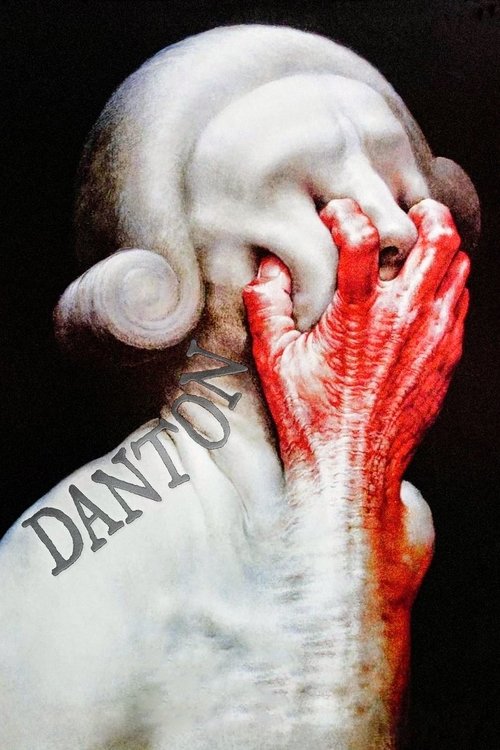
Counter-Program
Danton (1983)
The view from the far side of the gates: Wajda's Revolution is all breath, spit, and committee rooms, precisely the politics Coppola holds offscreen. Watch them together and each film supplies the half of the era the other deliberately starves.

Career Context
Lost in Translation (2003)
Coppola's previous girl in a gilded enclosure. Charlotte's hotel and Antoinette's palace are the same habitat at different price points: a young woman installed in luxury as decor, waking up inside the display case, and the director's sympathy pressed to the glass both times.
Further Reading
More Lunara Criticism
 ★★★★★
★★★★★
Lunara Review
Lost in Translation — Intimacy on a Tourist Visa
Two married Americans find the one person who can see them, at the exact end of the era when a person could still be unreachable.
Updated July 25, 2026
 ★★★½
★★★½
Lunara Review
The Devil Wears Prada — Cerulean Is a Verdict
The most unsettling thing about Miranda Priestly is how often she is completely right.
Updated July 25, 2026
 ★★★★★
★★★★★
Lunara Review
Miami Vice — Time Is Luck
Mann shot the night the way it actually looks and love the way it actually ends: on a clock.
Updated July 25, 2026
 ★★★★★
★★★★★
Lunara Review
Clerks II — Ownership Is the Happy Ending
The donkey show is the dare; the jailhouse proposal is the movie.
Updated July 25, 2026
 ★★★★★
★★★★★
Lunara Review
Children of Men — Tomorrow Is a Boat
The long takes made it famous; the margins made it permanent.
Updated July 25, 2026