

The Devil Wears Prada, 2006
The Devil Wears Prada — Cerulean Is a Verdict
Movie Review
The scariest thing about Miranda Priestly is that she is right, and the film knows it before you do.
There is a moment in The Devil Wears Prada when Meryl Streep, as Runway editor Miranda Priestly, takes a young woman’s entire sense of herself apart in under two minutes. No shouting. No cruelty you could point to in court. Just the word “cerulean” and a memory that runs from Oscar de la Renta’s runway down to a clearance bin. And here is the thing that stays with you, the thing that makes the scene hum long after the lights come up: Miranda is completely, unarguably right. That is the whole movie in one speech. A studio comedy smarter, colder, and more honest about power than it has any business being, walked past the gates in Chanel.
The setup is simple and the trap is not. Andy Sachs, a Northwestern journalism graduate played by Anne Hathaway, takes a job as second assistant to Miranda, editor-in-chief of Runway, a thinly veiled Vogue. She takes it believing she is above it. She does not care about fashion. She does not respect it. It is a line on a resume, a year of suffering before the real career starts. David Frankel, directing Aline Brosh McKenna’s screenplay, lets you sit in Andy’s contempt just long enough to make you comfortable there. Then he turns the chair around. Because the film is not about fashion. It is about how fast proximity to excellence can rearrange who you are. Andy walks in certain of herself. The movie watches, with a chill and steady eye, how quickly that certainty comes apart the moment someone brilliant and demanding starts paying attention to her potential.
Streep plays power by subtraction. Where a lesser actor would go loud, big gestures, theatrical fury, she goes quiet. The voice drops. Sentences trail into silence. She never raises her volume, which means every person in the room has to lean in and listen harder, and leaning in is already surrender. This is the only film in which Streep worked fully Method, keeping herself apart from the cast between takes to manufacture real unease, and you can see the dividend in every shared frame. Watch Emily Blunt’s Emily, watch Hathaway’s Andy: there is a genuine, faintly panicked vigilance in them whenever Streep enters the shot. Miranda never explains. Miranda never justifies. She arrives, and the temperature drops.
The smartest decision in the performance is the one Streep did not make. She does not do an Anna Wintour impression. American accent instead of English, silver hair instead of the famous bob, whisper instead of bark. Cut loose from celebrity mimicry, the character becomes something worse: competence so total it bends everyone around it into orbit.
Hathaway earns more credit than this film usually gets her. Early on, her shoulders are rounded, her stride loose and slightly apologetic, the body of someone who decided in advance that none of this matters. After the makeover, the spine straightens, the stride sharpens, the chin lifts. But she lets you see the seams. There is something faintly rehearsed in Andy’s new composure, a performance inside the performance, and it carries the film’s real anxiety: is the new self authentic, or borrowed?
Stanley Tucci’s Nigel is the deepest wound in the picture. He is the true believer, the man who loves this industry enough to absorb its cruelties without flinching, and Tucci gives him a weariness that reads like decades of compromise folded into one warm, resigned smile. When his loyalty is betrayed in the third act, it lands harder than anything in the main plot, because Tucci spent the whole film quietly earning that hurt.
Patricia Field’s costumes work like a second script. On a hundred-thousand-dollar budget, padded by an estimated million dollars in borrowed designer pieces, Field makes every outfit a claim. Miranda’s structured Donna Karan and cold silver jewelry say authority without a word of dialogue. And when Andy walks into the office head to toe in Chanel, after Nigel opens the Runway closet to her, you are watching an identity dissolve in real time. The transformation montage, cut briskly by editor Mark Livolsi and scored to pop, is not subtle about what clothes mean here: never neutral, never apolitical, never “just stuff.” Florian Ballhaus shoots the whole thing in two registers to match. Flat, ordinary light before the change, the city rendered mundane. Warm palette and gleaming surfaces after, the camera moving with Andy instead of watching her from across the room. It is not delicate work. It does not need to be. The seduction happens to your eye at the same speed it happens to her.
Which brings us back to cerulean. Andy snickers at a room of editors debating two nearly identical belts, and Miranda, without raising her voice or breaking eye contact, traces the family tree of Andy’s “lumpy blue sweater” from the runway to the bargain bin. A trickle-down theory of taste, delivered as annihilation. The speech runs nearly a full page of script, strange and long for a studio comedy. Streep picked the word “cerulean” herself from a list of shades McKenna gave her, and every word survived to the final cut. What makes the scene great is that it does two things at once. It is Miranda at her most cruel and Miranda at her most correct. Andy’s belief that she stands outside the fashion ecosystem, that her sweater is “just blue,” that her indifference exempts her, is exposed as arrogance wearing humility’s clothes. The film does not ask you to like Miranda for it. It asks you to admit that dismissing expertise in any field is its own kind of ignorance. That the truth arrives as a weapon does not make it less true.
Nearly two decades on, the film reads as strange prophecy about workplaces that dress exploitation up as privilege. “A million girls would kill for this job” is a recruitment pitch and a threat in the same breath, and it has traveled from throwaway gag to diagnosis. In a moment of quiet quitting and burnout talk, of a whole generation asking what labor actually owes the laborer, the film’s central question bites harder than it did in 2006: at what point does closeness to excellence become self-erasure? And the fact that Miranda persists as an icon, memed and quoted and adored, says something uncomfortable about the gap between what we know is healthy and what actually holds our attention.
Here is where the film falls short of its own best scene. It wants to celebrate Andy walking away. But it has spent ninety minutes proving Miranda’s worldview: that taste is a form of intelligence, that rigor demands sacrifice, that the people who sneer at your work are wearing the downstream evidence of it. The tidy rejection of ambition in the final act arrives too neatly, too late, and too unconvincingly to undo what Streep already proved. What you leave with is a low hum of ambivalence, the specific discomfort of having been persuaded by an argument the film then tries to take back. There is an ache in it, the recognition that competence and cruelty so often share a zip code, and that the people who demand the most from the world are rarely the ones who make it feel safe. It is a sharper, more honest film than its reputation as a breezy fashion comedy suggests, and Streep alone makes it durable. The scaffolding shows. But the foundation holds.
Lunara Film Debrief
- Score:★★★½
- Oscar Ledger2 nominations • 0 wins
- Year:2006
- Where to Watch:
Theme Echo
What is this film really about — and who else has said it?
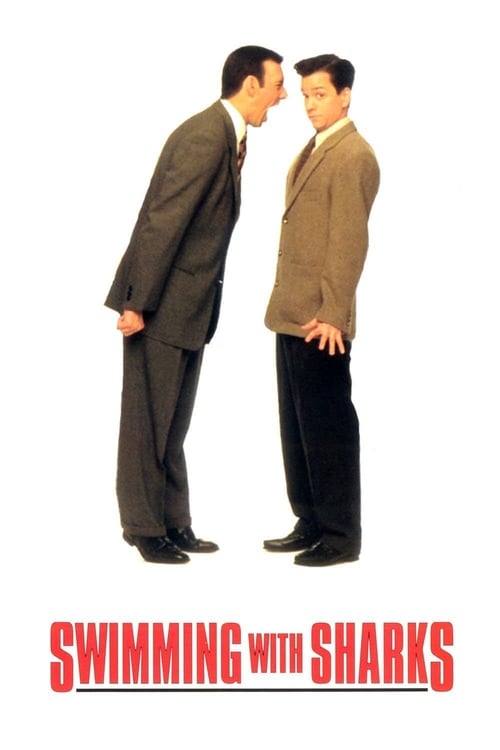
Swimming with Sharks (1994)
George Huang's acid-black comedy about a studio executive's sadistic mentorship. Same poison, no couture to disguise it.
Counter Program
What is the strongest argument against it?
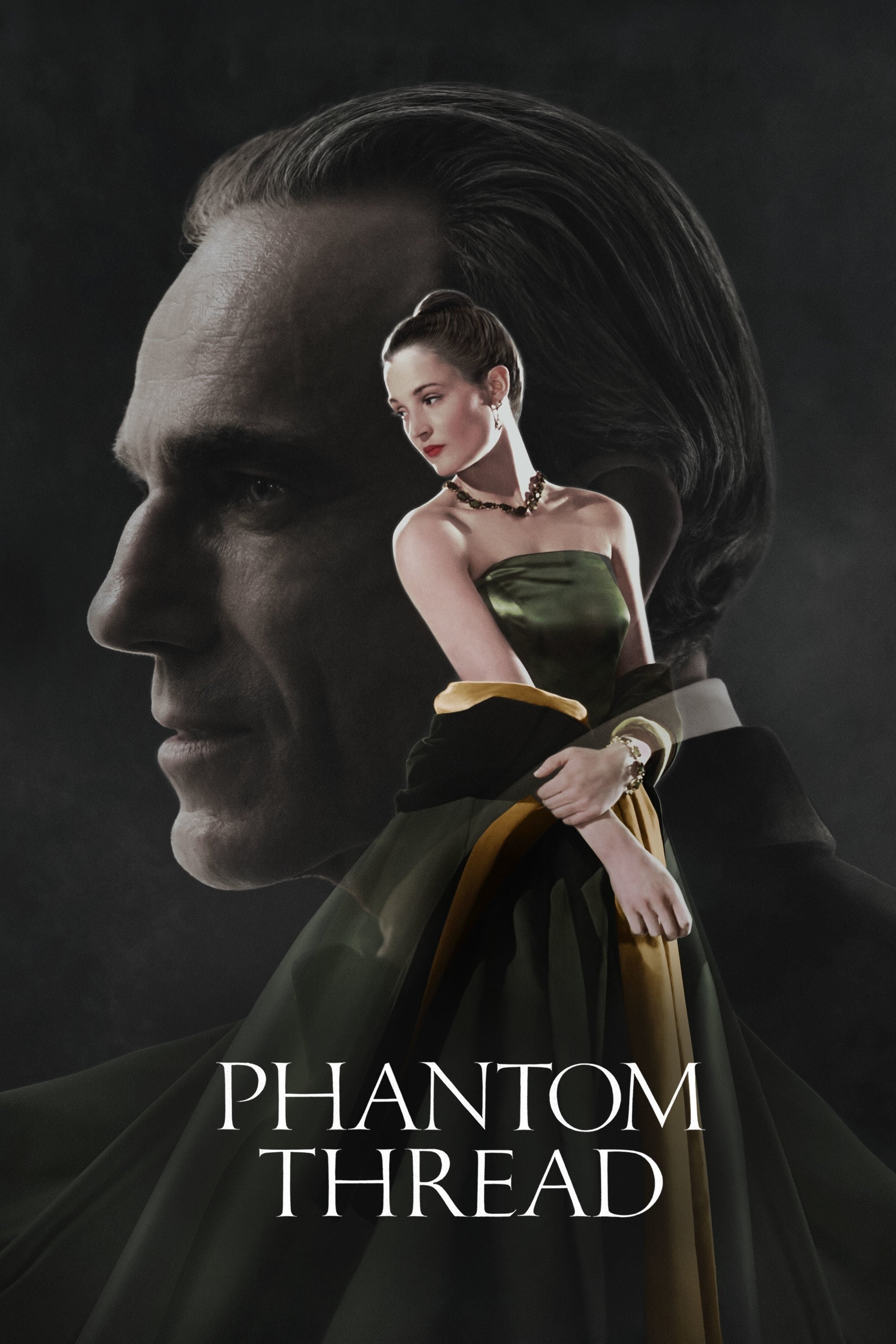
Phantom Thread (2017)
Paul Thomas Anderson takes up the same question about genius and cruelty, and never lets anyone walk away clean.

Career Context
Where does this sit in the artist's story?
Doubt (2008)
Streep deploys the same whispered authority as Sister Aloysius; two women who weaponize certainty in institutions that run on deference.
More Lunara Film Criticism
Further Reading
 ★★★★★
Lunara Film Review
Miami Vice — Time Is Luck
Mann shot the night the way it actually looks and love the way it actually ends: on a clock.
Updated September 23, 2026
 ★★★★★
Lunara Film Review
Marie Antoinette — Girlhood Under Glass
The film they booed for ignoring the Revolution is exact about the only country its queen was ever allowed to govern.
Updated September 23, 2026
 ★★★★★
Lunara Film Review
Clerks II — Ownership Is the Happy Ending
The donkey show is the dare; the jailhouse proposal is the movie.
Updated September 23, 2026
 ★★★★★
Lunara Film Review
Children of Men — Tomorrow Is a Boat
The long takes made it famous; the margins made it permanent.
Updated September 23, 2026
 ★★★★★
Lunara Film Review
The Prestige — The Second Viewing Is the Trick
The film tells you its secret in the first five minutes, out loud, twice. I did not hear it until the second viewing -- and the gap between...
Updated September 23, 2026