
Lunara Review
Clerks II — Ownership Is the Happy Ending
The donkey show is the dare; the jailhouse proposal is the movie.

The donkey show is the dare; the jailhouse proposal is the movie.
The film opens in black and white, because that is where these men live. Dante Hicks unlocks the Quick Stop the way he has unlocked it for a decade, rolls up the steel shutter on autopilot, and the monochrome fills with a flickering orange that should not be there. The movie cuts to color exactly as we register what the glow is: the store is on fire. Kevin Smith torches his own landmark in the first ninety seconds, in full color, a cult director burning the shrine his cult built, and the gesture announces the sequel’s entire program. There will be no rerun. The question the first film asked as a joke, what happens to guys like this, is going to get answered like it matters, because the men asking it are now in their thirties, and the joke has started keeping them up at night.
A year later Dante and Randal wear fast-food uniforms at Mooby’s, and the film’s engine is a countdown: it is Dante’s last day. Tomorrow he leaves for Florida with his fiancee Emma, toward a house her parents own and a car wash her father will hand him, a complete life delivered in flat-pack, no assembly required because none of it is his. Randal deals with the countdown the way Randal deals with everything, by getting crueler as he gets more frightened. Between them floats Elias, nineteen, evangelically innocent, guarding his girlfriend’s virtue on the advice of an imaginary troll, and above them all presides Becky, the manager, played by Rosario Dawson as the only adult on the premises and the best thing Smith ever put in a frame. Out front, Jay and Silent Bob hold the curb, freshly sober and entirely unchanged, a rehab success story still selling the product, doing a Buffalo Bill dance to lure customers. The pieces look like a hangout comedy. The clock underneath is pure dread.
Twenty years on, the reappraisal is overdue, because in 2006 this film was received as a retreat, the studio flop crawling home to the counter that made him, and the crudeness let everyone file it unexamined. Watch it now and the subject stands out like a beacon: Clerks II is the most honest American comedy of its decade about work and shame. The villain is never the job. The villain is the imported voice that says the job means you failed. It arrives in the person of Lance Dowds, the high school classmate turned internet rich, sneering across the Mooby’s counter at two men his own age in paper hats; it arrives through Emma’s Florida blueprint, aspiration as ventriloquism; it arrives out of Randal’s own mouth, aimed downhill at Elias, shame rolling in the only direction shame rolls. Dante’s crisis is not choosing between two women. It is choosing between two scripts: the one where a counter job at thirty-three is a humiliation to be escaped in someone else’s car, and the one Becky offers on the roof, where a life is measured by whether any of it belongs to you. A culture that waited until a pandemic to discover that counter work is essential work was twenty years behind this donkey-show movie. That should embarrass the culture, not the movie.
The roof is where the film shows its true heart rate. Becky, who has spent the picture deflating every romantic myth on offer, learns Dante cannot dance at his own wedding, drags him up beside the exhaust vents, and teaches him to the Jackson 5, and Smith, a director who hides behind irony the way his characters hide behind obscenity, shoots joy completely straight for the first time in his career: golden hour, full song, no punchline riding shotgun. The sincerity is the shock. It reframes everything around it, and it exposes the method: the vulgarity in this film is an airlock. Two straight New Jersey men cannot say what they are to each other at standard atmospheric pressure, so the film keeps committing acts of comic indecency until sincerity becomes the only breathable air left. That is why the third act detonates a donkey show inside the restaurant, staged by a mild professional who treats livestock cabaret like wedding catering. The obscenity is a controlled demolition of every last defense, and when the police haul everyone to a cell, the film arrives at the scene it built the airlock for: Randal, stripped of the smirk at last, saying the truest thing any Smith character ever says. That he secretly loved those years behind the register, because his best friend was on the other side of the counter. That he is not built for anywhere else, and does not want to be. And then the proposal, the real one, the one the movie is named for in everything but the title: let’s buy the Quick Stop. Jay and Silent Bob front the money, on the condition that the curb out front stays theirs, and the two clerks walk back into the burned store as owners.
You do not have to go looking for the problems. The donkey sequence runs well past its function as a dare and curdles into endurance; Emma is a cutout the film knocks over instead of answering, a fiancee denied the single scene where her version of events gets to be right; the racial-slur reclamation bit wants credit for knowing exactly how wrong it is while still spending the word, and the knowing does not cover the spend; a strand of gay-panic reflexes dates the film precisely to its year. The frames themselves are utilitarian, because Smith’s coverage was never the show. Every one of those charges holds. The verdict survives them because the film’s core transaction is so much rarer than polish: an American comedy that looks directly at male friendship, names it love without flinching, and then does something braver than the naming: it turns down the ending where growth means leaving, deliberately, the way you turn down a promotion that would move you away from everything you are. Escape was the fantasy the first film sulked inside. Ownership is the adult version.
So the last shot earns its rhyme. The Quick Stop reopens, Dante behind the register with Becky beside him and their child coming, Randal restocking the shelves of a store with his own name on the paperwork, and the camera pulls back slowly as the color drains away, returning the image to the 16mm monochrome of 1994. Same frame, same counter, same two men. One changed fact, and the fact changes everything: they are no longer stuck there. They are from there. The first film’s catchphrase was a complaint about fate, a man bleating that he was not even supposed to be here today. The sequel spends two hours of filth and grief converting the complaint into a deed, and lands on the most honest happy ending of its decade. Not escape. Title. Nobody was ever supposed to be here; these two stayed on purpose, and bought the here.
LUNARA DEBRIEF
- Score: 5 / 5
- Year: 2006
- Where to Watch: VOD [all major platforms] | Blu-ray disc
- Theme Echo: The World’s End (2013) tt1213663. Two comedies that side with the man who would not move on, then bill him honestly for it. Gary King needs the pub crawl to matter; Randal needs the counter to. Wright has to end the world to make the point; Smith only has to burn one convenience store.
- Counter-Program: Good Will Hunting (1997) tt0119217. The sacred American exit: genius as the ticket out, leaving as the proof of growth, the best friend who dreams of the empty doorstep. Clerks II is the rebuttal, growth measured not by distance from the counter but by whose name is on it. Each film calls the other’s bluff about class.
- Career Context: Clerks (1994) tt0109445. The same door, twelve years earlier. The first film mistook its stasis for a cage and its catchphrase was a complaint; the sequel repossesses both. The black-and-white ending of II reads only against the 16mm grain of I: the store did not change, the verb did. From stuck at, to belongs to.
LUNARA DEBRIEF
- Score:★★★★★
- Year:2006
- Where to Watch:DigitalFind Digital OptionsAvailabilityBlu-ray disc
Pair It With
Three films in conversation with this one.
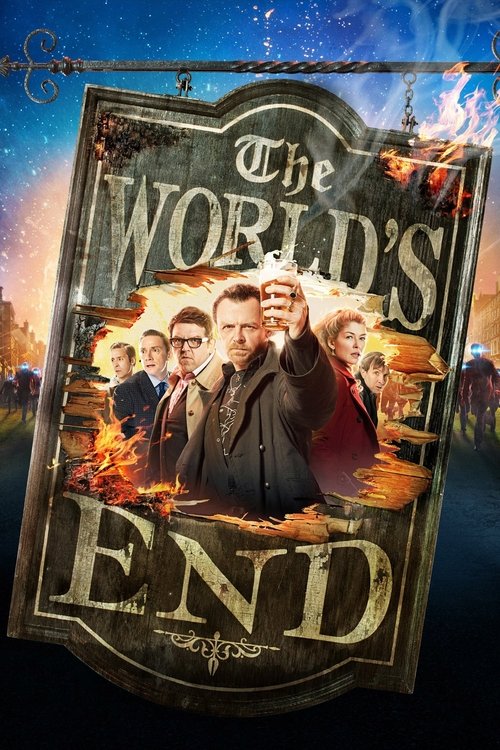
Theme Echo
The World's End (2013)
Two comedies that side with the man who would not move on, then bill him honestly for it. Gary King needs the pub crawl to matter; Randal needs the counter to. Wright has to end the world to make the point; Smith only has to burn one convenience store.

Counter-Program
Good Will Hunting (1997)
The sacred American exit: genius as the ticket out, leaving as the proof of growth, the best friend who dreams of the empty doorstep. Clerks II is the rebuttal, growth measured not by distance from the counter but by whose name is on it. Each film calls the other's bluff about class.
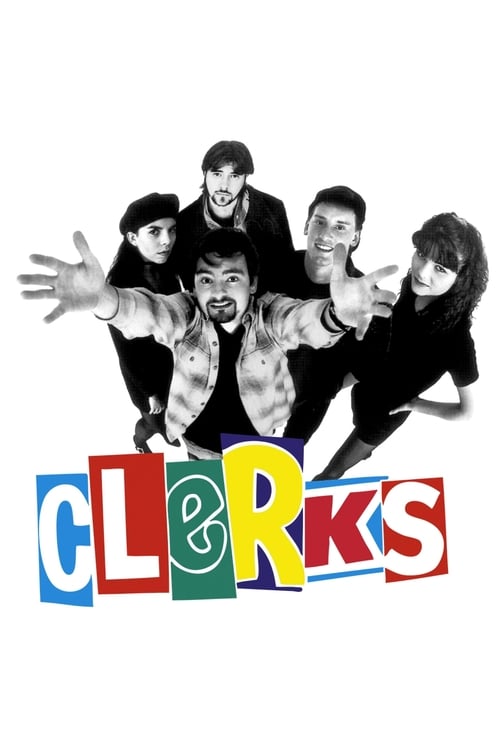
Career Context
Clerks (1994)
The same door, twelve years earlier. The first film mistook its stasis for a cage and its catchphrase was a complaint; the sequel repossesses both. The black-and-white ending of II reads only against the 16mm grain of I: the store did not change, the verb did. From stuck at, to belongs to.
Further Reading
More Lunara Criticism
 ★★★½
★★★½
Lunara Review
The Devil Wears Prada — Cerulean Is a Verdict
The most unsettling thing about Miranda Priestly is how often she is completely right.
Updated July 25, 2026
 ★★★★★
★★★★★
Lunara Review
Miami Vice — Time Is Luck
Mann shot the night the way it actually looks and love the way it actually ends: on a clock.
Updated July 25, 2026
 ★★★★★
★★★★★
Lunara Review
Marie Antoinette — Girlhood Under Glass
The film they booed for ignoring the Revolution is exact about the only country its queen was ever allowed to govern.
Updated July 25, 2026
 ★★★★★
★★★★★
Lunara Review
Children of Men — Tomorrow Is a Boat
The long takes made it famous; the margins made it permanent.
Updated July 25, 2026
 ★★★★★
★★★★★
Lunara Review
The Prestige — The Second Viewing Is the Trick
The film tells you its secret in the first five minutes, out loud, twice. I did not hear it until the second viewing -- and the gap between...
Updated July 20, 2026