

The Prestige, 2006. Touchstone / Warner Bros.
The Prestige — The Second Viewing Is the Trick
Movie Review
The Prestige confesses its secret out loud in the first five minutes, twice, and I still walked out fooled. The second night is the review.
“Are you watching closely?” That is the first line of the film, spoken straight at you, and I want it on the record that I was not. The Prestige told me its secret in the opening minutes, said it plainly, staged it visibly, repeated it in dialogue for two hours, and I left my first viewing fooled down to the roots. It took a second pass before the trapdoor swung open under me. So the second pass is the viewing I am reviewing, because that is where this movie actually lives. Nolan’s films have always paid out on return visits; it is the signature pleasure of his catalog, the reason the discs wore out. The Prestige is the only one that is ABOUT that. It is a film built to be watched twice, made by a director whose whole body of work quietly asks the same thing of you, and the first viewing, fittingly, is only the pledge.
The story: two magicians in Victorian London, taking turns ruining each other. Hugh Jackman’s Angier is the showman, all polish and hunger for the room’s love. Christian Bale’s Borden is the technician, the one with real magic in his hands and no idea how to sell it. A knot ties wrong, a woman drowns, and grief curdles into the most productive hatred Nolan has ever put on screen. Sabotaged tricks. Severed fingers. Stolen notebooks. Each man audits the other’s life, certain the secret must be hiding somewhere under it. The film itself runs on the nested structure of a trick, diaries inside diaries, each man reading the other’s account and being played by it, and the editing shuffles whole decades with a confidence that never once loses you. That is its own sleight of hand, and you feel it before you can name it.
Here is what the second viewing lays bare, and why it lifts the film from clever to great: The Prestige does not hide its secret. It performs it in the open, constantly, and trusts your assumptions to do the concealing. Borden tells Angier the answer at a funeral, in words. Cutter, played by Michael Caine as the film’s conscience and its narrator of method, explains the answer in the very first scene, over a demonstration with a bird cage. The film even shows you the cost. The crushed cage. The dead bird. The little boy crying because he alone sees it clearly. Every line Bale delivers is written to be true from two mouths at once, and his performance, criminally underdiscussed, is really a duet: watch how Borden is tender with his daughter on the days he is cold to his wife, and understand that the film has already told you why, in plain sight, and you did not want to hear it.
Rebecca Hall carries the human bill for all of it. “You don’t really love me today” is the most devastating line in the picture precisely because she is right, and the trick is standing in her kitchen, and she dies of a truth nobody will say out loud. On first viewing her scenes read as marriage trouble. On second viewing they are the film’s moral center, and they cut twice as deep for exactly half the screen time they deserved. That is the one place this airtight movie feels a draft: a picture so devoted to its own workings that the woman it kills gets less investigation than the bird.
Then there is Tesla, and the swerve some viewers never forgive: a period thriller about stagecraft hands its second act to David Bowie in a lightning field and lets actual magic through the door. Stop on that casting for a second, because it is the most inspired decision in the picture. Who better to play Tesla than the one performer in popular culture who always seemed beamed in from somewhere else? Every other actor in the film plays a man pretending to touch the beyond. Bowie walks through the arcing current and the pretending stops, because his whole career was proof that the otherworldly occasionally takes human form and grants a residency. Nolan needed you to believe, for exactly one stretch of film, that the impossible had entered a movie about fakery, and he solved it not with an effect but with a presence. The casting is the trick.
I understand the objection to the machine and I have never shared it, because the machine is not a cheat. It is the film’s whole case, printed in capital letters. Every trick in the movie has the same anatomy: the secret is always ugly, it always costs more than the audience wants to know, and the showman’s job is to keep the cost offstage. Borden’s cost is a shared life whittled down to half a life. Angier’s machine simply industrializes the arithmetic — a copy every night, a drowning every night, the prestige floating above a warehouse of the price — and the horror of the final image is that it is just Cutter’s bird cage again, scaled up to the size of a man’s soul. The fantastical element does not break the film’s rules. It reveals that the rules were always about what obsession is willing to pay, and Angier will pay anything, nightly, for the two seconds a room full of strangers loves him.
Jackman has never been better, and I mean that as a specific claim, not a blurb. The film needs a man whose warmth reads as real even while everything underneath it goes necrotic, and Jackman’s showman dies in front of you across two hours while his smile never does. Nolan shoots it all with a stage manager’s discipline, Pfister’s browns and brasses, tricks staged wide so you can verify there is nowhere to hide, and then cuts that hide everything anyway. The craft is the con. It is also, not incidentally, the best-constructed screenplay the Nolans have ever produced. Twenty years of rewatches and the joints still do not creak.
So no, the twist did not survive my second viewing. What replaced it is better, and it is why this has quietly become the Nolan film I defend hardest: knowledge does not close the movie. It opens it. Once you hold the secret, the film becomes a study of what secrets cost the people who keep them, every scene playing its second, truer meaning, every kindness revealed as bookkeeping, Hall’s marriage turning from puzzling to unbearable. The pledge, the turn, the prestige. The first viewing is the trick performed. The second is the trick explained, and the film was right about you all along: knowing how it is done does not make you love it less. You want to be fooled. Then, worse, you want to understand. The Prestige is the rare contraption that survives both wishes.
Lunara Film Debrief
- Score:★★★★★
- Oscar Ledger2 nominations • 0 wins
- Year:2006
- Where to Watch:

Theme Echo
What is this film really about — and who else has said it?
Amadeus (1984)
The other great rivalry where the lesser gift studies the greater one into mutual ruin.

Counter Program
What is the strongest argument against it?
The Illusionist (2006)
The same-year magician movie that chose romance over cost -- watch it after to feel exactly how sharp Nolan's knife is.
Career Context
Where does this sit in the artist's story?
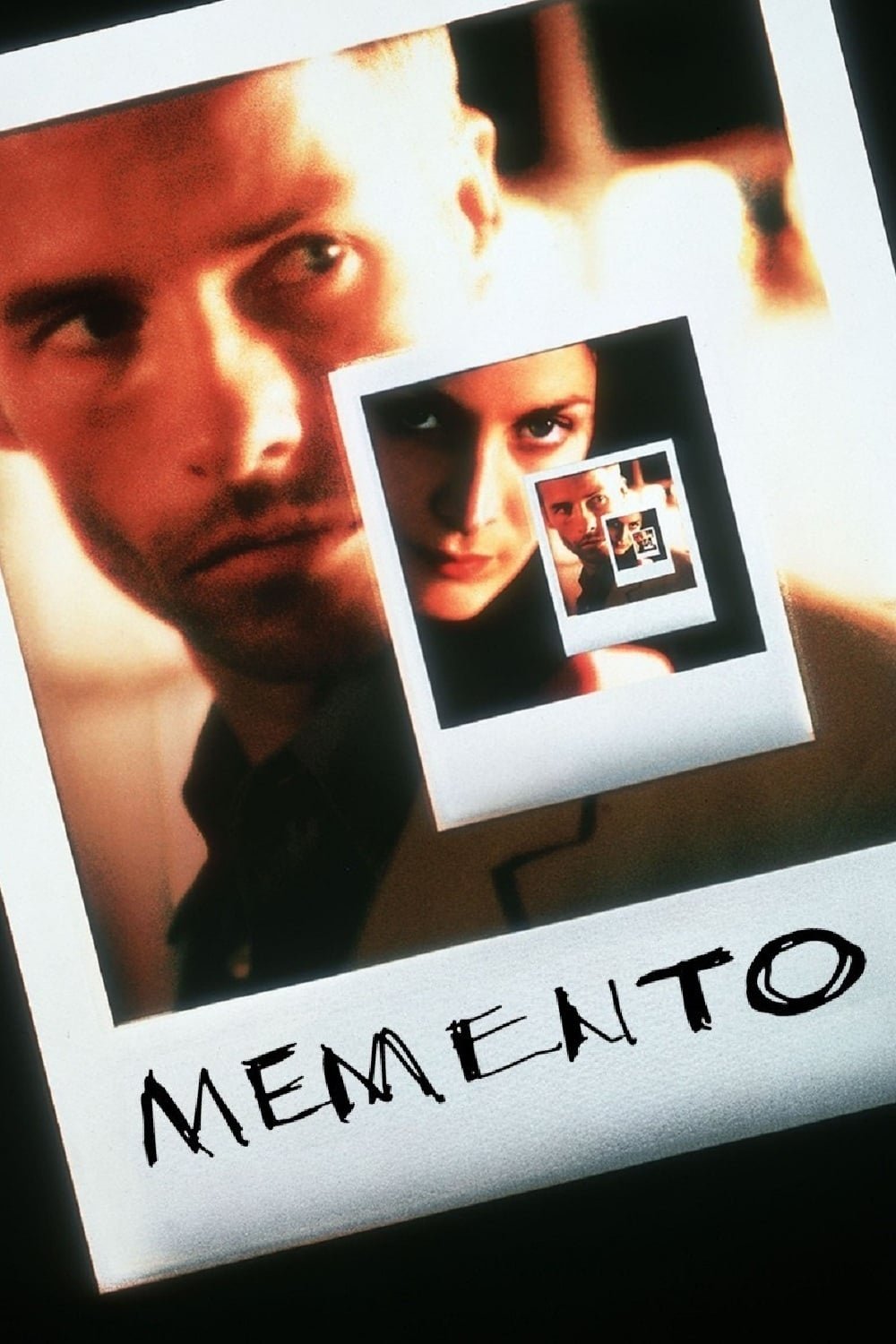
Memento (2000)
The earlier machine built on a confession you are not equipped to hear the first time.
More Lunara Film Criticism
Further Reading
 ★★★★★
Lunara Film Review
Watch trailerThe Odyssey — I Walked Right Back In
Nolan aimed the biggest camera on earth at the oldest story about going home -- and I walked out of the 70mm IMAX and bought a ticket to...
Updated September 23, 2026
 ★★★★½
Lunara Film Review
Tenet — Don’t Understand It. Feel It.
The Nolan film I have watched the most is the one everybody claims not to understand -- and the film told us all, out loud, in the trailer,...
Updated September 23, 2026
 ★★★★½
Lunara Film Review
Dunkirk — The Clocks Are the Story
A week on the beach, a day on the sea, an hour in the air -- braided into one escalating sensation. Dunkirk is the closest Nolan has come...
Updated September 23, 2026
 ★★★★★
Lunara Film Review
Interstellar — This Generation’s 2001
I will make the claim without a safety net: Interstellar may well be this generation's 2001 -- and the heresy is that it out-feels its...
Updated September 23, 2026
 ★★★½
Lunara Film Review
The Dark Knight Rises — Following a Shooting Star
No sequel in modern movies inherited a harder assignment: follow the film that changed everything, without the shooting star who changed...
Updated September 23, 2026