
Lunara Review
The Odyssey — I Walked Right Back In
I walked out of The Odyssey and bought a ticket to walk right back in -- Nolan aimed the biggest camera on earth at going home, and it wrecked me.

Nolan aimed the biggest camera on earth at the oldest story about going home — and I walked out of the 70mm IMAX and bought a ticket to walk right back in.
Watch
Official Trailer
Christopher Nolan’s “The Odyssey” does not open with thunder, steel, or a divine tantrum. It opens with a man on a banquet table, working the room like an ancient stand-up prophet. That is exactly right for an incredible adaptation, and arguably Nolan’s career-best screenplay: a movie about storytelling as power, the thing that saves you, damns you, flatters you, betrays you, and occasionally gets everyone killed.
The story he tells, however, is not the poem advertised on the marquee. The movie is the Odyssey; his bit is one room inside the labyrinth. Travis Scott, who plays the speaker and also cowrote and performs the closing song, turns up briefly but with purpose. By then Nolan has already dragged us deep into the legend, close to its grand housecleaning by murder. His subject is the Trojan Horse and Odysseus (Matt Damon), a hero so overhandled by culture that Nolan can weaponize our boredom with him. You think you know the image. Nolan keeps handing it back dirtier, stranger, and more dangerous.
The Trojan Horse, for starters, is not Homer’s personal property. It is not in The Odyssey, and it is not in The Iliad either. It comes down through other classical channels, most famously Virgil’s much later Aeneid. Nolan seizes that hand-me-down icon and strips off the gift-shop gloss. This is no adorable wooden pony on wheels. It lurches out of the surf like a dead god, then gets dragged inland over logs. Inside, Odysseus, Menelaus (Jon Bernthal), and the Greek soldiers are stuffed together in a reeking coffin of armor, sweat, terror, and corpses. Days pass. Men die before the trick even works. The movie spares us the smell, which is probably the most merciful choice Nolan makes.
As writer-director, Nolan treats the source material less like holy text than like salvage: fragments, rumors, canonical leftovers, and ancient gossip welded into one bruised machine. That is not disrespect. It is adaptation at its most alive, and the screenplay’s brilliance is how cleanly it turns a monument into a nerve ending. The center still holds Odysseus, king of Ithaca, husband of Penelope (Anne Hathaway), and father of Telemachus (Tom Holland), now grown into the shape of a question his father never answered. Back home, Penelope is trapped with suitors who eat her food, raid her wine, poison her household, and wait for exhaustion to look like consent. Odysseus goes to Troy for ten years, then spends ten more years not coming home — because of storms, gods, monsters, sex, pride, guilt, or the oldest excuse in the book: himself.
That is the movie’s live wire: is this fate, punishment, trauma, vanity, or just a man turning delay into destiny? At 172 minutes and IMAX scale, the film should lumber. It doesn’t, because Nolan and editor Jennifer Lame cut time into shrapnel. Youth, war, aftermath, prophecy, confession — they ricochet off one another until chronology feels like a weak organizing principle. The method recalls “Oppenheimer,” but with less stopwatch panic and more mythic rot. The film does not race toward disaster; it prowls around an old wound, pressing until something ugly leaks out. When one story opens into another, it feels less like structure than infection.
That experience is not abstract for me. I saw it in 70-millimeter IMAX in Dallas, Texas, one of the few places showing the film in that format, and the privilege of that access is hard to ignore. Everyone deserves theaters capable of making movies feel this large, alive, and enveloping, even if advocacy can only go so far when distribution and infrastructure make the choice for us. Still, sitting in that room, with the image towering and the sound seeming to move through the walls, the film became exactly what this format promises at its best: not just impressive, but transporting.
The mortal and divine roll call is sprawling, unruly, and better for it. Athena (Zendaya) appears to Odysseus like a private hallucination with authority. Lupita Nyong’o plays Helen, the face that launches a catastrophe, and Clytemnestra, Helen’s twin and Agamemnon’s wife; Benny Safdie plays Agamemnon with the hard little glint he brought to “Oppenheimer.” Nolan raids The Iliad, The Aeneid, The Odyssey, and the barnacles of later interpretation stuck to all of them. The result is basically an Odysseus Expanded Universe, minus the corporate stink of a post-credits scene where Zeus announces Phase Two.
Nyong’o’s casting as Helen, predictably, sent the usual bad-faith scolds into their tiny paper storms, suddenly defending Greek myth as though it were a police report. This is a universe with Scylla, a tentacled maritime nightmare; the Cyclops, Poseidon’s one-eyed outcast son; sirens; and Calypso (Charlize Theron), who loves Odysseus enough to drug his memory with lotus flowers. Circe (Samantha Morton), daughter of Helios and Perse, is the film’s purest menace, turning men into beasts without giving viewers the version they expect. Elliot Page’s Sinon begins as a doomed Greek pawn in the Horse scheme and returns after death in a sequence that owes as much to zombie cinema as to epic poetry.
Myths are not HR forms. They survive because cultures keep stealing them back from museums. Shakespeare lived through Denzel Washington’s Macbeth, Ian McKellen’s fascist “Richard III,” and Julie Taymor turning “Titus” into a fever dream; Homer can handle a casting director with a pulse. Nolan’s inclusiveness is not homework. It is the point: these stories belong to whoever can make them bleed again. Page, reunited with Nolan after “Inception,” plays a male warrior without quotation marks. John Leguizamo brings his own voice to Eumaeus, Odysseus’ blind counselor, and the character instantly stops smelling like marble. Leguizamo should be in the awards conversation, though Robert Pattinson may steal oxygen as Antinous, a suitor so slick, smug, and morally rancid he practically sweats cologne.
The strategy has ancestors in Scorsese’s “The Last Temptation of Christ” and Ridley Scott’s “Gladiator,” films that understood period distance is useless if everyone behaves like waxwork. That Scorsese connection is not accidental: Nolan’s composer, Ludwig Goransson, has said Nolan specifically invited him over to screen “The Last Temptation of Christ” as inspiration for “The Odyssey.” Nolan wants immediacy, not archaeology, and the modernization is deliberate rather than decorative. The blunt language, contemporary rhythms, and open casting are not attempts to make Homer “relatable” in the cheapest sense. They argue that the story already is: about war crimes recast as glory, men confusing absence with destiny, women forced to survive entitlement dressed as tradition, and societies turning violence into myth before the bodies are cold. That is why Telemachus says “my dad,” and why soldiers swear instead of declaiming like graduate students in linen. Purists may clutch their footnotes, but unless they are demanding the whole cast speak ancient Greek, their complaint is mostly costume jewelry.
As spectacle, the film has the brute authority Nolan’s partisans crave and his detractors often pretend not to notice. It is huge, yes, but not weightless; immaculate, but not shrink-wrapped. Salt, blood, smoke, crushed leaves, hot metal — the world has texture and bite. The Horse looks heavy because, miracle of miracles, something heavy appears to be there. In a war flashback, a towering burning structure collapses as bodies scatter beneath it, and the image lands with the sickening credibility of mass and heat. The whole thing feels like a feat of filmmaking we may not get again soon, maybe ever, at least not at this scale. Big-budget Hollywood now so often moves like an industry devoted to corner-cutting: green rooms pretending to be kingdoms, digital weather, digital crowds, digital danger, digital everything. Nolan seems almost allergic to that shortcut mentality. His obsession with practical effects, real locations, and film-based photography can sound precious in interviews, but onscreen it becomes a rebuke. Gravity still matters, and too many modern blockbusters have forgotten what objects are.
The scale never gets to be the whole argument. Ships, palaces, monsters, and collapsing towers matter because they squeeze the people trapped among them. Penelope’s rage is not ornamental suffering; it is the rage of a woman watching men treat her home, labor, body, and future as a waiting-room prize. Telemachus has inherited not a father but a vacancy with muscles. Odysseus slowly confronts the possibility that the gods are convenient scapegoats. Maybe home is far away because he has done things that make return morally impossible. Maybe exile is not only what happens to him, but what he keeps choosing.
Damon plays Odysseus like a classical star hero left out in the weather: sturdy, handsome, battered, and not nearly as noble as his posture suggests. Cunning is his brand, and cunning has a body count. He talks honor, even ceremonializes it with the twang of a bowstring before killing, but his code folds the moment rage, pride, or convenience touches it. The movie understands that warrior ethics often become decor after the killing starts. Even the Cyclops is granted a nasty little twist of sympathy: not just a monster, but a shepherd invaded by murderous houseguests with better public relations.
Troy’s fall is ugly enough to poison victory without turning the film into misery tourism. Odysseus’ men are accused elsewhere of “rape and murder” in Greece’s name; Nolan keeps the first offscreen and makes the second unavoidable. Women and children are killed. The Ithaca climax still gives the savage pleasure of payback, because genre machinery has its appetites, but Nolan refuses to let catharsis scrub the blood clean. These are kings, husbands, fathers, soldiers, and butchers. The hero has committed atrocities and still expects to be welcomed as the moral center of the room.
Best of all, Nolan does not tack on a moralizing explainer, that deadening little plaque so many blockbusters nail to the exit. “The Odyssey” leaves its hero contaminated: brave and vain, loving and violent, homesick and guilty, mythic and rotten. It neither exposes him as a fraud nor embalms him as an icon. That refusal is what makes the adaptation feel so startlingly modern. Its core themes — homecoming, conquest, masculinity, memory, propaganda, guilt, and the stories nations tell to excuse bloodshed — are not sealed in antiquity. They are still pacing around our world, wearing cleaner clothes. Just as rare is the filmmaking itself: a colossal studio picture that seems built, touched, dragged, burned, weathered, and endured rather than rendered into corporate vapor. People are mixed creatures. That is not exactly breaking news, but in a franchise age built to sand down every edge, fake every texture, and hand the audience a sedative, the refusal to simplify feels almost rude. Good.
LUNARA DEBRIEF
- Score:★★★★★
- Year:2026
- Where to Watch:
Pair It With
Three films in conversation with this one.
Theme Echo
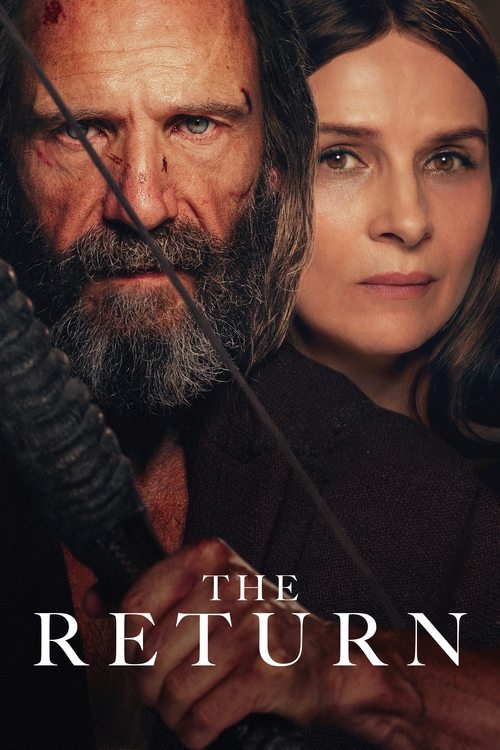
The Return (2024)
The same homecoming stripped of gods and monsters, Fiennes's Odysseus walking back into Ithaca with no myth left to hide behind, only the marriage and the damage. It shows you what all of Nolan's scale is for.

Counter-Program
2001: A Space Odyssey (1968)
The other Odyssey, and the anti-Nolan: Kubrick finds awe in a cosmos that could not care less whether you make it home; Nolan finds it in a man who cares about nothing else. One voyage, one cold as the void, one warm as a hearth.

Career Context
Interstellar (2014)
Nolan already bet a physics-scale epic on a parent's love and the pull home; The Odyssey is that same bet made ancient, the faith that feeling survives any distance, now measured in decades and a wife at a loom.
Further Reading
More Lunara Criticism
 ★★★★½
★★★★½
Lunara Review
Tenet — Don’t Understand It. Feel It.
The Nolan film I have watched the most is the one everybody claims not to understand -- and the film told us all, out loud, in the trailer,...
Updated July 20, 2026
 ★★★★½
★★★★½
Lunara Review
Dunkirk — The Clocks Are the Story
A week on the beach, a day on the sea, an hour in the air -- braided into one escalating sensation. Dunkirk is the closest Nolan has come...
Updated July 20, 2026
 ★★★★★
★★★★★
Lunara Review
Interstellar — This Generation’s 2001
I will make the claim without a safety net: Interstellar may well be this generation's 2001 -- and the heresy is that it out-feels its...
Updated July 20, 2026
 ★★★½
★★★½
Lunara Review
The Dark Knight Rises — Following a Shooting Star
No sequel in modern movies inherited a harder assignment: follow the film that changed everything, without the shooting star who changed...
Updated July 20, 2026
 ★★★★★
★★★★★
Lunara Review
Inception — The Review Already Exists
The definitive review of this film was written in the summer of 2010 by the critic I love most in this business, and anything I add to its...
Updated July 20, 2026