

Inception, 2010. Warner Bros.
Inception — The Review Already Exists
Movie Review
The definitive review of Inception was written in 2010. This is the review of what the movie has been doing to us ever since.
Some films come pre-reviewed, and this is one of them. The critic I love most in this business, the one whose work is the reason half of us do this at all, wrote the piece on Inception in the summer of 2010. He said what the film is and how it thinks with a clarity I could chase for a whole career and never catch. I am not going to stand here rearranging his furniture. Go read it; you know where it lives. What I can offer is the review no one could have written that summer, because the material for it did not exist yet: fifteen years of watching this movie work on people, in living rooms and rep houses and every best-of list it muscled onto, the way I have spent a lifetime watching people watch Nolan. Inception is that rare blockbuster whose afterlife outgrew its opening weekend. The afterlife is the review.
Say the pitch out loud and it still sounds ridiculous, in the way only supremely confident movies get to be ridiculous. A thief who steals secrets out of dreams takes one last job, except this time he is not extracting an idea. He is planting one, three layers deep in a sleeping heir’s mind, and he needs a crew to do it: a point man, a chemist, a forger, an architecture student who builds the mazes. Nolan shapes it as a heist because a heist is the one genre where exposition is a pleasure instead of a chore. Every rule the film lays out is a tool you will watch get used, and the lessons arrive with such procedural relish, the folding city, the training dream, the totems, that learning the game becomes the whole action of the first act. Then the job goes wrong the only way a Nolan job ever goes wrong, which is personally. The thing in the vault is grief. It is always grief. Cobb has been smuggling his dead wife into every dream like a stowaway, and the deeper the team goes, the plainer it becomes that all those nested levels, a dream inside a dream inside a dream, each layer’s clock stretching under the last, are a diagram of one man’s guilt. It goes down forever too. It will not let him wake either.
What holds up hardest at fifteen years is the weight of things. The hallway fight is still the best action sequence of its decade, and it was made with a rotating set and a man named Joseph Gordon-Levitt learning to run on walls. You believe the weightlessness because the weight was actually lost. A van falls for an entire act while three other timelines sprint underneath it, and the crosscutting, Lee Smith conducting four speeds of time against one Edith Piaf horn blast slowed into that bwaaam, remains the most influential ninety seconds of sound design this century. Everyone stole the horn. Nobody stole the discipline. Hans Zimmer’s score is the film’s own trick smuggled into music: the Piaf song runs all the way through it, decelerated, a soundtrack carrying its own dream layer, and the movie plants that detail and never once points at it.
The crew is the film’s slyest joke, and all you have to do is read the job titles. A director assembles a team for one last production. The point man runs logistics. The architect designs the sets. The forger plays the parts. The chemist handles the technical means. The money man wants a credit. And a mark, a tourist, must never realize he is inside a constructed experience, or the whole thing falls apart. Inception is a filmmaking allegory so complete it barely bothers to wink; Tom Hardy’s Eames even gets the director’s note, “You mustn’t be afraid to dream a little bigger, darling,” delivered while he upgrades a prop. A film about planting ideas in a stranger’s head, made by a man who plants ideas in strangers’ heads for a living. The con lands on us for the same reason it lands on Fischer. We wanted the catharsis more than we wanted the truth.
The complaints have not changed since 2010, and I will keep them short, since the definitive version of this paragraph also already exists. These dreams are suspiciously well-behaved, all corridors and cityscapes, when real dreaming is spillage and nonsense, and the film runs colder at heart than its premise promises. Marion Cotillard’s Mal is a magnificent threat who is also, finally, a projection, which is the point and also a ceiling on the feeling. The movie knows all of this. The dreams are orderly because they are jobs, and the film is about a man who has industrialized his own subconscious so he never has to feel it; the chill in the halls is his. I believed that defense in 2010. The years have only firmed it up.
But here is the part of Inception that belongs to the afterlife, the part I have watched with my own eyes more times than I can count. The ending is the greatest watching-people-watch moment in modern movies. The top goes up on the table. Cobb walks away from it, the film’s entire case made in one blocking choice, a man finally not checking, and Nolan cuts to black one wobble before the answer. Every room I have ever seen it in makes the same sound. The groan, the laugh, the argument starting before the lights come up. Fifteen years of dorm rooms and dinner parties litigating a spinning toy. The film planted an idea in the culture and let it grow on its own, and any character in this movie could tell you that is the only kind of inception that takes. The idea is the simplest one in the world: it does not matter whether the top falls. He is not watching it. We are. Still. All these years later. That is not a plot hole, and it is not a tease. It is the most elegant proof any blockbuster has ever offered that the audience was the mark all along, and we keep lining up to be fooled, and we call the con a classic because that is exactly what it is.
Lunara Film Debrief
- Score:★★★★★
- Oscar Ledger8 nominations • 4 wins
- Year:2010
- Where to Watch:

Theme Echo
What is this film really about — and who else has said it?
Solaris (1972)
The other grief that manifests inside the machine -- a dead wife the mission cannot quarantine.

Counter Program
What is the strongest argument against it?
Paprika (2006)
Dreams as spillage instead of architecture -- the anarchic id this film keeps in a vault.
Career Context
Where does this sit in the artist's story?
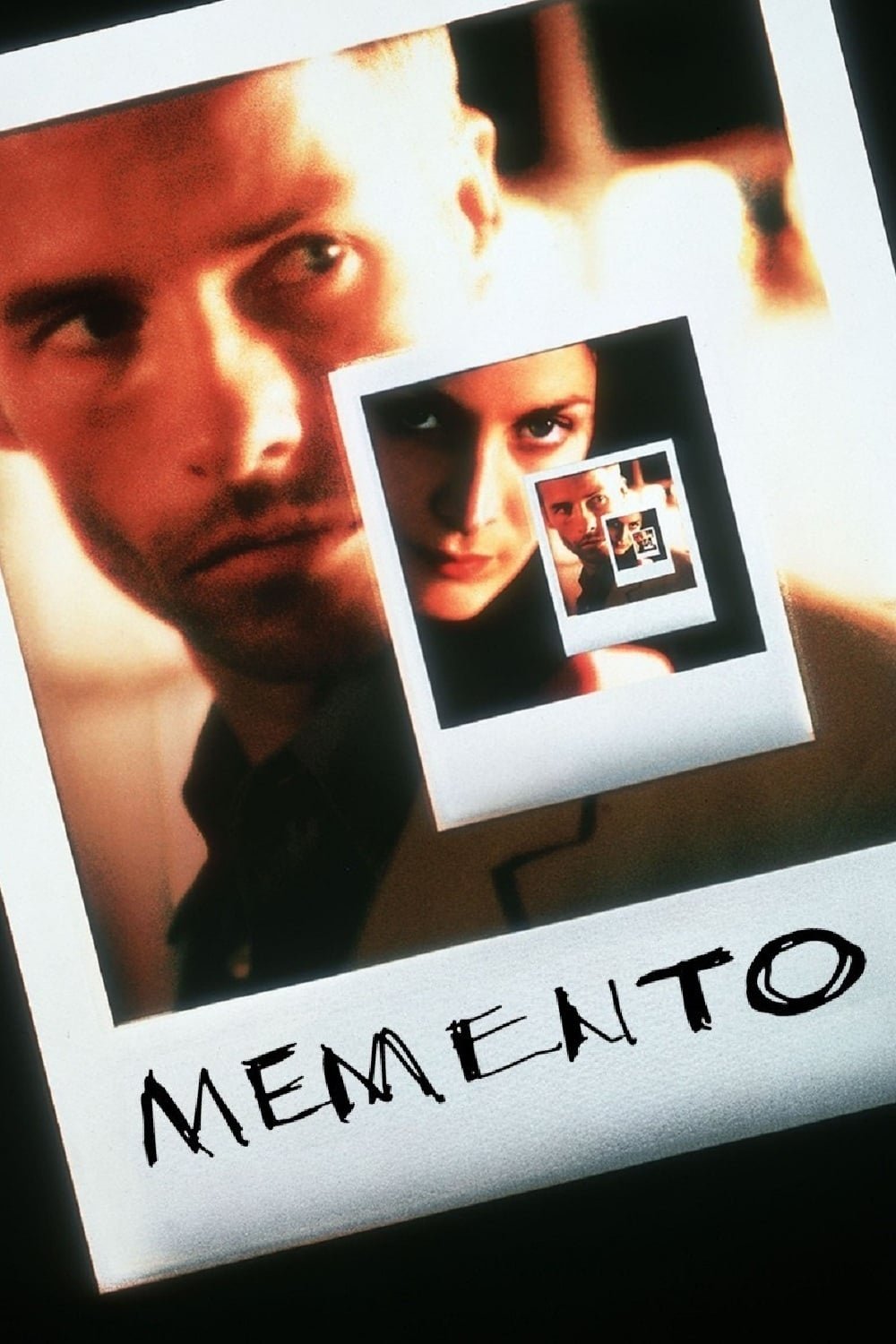
Memento (2000)
The first Nolan man who built a system to avoid a grief -- Cobb is Leonard with a budget.
More Lunara Film Criticism
Further Reading
 ★★★★★
Lunara Film Review
Watch trailerThe Odyssey — I Walked Right Back In
Nolan aimed the biggest camera on earth at the oldest story about going home -- and I walked out of the 70mm IMAX and bought a ticket to...
Updated September 23, 2026
 ★★★★½
Lunara Film Review
Tenet — Don’t Understand It. Feel It.
The Nolan film I have watched the most is the one everybody claims not to understand -- and the film told us all, out loud, in the trailer,...
Updated September 23, 2026
 ★★★★½
Lunara Film Review
Dunkirk — The Clocks Are the Story
A week on the beach, a day on the sea, an hour in the air -- braided into one escalating sensation. Dunkirk is the closest Nolan has come...
Updated September 23, 2026
 ★★★★★
Lunara Film Review
Interstellar — This Generation’s 2001
I will make the claim without a safety net: Interstellar may well be this generation's 2001 -- and the heresy is that it out-feels its...
Updated September 23, 2026
 ★★★½
Lunara Film Review
The Dark Knight Rises — Following a Shooting Star
No sequel in modern movies inherited a harder assignment: follow the film that changed everything, without the shooting star who changed...
Updated September 23, 2026