
Lunara Review
Children of Men — Tomorrow Is a Boat
The long takes made it famous; the margins made it permanent.

The long takes made it famous; the margins made it permanent.
The miracle gets about ninety seconds. Deep in the battle for the Bexhill refugee camp, in a tenement being taken apart floor by floor, a newborn starts crying, and the war stops. Soldiers lower their rifles and cross themselves. Refugees reach out to touch the blanket as Theo and Kee carry the first child born on earth in eighteen years down an open stairwell, through men who a moment ago were killing each other and will shortly resume. Somebody shouts the ceasefire down the line. The camera walks with them, unbroken, out into gray daylight. Then a rocket lands, and the fighting picks back up like weather. That is the scene the whole film exists to earn, and its honesty is the point: the miracle changes every heart in range and not one fact on the ground. Hope, in Alfonso Cuaron’s masterpiece, is not a feeling. It is a job you finish anyway.
The setup is a nativity restaged as a courier run. London, 2027, eighteen years into global infertility no one can explain. The youngest person alive, a celebrity called Baby Diego, has just been stabbed by an admirer he waved off, and the whole planet grieves him like a family member because he was the last proof the species had a pulse. Britain, the propaganda says, soldiers on: which means cages on the high street, deportation buses, suicide kits sold over the counter with a soothing brand name. Theo Faron, a former activist hollowed into a ministry clerk, pours whiskey into his morning coffee and walks out of a cafe seconds before it detonates. His ex-wife Julian resurfaces to buy his connections for transit papers, and the cargo turns out to be Kee, a refugee eight months pregnant with the impossible. Everyone who learns she exists, government and revolutionary alike, wants her as a flag. The film is the story of the one man who ends up wanting her safe instead.
In 2006 the craft got the headlines, and the craft deserved them: the roadside ambush shot in one unbroken take from inside the car, the camera swiveling on a rig built into the roof; the six-minute walk through the Bexhill battle with blood spattered on the lens, left there because wiping it would have been a lie. Twenty years on, the takes are the least of it. What made the film permanent is its peripheral vision. Cuaron’s camera keeps getting distracted from the plot by grief that has nothing to do with the plot: the caged elderly on the pavement, the burning livestock in the fields, a woman on a shelled street keening over her son’s body, posed like a wire photo out of the Balkans. His design rule was that nothing on screen could be invented; every horror had to be sourced from an existing photograph of the actual present, the hood from Abu Ghraib, the cages from Guantanamo, the camps from the evening news. That rule is why the film has aged backward. It was never a prediction. It was a scrapbook of things already happening somewhere else, mailed forward to a decade that would recognize them at home.
The single takes are usually praised as immersion, but their real function is harsher: they cancel mercy. When Julian is killed, shot through the windshield mid-laugh minutes after a ping-pong ball trick that briefly resurrected an entire marriage, there is no cutaway to absorb it, no reaction shot to tell you how to feel. The scene has to keep living with the body in it, the way a day does. Clive Owen builds Theo out of that same grammar. He is the rare action lead whose heroism is only stamina; he never fires a shot in the entire film, spends the climax armed with nothing but a newborn, and does his most important acting with his back, hauling, shielding, staggering forward in sandals. Michael Caine’s Jasper, an aged radical with a catatonic wife, a crop called Strawberry Cough, and a standing pull-my-finger routine, supplies the film’s whole case for joy, and pays it off with the bravest thing in the picture: he tells the joke one last time to the man about to kill him, buying his guests sixty more seconds of head start. And Claire-Hope Ashitey keeps Kee human inside a role every faction in the story tries to flatten into scripture, springing her pregnancy on Theo in a barn full of cows and then puncturing the tableau with a grin and a virgin-birth joke. The film knows exactly what picture it is painting, and lets her laugh at it first.
The center is thinner than the circumference. Theo’s grief for his dead son runs mostly on shorthand, one photograph on Jasper’s table and one wordless look, and the film asks Owen’s stubble to carry backstory the script declines to dramatize. Kee, for all Ashitey’s pushback, still spends long stretches as sacred cargo, ferried and fought over, her interior life the one margin this endlessly attentive camera does not wander into; the film indicts every faction for treating her as a symbol while never entirely breaking the habit itself. And when the symbolism dial turns, it turns loud: the rescue vessel is named Tomorrow, in case the fog was too subtle. There is a fair dissent that assembles these into a charge of spectacle, misery orchestrated for virtuosity. It collapses on the evidence of the style: the lens dirty, the light overcast, the compositions crediting every extra with a life the plot has no use for. But the thinness at the center is real, conceded, and priced in.
What the verdict rests on is the ending, which may be the most honestly earned in the century’s science fiction. A rowboat in fog, a wounded man teaching a new mother how to burp her child, gently, gently, while his own blood pools unmentioned. Kee tells him the name she has chosen: Dylan, the name of Theo’s dead boy. It is a girl’s name too, she says. Then the buoy, the fog, and the trawler surfacing out of gray like a rumor made of steel, the word Tomorrow on its hull. Read the image literally, the way it asks: a boat, arriving on schedule, because two dead women and two dead men kept an appointment. Hope in this film is not optimism, which is a mood, but fidelity, which is a practice. The war resumed ninety seconds after the ceasefire. The baby is still on the water. Both things are true, and Children of Men is the great film of its era because it never once picks just one.
LUNARA DEBRIEF
- Score: 5 / 5
- Year: 2006
- Where to Watch: VOD [all major platforms] | Universal disc
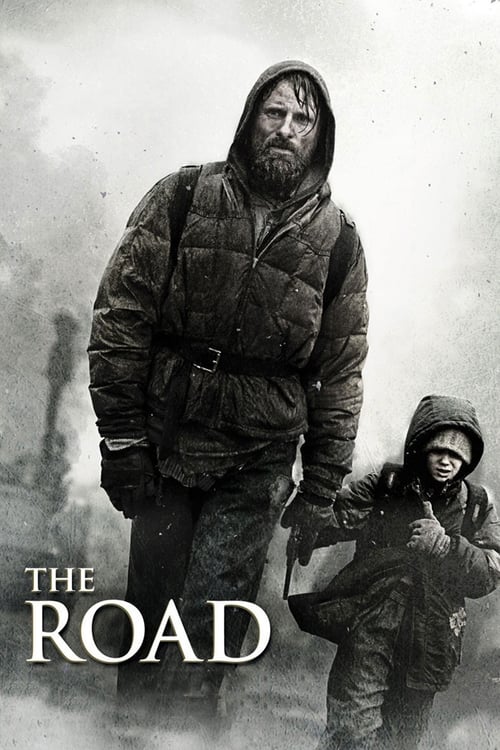
- Theme Echo: The Road (2009) tt0898367. Two films about ferrying the future through a dead world. The father carries the fire as a private inheritance, one soul to one soul; Theo carries a public delivery, meant for everyone. Each film exposes the other’s blind spot: private hope curdles into paranoia, public hope gets seized as a flag.
- Counter-Program: Blade Runner (1982) tt0083658. The invented future against the sourced one. Scott built tomorrow out of imagination and it became style; Cuaron built it out of that morning’s news photos and it became true. The pairing shows the price each paid: one film is more beautiful, the other more likely.
- Career Context: Y Tu Mama Tambien (2001) tt0245574. The road movie whose camera kept drifting from its leads to notice roadside arrests and funeral processions. Children of Men is that same wandering eye given a war to notice: the holiday drive grown up into an evacuation.
LUNARA DEBRIEF
- Score:★★★★★
- Oscar Ledger3 nominations • 0 wins
- Year:2006
- Where to Watch:DigitalFind Digital OptionsAvailabilityUniversal disc
Pair It With
Three films in conversation with this one.
Theme Echo
The Road (2009)
Two films about ferrying the future through a dead world. The father carries the fire as a private inheritance, one soul to one soul; Theo carries a public delivery, meant for everyone. Each film exposes the other's blind spot: private hope curdles into paranoia, public hope gets seized as a flag.

Counter-Program
Blade Runner (1982)
The invented future against the sourced one. Scott built tomorrow out of imagination and it became style; Cuaron built it out of that morning's news photos and it became true. The pairing shows the price each paid: one film is more beautiful, the other more likely.

Career Context
Y Tu Mama Tambien (2001)
The road movie whose camera kept drifting from its leads to notice roadside arrests and funeral processions. Children of Men is that same wandering eye given a war to notice: the holiday drive grown up into an evacuation.
Further Reading
More Lunara Criticism
 ★★★½
★★★½
Lunara Review
The Devil Wears Prada — Cerulean Is a Verdict
The most unsettling thing about Miranda Priestly is how often she is completely right.
Updated July 25, 2026
 ★★★★★
★★★★★
Lunara Review
Miami Vice — Time Is Luck
Mann shot the night the way it actually looks and love the way it actually ends: on a clock.
Updated July 25, 2026
 ★★★★★
★★★★★
Lunara Review
Marie Antoinette — Girlhood Under Glass
The film they booed for ignoring the Revolution is exact about the only country its queen was ever allowed to govern.
Updated July 25, 2026
 ★★★★★
★★★★★
Lunara Review
Clerks II — Ownership Is the Happy Ending
The donkey show is the dare; the jailhouse proposal is the movie.
Updated July 25, 2026
 ★★★★★
★★★★★
Lunara Review
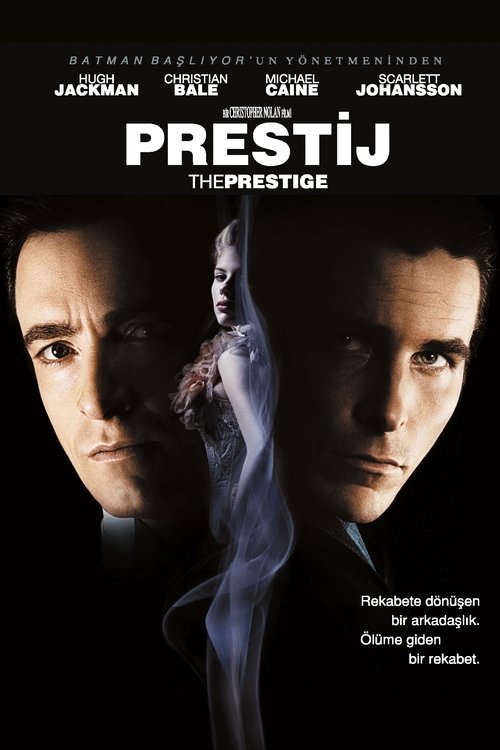
The Prestige — The Second Viewing Is the Trick
The film tells you its secret in the first five minutes, out loud, twice. I did not hear it until the second viewing -- and the gap between...
Updated July 20, 2026