

Silence, 2016. Paramount Pictures
Silence — The God Who Will Not Answer
Movie Review
After fifty years of arguing with God, Scorsese finally goes quiet and listens, and the silence he hears back is the most frightening and most consoling thing he has ever put on screen.
A man is lashed to a cross in the surf. The tide comes in, and goes out, and comes in again, and Martin Scorsese will not cut away. It takes the man three days to die, and the film makes you live inside those days, because the horror here is not blood. The horror is duration. The waiting is the prayer, and the prayer goes unanswered, and that unanswered prayer is the whole movie, held in one image until you can barely stand it.
Scorsese has spent fifty years making films about men who believe in something the world will not let them keep. The church, the code, the family, the myth of their own grace. He has watched that belief curdle into violence or delusion in picture after picture, and he has always kept one hand on the wound. Silence is the film where he takes the hand away. No code fails here. No family betrays anyone. His man stands in front of the thing itself: if God is real, why is He silent while His people drown?
The story is simple enough to say in a breath. Two young Portuguese Jesuits sail to seventeenth-century Japan to find their mentor, Ferreira, who is rumored to have renounced the faith under torture, and to minister to a hidden Christian population being hunted to extinction. What they find is not the glory of martyrdom they packed with their vestments. It is mud. It is fog. It is a question that gets quieter and heavier the longer the film holds it, and the film holds it for nearly three hours without blinking.
Nothing else in Scorsese’s filmography looks or moves like this. There is no needle-drop. There is almost no score. The camera that made his gangsters and hustlers feel like the most alive men in any room has been stilled. Rodrigo Prieto shoots Japan in a near-monochrome of grays and bled greens, human figures pushed to the bottom of enormous frames and crushed under weather, and Thelma Schoonmaker cuts against every reflex that made Goodfellas fly, slowing the film until time itself becomes a penance. Understand what that choice is. It is not a style. It is theology. A film about the silence of God could not be told in a maximalist’s voice; it had to be built to wait, to sit inside the absence of the thing it longs for, so that you do not hear the withholding described. You feel it withheld from you.
Andrew Garfield plays Rodrigues, and the part asks for the hardest thing acting can do, which is to make the erosion of a soul visible from the outside. At the start his faith is still half vanity. He wants to suffer beautifully. He wants to be the saint in the painting, lit from above, and the film’s long merciless project is to take that picture away from him one humiliation at a time. Watch his face across the runtime: luminous with certainty at the docks, hollowed out by the end, and hollowed not into disbelief but into something stranger and more terrible than disbelief, something that has no name because the church never needed one for it. Across from him, Issey Ogata’s Inoue, the old inquisitor, gives the performance of the year in any language. Inoue does not hate the Christians. He has simply understood that the efficient way to destroy a faith is not to kill its believers but to make its priests choose between their God and their flock’s agony, and he delivers that understanding with a courtly, almost gentle good humor that is worse than any cruelty. He never raises his voice. He never has to.
The whole moral weight of the film comes down to a single object, pressed underfoot again and again: the fumie, a bronze image of Christ that suspected Christians are ordered to step on to prove they have renounced the faith. Scorsese photographs it worn smooth, the face half-erased by the soles of everyone who came before, and the bargain it demands is the most exact dramatization of grace I know of in modern cinema. Step on it, and you have committed apostasy, damnation, the loss of everything Rodrigues crossed the world to keep. Stand firm, and other people, peasants with no theology and only a borrowed hope, are tortured to death in your place. Your purity is paid for in their screaming. The film will not let that choice come clean, and it builds with terrible patience toward the moment when the image on the bronze does the one thing the heavens never have. What it offers Rodrigues in that moment is either the deepest mercy in the picture or its final, cruelest silence. Scorsese does not tell you which. That withholding is the film’s own act of faith.
And this is where Silence shows you what it actually is. Not a film about losing faith. A film about what faith costs once you strip away the consolation of being watched while you lose it. Liam Neeson’s Ferreira, when he finally appears, is no villain and no coward; he is a man who carried the same unbearable arithmetic all the way to its end and came out the other side with an answer that looks, from the outside, exactly like betrayal. The film’s radical proposition is that the answer might also be the truest Christian act in the picture, a love that consents to its own damnation so that others might live. Scorsese once trained for the priesthood and has spent a career failing either to keep the collar or to shake it, and he has made the rare religious film that takes belief and doubt with equal, total seriousness. The believers in the theater and the skeptics beside them will walk out having seen different films, and both will be right, because the silence at the center is large enough to hold both readings without cracking.
But the figure who carries the film’s heart is its least dignified. Kichijiro, the wretched, drunken peasant, betrays Rodrigues and crawls back to confess, betrays him again, confesses again, an endless loop of weakness and repentance that the priest, and honestly the audience, comes to despise. Keep your eye on him anyway, because he is what the film has been about all along. Kichijiro is the Christian who cannot be a hero, who fails every test and comes back anyway, begging for a forgiveness he will only squander, and Scorsese’s deepest sympathy is reserved for exactly this man. The strong renounce grandly, once, and are done. Kichijiro just keeps returning to the mud, asking. That is faith with the strength and the vanity and the martyrdom stripped off, faith reduced to nothing but the need, and the film says the need is enough.
It is a punishing sit, and it means to be; this is not a movie that wants your love so much as your endurance, and its patience will honestly cost it viewers, the long middle circling through capture and coercion one pass more than it strictly needs, the voiceover now and then saying what Prieto’s images have already said better. Carry it out of the theater anyway. What it leaves behind is not despair but the strangest possible consolation, held without one flicker of sentimentality: the idea that God’s silence might not be His absence at all, but the form His presence takes in a world that has made too much noise to hear anything else. Scorsese ends on an image so quiet and so private that to describe it would be to break it, an image that answers the film’s entire question without a single word, which is of course the only way this film could ever answer it. He spent his whole life shouting at the silence. Here, at last, he lets it speak.
Lunara Film Debrief
- Score:★★★★★
- Oscar Ledger1 nominations • 0 wins
- Year:2016
- Where to Watch:DigitalFind Digital OptionsAvailabilitystreaming availability varies
Theme Echo
What is this film really about — and who else has said it?
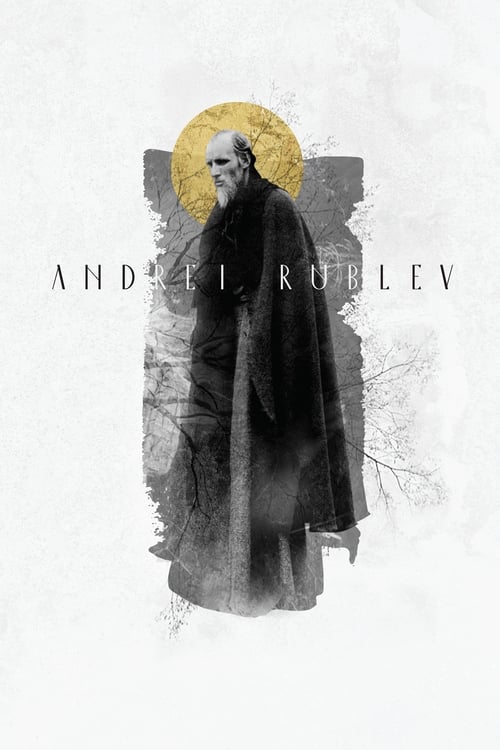
Andrei Rublev (1966)
Tarkovsky's chronicle of a monk-painter who takes a vow of silence after witnessing atrocity is the deepest cousin to Scorsese's film -- both are about an artist or a priest confronting the silence of God across a landscape of historical cruelty, and both locate faith not in answered prayer but in the act of continuing to make or believe anyway. Watched together they argue that the silence is the test, and the test is the whole of the religious life.

Counter Program
What is the strongest argument against it?
The Mission (1986)
Roland Joffe's Jesuit epic takes nearly the identical material -- missionaries, martyrdom, a faith crushed by colonial power -- and renders it as operatic tragedy, swelling with Morricone and moral grandeur. Set against Silence it throws Scorsese's austerity into relief: where The Mission makes martyrdom magnificent, Silence makes it muddy, slow, and unwitnessed, and asks whether the magnificence was ever anything but a story the survivors told themselves.

Career Context
Where does this sit in the artist's story?
The Last Temptation of Christ (1988)
Scorsese's earlier, more scandalous reckoning with faith imagined a Christ tempted by an ordinary human life; Silence is its mature answer, trading the young provocateur's heat for the old believer's stillness. The pairing maps thirty years of one man failing to either keep or abandon his God -- the same wound, opened first in fever and finally in quiet.
More Lunara Film Criticism
Further Reading
 ★★★★
Lunara Film Review
Hail, Caesar! — Faith in the Fake
A studio fixer spends twenty-seven hours protecting lies he believes in, and the Coens mean the believing.
Updated September 23, 2026
 ★★★
Lunara Film Review
Doctor Strange — The Decoration Without the Dread
The images promise a movie Marvel had never made; the script delivers the one it always makes.
Updated September 23, 2026
 ★★★★
Lunara Film Review
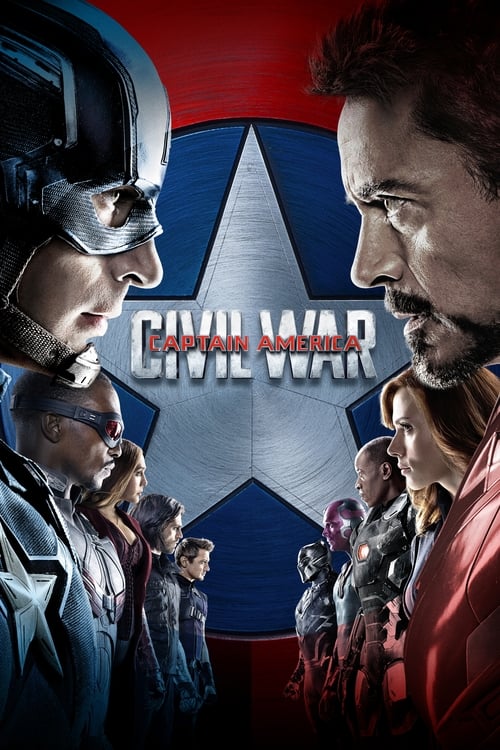
Captain America: Civil War — The Bill Comes Due
The fight everyone paid for happens at an airport; the fight the film is about happens in a bunker, between three men and a television.
Updated September 23, 2026
 ★★★
Lunara Film Review
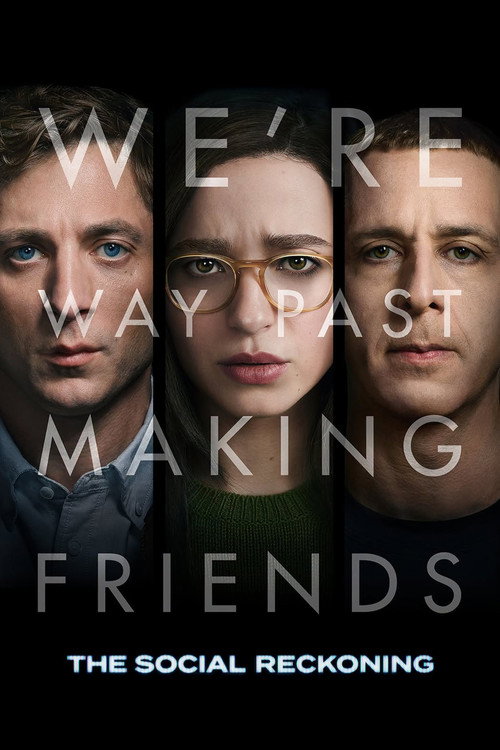
The Social Reckoning – A Procedural Without a Pulse
Aaron Sorkin's The Social Reckoning trades Fincher's kinetic tragedy for a dry, well-acted Facebook procedural that informs rather than shatters.
 ★★½
Lunara Film Review
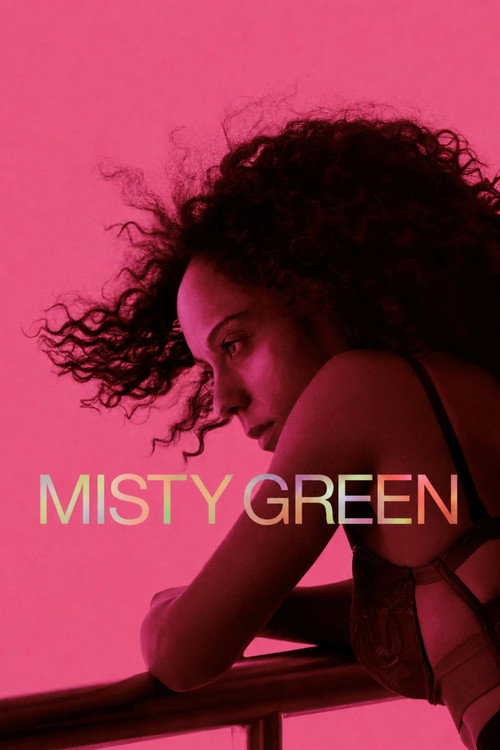
Misty Green – The Price of Second Acts
Chris Rock's Misty Green is an ambitious, tonally fractured Hollywood satire rescued only by Rosalind Eleazar's smoldering musical defiance.