

The End of Oak Street, 2026. Warner Bros. / Bad Robot
The End of Oak Street — All Killer, Full Heart
Movie Review
The best movie of the summer is about a street that falls out of time, and it never wastes a minute of its own.
FULL SPOILERS. This review discusses the entire film, including the third act and the ending. See it first. Trust me on this one.
There is a shot late in The End of Oak Street that I have been carrying around for two weeks like a splinter. A pizza delivery car comes up the hill of a suburban street at dusk, the big plastic logo glowing on its roof, and a family stands at a payphone watching it climb, and I was genuinely afraid. Not of a dinosaur. Of a driver’s face being the wrong face. To explain why a Domino’s-style roof sign became the most suspenseful image of the summer, I have to spoil everything, and for once the movie has earned that: this is the rare picture whose mechanics are so clean that describing them is a form of praise.
Here is the machine. It is 1982, and the Platts live on Oak Street: Denise, a writer working a typewriter in the basement and wondering, guiltily, if this is all there is; Greg, who lost his job and now delivers pizzas, and who pulls the sign off the roof of the car every night before he gets home so his wife will not know. He even loops their son into the lie, gently: your mom would be embarrassed. That detail is the whole film in a driveway. Before a single prehistoric thing happens, David Robert Mitchell has built a household out of small protective dishonesties, everyone shielding everyone from truths that were never actually lethal, and then he drops the neighborhood through a hole in time to find out what the truth costs when it is. One green sphere later, the kind of perfect spherical cutout that leaves trees sheared mid-trunk, the entire street sits in the deep past, and the things outside the windows have feathers.
I want to stand and applaud the dinosaur decision. These are not the glamour lizards we were raised on. They are the current-science versions, feathered and furred and birdlike and wrong-looking in exactly the way real animals are wrong-looking, raptors like tall vicious cranes, a tyrannosaur that moves with the horrible patience of something that has never once been hurried. Some people miss the movie monsters. I understand and I could not disagree more. The design is a thesis: this is not an adventure park, it is an ecosystem that does not know your family is special, and every animal in it is uglier, stranger, and more frightening than nostalgia would allow. When a snake the length of a hallway comes through the house, the film does not score it like a set piece. It scores it like a home invasion, which is what all of this is.
What the movie understands, and what nothing at this budget level has understood in years, is that none of it works unless the family works. The Platts are drawn with the kind of patience that never once feels like stalling. The film splits them along a fault line I loved: when Audrey, the daughter, the one on the roof at night reading Carl Sagan, says the quiet part, that they may be stuck here forever, the family divides not into brave and scared but into believers and reckoners. Greg insists God will not leave them stranded, and their son sides with dad. Denise will not lie to her children, and Audrey, the wormhole explainer, was never going to take comfort on faith. Mitchell does not sneer at either camp. He knows that is how actual people meet catastrophe, half of them praying and half of them counting, and he pays the thread off in the smallest way possible, through Jeannette, the new girl hiding from raptors with them, telling Brian that you do not need private school to pray, you can pray whenever you want. A creature feature that has time for that exchange is a creature feature with a soul.
And it is such a well-made thing, frame by frame. Mike Gioulakis shoots the cul-de-sac the way he shot the suburbs of It Follows, as geometry that promises safety it cannot deliver, and the split diopters had me levitating: foreground face, background threat, both razor sharp, the grammar of not being safe anywhere in the frame. Michael Giacchino, subbing in for the synth dread Mitchell usually favors, goes somewhere I did not expect. The score kept pulling me toward Danny Elfman, the storybook ache of Edward Scissorhands with the size and threat of his Batman moving underneath it, and I mean that as the highest praise I have got. It is a music-box-over-the-rooftops register, the sound of a neighborhood as a snow globe, right before something scaly shakes it, and the trick of it is that the enchantment survives the danger instead of evaporating on contact. The same cue that makes a split-level look like a storybook can make its porch feel far too small for the animal standing on it. My favorite scene in the film has no dinosaur in it at all. Denise alone in the garage, pushing a cassette in, Steve Winwood filling the dark while she sings along and cries at a steering wheel, and the film trains you so well that you brace for the wall to burst the whole time, and nothing comes. Just her hands on the wheel, held in close-up. A monster movie confident enough to let its scariest scene be a woman realizing the size of her own life.
Then the porch. I need to talk about the porch.
Denise, cornered by the tyrannosaur she has already shot and only insulted, and Greg arriving with a sledgehammer, which is exactly the wrong tool, which is exactly the point. He lands it. He actually puts the animal down, leg and then face, and for one delirious second the movie lets you believe in the dad-with-a-hammer version of this story. Then the animal gets up. It takes his leg. And then, in a wide-release PG-13 summer entertainment, it eats him. Eats the father, the co-lead, the movie star, in front of his wife, and the film goes still instead of loud, the frame settling on Denise in shock as she does the thing that broke me, which is that she goes to the children first, because she is a mother before she is a widow, and the grief will have to wait its turn. I sat there genuinely rearranged. The film had spent an hour teaching me it loved this family too much to hurt them, and that was the setup, not the promise.
What saves it, and what elevates the whole picture into the all-timer conversation for me, is that the escape hatch is not a cheat, it is the theme completing itself. The survivors go through the sphere and land in a stranger’s swimming pool, and the year is 1982, the same night, hours before the street is taken. The daughter knows the exact time it happens. The phone calls Denise made in the opening, the ones you barely registered, come due. And so the climb: the pizza car coming up the hill, sign still on the roof, because in this timeline Greg never got home early enough to hide it, and his face in shadow long enough for me to make a full deal with God in my seat, and it is him. It is him. The family that spent the whole movie protecting each other with lies gets saved by the one piece of the lie that was still visible, a plastic sign a proud man forgot to take down. Denise, who once shot a tyrannosaur to no effect, saves everyone this time with a telephone, warning Mrs. Huddleston, warning the librarian who saved them, paying every kindness backward. The epilogue, two years on, has the confidence of a filmmaker who knows he earned it: a bigger house, news footage tying off the dinosaurs, Audrey and Jeannette together at Cornell distance, and a family watching the sphere swallow the old street from the outside, knowing exactly what they were spared.
I have said nothing about the dog, and that is an oversight, because Starbuck is where the film finally says out loud what it thinks love is. He is not a mascot bolted on to manufacture worry. He has a mind, wants of his own, loyalties he acts on without consulting anybody. When the family comes apart, his choices are choices. When somebody he loves is in trouble, he commits his entire body to it, and he does it without first telling a comforting story about how this is going to turn out. Greg swore God would not leave them stranded. Denise would not swear to anything. The dog does not deal in reassurance at all. He moves toward the person who needs him. In a house built out of protective lies, the only one who cannot tell one is the only one who shows you what showing up actually looks like.
The honest flaw, and it is real, is that the McGregor half of the marriage is written a size smaller than the Hathaway half; his fight with Denise about the typing in the basement lands, but he is the one character whose interior the film mostly infers, and the movie leans on our stock affection for the actor to close the gap. It closes it. Barely, and only because the porch turns his simplicity into tragedy retroactively. I can also feel the version of this complaint that says the whole thing is pastiche, the early-Burton hilltop, the Amblin bicycle light, the time-loop homework. To which I say: pastiche is when you borrow the furniture. This movie borrowed the furniture and then lived in the house, fought in it, died in it, and called home from a payphone to save it. I saw it in IMAX at Grapevine Mills with the seats I always complain about, and I did not notice the seats once. Favorite movie of the summer. I cannot wait to take the person I love most to see it, giant snake and all. She will forgive me eventually.
Lunara Film Debrief
- Score:★★★★★
- Year:2026
- Where to Watch:
Theme Echo
What is this film really about — and who else has said it?
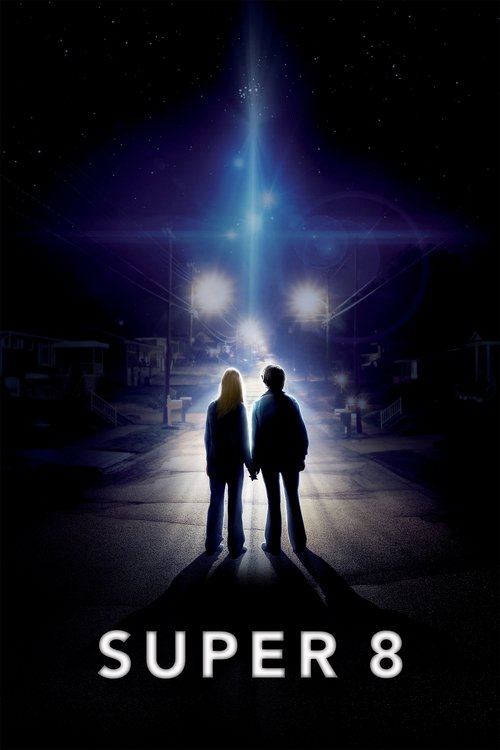
Super 8 (2011)
The other great neighborhood-under-siege period piece, and the same secret: the creature is the occasion, the family is the movie. Oak Street is the version where the marriage, not the monster, holds the mystery.

Counter Program
What is the strongest argument against it?
Jurassic Park (1993)
The glamour-dinosaur cathedral this film argues with, awe against appetite. Watch them together and you can see Oak Street deliberately trading majesty for menace, and what each film buys with its choice.
Career Context
Where does this sit in the artist's story?
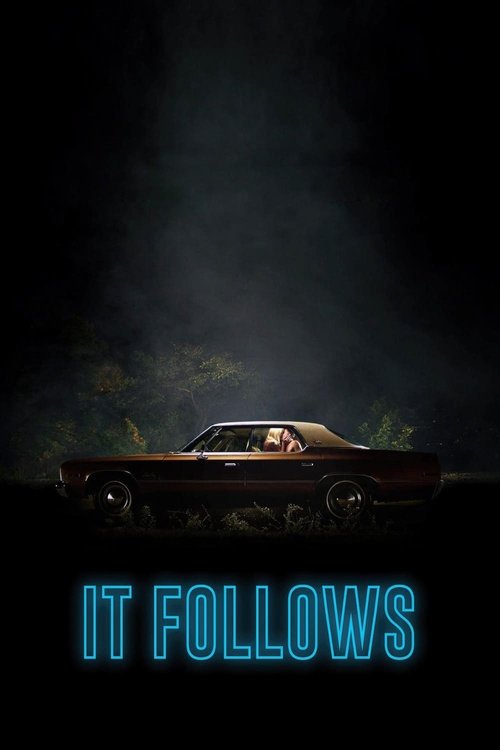
It Follows (2014)
Mitchell's suburbs have always been haunted geometry where the threat can enter any frame. Same eye, same streets, same dread, with the nihilism swapped out for a beating family heart, and the swap is the growth.
More Lunara Film Criticism
Further Reading
 ★★★
Lunara Film Review
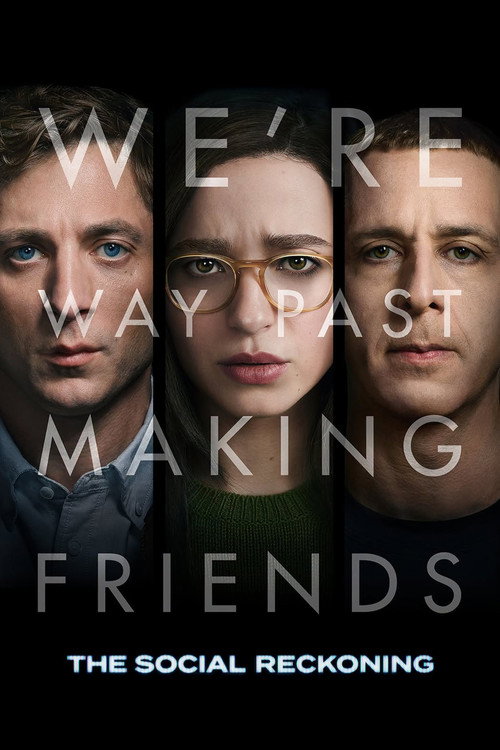
The Social Reckoning – A Procedural Without a Pulse
Aaron Sorkin's The Social Reckoning trades Fincher's kinetic tragedy for a dry, well-acted Facebook procedural that informs rather than shatters.
 ★★½
Lunara Film Review
Misty Green – The Price of Second Acts
Chris Rock's Misty Green is an ambitious, tonally fractured Hollywood satire rescued only by Rosalind Eleazar's smoldering musical defiance.
 ★★★★½
Lunara Film Review
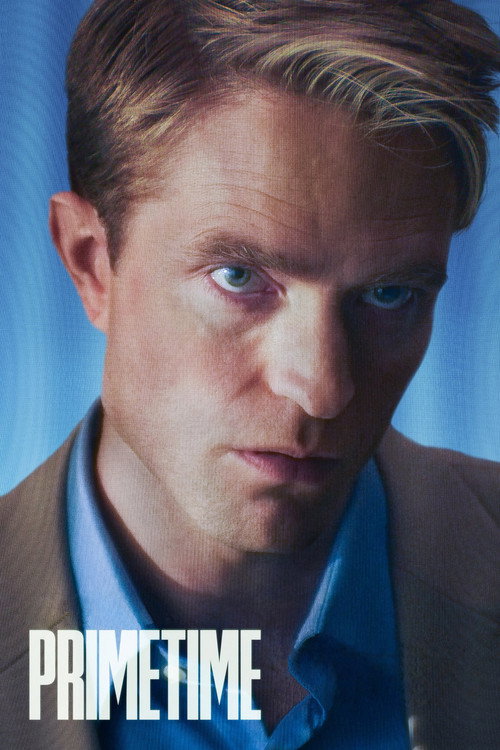
Primetime — The Sordid Theater of Our Friday Night Bloodsport
Lance Oppenheim turns To Catch a Predator into a horror movie, with Robert Pattinson's Chris Hansen in the kitchen and all of us watching from home.
 ★★½
Lunara Film Review
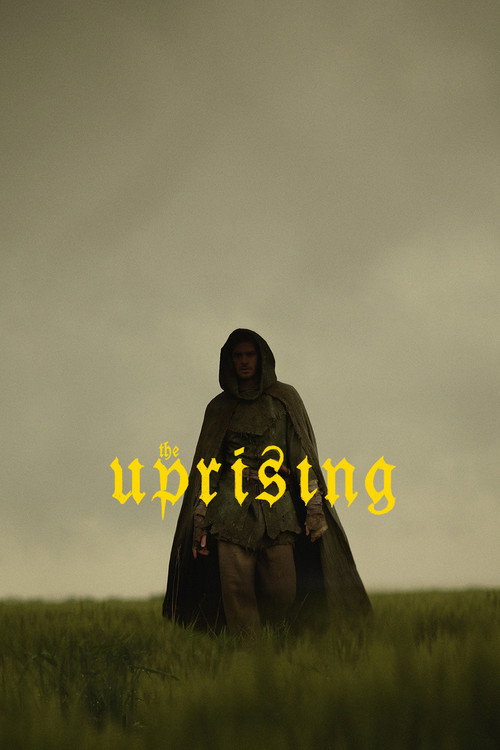
The Uprising What Could Have Been
Paul Greengrass files a searing report from the mud of 1381, then spends his final stretch turning a real tragedy into a Robin Hood origin story.
 ★★★
Lunara Film Review
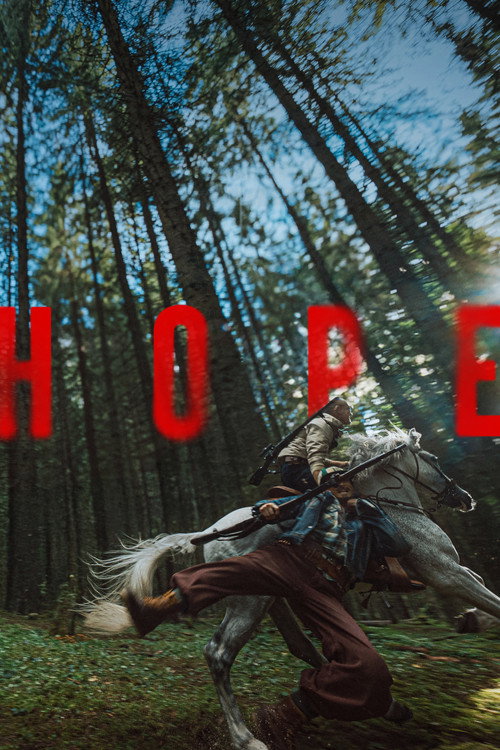
Hope — The First Hour Is the Movie
Na Hong-jin's first film in ten years wins its opening hour outright, then spends the rest of itself building a franchise nobody asked for.