
Lunara Review
Oppenheimer — Knowledge You Can Never Give Back
The only church I keep. Oppenheimer makes knowing a thing the body has to suffer, and at seventy millimeters the screen makes you suffer it too.


I have made the pilgrimage to one of its thirty seventy-millimeter screens more times than I can defend to anyone outside the faith, and every time the shockwave reaches the floor of the theater before it reaches my ears — which is the closest the movies have come to teaching me, in the body, what it costs to know a thing you can never again not know.
The movie theater is the only church I keep, and I went back to this one more times than the runtime can justify. Nolan shot it for seventy-millimeter IMAX — reels that weigh six hundred pounds and run eleven miles, a black-and-white large-format stock that did not exist until Kodak invented it for him and recalled retired technicians to make it — and projected it to barely thirty screens on the planet. You travel to one of those thirty not for the novelty and not for the bragging rights. You go because at that size the screen stops being a rectangle you are looking at and becomes a room you are standing inside. The frame swallows your peripheral vision. The image breathes. You stop watching a man think and start thinking alongside him, which is the only honest way to enter a film about the most dangerous thinking of the twentieth century.
And then the desert, and the count, and the thing I have never felt a theater do before or since. Nolan holds the silence before Trinity until it becomes unbearable, and when the device fires he gives you the light first and the sound long after, because light outruns sound and the universe owes no one a synchronized catharsis. The flash fills the frame edge to edge, white and total, and your body flinches a full beat before your mind catches up to what it is seeing. The desert goes lunar. And then the shockwave — not loud, physical, a pressure that crosses the distance and moves up through the seat and the floor and the chest. What follows is the part I keep returning for: not applause, not a gasp, but the specific stillness of a thousand people who have just felt, in the body, a thing they had only ever known as information. That conversion is not the format flexing. It is the film’s entire subject, performed on the audience. The bomb did exactly this to the men who built it — turned a number on a chalkboard into a fact in the nervous system — and the seventy-millimeter frame does it to you. Knowledge becomes experience. You cannot give it back.
Which is why the explosion is not the ending, and why the people who wanted it to be have walked out of the wrong movie. Nolan detonates Trinity at the midpoint and then keeps going for an hour, because the weapon was never the event. The event was the knowing, and the knowing has no climax — it only spreads. The back half is a government discovering that it can build the unthinkable and then convene a small beige room to punish the one man who admitted the unthinkable had changed him. Trinity is the loudest thing in the film and the least final. The detonation that actually decides Oppenheimer’s life is a closed-door security hearing where the fallout is entirely bureaucratic, and the genius of the structure is that it makes the hearing land harder than the bomb.
What surfaces after the victory is not cruelty but horror, and the distinction is the whole point: cruelty would need someone choosing to wound, and what Nolan stages is worse than any choice — a celebration curdling into atrocity inside the only mind in the room that can see it. Oppenheimer stands before the lab to be celebrated for Hiroshima, the crowd stamping its feet in adulation, and Nolan lets the triumph rot in real time. The stamping swells into something deafening and arrhythmic; a young woman’s face in the crowd flares and peels in a flashbulb of imagined radiation; his own foot comes down on something that gives way underneath it like a charred body. The cheering and the horror occupy the same room in the same instant, because that is the true content of the moment — a man being celebrated for the worst thing ever made, his own mind already filling the auditorium with the dead. Nolan does not cut away to spare him, or us; he holds the applause until it curdles into the sound of an atrocity. And Ludwig Goransson’s score has been priming that nerve the whole film — a ticking that never resolves, that teaches you to hear time itself as a threat — so that when the ticking drops out completely in the held silence before Trinity, the absence becomes the most frightening sound in the picture. It is the first time the film lets its full horror off the leash, and it will not be the last.

Cillian Murphy carries all of this in the eyes, and what they do is precise: they arrive at the conclusion a beat before the scene does. He sees what is about to happen, understands he cannot stop it, and proceeds — and that fraction of a second between comprehension and resignation, repeated across the film, is Nolan’s whole definition of tragedy. Watch the hands and you can date the damage. At Los Alamos the cigarette is held by fingers that are perfectly steady, the hand of a body organized entirely around the act of thinking. After Trinity the cigarette is doing exactly what it always did, but the steadiness is gone — not in a breakdown, in an erosion, something quietly subtracted between scenes without a single line to announce it. For two decades Murphy has played dangerous intelligence aimed outward, at enemies and systems and the world. Here, for the first time, the intelligence has nowhere to go but inward, and it corrodes the man holding it.

Robert Downey Jr. rebuilds himself as Lewis Strauss into the negative image of every charming genius he ever played, a man who understood long before Oppenheimer did that the deadliest instrument in Washington is not a bomb but a security clearance. His malice never raises its voice; it files paperwork, schedules hearings, waits. And when the black-and-white box finally closes around Murphy’s face, the proceeding reveals its real rule — that the only way to prove loyalty to the state is to demonstrate the absence of thought, and that Oppenheimer’s crime was never betrayal but doubt. If there is a cost to the design, and there is, it is that the film is sealed so completely inside one haunted skull that everyone outside it thins toward weather: Kitty’s fury, Jean Tatlock’s grief, register less as lives than as forces acting on the man at the center. I feel that cost every time, and I would still not trade the airless interiority that exacts it, because the airlessness is the point — this is a film built to trap you in a single mind at the exact moment that mind realizes it cannot get out.
It ends, finally, on a porch and a memory. Einstein by the water, a conversation we were shown the front of hours ago and only now get the back of, and the old fear Oppenheimer once carried into Trinity: the calculation, never quite zero, that the first detonation might ignite the atmosphere and take the whole sky with it. They ran the numbers, decided the chance was small enough to live with, and proceeded. Nolan’s last move is to withdraw even that mercy. He loads the fear back behind Murphy’s eyes and lets him see the rest of it — a plane in the dark with rockets streaking past the window, the Earth seen from far above as fire races across the whole atmosphere, missile after missile climbing out of the world he started. The vision does not stop at the test; it keeps going until it arrives at the shape of the present, the arsenal we are all still living under. The chance was never zero. It was only slow. We have been standing in the gap between the flash and the shockwave since 1945, still waiting for the sound to arrive, and the last thing this enormous, airless, morally serious film does is refuse to let us pretend we are standing anywhere else.
LUNARA DEBRIEF
- Score:★★★★★
- Oscar Ledger13 nominations • 7 wins
- Year:2023
- Where to Watch:
Pair It With
Three films in conversation with this one.

Theme Echo
The Fog of War (2003)
The documentary twin: another architect of mass death sits down late in life and circles his own conscience without ever quite landing on absolution. Morris catches as plain testimony the reckoning Nolan stages as dread, and the pairing proves the pattern is older and larger than one man.
Counter-Program
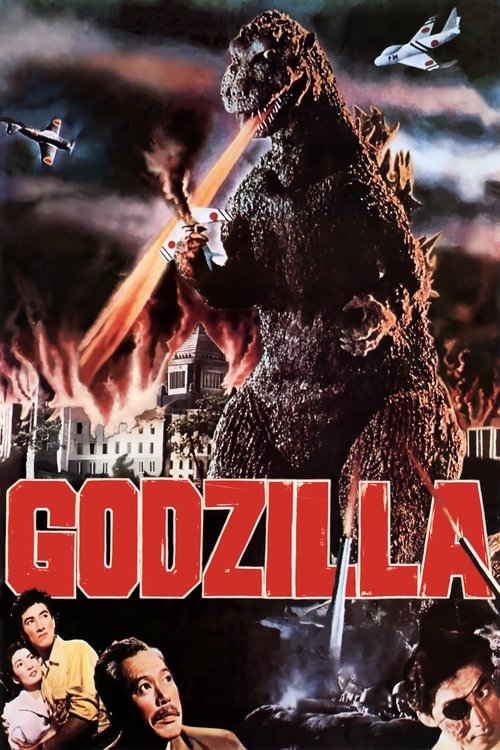
Godzilla (1954)
The bomb from underneath it. Honda films the creation's story where Nolan films the creator's; one is the guilt of the hand that built the thing, the other is the scream of the city it fell on, and what each one leaves out of frame is the exact measure of where it was made.

Career Context
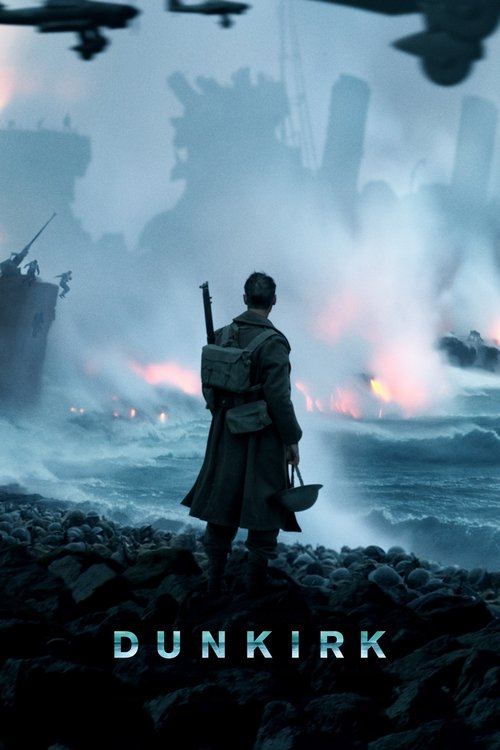
Dunkirk (2017)
Nolan's prior war, told as pure body: survival as sensation, the man under fire, dialogue stripped to almost nothing. Oppenheimer runs the same fractured-time machine in the opposite direction, into the mind that armed the century. The distance between them is the distance from the body to the conscience.
Further Reading
More Lunara Criticism
 ★★★★★
★★★★★
Lunara Review
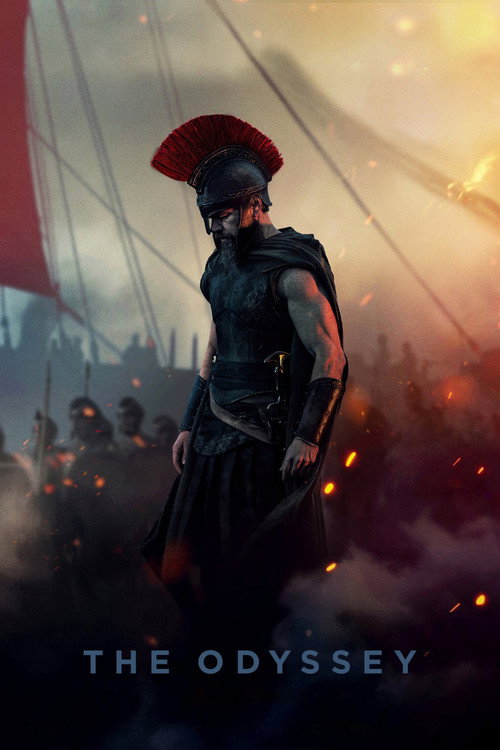
Watch trailerThe Odyssey — I Walked Right Back In
Nolan aimed the biggest camera on earth at the oldest story about going home -- and I walked out of the 70mm IMAX and bought a ticket to...
Updated July 28, 2026
 ★★★★½
★★★★½
Lunara Review
Tenet — Don’t Understand It. Feel It.
The Nolan film I have watched the most is the one everybody claims not to understand -- and the film told us all, out loud, in the trailer,...
Updated July 20, 2026
 ★★★★½
★★★★½
Lunara Review
Dunkirk — The Clocks Are the Story
A week on the beach, a day on the sea, an hour in the air -- braided into one escalating sensation. Dunkirk is the closest Nolan has come...
Updated July 20, 2026
 ★★★★★
★★★★★
Lunara Review
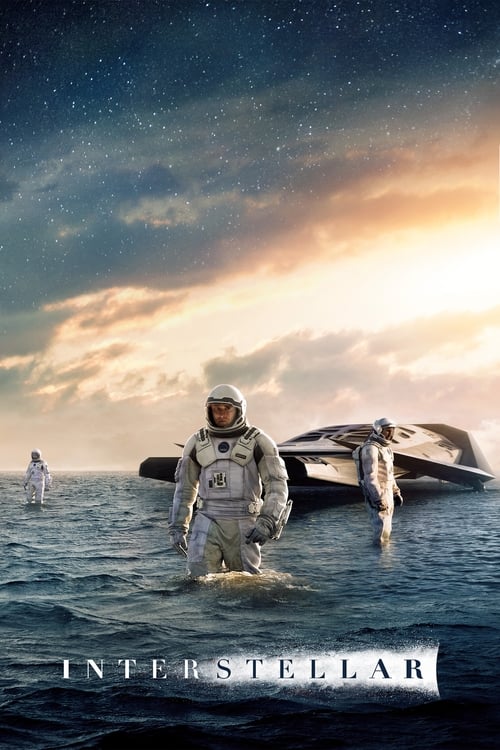
Interstellar — This Generation’s 2001
I will make the claim without a safety net: Interstellar may well be this generation's 2001 -- and the heresy is that it out-feels its...
Updated July 20, 2026
 ★★★½
★★★½
Lunara Review
The Dark Knight Rises — Following a Shooting Star
No sequel in modern movies inherited a harder assignment: follow the film that changed everything, without the shooting star who changed...
Updated July 20, 2026