
Lunara Review
Barbie — The Product That Noticed
A corporation paid for a film about the impossibility of being a product, and Greta Gerwig almost got the whole confession on tape.
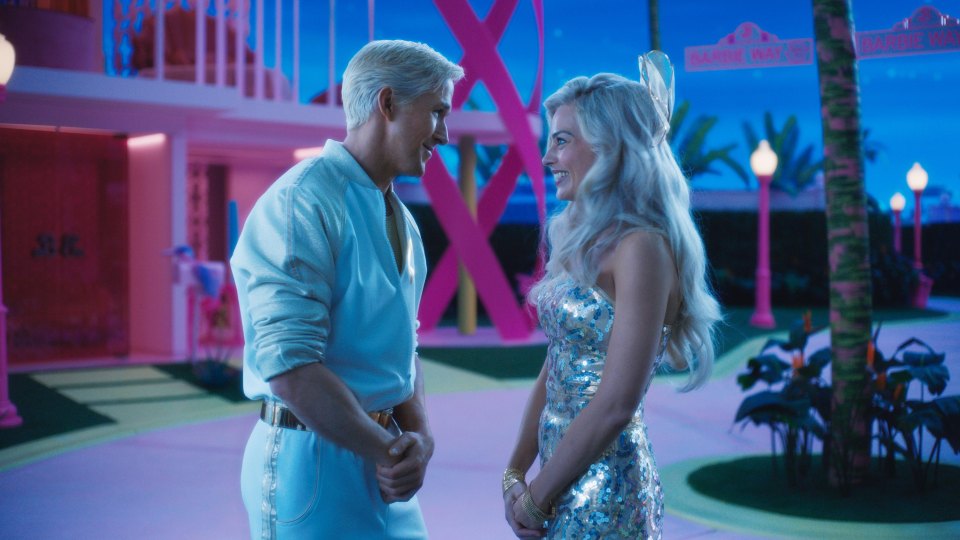
A corporation paid for a film about the impossibility of being a product, and Greta Gerwig almost got the whole confession on tape.
Every morning in Barbieland runs on the same choreography: the shower with no water, the milk that pours without pouring, the wave to a street full of Barbies who are all having the best day since yesterday, which was also the best day. Greta Gerwig and her designers stage this perfection with the physics of play, floating Margot Robbie from the Dreamhouse roof to the pink pavement the way a child’s hand moves a doll, and the craft is so buoyant it takes a while to register how sinister the premise is. Then, mid-dance-number, under the disco lights, Robbie’s Stereotypical Barbie asks the room whether anyone else ever thinks about dying, and the record scratch is not just the film’s best joke. It is its entire thesis breaking the surface: a manufactured thing has developed an interior, and an interior is a warranty violation.
The picture’s secret weapon is that Gerwig treats a brand contradiction as a character crisis. Barbie was sold for decades as both a liberating blank, be anything, and a punishing spec sheet, look like this while doing it, and rather than adjudicate the contradiction the film incarnates it. Cellulite appears on a thigh like a stigmata. Heels touch the ground. The morning milk turns sour. Robbie plays the malfunction beautifully, letting panic operate underneath the factory smile, and her best scene is nearly wordless: sitting at a bus stop in the real world, she watches an old woman beside her and says she is beautiful, and the woman answers that she knows it. It is the one exchange in the film that no toy could have, and Gerwig shoots it plainly, no gag, letting mortality look for a moment like the privilege the whole plot is deciding whether to purchase.
Around this, two comedies run at different altitudes. The higher one belongs to Ryan Gosling, whose Ken discovers patriarchy on a Century City sidewalk the way a toddler discovers a light switch, and imports it home as a lifestyle brand of horses, fur coats, and mini-fridges. Gosling commits with the fearlessness of a man who understands the assignment is total sincerity about total emptiness, and the Kens’ beach war, resolving into a soundstage dream ballet, is the film’s purest Gerwig sequence, screen-musical literacy deployed as a joke and a love letter in the same motion. The craft argument underneath is quietly the film’s most political: Barbieland is built practical, painted backdrops, hand-crafted waves, a set so hungry for a specific pink that the production famously strained the supplier’s stock, and the film’s tactile, analog beauty is itself a case for the physical toy, and the physical movie, in a scroll-based world.
The honest limit is corporate, and it is not small. The film’s designated satire target is Mattel itself, embodied by Will Ferrell and a boardroom of male executives who sell female empowerment they cannot spell, and the jokes have no teeth because teeth were never on the table; the company holds the license, and the film can only mock its owner in ways its owner pre-approved. The Ferrell scenes play like a hostage’s wink, funny, weightless, and structurally exculpatory, and they surround the movie’s genuinely subversive material like packing foam. Related, and more debated: America Ferrera’s monologue about the impossible double-binds of being a woman states in plain speech what Robbie’s performance had already dramatized. I understand the defense, some things need saying out loud, in a film made partly for children who will not parse subtext, and the speech does operate as a plot device, deprogramming the Barbies. But a film this fluent in show-don’t-tell chose to tell, at length, at its climax, and the choice reads as a flinch of trust.
What survives every reservation is the ending, which is stranger and better than the discourse remembered. Offered the choice between perfection and meaning by the ghost of her own inventor, Ruth Handler, played by Rhea Perlman as a warm, tax-troubled deity, Barbie chooses to become the thing the whole film has treated as a malfunction: a mortal. Gerwig scores the decision to a montage of home-video girlhood, ordinary faces aging, and then lands the film’s last joke, Barbie’s first appointment as a human being is with a gynecologist. It is a punchline about embodiment, the exact thing the doll was designed to launder away. A billion-dollar toy commercial ends by asserting that a body that ages, breaks, and dies is worth more than one that cannot. The corporation got its billion. The confession got out anyway.
LUNARA DEBRIEF
- Score: 4.5 / 5
- Year: 2023
- Where to Watch: Streaming (Max) | VOD (major platforms) | 4K UHD
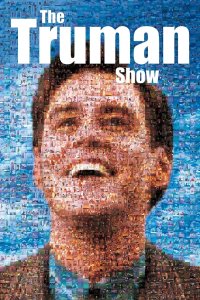
- Theme Echo: The Truman Show (1998) tt0120382. The other great film about a being who discovers his perfect world has a ceiling and a sponsor. Truman sails to the wall; Barbie walks to the doctor. Both endings argue that an authored paradise is a prison with better lighting.
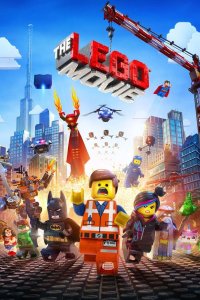
- Counter-Program: The LEGO Movie (2014) tt1490017. The same premise, a toy achieving self-awareness inside its brand, resolved in the opposite direction: back toward the family and the franchise, everything awesome, everyone buying. Watching it against Barbie measures exactly how much escape Gerwig actually negotiated.
- Career Context: Lady Bird (2017) tt4925292. Gerwig’s debut is this film with the budget of one Dreamhouse: a girl and a maternal figure negotiating what the younger one is allowed to become. Ruth Handler on the bench is Marion McPherson in the car, and the pink city was Sacramento all along.
LUNARA DEBRIEF
- Score:★★★★½
- Oscar Ledger8 nominations • 1 wins
- Year:2023
- Where to Watch:
Pair It With
Three films in conversation with this one.
Theme Echo
The Truman Show (1998)
The other great film about a being who discovers his perfect world has a ceiling and a sponsor. Truman sails to the wall; Barbie walks to the doctor. Both endings argue that an authored paradise is a prison with better lighting.
Counter-Program
The LEGO Movie (2014)
The same premise, a toy achieving self-awareness inside its brand, resolved in the opposite direction: back toward the family and the franchise, everything awesome, everyone buying. Watching it against Barbie measures exactly how much escape Gerwig actually negotiated.

Career Context
Lady Bird (2017)
Gerwig's debut is this film with the budget of one Dreamhouse: a girl and a maternal figure negotiating what the younger one is allowed to become. Ruth Handler on the bench is Marion McPherson in the car, and the pink city was Sacramento all along.
Further Reading
More Lunara Criticism
 ★★★★½
★★★★½
Lunara Review
Guardians of the Galaxy Vol. 3 — The Wound Under the Fur
The last MCU film made by somebody who loved the characters more than the franchise, and it is about a raccoon, and it wrecked me.
Updated July 26, 2026
 ★★★★½
★★★★½
Lunara Review
Evil Does Not Exist — The Villain Is a Sentence
The scariest line of the year is "we can mitigate," said politely, by people who will be gone by February.
Updated July 25, 2026
 ★★★★½
★★★★½
Lunara Review
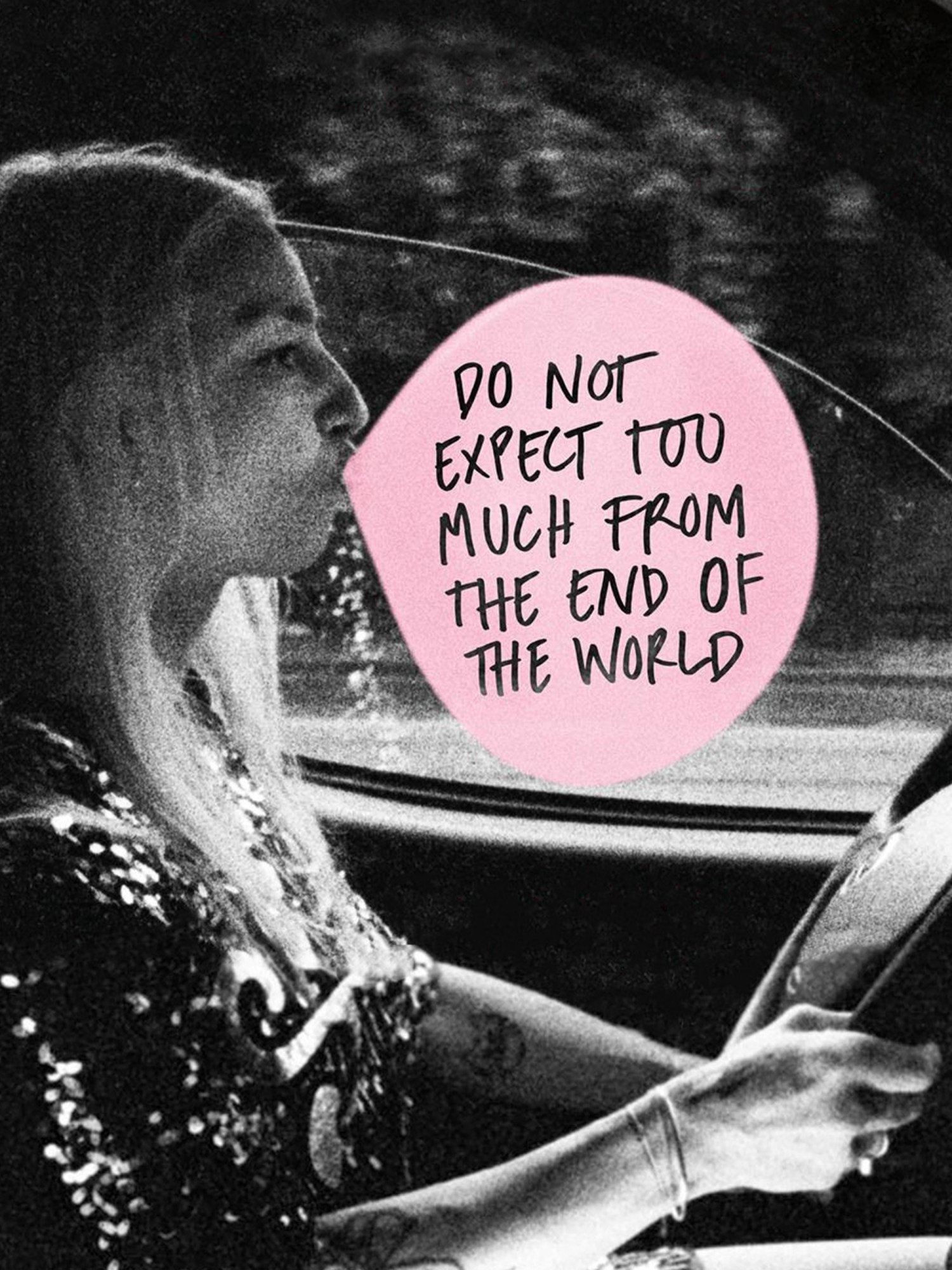
Do Not Expect Too Much From the End of the World — Harm, Rebranded as Story
Radu Jude staples two lying centuries together, points a camera at one workday, and calls it Monday.
Updated July 25, 2026
 ★★★★
★★★★
Lunara Review
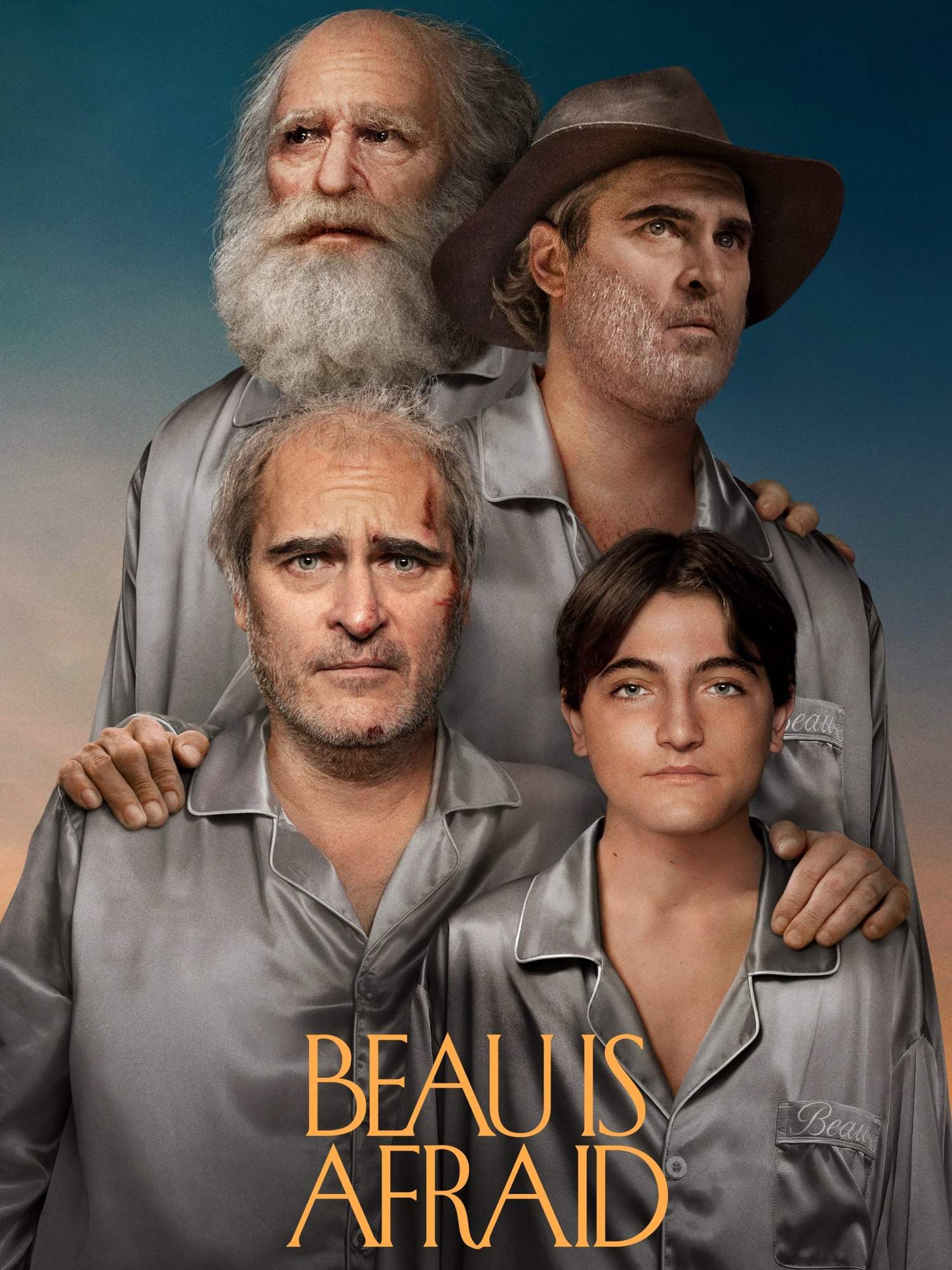
Beau Is Afraid — The Verdict Came First
Three hours inside a guilt that predates its owner; the trial was underway before the birth.
Updated July 25, 2026
 ★½
★½
Lunara Review
Ant-Man and the Wasp: Quantumania — Big by Accident, on Orders
The franchise's smallest movies got drafted to launch its biggest war, and the draft notice destroyed everything worth saving.
Updated July 25, 2026