
Evil Does Not Exist — The Villain Is a Sentence
Movie Review

Evil Does Not Exist, 2023
The most frightening villain of the year is a sentence, spoken politely, by people who will be in another prefecture by February.
Evil Does Not Exist opens with the camera gliding low through a winter forest, lens aimed straight up, bare branches raking past against a white sky while Eiko Ishibashi’s strings hold the air the way you hold a breath you have not decided what to do with. It goes on for minutes. Then the music stops mid-phrase, chopped off like a door shutting on somebody’s sentence, and the movie has taught you its first lesson without a word: you were not admiring scenery. You were learning a tempo. Everything that happens over the next hundred minutes is a quiet test of whether you can keep it.
Ryusuke Hamaguchi spent his last two films proving that conversation could carry a whole cosmos. Here he pulls the conversation out and lets the land do the carrying. Mizubiki is a hamlet a few hours from Tokyo, close enough for a day trip, far enough that the water still tastes like the mountain it came down from. Takumi, the man at the center, gets called the local jack-of-all-trades by his neighbors, and what that actually means is that he is the thing holding the place together. He splits wood. He ladles spring water into jugs for the udon shop. He knows which wild wasabi leaf is ready to pick, and he walks his eight-year-old daughter Hana home through the trees, naming what they pass. Hitoshi Omika plays him with almost no inflection at all, a man built entirely out of tasks, and the film’s patience with those tasks is not atmosphere. It is the whole moral case. Attention, held long enough, becomes a position on how to live.
The trouble comes in a briefcase. A Tokyo talent agency, chasing a pandemic subsidy before its deadline expires, wants to plant a glamping resort in the forest above the village: city people paying for a curated version of the wild, checked in by staff, warmed by fire pits, drained by a septic tank. Two employees, Takahashi and Mayuzumi, get sent down with a promotional video and a folding table to run an explanatory meeting, and that meeting is the best scene anybody has staged this year with nothing but chairs and faces. Nobody shouts. The villagers ask about capacity. The proposed tank is too small for the guest count and sited upstream, and one by one, courteously, with diagrams, the residents walk the visitors through what upstream means. The spring feeds the wells. The wells feed the noodle shop. The broth is the water, and the water is the village. The headman puts it plainest: water flows downhill, so whatever you do up here lands in somebody’s kitchen down there. The reps take notes, and you can feel the minutes of the meeting being taken hostage by language. This is where the film finds its true villain, and it is not a person. It is a sentence, delivered in the tone you would use to apologize for a late email: we can mitigate. Mitigation, the movie understands, is the promise you make after you have already chosen the wound.
What makes Hamaguchi dangerous is that he will not hand you wolves. Takahashi and Mayuzumi are not predators. They are debtors, tied to an appetite that sits upstream of their own paychecks, and the film’s middle stretch rides home with them, lets them gripe about the gig, talk marriage apps, smoke, waver. Their bosses, glimpsed on a laptop screen, are barely worse. A consultant floats the idea of hiring Takumi as the site’s caretaker, not to fix the plan but to launder it, and that scene, where harm gets rinsed through language until it comes out sounding like community outreach, scared me more than anything with claws this year, because everyone in the room is tired and nobody in it is lying, exactly. When Takahashi, splitting firewood on a return visit, lands one clean stroke, lights up, and announces he could live out here, the film lets his sincerity be real and clumsy at the same time. By the time harm reaches a village like this one, it has passed through so many meetings that it shows up wearing the face of a man who just wants to be liked.
The form does the ethics. Ishibashi’s score keeps starting up like someone making a case under their breath, and it keeps getting cut mid-phrase, beauty interrupted the way this land is about to be. Yoshio Kitagawa shoots people the way a forest handles light, granting passage rather than giving it, and the long takes let silence pile up until it starts to count as testimony. Again and again the film comes back to the deer trail that crosses the proposed site, to the far-off crack of hunters’ rifles, to Takumi’s flat note that a gut-shot deer, gentle in every other circumstance, will charge. Showing up becomes a motif of its own: who comes to listen, and who comes to produce a record of having listened. Across a folding table those look identical. They are the difference between custody and management.
About the final movement I will keep faith with the film and stay general. Hana is late coming home. The village walks the woods with flashlights. What happens in that fog-heavy meadow, between a wounded animal, a child, a father, and a visitor, is not a twist and never behaves like one. It lands as a consequence, the kind you could have predicted if you had respected the arithmetic of those opening minutes. The last two faces on screen carry full verdicts without a line of dialogue, one an accusation, one an ache, and the cut to black is not a punishment. It is the film refusing to let cinema take responsibility for what happens next. That part it leaves with the audience, where it has believed the responsibility belonged all along.
Here is what I will not pretend away. Those closing minutes spend a currency of pure dread that the previous ninety never put into circulation, and the purchase clears only if you accept dread as a form of evidence. Trust the film’s procedure and the swerve reads like a bill finally arriving. Need the causal chain the rest of the movie trained you to expect, and it reads like a page somebody tore out. I mostly trust it, and the sliver I cannot trust is the half star this film does not get. Everything else stands. This is the cleanest act of moral attention in a year crowded with sermons, a film whose hero is time itself and whose villain will be in a different prefecture by February. I used to like the word stewardship. It sounded noble, managerial, safe. This movie took the word away from me and left custody in its place. Custody, as in: someone will notice if you do not bring it back alive.
Lunara Film Debrief
- Score:★★★★½
- Year:2023
- Where to Watch:

Leviathan (2014) tt2802154. Zvyagintsev's Russia and Hamaguchi's Japan try the same case at different volumes: a bureaucratic appetite shows up with paperwork, a man's ground gets taken by entities too diffuse to punch, and the landscape sits through the proceedings like a plaintiff. One film rages and one whispers, and both know the verdict was drafted before the hearing began.

The Village (2004) tt0368447. Shyamalan builds wilderness dread inside a fiction and names the outside world the monster; Hamaguchi finds more terror in a septic-tank spec sheet than in anything wearing a cloak. Watch them together and you can tell fear that is administered from fear that is earned.

Drive My Car (2021) tt14039582. Hamaguchi's Chekhov film believed people could talk their way toward each other across three hours; this one strips the talk out and asks whether the silences were doing the carrying all along. Same patience, same test, opposite instrument.
More Lunara Film Criticism
Further Reading
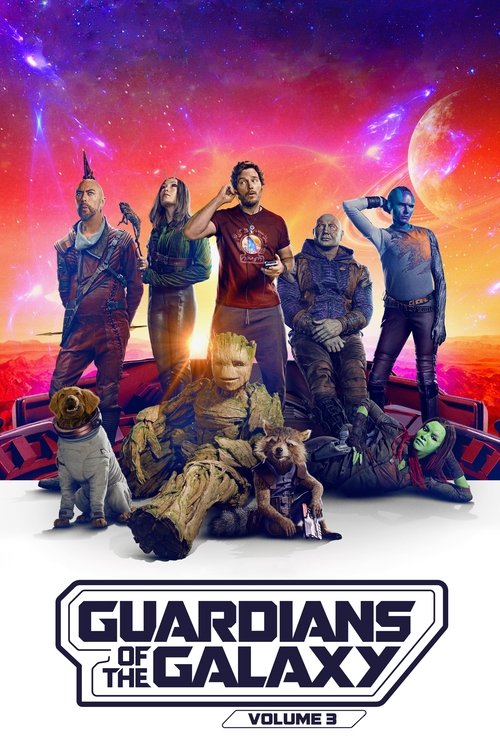 ★★★★½
Lunara Film Review
Guardians of the Galaxy Vol. 3 — The Wound Under the Fur
The last MCU film made by somebody who loved the characters more than the franchise, and it is about a raccoon, and it wrecked me.
Updated September 23, 2026
 ★★★★½
Lunara Film Review
Do Not Expect Too Much From the End of the World — Harm, Rebranded as Story
Radu Jude staples two lying centuries together, points a camera at one workday, and calls it Monday.
Updated September 23, 2026
 ★★★★
Lunara Film Review
Beau Is Afraid — The Verdict Came First
Three hours inside a guilt that predates its owner; the trial was underway before the birth.
Updated September 23, 2026
 ★★★★½
Lunara Film Review
Barbie — The Product That Noticed
A corporation paid for a film about the impossibility of being a product, and Greta Gerwig almost got the whole confession on tape.
Updated September 23, 2026
 ★½
Lunara Film Review
Ant-Man and the Wasp: Quantumania — Big by Accident, on Orders
The franchise's smallest movies got drafted to launch its biggest war, and the draft notice destroyed everything worth saving.
Updated September 23, 2026