
Lunara Review
Batman Begins — My Batman
I dressed as Batman three Halloweens running. In 2005, sitting with my grandparents on opening night, somebody finally took him as seriously as I did.
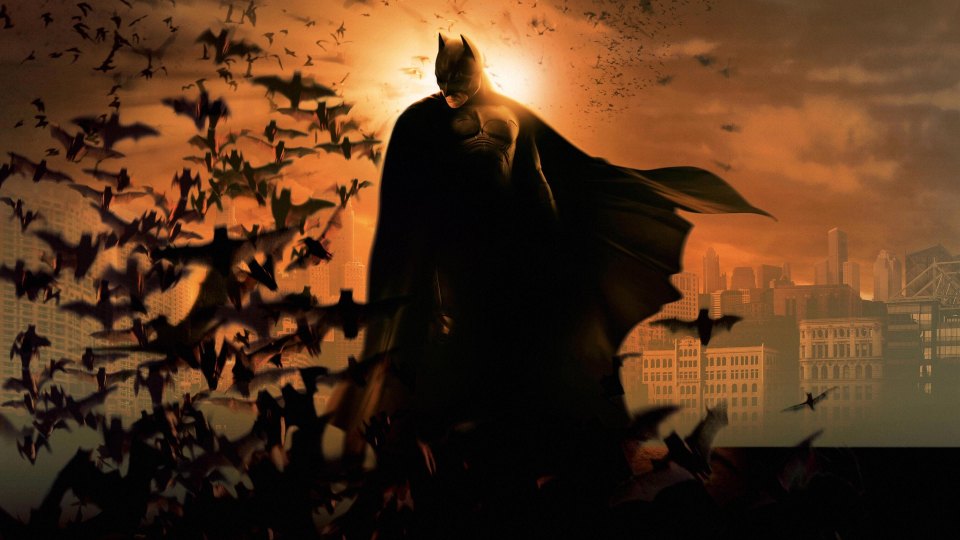
Everyone has their Batman. Mine showed up on opening night in 2005, sitting between my grandparents, when a filmmaker finally took a man dressed as a bat exactly as seriously as a kid in a Halloween costume always had.
I dressed up as Batman for Halloween three years in a row. Not three costumes, either — the same conviction, renewed annually, that this was the one worth being. So understand what it meant to sit in a theater on opening night in June of 2005, my grandparents on either side of me, and watch somebody take my favorite character of all time and make him tangible. Serious. Completely believable. That should be impossible. We are talking about a man who dresses up as a bat to punch criminals, a premise that had spent the previous decade drowning in neon and nipple armor. Christopher Nolan looked at the most snickered-at property in the studio catalog and asked the question nobody in Hollywood had thought to ask out loud: what if we meant it?
Meaning it turns out to be a construction project, and the film shows you every beam. Batman Begins spends nearly an hour without a costume in it, and that hour is the whole ballgame. Bruce Wayne falls down a well. Bruce Wayne watches his parents die outside an opera. Bruce Wayne rots in a foreign prison, hauls himself up a mountain, and learns from Ra’s al Ghul’s cult exactly how fear works before he ever thinks to wear it. By the time the cowl finally appears, the movie has answered every practical question a serious person would ask — where the armor comes from, why the ears, what the cape is for, how a billionaire buys equipment without a paper trail — and each answer does double duty, because the film understands that the gadgets were never the point. The point is a man engineering himself into a symbol because a symbol cannot be shot in an alley.
Fear runs in both directions here, and that is the film’s real discovery. Every previous Batman movie was about what Batman does. This one is about what fear does — to a boy in a well, to a city sliding into rot, to criminals looking up at something they cannot explain. Bruce does not conquer his fear and move on, the way a lesser script would have it. He picks it up and points it outward. The bats that swarm him in the well come back swarming out of him in the third act, and the image says what the movie believes: the difference between trauma and power is only a matter of aim. Cillian Murphy’s Scarecrow works the same nerve from the other side, weaponizing panic with a burlap sack and a spray canister, menace on a budget, and his fear-toxin hallucinations give the film its glimpses of actual horror — the cowl writhing with maggots, a demon-faced bat-thing shrieking out of the dark. For one shot at a time, you get to see Batman the way the criminals do. No film had ever thought to show you that.
And Christian Bale became my Batman that night, a title nobody has taken from him since. Everyone has their version — the argument is a rite of passage, like picking a Bond — and what settles it for me is that Bale is the only actor who plays all three men instead of two. There is Batman, a voice like gravel dragged over concrete. There is the private Bruce, grieving and furious and a little lost, the one only Alfred and Rachel see. And in between, there is the performance the film cares most about: Bruce Wayne, public idiot, buying hotels because the girls he walked in with want to swim in the fountain. Bale plays that Bruce as the most calculated mask of the three, vapid on purpose, so that the tabloid playboy becomes armor as functional as anything in the cave. Watch him let his face go pleasantly empty in the restaurant scene and then snap back to intent the second no one is watching. That is the character solved. The bat is not the disguise. The billionaire is.
The seriousness holds because Nolan builds it out of real material. Chicago streets standing in for Gotham. A Tumbler that actually drives, flipping real cars on a real backlot. An Icelandic glacier for the sword fight, cracking underfoot while Neeson and Bale spar on it. Wally Pfister shoots the city in amber and rust, a place worth saving instead of a gothic cartoon, and Michael Caine walks off with every scene he is allowed near, delivering “Why do we fall, sir?” like it is the only sentence that matters — and in this movie it is. The film’s faith in practical weight is a promise to the audience: nothing here is a joke, including the parts that used to be.
Twenty years on, the flaws have names: the fights are cut too close and too fast, a blur of elbows where the geography goes missing — a strange flinch in a movie this committed to legibility, as if the camera trusted everything about Batman except watching him work. And the third act trades the film’s patient realism for a microwave emitter vaporizing the water supply and a runaway monorail, machinery from exactly the kind of Batman picture the first two hours were built to bury. Katie Holmes gets the thankless job of narrating the theme back to Bruce. None of it breaks the film. All of it marks the distance between this and the sequel, where the ambitions and the execution finally arrive at the same address.
But sitting in that auditorium in 2005, none of the flaws had been invented yet. What existed was a kid who took Batman seriously for three Halloweens straight, finally watching a movie agree with him — and my grandparents beside me, watching their grandson’s favorite character get treated like he deserved a real film. That is what Batman Begins actually accomplished, beyond the origin template every franchise spent the next decade photocopying. It did not ask the genre to grow up. It proved the genre had been grown up all along, waiting for somebody to stop apologizing for it.
LUNARA DEBRIEF
- Score:★★★★½
- Oscar Ledger1 nominations • 0 wins
- Year:2005
- Where to Watch:
Pair It With
Three films in conversation with this one.
Theme Echo
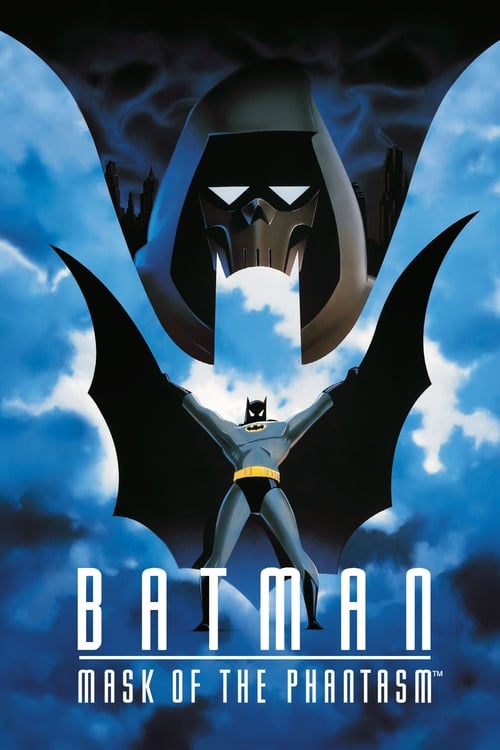
Batman: Mask of the Phantasm (1993)
The animated one that took him seriously first -- grief under the cowl, made for kids, aimed at adults.
Counter-Program
Batman (1989)
Burton's gothic carnival -- the other complete answer to the same character, belief through style instead of engineering.

Career Context
Following (1998)
Nolan's $6,000 debut has a Batman logo stuck on an apartment door -- the wish, visible seven years early.
Further Reading
More Lunara Criticism
 ★★★★★
★★★★★
Lunara Review
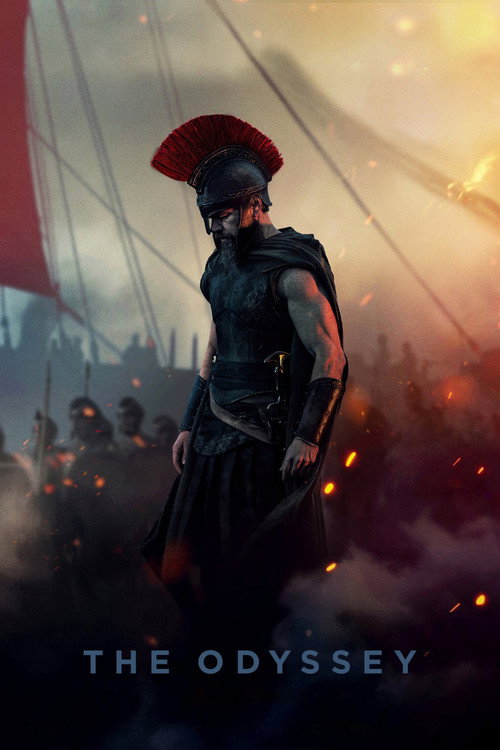
Watch trailerThe Odyssey — I Walked Right Back In
Nolan aimed the biggest camera on earth at the oldest story about going home -- and I walked out of the 70mm IMAX and bought a ticket to...
Updated July 28, 2026
 ★★★★½
★★★★½
Lunara Review
Tenet — Don’t Understand It. Feel It.
The Nolan film I have watched the most is the one everybody claims not to understand -- and the film told us all, out loud, in the trailer,...
Updated July 20, 2026
 ★★★★½
★★★★½
Lunara Review
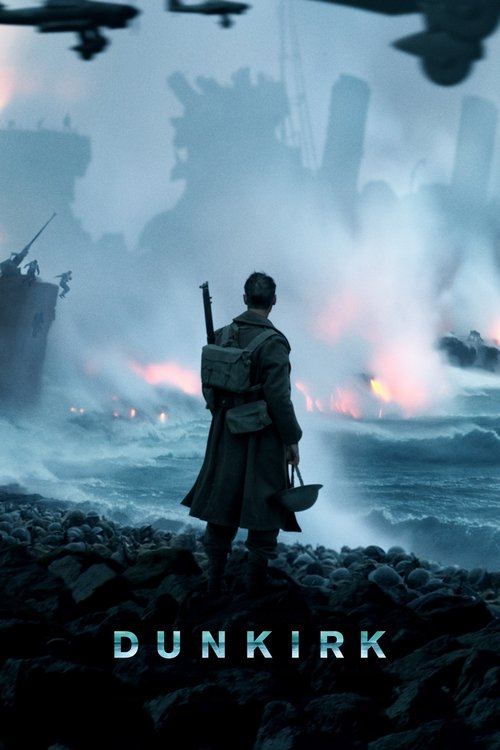
Dunkirk — The Clocks Are the Story
A week on the beach, a day on the sea, an hour in the air -- braided into one escalating sensation. Dunkirk is the closest Nolan has come...
Updated July 20, 2026
 ★★★★★
★★★★★
Lunara Review
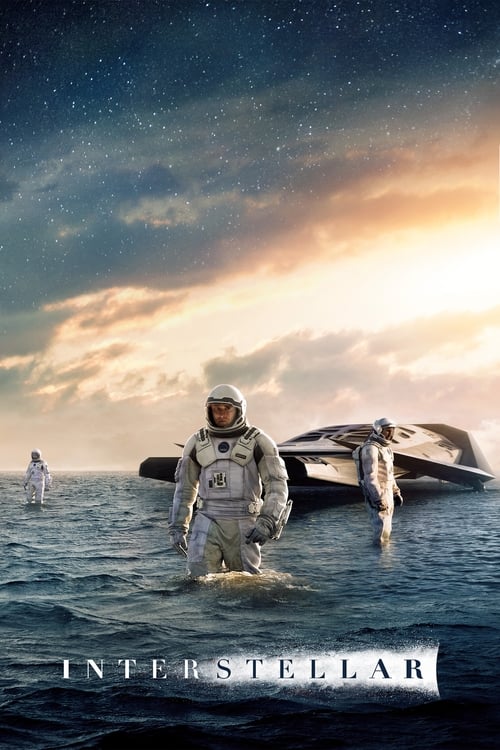
Interstellar — This Generation’s 2001
I will make the claim without a safety net: Interstellar may well be this generation's 2001 -- and the heresy is that it out-feels its...
Updated July 20, 2026
 ★★★½
★★★½
Lunara Review
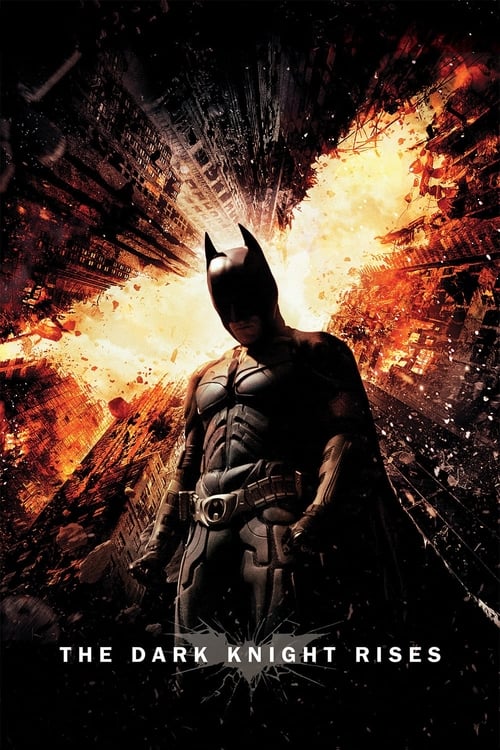
The Dark Knight Rises — Following a Shooting Star
No sequel in modern movies inherited a harder assignment: follow the film that changed everything, without the shooting star who changed...
Updated July 20, 2026