
Lunara Review
Following — The Obsessions Arrived First
The Nolan I have revisited least, and that is its own review: the talent was not fully formed in 1998, but the obsessions -- time, process -- were.
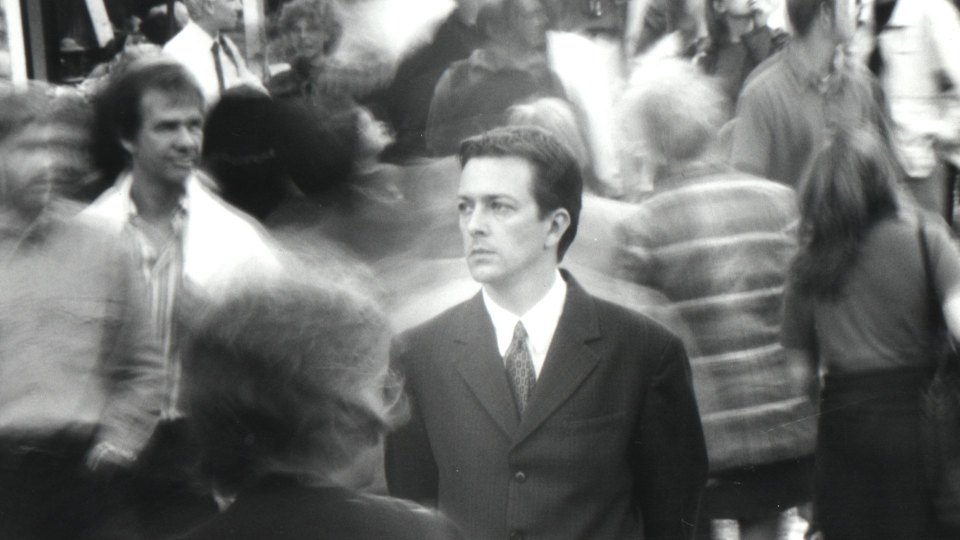
Nolan’s $6,000 debut is the filmography in embryo: the ability not yet in full form, the obsessions — time, process, the edited life — already complete and waiting for a budget.
Full disclosure on this one: of all the Nolan films, Following is the one I have watched the least, and I think that fact belongs in the review. Some movies in a filmography you wear out. This one I circle back to the way you flip to the first pages of a writer’s first notebook — not for the pleasure of the thing itself, but to check your memory of what was already there. And every time, the answer startles me a little. The filmmaking is not in full form yet. The filmmaker is. The interests that would carry him from a London flat to the atom bomb are sitting right here in seventy black-and-white minutes that cost less than a used car: time taken apart and reassembled, and process — the how of things — treated as the true subject while the plot works as the delivery vehicle.
The premise is a con wearing a character study. A broke young writer follows strangers through London, harmlessly, he insists — just research, just watching — until he follows the wrong man. Cobb, sleek and confident, turns out to be a burglar, catches him in the act of following, and instead of walking away does something far more dangerous: he invites him in. What Cobb burgles is not really property. He breaks into flats and reads them — riffles the CDs, drinks the wine, pockets little of value — because, as he explains with the calm of a man stating a law of physics, taking things away is how you show people what they had. The young man is seduced. Not by money. By method. And the film’s first real Nolan move is that the seduction scene is a lecture on process: watch Cobb work a room and you are watching every future Nolan protagonist explain the rules of the trick while the trick is being played on you.
The second Nolan move is the structure, and it is the reason the film still gets taught. Following runs three timeframes shuffled together — the young man clean-shaven and eager, then bruised and hunted, then suited and slick like a copy of Cobb — and the film gives you no dates, no titles, nothing but haircuts and injuries to navigate by. In 1998, on borrowed 16mm, that was not a style. It was a wager that an audience would do the assembly, and that the assembling would BE the experience — that you would feel the story happening to you the way it happened to the mark, out of order, understood only in retrospect, too late. Every film he has made since is a refinement of that wager. The nonlinearity here is rougher than what came after and, watched today, transparently the same instrument: time rearranged not to decorate a story but to withhold the one fact that would let you protect yourself.
You can feel the six thousand dollars, and honestly, you should look for it, because the poverty is the film school. Shot on weekends over a year while everyone kept day jobs. Natural light because lights cost money. Scenes rehearsed to death because 16mm stock meant one take, maybe two — an economy you can hear in the performances, which have the slightly over-prepared crispness of actors who knew a flub was unaffordable. Jeremy Theobald and Alex Haw and Lucy Russell were not stars and did not become them, and the acting is the place where the film’s age shows most; the femme fatale turns arrive with their gears visible in a way the later films learned to grease. That is the honest limit, and it extends past the cast: Following is a movie you admire at slight remove. It picks your pocket expertly and touches you almost not at all — the emotional voltage that would eventually run through the machinery, the dead wives and lost daughters and drowned partners, has not been wired in yet. What is wired in is the trap. The last ten minutes fold every timeline shut with a click you feel in your teeth, revealing the whole film as a document of a man being edited into someone else’s story, and it turns out even the title was the con: he thought he was the one following.
Watch where the pieces went, though, because none of them got thrown away. The burglar who seduces a lonely man into someone else’s method is named Cobb, and twelve years later Nolan handed that name to the thief in Inception — another sleek professional who breaks into private interiors, reads what people keep there, and walks out having planted more than he took. The young man’s transformation runs on costume logic the whole filmography kept: he cuts his hair, buys the suit, becomes a copy of the man he studied, and the film quietly asks the question Batman Begins would ask with a hundred million dollars — whether the disguise is the lie or the self underneath it was. Even the violence lands the way later Nolan violence lands, abrupt and unglamorous, a hammer where you expected choreography. The debut is a parts catalog, and the parts were all load-bearing from the start.
And then there is the detail I cannot resist, the one that plays now like a message from the future: on the door of the young man’s flat, plain as anything, a Batman logo. Stuck there in 1998 by a broke twenty-something shooting on weekends, seven years before Warner Bros. handed him the real thing. The most process-obsessed filmmaker alive left us a document of his own process, and the document says the plan was always visible — you just had to be watching closely, out of order, the way he was already teaching us to watch. Following is minor Nolan and essential Nolan at once: the film where the ability had not caught up to the ambition, and the proof that the ambition never needed to change. It only needed scale.
LUNARA DEBRIEF
- Score:★★★
- Year:1998
- Where to Watch:
Pair It With
Three films in conversation with this one.
Counter-Program
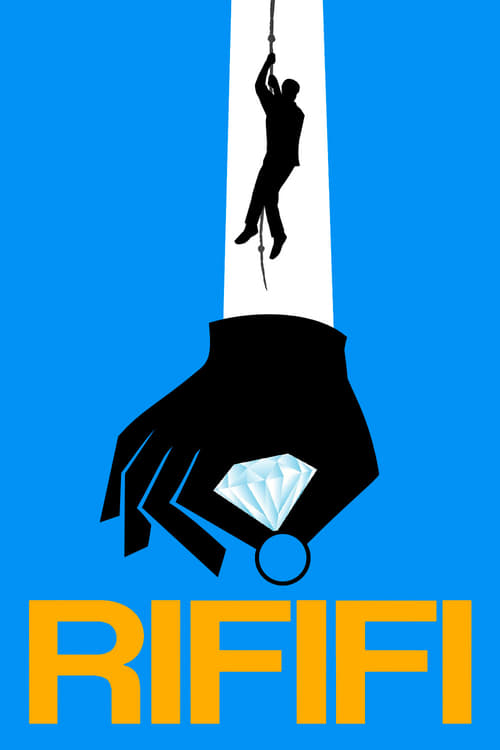
Rififi (1955)
Process cinema at the opposite pole -- the heist shown whole, in order, in silence, and devastating for it.
Career Context
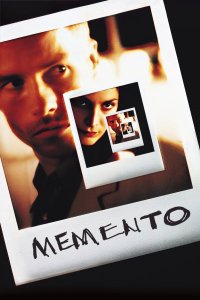
Memento (2000)
Two years later: same shuffled time, same edited self -- now with a wound wired to the machinery.
Further Reading
More Lunara Criticism
 ★★★★★
★★★★★
Lunara Review
Watch trailerThe Odyssey — I Walked Right Back In
Nolan aimed the biggest camera on earth at the oldest story about going home -- and I walked out of the 70mm IMAX and bought a ticket to...
Updated July 28, 2026
 ★★★★½
★★★★½
Lunara Review
Tenet — Don’t Understand It. Feel It.
The Nolan film I have watched the most is the one everybody claims not to understand -- and the film told us all, out loud, in the trailer,...
Updated July 20, 2026
 ★★★★½
★★★★½
Lunara Review
Dunkirk — The Clocks Are the Story
A week on the beach, a day on the sea, an hour in the air -- braided into one escalating sensation. Dunkirk is the closest Nolan has come...
Updated July 20, 2026
 ★★★★★
★★★★★
Lunara Review
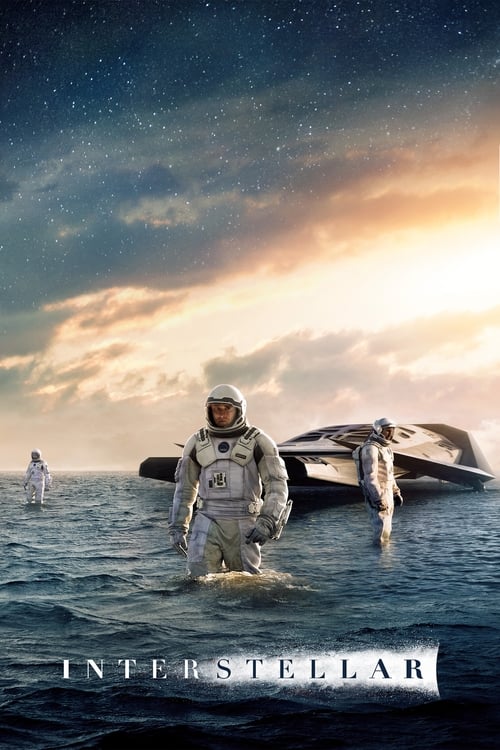
Interstellar — This Generation’s 2001
I will make the claim without a safety net: Interstellar may well be this generation's 2001 -- and the heresy is that it out-feels its...
Updated July 20, 2026
 ★★★½
★★★½
Lunara Review
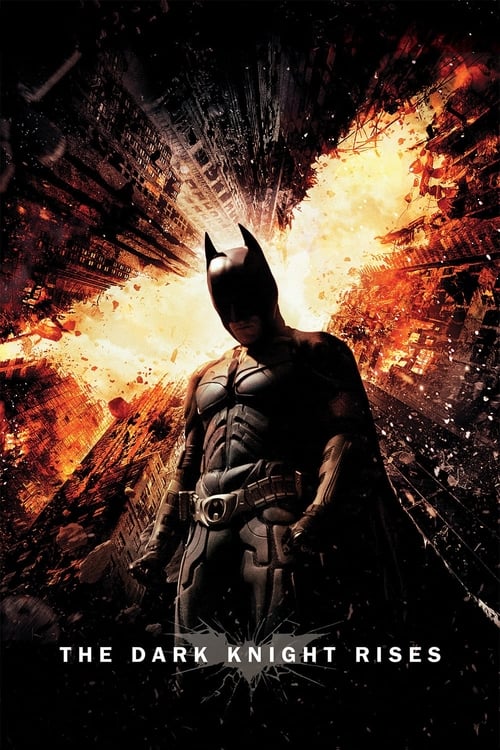
The Dark Knight Rises — Following a Shooting Star
No sequel in modern movies inherited a harder assignment: follow the film that changed everything, without the shooting star who changed...
Updated July 20, 2026