

Flow, 2024
Flow — Survival Is a Team Sport
Movie Review
A wordless cat picture out of Latvia just made the entire studio animation system look overstaffed.
There is an image near the end of Flow that the whole film has been sailing toward, and it is almost nothing: a small dark cat watching the sun rise over a drowned world. Tail still. Ears forward. Breath fogging in the cold. Not one thing in that frame is technically alive. Every pixel of it was rendered in software anyone can download for free, on a small Latvian budget, and the screen holds more life than most nine-figure productions manage from first frame to last. The moment lands because the movie has spent an hour earning what it carries: the world does not have to be angry to kill you. It only has to be itself. And the right answer to that fact is not heroism. The right answer is to keep moving, share the weight, and look where you are going.
Here is what the film is. No dialogue. No character names. No humans anywhere on screen. A flood arrives, sudden and total, and swallows the forest where the cat lives among mossy statues of people who are simply gone, no explanation offered and none needed. To stay alive, the cat climbs aboard a drifting sailboat already claimed by a capybara, and the ark fills as it goes: a lemur who hoards shiny junk, a secretarybird carrying a wound, a dog with more enthusiasm than judgment. Gints Zilbalodis, who directed this, co-wrote it, co-scored it, and shot it inside the open-source program Blender, gives these creatures a tactile behavioral honesty that never once begs for your affection. Nobody talks. Nobody turns out to be secretly a person in an animal suit. The cat learns the way a body learns, not like a hero but like something that intends to see tomorrow, and the film’s warmth grows straight out of that truthfulness. Empathy shows up in the paws before it shows up anywhere else: in the small resettling of weight on a wet deck, in a bird working out exactly how close a beak may come before custom says too close.
The boat is the movie’s whole moral world, and its rules are the rules of any lifeboat. Tight quarters demand manners. Open horizons demand humility. These animals cooperate because the alternative is drowning, and they give each other room because the deck is not big enough for pride. What startled me is how the scenes choose to end. Not with triumphs. With adjustments. A change in the texture of the water announces danger more clearly than a line of dialogue ever could. A standoff over one of the lemur’s shiny trinkets resolves not in a lesson but in a small, grudging recalibration of who sits where. Zilbalodis moves his virtual camera through all of this in long unbroken glides that behave the way the water behaves, indifferent, constant, gorgeous, while the light keeps the clock: hard noon glare easing into a twilight purple that forgives everything it touches. Call it digital impressionism. It proves a thing the industry keeps forgetting, which is that one coherent eye will beat a thousand coordinated ones every time.
The proof got certified in the most public room there is. Flow, made entirely outside the studio animation system, in free software, won the Academy Award for Best Animated Feature, the first Oscar in Latvia’s history, over machines a hundred times its size. Set the trivia aside and the win still matters, because of what it validates: a movie built on the conviction that an audience, including a young audience, does not need chatter, pop songs, or a celebrity voice cast to follow a story. It needs truthful movement and consequences that hold. Children track this film without strain. It trusts them completely, and the trust is the style.
The current does slacken. The middle stretch loops its own peril, another swell, another separation, another scramble back onto the deck, and one or two of those rescues end on rhythm rather than consequence, the crisis closing because the sequence has run its natural length and not because anything got decided. And late in the picture the film drifts toward the mystical, a spire, a lift of light, and for some viewers that will be the one place this scrupulously concrete movie pays for meaning with vagueness. The images stay ravishing. The ground under them thins for a moment, and you feel it precisely because everywhere else the ground is so firm.
What Flow leaves behind is physical. It unclenches muscles you did not know you were holding, and it hands back a piece of common sense that modern movies keep misplacing: catastrophe does not have to be answered with despair or with speeches. It can be answered with seamanship. Keep moving. Share the weight. Look where you are going. A cat learns all of it in ninety minutes without one word, and steps off the boat carrying the quietest, sturdiest optimism of the year. Not the promise that the flood will spare you. The knowledge that the boat holds more kinds of creature than anyone believed, and that the water, eventually, goes down.
Lunara Film Debrief
- Score:★★★★★
- Oscar Ledger2 nominations • 1 wins
- Year:2024
- Where to Watch:

Theme Echo
What is this film really about — and who else has said it?
All Is Lost (2013)
The other great wordless survival film on open water, process over panic, one body and one boat bargaining with a sea that owes them nothing. Redford's sailor and Zilbalodis's cat live by the same creed: competence is a form of prayer.

Counter Program
What is the strongest argument against it?
The Secret Life of Pets (2016)
The industrial opposite, animals as chattering merchandise. Watch ten minutes of it after Flow and you can hear exactly what the silence was buying.

Career Context
Where does this sit in the artist's story?
Away (2019)
Zilbalodis's previous feature, animated entirely alone, a boy and a bird crossing an island without a word. Flow is that method scaled to a crew and a flood, and the pair proves the one-eye principle was never a budget constraint. It was the aesthetic.
More Lunara Film Criticism
Further Reading
 ★★★★½
Lunara Film Review
Inside Out 2 — Anxiety Is Middle Management
Pixar's sequel knows the scariest thing in a thirteen-year-old's head is the employee who never sleeps.
Updated September 23, 2026
 ★★★★
Lunara Film Review
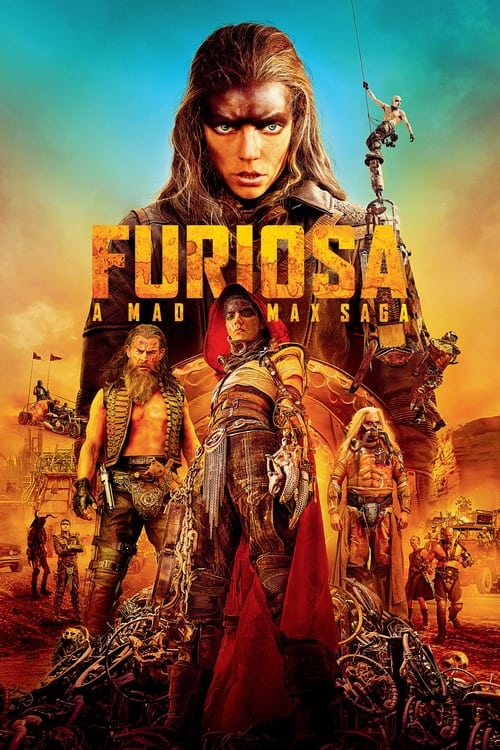
Furiosa — Revenge Keeps the Books
George Miller trades velocity for weight, and revenge becomes a calendar kept for fifteen years.
Updated September 23, 2026
 ★★★
Lunara Film Review
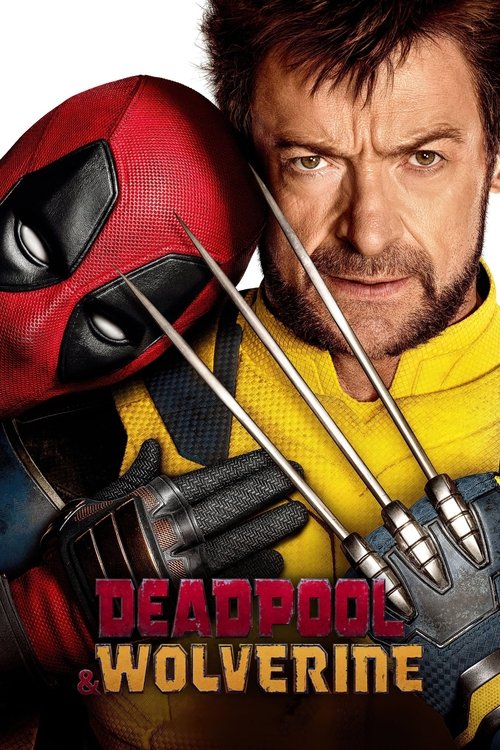
Deadpool & Wolverine — A Eulogy in the Gift Shop
Two movie stars crack jokes at a funeral for twenty-five years of X-Men pictures, and the strange part is that the grief underneath is real.
Updated September 23, 2026
 ★½
Lunara Film Review
Argylle — All Tuxedo, No Motion
It shows up in a tux and forgets to dance.
Updated September 23, 2026
 ★★★½
Lunara Film Review
A Quiet Place: Day One — One Last Errand
The apocalypse arrives and finds a dying woman unimpressed; she still wants the pizza.
Updated September 23, 2026