
Juror #2 — The Man Who Judged Himself
Movie Review

Juror #2, 2024
At ninety-four, Clint Eastwood strips the courtroom drama down to one man’s silence, and it cuts deeper than any verdict.
Rain on a dark road. A thump. Justin Kemp is a year sober, driving home from a bar where he ordered a whiskey and then left it sitting on the counter, untouched, a small victory nobody saw. He feels the impact, stops the car, walks the shoulder in the wet, sees nothing but a deer-crossing sign, and drives on. A year later he is in a jury box, a bored citizen doing his civic chore, when a prosecutor starts describing how the defendant beat his girlfriend to death and left her in a creek bed beside that road. On that night. At that hour. And suddenly the courtroom’s air-conditioning hum is the loudest sound Justin has ever heard, because he knows what the twelve people around him are days away from getting wrong. There was no deer. He is not sitting in judgment of the man at the defense table. He is sitting in judgment of himself, and he is the only person in the building who knows it.
Eastwood directed Juror #2 at ninety-four, and it moves the way you would hope a film by a ninety-four-year-old moves: like a man who has thrown out everything he does not need, which turns out to be nearly everything other courtroom dramas are built from. There is no surprise witness. No gallery gasping on cue. No lawyer delivering an aria in closing. Jonathan Abrams’ script generates all of its pressure from simple proximity, the truth sitting three feet from the lie, every day, in a fluorescent-lit room, and nobody allowed to leave. What Eastwood photographs instead of spectacle is Nicholas Hoult’s face, and he shoots it the way other directors shoot car chases. There is a stretch in the jury room where Justin does nothing but listen. The camera holds on him longer than feels polite while his fellow jurors assemble a sincere, careful, completely mistaken account of the night, and Hoult lets you watch a soul curdle in real time. The eyes track each point. The throat swallows each chance to speak. Cowardice slowly arranges itself into the posture of thoughtful deliberation, which is the most frightening thing in the film, because it looks exactly like being reasonable. It is the best acting of Hoult’s career and it is almost entirely reactive. He plays a good man learning, one increment at a time, the exact market price of his goodness.
The plainness here is not a limitation. It is the point being made in light and rhythm. Yves Belanger shoots the courtroom, the motel, the kitchen, all of it, in the flat institutional glare of rooms no one has ever wanted to be in, and the insistence lands: moral catastrophe does not get dramatic weather. It gets drop ceilings. Joel Cox cuts at the unhurried pace of actual deliberation, letting the dilemma sit and rot instead of escalate, trusting that dread compounds better at room temperature. And there is no villain anywhere to lean on. Toni Collette’s prosecutor is ambitious but not corrupt, and her late crisis of conscience becomes the story’s second spine. The defense is competent and tired. The jurors are trying, honestly trying. Eastwood has spent his late career circling one idea, that a system is only an assembly of people, and here it arrives at its cleanest form: one frightened person is all it takes. Even the flashback to the accident stays deliberately useless, rain and a shape and a thump, exactly what Justin saw and nothing more, so we never get the omniscience the jury lacks. You deliberate right along with them, holding in your lap the one fact they will never hear.
Where the film falls short of its own standard is the rest of the jury room. Outside Justin and the prosecutor, the deliberation table is furnished with single-trait citizens, the impatient one, the ex-cop who is sure, the kid, sketches asked to do structural work that this film’s great ancestor gave whole lives to, and Justin’s wife exists mostly as the stakes on the table rather than a person sitting at it. The movie is so fiercely interior that its supporting world goes thin at the edges. But the interior is the whole case being made, and the interior holds.
It holds all the way to a final shot that lands like a gavel coming down in silence. The verdict arrives, the consequences settle into daily life, and the film could exhale into relieved ambiguity right there. Then the doorbell rings, and Eastwood cuts to black on the precise instant the story stops being about what Justin did and becomes about what he will finally have to answer for. It is a perfect ending and a merciless one. The film never lets its protagonist off, not once, and it never pretends you or I would have done better, which is the harder honesty. Self-preservation, the movie argues without ever raising its voice, is the strongest force in the room at every trial that has ever been held, and justice is the name we give the occasions when it happens to lose. People love to say nobody makes them like this anymore, and that praise is too lazy for what Eastwood has done. Nobody else ever made them like this. Quiet, adult, pitiless. A thriller where the only weapon is a man’s silence, and the only victim within reach is his own soul.
Lunara Film Debrief
- Score:★★★★
- Year:2024
- Where to Watch:

Lumet's jury room believes deliberation surfaces the truth. Eastwood's answers that it surfaces whatever the most motivated man at the table needs it to. The two films are one argument held sixty-seven years apart, and each one sharpens the other's blade.
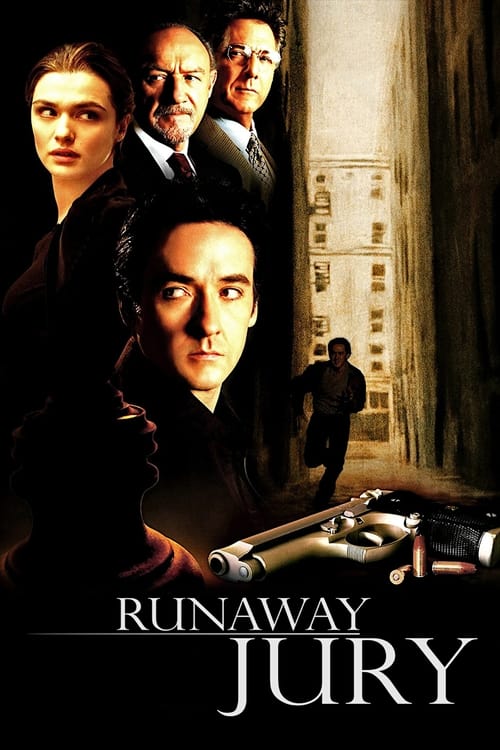
The jury as playing field, justice as a game won with money and manipulation, everything slick where Eastwood is plain. Watch it after Juror #2 and you can measure exactly how much noise the genre uses to duck this film's one quiet question.

Eastwood's grand opera of guilt and wrong verdicts, where the past surfaces as violence. Twenty years on, the same themes return stripped of opera: no rivers, no requiems, just a man in a jury box discovering the past never needed to surface. It was driving the car.
More Lunara Film Criticism
Further Reading
 ★★★★★
Lunara Film Review
Unforgiven — Deserve’s Got Nothing to Do With It
Clint Eastwood spent thirty years teaching America to love the man with the gun. Unforgiven is the film where he digs that man up, shows...
Updated September 23, 2026
 ★★★★½
Lunara Film Review
Inside Out 2 — Anxiety Is Middle Management
Pixar's sequel knows the scariest thing in a thirteen-year-old's head is the employee who never sleeps.
Updated September 23, 2026
 ★★★★
Lunara Film Review
Furiosa — Revenge Keeps the Books
George Miller trades velocity for weight, and revenge becomes a calendar kept for fifteen years.
Updated September 23, 2026
 ★★★★★
Lunara Film Review
Flow — Survival Is a Team Sport
The world ends, the water rises, and a cat learns the only lesson that matters: share the boat.
Updated September 23, 2026
 ★★★
Lunara Film Review
Deadpool & Wolverine — A Eulogy in the Gift Shop
Two movie stars crack jokes at a funeral for twenty-five years of X-Men pictures, and the strange part is that the grief underneath is real.
Updated September 23, 2026