
Lunara Review
Poor Things — Freedom Is a Competence
A resurrection comedy where every joke lands on ownership and the punchline is a woman who learns to write her own no.

A resurrection comedy where every joke lands on ownership and the punchline is a woman who learns to write her own no.
The whole film is on the dance floor in Lisbon. A band strikes up, and Bella Baxter, mid-dinner, stands and invents dancing from scratch: knees jackknifing, arms semaphoring, a body drafting its own choreography with total conviction and no reference material. Duncan Wedderburn, her seducer and self-appointed tutor in pleasure, rushes over, and watch precisely what he does. He does not stop her. He tries to steer her, gripping, redirecting, converting her invention into steps a ballroom would recognize, and the scene becomes a wrestling match disguised as a waltz: a woman writing a sentence while a man tries to edit it in real time. Yorgos Lanthimos plays it for the biggest laugh in the picture, and the laugh has a blade in it. Every man in Poor Things will attempt some version of that grip. The comedy of the film is watching each grip slip.
The premise is a grim joke with a humanist punchline. Godwin Baxter, a scarred Victorian surgeon whom Willem Dafoe plays as a monument to bad fathering both received and paid forward, retrieves a drowned woman and revives her with the brain of her own unborn child. What should be pure gothic grotesquerie becomes, over two and a half hours, the story of a self assembled from zero at ferocious speed: language, appetite, philosophy, economics, cruelty, kindness, in roughly that order. Emma Stone builds the progression like a course of study you can hear. Early Bella speaks in blunt declaratives and walks like a marionette learning its strings; every chapter recalibrates the gait, tightens the syntax, sharpens the diction from noise into aim, and the body comedy is so precise it doubles as biography. No transformation sequence, no montage. You simply notice, somewhere at sea, that the toddler is gone and a mind has arrived, and that the film has been showing you the assembly the entire time.
Lanthimos matches her construction with his own. Robbie Ryan’s fisheye lenses bulge and warp the early chapters, a world seen through a peephole that only widens as Bella claims it, and the production design hands each city its own palette and its own verbs: London a monochrome nursery, Lisbon a pastry in heat, the ship a floating purgatory, Paris a blue-gray classroom. Jerskin Fendrix scores it with instruments that wobble and lurch like a body learning to stand, tuning finding itself mid-phrase, and the editing keeps the stitching visible, hard cuts and iris shots, sutures on the film to match the sutures on the woman. None of it is decoration. The world literally rights itself as Bella learns to stand in it, and by the final chapter the frames have gone level and calm, because she has.
Underneath the excess the movie is a political comedy with one target: ownership in all its costumes. Marriage as contract, seduction as claim-staking, science as custody, polite society as a rulebook written by the people it flatters. Mark Ruffalo’s Duncan is the funniest demolition, a preening libertine who signs on as professor of hedonism and discovers within weeks that he is the weeping student, and Ruffalo weaponizes his own vanity so completely that each pratfall reads as a moral event: the collapse of a man whose entire self was a deed of title to women who have stopped signing. Dafoe gives the film its sadness, a creator who loves what he made and cannot see that keeping is not loving until the keeping fails. Ramy Youssef’s Max supplies the ethical control group, curiosity without entitlement, the one man who asks Bella questions to hear the answers. And the Paris brothel, where the film was always headed, is its crux: Bella declines the shame on offer, studies the economy instead, unionizes her sympathies, and walks out with the film’s real discovery, that the third option between safety and surrender has always been competence. She stops being a thing that men argue over and becomes a person who works.
The flaw is Max himself. The film’s kindest man is its flattest instrument, decency written as a resting state rather than a choice under pressure, and because acceptance never gets dramatized with the ferocity the predators receive, the ending’s domestic calm plays a shade easier than it should. A film this rigorous about the cost of everything might have priced its one good man too. It is a real thinness, and it is also the only major element Lanthimos leaves unexamined; everywhere else the excess is the rigor, every gag load-tested, the vulgarity doing philosophy’s work in its shirtsleeves.
What the film lands on is quieter than its reputation. Bella’s ascent does not end on a throne or a rampage; it ends in work, a garden, a textbook, a household she has arranged to her own specifications, with the man who grabbed hardest reassigned to a life that finally suits his appetites. The last movement plays almost serene, and the serenity is the point. Transgression was never the destination, only the tuition. Freedom in Poor Things is not the first yes, however loudly the film enjoys its yeses. It is the earned ability to draft your own no, revise it, and live inside what you wrote. Somewhere Bella is still revising, and the film trusts her with the pen, which is more than any man in it managed.
LUNARA DEBRIEF
- Score: 4.5 / 5
- Year: 2023
- Where to Watch: Streaming (Hulu) | VOD (major platforms)
- Theme Echo: The Shape of Water (2017) tt5580390. Desire as liberation rather than apology. Two fables where appetite is the road into personhood instead of the fall from it, and where the monsters are the men keeping the keys.
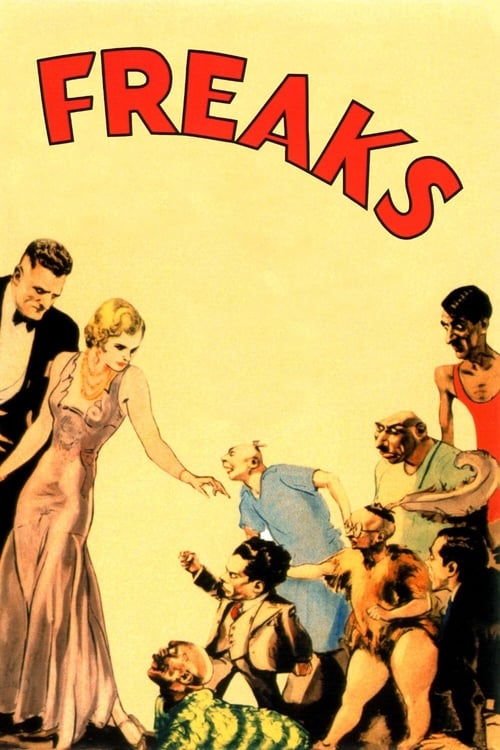
- Counter-Program: Freaks (1932) tt0022913. Bodies defying the rules written about them, ninety years earlier and played as horror. Browning finds tragedy where Lanthimos finds comedy, and the pairing shows how far the same defiance can travel.
- Career Context: The Favourite (2018) tt5083738. Lanthimos and Stone’s first war over power in corseted rooms. That film studies control from beside the throne; this one studies it from the operating table, and Stone’s Abigail is the cynical education Bella gets to skip.
LUNARA DEBRIEF
- Score:★★★★½
- Oscar Ledger11 nominations • 4 wins
- Year:2023
- Where to Watch:
Pair It With
Three films in conversation with this one.

Theme Echo
The Shape of Water (2017)
Desire as liberation rather than apology. Two fables where appetite is the road into personhood instead of the fall from it, and where the monsters are the men keeping the keys.
Counter-Program
Freaks (1932)
Bodies defying the rules written about them, ninety years earlier and played as horror. Browning finds tragedy where Lanthimos finds comedy, and the pairing shows how far the same defiance can travel.

Career Context
The Favourite (2018)
Lanthimos and Stone's first war over power in corseted rooms. That film studies control from beside the throne; this one studies it from the operating table, and Stone's Abigail is the cynical education Bella gets to skip.
Further Reading
More Lunara Criticism
 ★★★★
★★★★
Lunara Review
Kinds of Kindness — Being Chosen Is Not Being Loved
Three fables, one appetite: to be told what to do so completely that responsibility evaporates.
Updated July 25, 2026
 ★★★★½
★★★★½
Full Spoiler Review
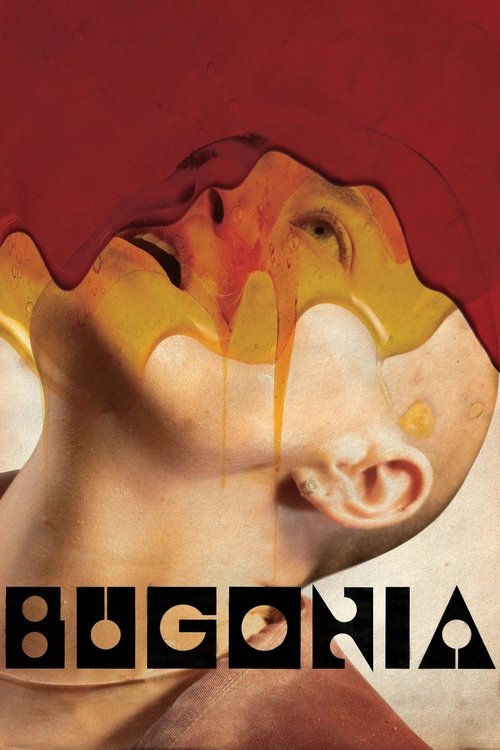
Bugonia — The Full Spoiler
The full-spoiler reading of Bugonia: Michelle is the Andromedan, the switch kills everyone, and Lanthimos gives the last forty seconds to the bees.
Updated July 25, 2026
 ★★★★½
★★★★½
Lunara Review
Bugonia — The Conspiracy Was Always the Courtesy
Ninety minutes of feeling superior to the men in the basement, and then the bill arrives. Bugonia is Yorgos Lanthimos's ambush: a film that...
Updated July 18, 2026
 ★★★★½
★★★★½
Lunara Review
Guardians of the Galaxy Vol. 3 — The Wound Under the Fur
The last MCU film made by somebody who loved the characters more than the franchise, and it is about a raccoon, and it wrecked me.
Updated July 26, 2026
 ★★★★½
★★★★½
Lunara Review
Evil Does Not Exist — The Villain Is a Sentence
The scariest line of the year is "we can mitigate," said politely, by people who will be gone by February.
Updated July 25, 2026