

Bugonia, 2025. Focus Features
Bugonia — The Conspiracy Was Always the Courtesy
Movie Review
Ninety minutes of feeling smarter than the men in the basement, and then the bill comes due.
There is a scene near the middle of Bugonia where Jesse Plemons runs one of his tests on Emma Stone, a chemical procedure meant to prove she is an alien, and the test comes back negative. Watch what he does. He does not rage. He does not doubt. He accepts the negative and starts designing the next test, calm as a man checking off a grocery list. And watch what she does. Her eyes follow him across the room, and on a first viewing that gaze reads as the smart captive’s attention, a woman learning the patterns of the man who took her. On a second viewing it reads as something else entirely: a thing watching an investigator inch toward a truth it needs to slow down. Her face holds no fear and no relief. It holds patience. That patience is where the whole movie pivots.
Fair warning before we go further: this piece walks all the way to the end of the film, ending included. If you want Bugonia clean, and you should want it clean, see it first and come back.
Here is what Yorgos Lanthimos has built, working from Kim Jee-woon’s 2003 South Korean original Save the Green Planet!: a trap with the audience inside it. Two men, Plemons’s flat-voiced true believer and his more volatile partner, kidnap the CEO of a pharmaceutical corporation because they are convinced she is an alien engineering humanity’s extinction. For ninety minutes the film hands you a comfortable seat above them. You get to watch two conspiracy theorists at work and feel every inch of your distance from their delusion. Then the last movement arrives, the conspiracy turns out to be true, and the camera keeps running while everyone dies. It is 2026. Men like these have been signing executive orders and sitting at Senate hearings for half a decade, and Lanthimos has found the sharpest version of the question the culture keeps swerving around. Not: what if the paranoid men are wrong. Instead: what if being right changes nothing about how ugly they are, and nothing about the outcome they could not stop.
The ending is not a twist, and I want to be careful about that word, because a twist replaces what you knew. What Bugonia does is worse. It leaves every scene exactly where it was and changes what each one means. The dark comedy becomes evidence. The tests that seemed to confirm two men’s paranoia become data. The crazy men were telling the truth the whole time, and the film has been letting you laugh at them anyway. The ending is not a surprise. It is a bill.
Stone’s performance is the film’s biggest problem and its finest achievement, and it is both at once. Through the first act she plays the kidnapped CEO as a study in managed survival, cycling through victim, negotiator, boss, supplicant with the speed of someone who spent a career in rooms where the wrong face costs you the deal. Every shift lands in the body: the shoulders softening a degree when she chooses to perform submission, the jaw setting when she smells an opening. And here is the trick, because the performance protects the film’s secret not by holding back but by giving too much. Every tiny calibration reads two ways, as a human being adapting under pressure, and as something that has studied very precisely what human adaptation looks like. Her earlier work with this director, the court maneuvering of The Favourite, the baroque self-invention of Poor Things, built a grammar of intelligent women surviving hostile systems by weaponizing how they present. Bugonia asks the question those films left in the drawer. What if the presentation is not strategy but camouflage? What if the weapon is not intelligence but mimicry? So “is this person human” stops being a puzzle you solve and becomes a weight you carry, and when it finally drops, the horror runs backward through everything you already watched. You feel your own investment in her humanity collapse inside a single close-up.
Plemons is doing something quieter and, to me, scarier. No theatrical menace, no wild eyes. He gives his conspiracy theorist a flat Midwestern evenness, delivering lines about intergalactic extinction in the same measured cadence he might use for quarterly projections, and the effect is disorienting in a very particular way: the plainness of the delivery makes the content feel absurd and oddly credible in the same breath. This is not a man performing belief for anyone. This is a man who has taken in so many late-night forum threads, so many corroborating fragments, that his conviction has hardened past where any counterargument can reach. His menace is not a violent man’s menace. It is a certain man’s. He has processed all available data, reached a conclusion that permits anything, and now he simply needs to execute the protocol.
Robbie Ryan shoots the basement in wide-angle compositions that bend the space until you stop trusting it. Ceilings press down. Walls curve inward at the edges of the frame. It is the coercive domestic geometry of Dogtooth and the institutional wrongness of The Killing of a Sacred Deer, put to work inside a paranoid thriller instead of a social fable, and the distortion is doing diagnosis, not poetry. The room is a place where the rules of the outside world may not hold, which means nothing you observe in it can be taken at face value. The rituals Plemons performs on Stone, the chemical tests, the physical procedures, the pseudo-scientific protocols, are filmed with the clinical patience of an instructional video. A lesser director would shoot them as horror, all dread and shadow. Lanthimos shoots them as evidence collection, and that neutrality is the gamble. If the camera treats paranoid ritual like documentary footage, you cannot be sure what you are looking at. Jerskin Fendrix’s score will not let you settle either; it is the bloodstream of the movie, music that sounds like derangement trying to pass for elegance, needling every scene one inch past credible human behavior into territory that feels stupid and sacred at once. Without it, Bugonia might merely function. With it, the film has a pulse that never steadies.
Lanthimos has been building toward this move since Dogtooth: the belief that cinema’s strongest tool is not the twist but the recontextualization, the moment the same footage means something categorically different because your assumptions have been surgically removed. Dogtooth did it to the family. The Lobster did it to romance. Bugonia does it to the conspiracy theorist, and this time the operation runs toward confirmation instead of critique, which makes it far more dangerous. The film does not claim conspiracy theorists are right. It claims that being right is not the point. The point is what rightness costs, and what it cannot prevent.
Which brings us back to that final close-up. The corporate composure falls away from Stone’s face and what remains was never human, and what her face carries is not fear but a kind of cosmic resignation. It works because the film spent two hours earning your faith in her humanity and then showed you the faith was fraudulent. That last frame is not a reveal. It is a verdict on you. You spent the movie performing the same condescension toward the men in the basement that the culture has been performing toward the men in the Senate, and the ending greets that condescension with the same indifference the extinction event has for everyone in the room. What stays with you afterward is not dread, exactly, because dread implies a threat that has not arrived yet. It is closer to the specific discomfort of having been outthought by a film patient enough to wait for you to finish congratulating yourself. By the time the punchline lands, it has already digested your laughter.
The film is not seamless, and the seam matters. The second act loses hold of the tonal register everything else is straining to maintain; several sequences play as genuine dark comedy rather than horror waiting to be recognized, and the recalibration the ending demands of them is work a first viewing does not fully earn. But Lanthimos has always trusted the second viewing more than the first, and the commitment here is total. The apocalypse arrives without apology. In 2026, that refusal to hand the audience an exit is not a formal gesture. It is a position.
Lunara Film Debrief
- Score:★★★★½
- Oscar Ledger4 nominations • 0 wins
- Year:2025
- Where to Watch:
Theme Echo
What is this film really about — and who else has said it?
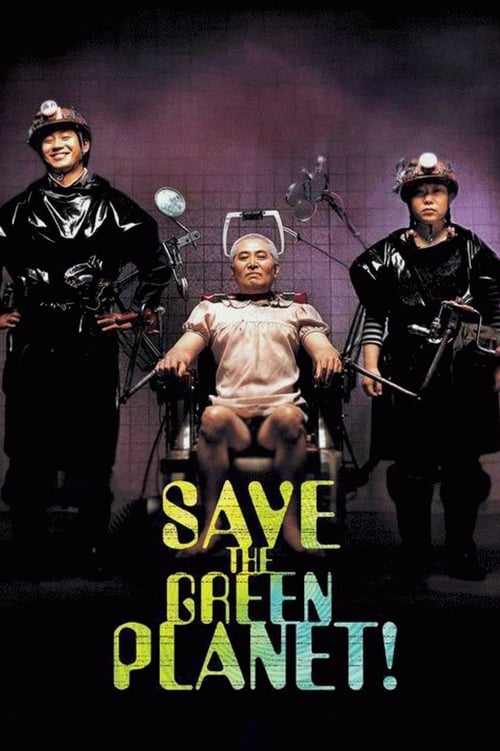
Save the Green Planet! (2003)
Kim Jee-woon's original shares the premise and the nerve to follow paranoia all the way to its cosmic conclusion. The American remake gets to say what the South Korean film could not quite say, about the specific texture of American political delusion.

Counter Program
What is the strongest argument against it?
10 Cloverfield Lane (2016)
The safer basement thriller, which spends its genre reveal as spectacle rather than moral reckoning. Trachtenberg offers the exit Lanthimos will not provide.

More Lunara Film Criticism
Further Reading
 ★★★★½
Lunara Film Review
Poor Things — Freedom Is a Competence
A resurrection comedy where every joke lands on ownership and the punchline is a woman who learns to write her own no.
Updated September 23, 2026
 ★★★★
Lunara Film Review
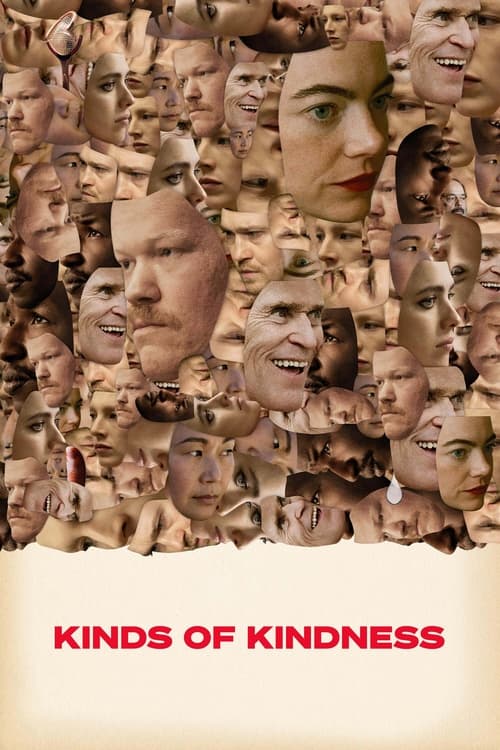
Kinds of Kindness — Being Chosen Is Not Being Loved
Three fables, one appetite: to be told what to do so completely that responsibility evaporates.
Updated September 23, 2026
 ★★★★½
Full Spoiler Review
Bugonia — The Full Spoiler
The full-spoiler reading of Bugonia: Michelle is the Andromedan, the switch kills everyone, and Lanthimos gives the last forty seconds to the bees.
Updated September 23, 2026
 ★★★½
Lunara Film Review
Den of Thieves 2: Pantera — Burn the Blueprints
The first one wanted to be Heat; this one would rather be drunk, and it turns out drunk is the more honest condition.
Updated September 23, 2026
 ★★½
Lunara Film Review
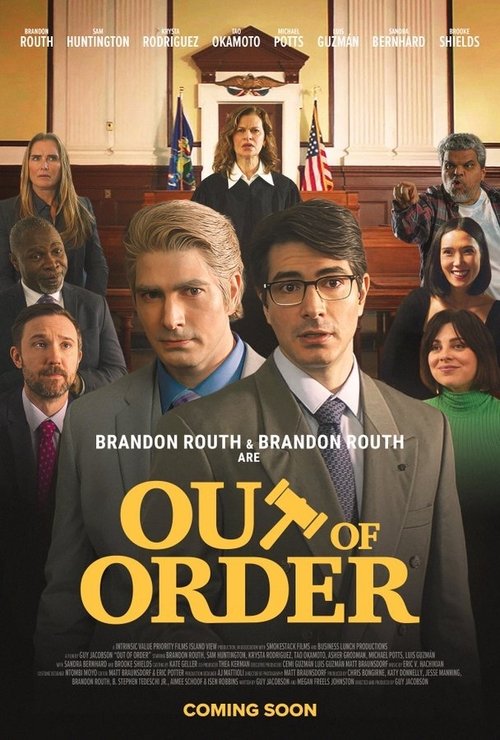
Out of Order! — The Reunion the Movie Doesn’t Know It Has
Superman and Jimmy Olsen share frames again after nineteen years, a Broadway scene-stealer plays the farce all by herself, and the screenplay never shows up to...
Updated September 23, 2026