

Kinds of Kindness, 2024
Kinds of Kindness — Being Chosen Is Not Being Loved
Movie Review
Three fables, one appetite: the deep, shameful relief of being owned.
Robert wakes up at the hour Raymond set for him. He wears what Raymond picked out. He eats what Raymond permits, reads his assigned pages of Anna Karenina, and will try for a child on the schedule Raymond approves, because Raymond is his boss, and Raymond dictates every line item of Robert’s life and pays for the privilege in gifts. A house. A car. A smashed tennis racket once swung by a champion, presented like a saint’s knuckle. Here is the thing you have to sit with: Robert is not a hostage. Robert is a success. The first order he balks at, the one that opens Yorgos Lanthimos’s Kinds of Kindness, is to ram his car into another man at speed, a man who has, Raymond assures him, consented. And what the film does next is worse and much funnier than any thriller about escaping a controlling monster. It watches how badly Robert misses being owned the moment he hesitates. It watches the world go gray around a man nobody will interpret for anymore.
Lanthimos, back with Efthimis Filippou, the co-writer of his early Greek films, builds a triptych: three separate fables sharing one repertory cast. Jesse Plemons, Emma Stone, Willem Dafoe, Margaret Qualley, and Hong Chau get reshuffled panel to panel, plus one silent constant, a man billed only as R.M.F., who according to the segment titles dies, flies, and eats a sandwich. The stories pretend to shuffle the deck and keep dealing the same hand. An employee whose devotion is his entire job description. A cop whose sea-lost wife comes home subtly wrong, feet a size off, suddenly fond of chocolate, and who sets her escalating proofs of love until faith runs out of body to spend. A cult scout combing morgues for a prophesied woman who can raise the dead, purity policed in sauna water and tears. Devotee, husband, acolyte. Three men, one appetite, and the appetite is this: to be told what to do so completely that responsibility evaporates. The film’s real subject is the relief of surrender. Its real scandal is how familiar it makes that relief feel from the inside.
Plemons, who took the acting prize at Cannes for the trio, works by reduction, boiling the affect down until you can taste the salt. Each of his three men is a different note in the same chord: a smile that asks permission to exist, eyes that shop for an owner, a body that experiences rules as a kind of love. And around him Lanthimos builds the plainest world of his career, which turns out to be the whole insight. Robbie Ryan shoots suburban New Orleans in ordinary daylight, tasteful kitchens, boutique offices, no distorting lenses, no marble palaces, because the point is that control no longer needs a compound or a costume. It thrives at room temperature, anywhere confidence is worn like cologne. Jerskin Fendrix’s score, piano clusters landing like knuckles on a table, sudden choral yelps, does not ask for your unease. It gives the order. And in each panel Lanthimos allows himself exactly one image of full outrage, the kind that gets screenshotted, Stone’s convulsive parking-lot dance being the one the culture will keep, and then surrounds it with an hour of polite, well-lit compliance. The ratio is the joke. The joke is the warning. Atrocity is one percent of the system, and the other ninety-nine percent is agreement.
Anthology films usually sag into strong segments and weak ones. This one compounds. The repetitions, orders given and taken, bodies priced, love converted into proof of obedience, stop feeling like stutters and start working like evidence entered a second and third time so the pattern cannot be talked away. By the third panel you are not watching new stories anymore. You are recognizing your own habits of surrender under harsher and harsher light: the job you let define you, the partner you keep auditioning for, the confident voice you hand your mornings to. The complaint that the film goes too far, and the third panel goes very far, gets it backwards. It goes exactly as far as belief has always gone once it is asked to be proof instead of practice.
The serious charge against Kinds of Kindness is cruelty for its own sake, and the charge deserves a serious answer. The answer is that the incisions are placed. Every atrocity here cuts along a line the culture already drew, employer over employee, husband over wife, shepherd over flock, and the pain arrives the way it does under a doctor’s hands rather than a bully’s, as the side effect of an accurate blade. Misanthropy would be easier to shrug off. What this film practices is closer to pastoral care for adults who have noticed that following orders is the most addictive story a person can tell themselves once responsibility starts to hurt. What I cannot fully argue away is the airlessness of the design. Across nearly three hours the film’s control never breaks a sweat, and by the final movement you can call each shape before it lands, devotion, test, atrocity, deadpan, until recognition becomes the only payoff on offer. The middle panel takes the worst of it, its certainty arriving pre-formed, its escalation executed rather than discovered. This movie knows precisely what it is doing at every second, and that knowledge is the ceiling as well as the achievement.
The triptych ends by holding out an open hand, and what you put in it the film neither rewards nor punishes. That evenness is its last word on the subject. Kindness of the kind these stories mean, kindness with terms attached, is not love. Being chosen is not being loved, however long a person has run those two together, and every panel here watches somebody pay the difference between them. Choose, or be used. The film would never say it that plainly; it just runs the account three times and lets you notice whose signature keeps showing up at the bottom of the page. Yours. This is not an unkind movie. It is a precise one, and in a culture that keeps rebranding obedience as devotion, precision is the kinder cut.
Lunara Film Debrief
- Score:★★★★
- Year:2024
- Where to Watch:

Theme Echo
What is this film really about — and who else has said it?
The Master (2012)
Anderson's drifter and guru run the same experiment at feature length: consent rehearsed until it salutes. Both films guard the secret the follower keeps from himself, that he auditioned for the leash.

Counter Program
What is the strongest argument against it?
Eyes Wide Shut (1999)
Kubrick dresses ritual power in masks, mansions, and passwords; Lanthimos strips it down to polo shirts and open-plan offices. Watch them together and the mask turns out to have been optional all along. Obedience is the costume.

Career Context
Where does this sit in the artist's story?
Dogtooth (2009)
The family compound where Lanthimos first taught obedience as a native language. Fifteen years on, the fence is gone, the vocabulary lessons went corporate, and the children grew up and got jobs. This is the sequel in everything but name.
More Lunara Film Criticism
Further Reading
 ★★★★½
Lunara Film Review
Poor Things — Freedom Is a Competence
A resurrection comedy where every joke lands on ownership and the punchline is a woman who learns to write her own no.
Updated September 23, 2026
 ★★★★½
Full Spoiler Review
Bugonia — The Full Spoiler
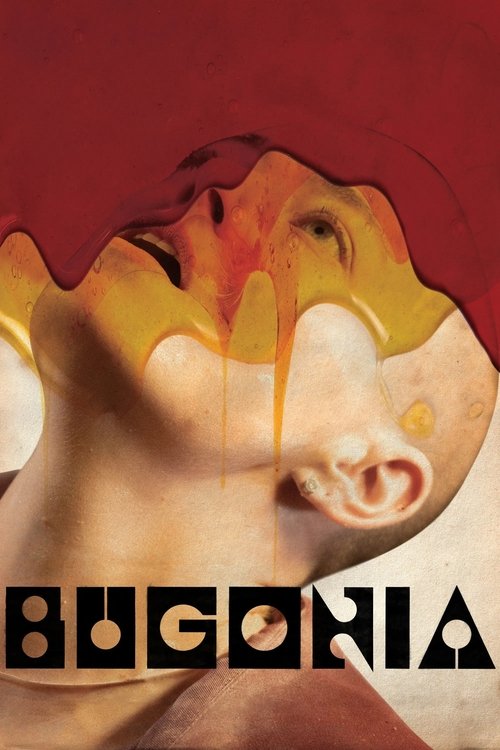
The full-spoiler reading of Bugonia: Michelle is the Andromedan, the switch kills everyone, and Lanthimos gives the last forty seconds to the bees.
Updated September 23, 2026
 ★★★★½
Lunara Film Review
Bugonia — The Conspiracy Was Always the Courtesy
Ninety minutes of feeling superior to the men in the basement, and then the bill arrives. Bugonia is Yorgos Lanthimos's ambush: a film that...
Updated September 23, 2026
 ★★★★½
Lunara Film Review
Inside Out 2 — Anxiety Is Middle Management
Pixar's sequel knows the scariest thing in a thirteen-year-old's head is the employee who never sleeps.
Updated September 23, 2026
 ★★★★
Lunara Film Review
Furiosa — Revenge Keeps the Books
George Miller trades velocity for weight, and revenge becomes a calendar kept for fifteen years.
Updated September 23, 2026