
Lunara Review
The Grand Budapest Hotel — Ritual in Defiance of Ruin
A pink hotel, a perfumed concierge, and the century that came for them both.

A pink hotel, a perfumed concierge, and the century that came for them both.
The scene the whole film hangs from happens twice. The first time, a train stops in a barley field at the border: soldiers board, demand documents, and find that Zero, the lobby boy, holds nothing but a migrant’s scrap of paper. M. Gustave, concierge of the Grand Budapest, does not weigh the odds. He goes off like a kettle, defends the boy at full volume, takes a beating for it, and is saved by luck with a memory attached: the inspecting officer, Henckels, was once a lonely little boy at the hotel, and Gustave was kind to him. Papers are issued. Courtesies are exchanged. And Gustave, bloodied and beaming, delivers the sentence the movie is built around: “There are still faint glimmers of civilization left in this barbaric slaughterhouse that was once known as humanity.” He means the officer. The film spends the rest of its running time testing whether the sentence is true.
The Grand Budapest Hotel arrived in 2014 looking like the most Wes Anderson object ever assembled: a pink alpine hotel, a stolen Renaissance portrait, a prison break run on pastry tools, a cast list as long as a menu. It is also the film where he stopped hiding what the miniatures are for. The credits say “inspired by the writings of Stefan Zweig,” the Viennese memoirist who watched the world of cafes and manners go under twice and did not survive the second time, and the debt is structural: a caper on top, an obituary underneath, a valentine to civility framed by fascism, powdered sugar packed around a wound. The republic of Zubrowka is invented; the black uniforms, the ZZ insignia and the checkpoints are not invented at all, only renamed.
Anderson gives each era its own shape of frame: the 1930s in the boxy Academy ratio, 1968 in widescreen, the 1980s in between. That is not a gimmick but a filing system for memory: the deeper the story reaches, the smaller and more jewel-cased the image, until 1932 sits in the middle of the screen like a courtesan au chocolat in its Mendl’s box, tied with ribbon because the contents cannot survive open air. The hotel exteriors are frank miniatures, the funicular is a toy, Alexandre Desplat scores the century on balalaikas, and the telling is nested like the frames: a girl at a cemetery statue reads a book by an author who heard the story in 1968 from an old man who lived it as a lobby boy. Four layers of narration stand between you and Gustave. That distance gets called preciousness; it plays as protective packing, because some cargo cannot be carried bare-handed. Even the locations tell the story. Anderson found his lobby rather than building it: a shuttered Jugendstil department store in Gorlitz, its grand atrium intact, dressed up as a living hotel. The film is literally staged inside a beautiful thing the twentieth century had no more use for.
Ralph Fiennes had spent two decades as English cinema’s coldest star, and Anderson heard the comedian in him before almost anyone else. His Gustave runs on tempo: the patter of compliments, the fog of L’Air de Panache, romantic poetry recited until the plot interrupts, profanity arriving at the precise point where manners run out, and the joke lands every time because Fiennes never once plays it as a joke. The courtesy is the character, all the way down. Gustave is a concierge, a seducer of rich elderly blondes, a poet, and a vanishing point of European manners, and his devotion to decorum while the continent erodes under his polished shoes makes him the most magnetic and most doomed creation in Anderson’s whole gallery. Beside him, Tony Revolori’s Zero answers the interview question about experience with what doubles as his name, draws his mustache on fresh each morning, and studies the institution he wants to belong to like an immigrant studying for citizenship, which is what he is. Saoirse Ronan’s Agatha, a birthmark shaped like Mexico on her cheek and a pastry box in her basket, is the courage of the piece, the one who walks into the occupied hotel when nobody else can.
For all the sugar, no Anderson film is more violent. Willem Dafoe’s Jopling, brass knuckles and dead eyes, throws a cat out a window, takes a man’s fingers off in a doorway, leaves a severed head in a laundry basket. The comedy is deadpan and the danger is real, and the violence is framed with the same composure as the pastry, which is exactly why it lands: the style does not flinch, so you do. This is the film’s true subject, what ritual can and cannot do against force. Breakfast served correctly, on trays, in defiance of the collapse of nations.
Then the scene comes back. Another train, another field, this time in the first days of the war, and the soldiers who board have no boyhood memories of the Grand Budapest. Gustave does what he did the first time, rises again for his lobby boy’s papers, and the narration hands you the outcome flat: in the end, they shot him. The two checkpoints measure everything between them. Manners saved Zero once, because one officer happened to remember tenderness; the second time, manners bought nothing but the manner of the death. Civility is real, the film concludes, and it is also outnumbered. The reservation worth keeping concerns Agatha. She is radiance, courage, a birthmark and a profession, granted almost no interior before the story dispatches her in a subordinate clause: the Prussian grippe, two years on, her and the infant son both, “an absurd little disease.” The composure that cracks a little for Gustave never cracks for her. Old Zero’s explanation, that he keeps the ruined hotel not for Gustave but for Agatha, because they were happy there, converts some of that thinness into design, a widower keeping one door in his memory shut. Some, not all. The film’s women are luminous cameos in a century it renders as something that happened to men, and Ronan is handed a glow where a person would have been welcome.
What remains is the ending the film chose, the bleakest happy ending in Anderson: the author asks old Zero whether Gustave’s world ever really existed, and the answer settles on this, that it had vanished before Gustave ever entered it, “but he certainly sustained the illusion with a marvelous grace.” That is the film judging its own style before anyone else can. Yes, it is an illusion, sumptuously maintained; sustaining illusions gracefully is not a small act; some years it is the only civilized act available. The hotel goes to concrete, the author goes to a statue, Gustave goes to a field, and what survives is a girl on a bench holding the book. Anderson’s most accomplished and most haunted film closes on its own reason for existing: when the world is gone, the telling is the world. Civilization was never the marble or the pastry. It is ritual performed in defiance of ruin, and no movie has performed the ritual more beautifully.
LUNARA DEBRIEF
- Score: 5 / 5
- Year: 2014
- Where to Watch: Streaming [Max] | Criterion Collection disc
- Theme Echo: Cabaret (1972) tt0068327. Divine decadence as the lights go out: Fosse’s Kit Kat Klub and Anderson’s lobby are the same room at different volumes, stages where style holds the door against history for exactly as long as style can. Both films know the year the door gives.
- Counter-Program: To Be or Not to Be (1942) tt0034583. Lubitsch made the joke with the actual Gestapo in the room, no Zubrowka, no ZZ, no cushion of fable. Set against Anderson’s remove, it shows precisely what the pastel buys and what it declines to touch.
- Career Context: Moonrise Kingdom (2012) tt1748122. The film immediately prior, where Anderson first set tenderness against uniformed force and first went full storybook. Budapest takes that island premise continental: the lovers age up, the scout troop becomes a death squad, and the storybook acquires a body count.
LUNARA DEBRIEF
- Score:★★★★★
- Oscar Ledger9 nominations • 4 wins
- Year:2014
- Where to Watch:StreamingMaxAvailabilityCriterion Collection disc
Pair It With
Three films in conversation with this one.

Theme Echo
Cabaret (1972)
Divine decadence as the lights go out: Fosse's Kit Kat Klub and Anderson's lobby are the same room at different volumes, stages where style holds the door against history for exactly as long as style can. Both films know the year the door gives.

Counter-Program
To Be or Not to Be (1942)
Lubitsch made the joke with the actual Gestapo in the room, no Zubrowka, no ZZ, no cushion of fable. Set against Anderson's remove, it shows precisely what the pastel buys and what it declines to touch.

Career Context
Moonrise Kingdom (2012)
The film immediately prior, where Anderson first set tenderness against uniformed force and first went full storybook. Budapest takes that island premise continental: the lovers age up, the scout troop becomes a death squad, and the storybook acquires a body count.
Further Reading
More Lunara Criticism
 ★★★★½
★★★★½
Lunara Review
Fantastic Mr. Fox — The Itch Under the Corduroy
A storybook caper about the one promise a wild animal cannot keep.
Updated July 25, 2026
 ★★★★½
★★★★½
Lunara Review
The Life Aquatic — Grief in a Red Beanie
The film everyone called the moment Wes Anderson disappeared into his dollhouse turns out to be the one about drowning in plain sight.
Updated July 25, 2026
 ★★★★★
★★★★★
Lunara Review
The Royal Tenenbaums — Failure Is the Family Business
Every frame is composed; nobody inside them is.
Updated July 25, 2026
 ★★★★
★★★★
Lunara Review
Isle of Dogs — The Bedtime Story Is Angry
The fur is soft because the teeth are real.
Updated July 25, 2026
 ★★★★
★★★★
Lunara Review
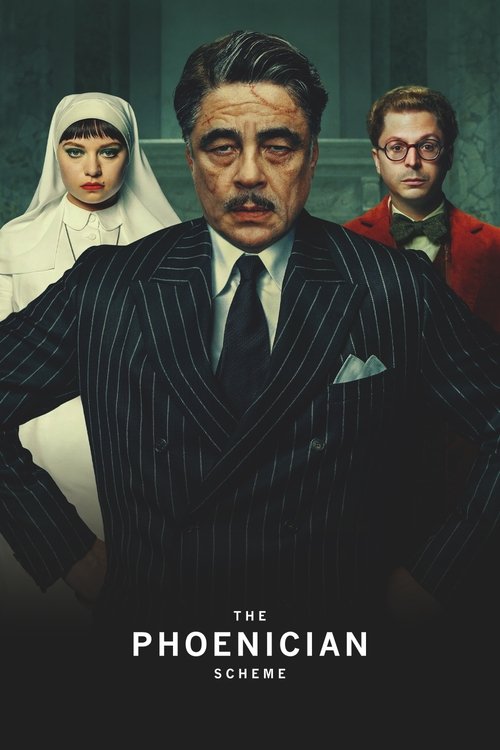
The Phoenician Scheme — The Armor Cracks
The knock on The Phoenician Scheme is the same knock Wes Anderson has taken for a decade: too much style, too little feeling, a beautiful...
Updated July 14, 2026