

The Phoenician Scheme, 2025. Focus Features
The Phoenician Scheme — The Armor Cracks
Movie Review
The famous airtight style was never the problem. It is the only box strong enough to carry this much grief.
A man is assassinated, or nearly, and in the seconds before the world snaps back he stands in black and white before a heavenly tribunal, waiting to hear whether his life added up to anything. Then he wakes, dusts himself off, and gets back to the deal. That is The Phoenician Scheme in one motion: death interrupting commerce, commerce refusing to take the hint, and Wes Anderson filming both with the same level gaze.
You know the complaint by heart, because it has trailed Anderson for a decade: too much style, too little feeling, a beautiful sealed box with nothing breathing inside. The complaint has landed on this film too, and this time it is not just wrong. It is exactly backwards. This is the movie where the airtight control finally springs a leak, and what comes through the crack is mortality, faith, and the most unguarded father-daughter love Anderson has ever put on film, all of it carried on the great exhausted face of Benicio del Toro.
Del Toro plays Zsa-zsa Korda, a fabulously wealthy arms dealer and industrialist, one of the richest and least scrupulous men in Europe. People keep trying to kill him. He keeps not quite dying. And in each of those near-death seconds he is hauled before that monochrome court to answer for himself. Korda responds to mortality the way a tycoon responds to anything: with a scheme. He summons his estranged daughter, a novice nun played by Mia Threapleton in a genuine discovery of a performance, names her sole heir to his vast crooked enterprise, and sets out to close the last great deal of his life, an infrastructure caper across a fictional Phoenicia that he has mapped into a row of labeled shoeboxes. A soul reduced to inventory. A father trying to leave his daughter everything except an apology.
Del Toro is the reason any of it runs. He plays the robber baron as exhausted penitent, comedy and dread crossing the same heavy features, a man counting his fortune and his sins in the same breath. My own first reaction to the film was simply that: God, what a great actor Benicio del Toro is. That is the correct first reaction. The movie is built on him.
Here is where I part ways with the prevailing take, the one that says the hermetic doll’s-house perfection seals the feeling out and leaves you admiring a gorgeous machine you can never get inside of. That reading gets the film precisely upside down. The control is not keeping the feeling out. It is the only thing through which this much feeling could be smuggled in. Anderson is working with the most nakedly sentimental material imaginable, death and judgment and a father begging his child’s forgiveness without ever saying the words, and the deadpan is the pressure seal that keeps it from turning to syrup. Strip the armor off and you have a greeting card. Keep it on, and the emotion has to find the hairline cracks: a held look, a flicker of panic under the unflappable surface, a daughter’s cold front warming by a single degree. And because you were not braced for it, when it comes through it lands harder than open weeping ever could. The style is not the obstacle. The style is the delivery system.
It is also, formally, a real departure, which the dismissals miss. For the first time in the heart of his career Anderson did not shoot with Robert Yeoman. Bruno Delbonnel takes the camera, and you feel a different relationship to shadow and grain, especially in the monochrome afterlife interludes where Korda stands trial before a heavenly court with Bill Murray, of all people, presiding as God. Those black-and-white passages are the film’s spine and its boldest swing: a man dying over and over and being asked, each time, whether his life has been worth anything at all. Alexandre Desplat scores it. Adam Stockhausen builds the boxes. And crucially, this is a linear film, not another of Anderson’s nested stories-within-stories. The structure is the scheme itself, a caper advancing investor by swindled investor, each one a self-contained comic set piece, while underneath the mortality clock keeps ticking. Michael Cera turns up as a Norwegian tutor and quietly walks off with every scene he is in, the comic third point of a triangle whose other two corners are doing something much sadder.
Because under the caper this is Anderson’s most openly God-haunted film, and his angriest. Korda is a man who has made everyone’s life a little worse in order to make his own ledger a little fatter, and the movie lets you laugh at him for two acts before quietly asking whether even he, a man like this, in an economy like ours, can be redeemed. What would it cost. Whether redemption is a thing you earn or a thing that simply, undeservedly, arrives. I will not say how the film answers. But the question is real, and it is asked with a moral seriousness people do not expect from a director they long ago decided cares only about symmetry and pastel. The daughter is the soul of it: a young woman who measures lives in souls where her father measures them in assets, and whose slow, grudging, unfinished thaw toward him is the most vulnerable thing Anderson has put on screen since the brothers on the train in The Darjeeling Limited.
Is it top-tier Anderson? No. It does not have the aching fullness of The Grand Budapest Hotel or the cosmic melancholy of Asteroid City, and there are stretches where the clockwork runs a step ahead of the heart, where you admire the set piece a beat before you feel it. Say that plainly and then say the rest: the film is far better, and far braver, than the shrug it has mostly gotten, and it rewards a second watch the way his best late work does, opening a little wider once you stop waiting for it to behave like a normal movie and let it be the strange, funny, mortality-sick thing it is.
The story on Wes Anderson is that he keeps making the same film. The truth, here, at fifty-six, is a director using the most controlled style in American movies to sneak up on the only questions that ever mattered: whether a life was good, whether it is too late to fix, whether love can still reach a man who spent his whole life making himself unreachable. He has not run out of feeling. He has just found the one box airtight enough to carry it.
Lunara Film Debrief
- Score:★★★★
- Year:2025
- Where to Watch:AvailabilityStreamDigitalFind Digital Options
Theme Echo
What is this film really about — and who else has said it?
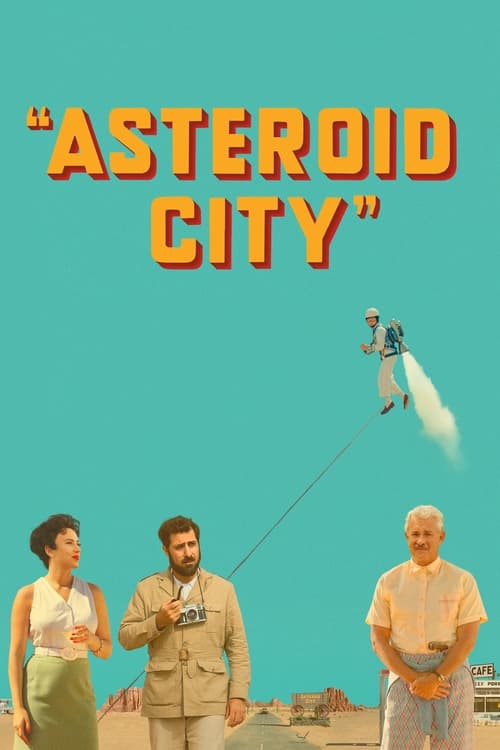
Asteroid City (2023)
The late-Anderson mortality companion -- the other deadpan box built to carry grief; pair them and the pressure-seal style reads as a method for handling feeling too big to face head-on, not a wall against it.

Counter Program
What is the strongest argument against it?
There Will Be Blood (2007)
The other great film about an American-style tycoon and the cost of his soul -- maximalist, operatic, damned, where Anderson is miniature, deadpan, and reaching for grace; the same subject in opposite keys.

Career Context
Where does this sit in the artist's story?
The Grand Budapest Hotel (2014)
His prior peak in exactly this register -- a caper that is secretly an elegy; the bar The Phoenician Scheme measures itself against and falls a step short of, which is no shame.
More Lunara Film Criticism
Further Reading
 ★★★★½
Lunara Film Review
Fantastic Mr. Fox — The Itch Under the Corduroy
A storybook caper about the one promise a wild animal cannot keep.
Updated September 23, 2026
 ★★★★★
Lunara Film Review
The Grand Budapest Hotel — Ritual in Defiance of Ruin
A pink hotel, a perfumed concierge, and the century that came for them both.
Updated September 23, 2026
 ★★★★½
Lunara Film Review
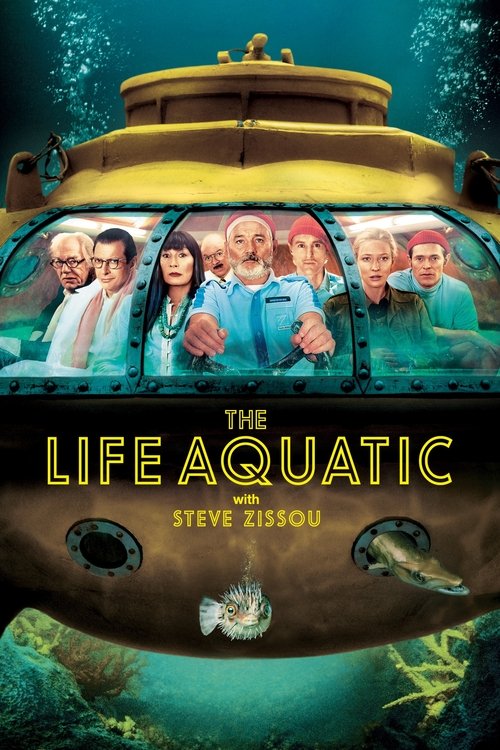
The Life Aquatic — Grief in a Red Beanie
The film everyone called the moment Wes Anderson disappeared into his dollhouse turns out to be the one about drowning in plain sight.
Updated September 23, 2026
 ★★★★★
Lunara Film Review
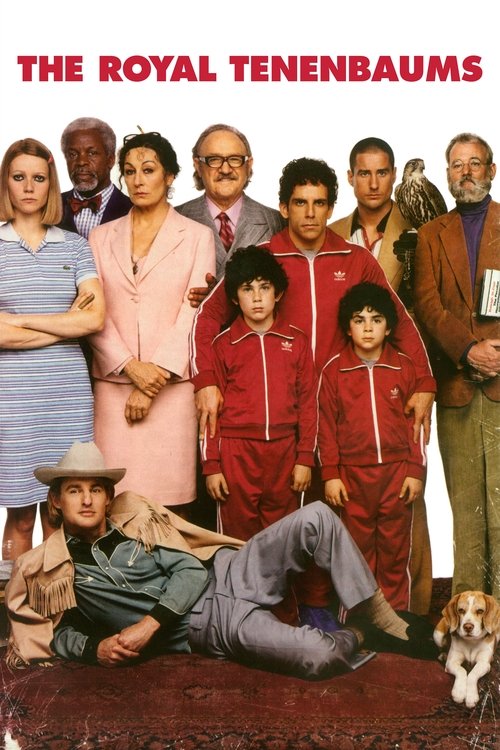
The Royal Tenenbaums — Failure Is the Family Business
Every frame is composed; nobody inside them is.
Updated September 23, 2026
 ★★★★
Lunara Film Review
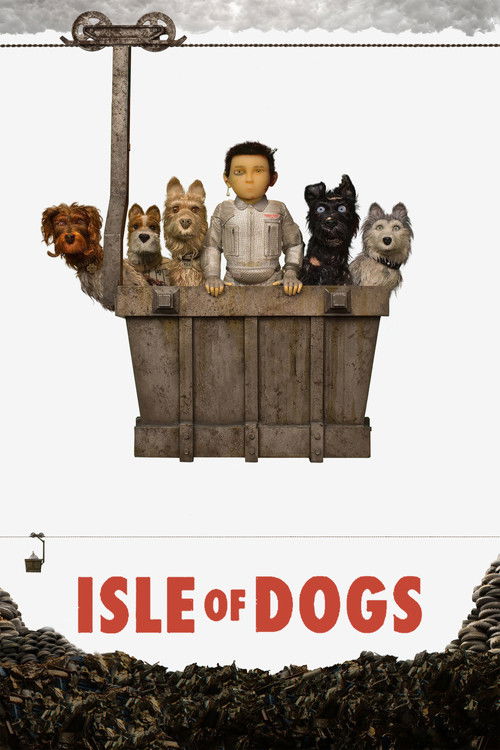
Isle of Dogs — The Bedtime Story Is Angry
The fur is soft because the teeth are real.
Updated September 23, 2026