

All Quiet on the Western Front, 2022
All Quiet on the Western Front — The Uniform Outlives the Boy
Movie Review
The scariest thing in Edward Berger’s war film is the laundry, and he knows it.
A boy named Heinrich dies in the first minutes of All Quiet on the Western Front, charging a French position in the smeared handheld panic that a hundred war movies have trained us to read as one man’s tragedy. Fine. We know this scene. Then Edward Berger does something I have not seen a war picture do, and it rearranged my stomach: he stays with the uniform. The camera watches it stripped from Heinrich’s body, trucked back behind the lines with thousands of others, boiled in vats, scrubbed, stitched by rows of seamstresses, folded, and handed, crisp and warm, to a beaming teenager named Paul Baumer. Paul notices another boy’s name tag still sewn inside the collar. The quartermaster rips it out and tells him the thing was probably just too small for its last owner. That line has haunted me for days, and here is why: it is not a lie told to Paul. It is a lie the whole system tells itself, over and over, at scale, so the work can continue. In three minutes of laundry, Berger says what no previous version of Remarque quite dared to say out loud. The uniform is the durable good. The boy inside it is the consumable.
Everything that follows is built on that idea, and the film has the discipline to mean it. This is a war movie assembled like a production line, which sounds cold until you understand that industrial process is the subject, and that the coldness is where the grief lives. James Friend shoots the Western Front in grays and gas-yellows that dissolve the difference between the living and the dead, and his cruelest setups are the wide overheads, both armies flattened into insect columns fighting over the same mud. The picture’s great structural contrast is two rooms. In one, a forest-green railway carriage, Matthias Erzberger negotiates the armistice over pastries and clean linen; Daniel Bruhl plays him with a weary decency that never asks for applause. In the other, Paul’s company stands in brown trench water, waiting to learn what the clean men decide. Clean men sign the papers. Dirty men die for the ink. Berger cuts between the two rooms with a bluntness that would feel crude if the actual history were not cruder, and Volker Bertelmann’s score drives it home with that already infamous three-note harmonium figure, a mechanical bray that works less like music than like a factory horn calling in the next shift of the dying.
The heart of the film is a crater. Paul, played by Felix Kammerer with a face that loses its childhood in visible stages, tumbles into a shell hole with a French soldier and stabs him. Then he has to stay there, in something close to real time, listening to the man not die. The gurgling runs long past the point any editor would normally allow, and the length is the point. Paul packs mud into his ears and hears it anyway. Then he crawls back to the man he has killed and tries to save him, pressing bandages into the wound, digging through his papers, finding the wife and daughter smiling out of a photograph. This is the one moment where the film’s industrial frame cracks open and a single death gets its full weight, and the movie needed it desperately. A film about anonymous attrition has to prove it knows what one man costs, or the anonymity is just accounting. This scene is the proof. Kammerer plays the aftermath like a boy carrying something no body has room for.
Now the flaw, and it deserves a real argument, not a wave. Remarque killed Paul on a day so quiet the official communique dismissed the entire front in a single sentence; the novel’s title is its cruelest irony. Berger throws that away. He invents a vainglorious general who orders one final assault at 10:45, fifteen minutes before the armistice takes effect, so that Paul dies in a scheduled catastrophe with a named author. I understand the intention, and it is even honorable: indict the officer class that fed boys into the grinder for pride until the last permissible second. The sequence is staged with horrible power. But it quietly unmakes the film’s own best idea. A machine that needs no villain is scarier than one wearing a mustache. The novel’s random, unremarked death said the system ran on indifference, not malice, and indifference is the harder thing to prosecute and the truer thing to fear. The film trades its deepest horror for a more chargeable one. That trade is the distance between a masterpiece and a great film, and this is the great film.
Still, what Berger gets right, nobody else has gotten right at this scale in years. The tanks arrive like weather. The flamethrowers are carried by men whose faces we never see. Kat, the scrounging veteran Albrecht Schuch turns into the movie’s one warm room, dies not in battle but shot by a farm boy over stolen eggs, a death so small it barely registers as an event, which is exactly the lesson the ending forgot it had taught. And underneath everything runs the image the film opened with, the one I cannot put down. Somewhere behind the lines, the vats are still boiling. The uniform Paul dies in will be back at the front within the week, fitted to someone else’s son, the name tag torn out, the lie told again, kindly, at scale. All quiet.
Lunara Film Debrief
- Score:★★★★½
- Oscar Ledger9 nominations • 4 wins
- Year:2022
- Where to Watch:StreamingNetflixAvailability4K UHD import

Theme Echo
What is this film really about — and who else has said it?
Paths of Glory (1957)
Kubrick drew the same map sixty-five years earlier: the chateau where careers advance and the trench where the advancing gets paid for. Berger's railway carriage is that chateau with better catering, and both films understand that the distance between the two rooms is the whole war.

Counter Program
What is the strongest argument against it?
1917 (2019)
Mendes builds the trench as something a hero can cross, a mission with a finish line. Berger builds it as a floor you sink into. One film believes war can be survived by excellence; the other knows excellence was never a variable. Watch both and you will learn what camera choices believe.

Career Context
Where does this sit in the artist's story?
All Quiet on the Western Front (1930)
Milestone's version, made when the veterans were still alive to watch it, ends on a hand reaching for a butterfly. Berger's ends on an ordered assault. The same novel, adapted a century apart, and the changed ending is a precise record of what each era believed about where the horror comes from.
More Lunara Film Criticism
Further Reading
 ★★★★★
Lunara Film Review
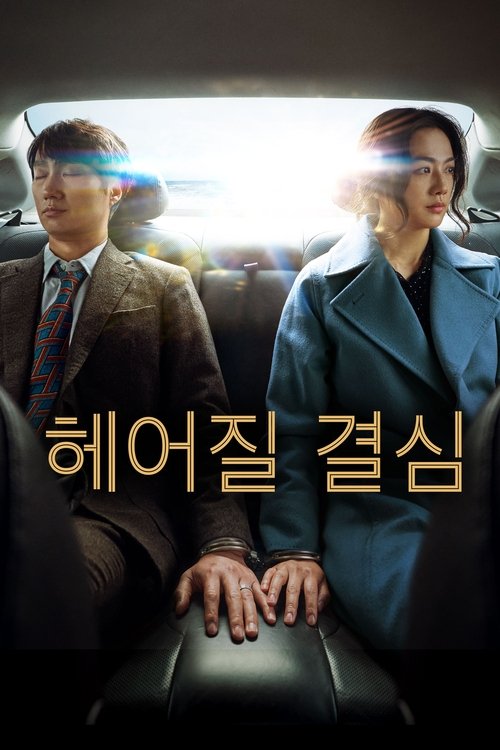
Decision to Leave — Surveillance Is the Love Language
Park Chan-wook's detective romance understands the terrible secret of both professions: to investigate someone and to love someone are the same activity.
Updated September 23, 2026
 ★★★½
Lunara Film Review
Black Panther: Wakanda Forever — Stronger as Eulogy Than Entertainment
The first franchise film that had to bury its star before it was allowed to tell a story.
Updated September 23, 2026
 ★★★★★
Lunara Film Review
Babylon — The Movies Were Never Respectable
Three hours of vomit, jazz, and dying stars, all of it in defense of one heretical idea: the sacred thing was built by the vulgar people.
Updated September 23, 2026
 ★★★★
Lunara Film Review
Triangle of Sadness — Tip the Room, Watch Power Slide
Ostlund's Palme d'Or winner is less a satire than a physics experiment: tilt the deck and see where authority rolls.
Updated September 23, 2026
 ★★
Lunara Film Review
Thor: Love and Thunder — A Tone Is Not a Formula
A father buries his daughter, a god laughs in his face, and then a goat screams: the sequel that could not pick a movie and lost...
Updated September 23, 2026