

Black Panther: Wakanda Forever, 2022
Black Panther: Wakanda Forever — Stronger as Eulogy Than Entertainment
Movie Review
The first franchise film that had to bury its star before it was allowed to tell a story.
The Marvel logo comes up, and the logo is in mourning. The familiar flip-book of heroes has been rebuilt entirely from footage of one man, Chadwick Boseman, and the fanfare that always blares over it is gone. It plays in silence. Then we are in Shuri’s lab, watching her pray to ancestors she does not believe in while she races to synthesize a cure, and her brother dies offscreen while she works. What follows is a funeral in white: drums, dancing, a coffin carried at shoulder height under full sun. And here is the thing you cannot get around, sitting in the dark. None of it is really fiction. Nobody in that theater is mourning T’Challa, a character in a costume. They are mourning Boseman, the actor who shot this franchise’s proudest film while privately fighting the cancer that killed him at forty-three. No screenplay can build what that sequence carries. The smartest thing Ryan Coogler does in Black Panther: Wakanda Forever is know better than to try. He points the camera, keeps the staging simple, and lets a real loss stand in the middle of an invented country.
That choice sets the terms for everything that follows, the extraordinary parts and the broken ones alike. Wakanda Forever is stronger as eulogy than as entertainment. It is more powerful in its quietest scenes than in its loudest, and I want to say plainly that this is a description before it is a complaint. No franchise film has ever been handed this assignment: absorb the death of an irreplaceable lead, honor it without exploiting it, and still deliver a functioning superhero picture on schedule. That it pulls off the first two at all is a small miracle of tact.
Letitia Wright carries the dramatic weight, and she carries it as anger. Her Shuri has traded the first film’s quick comedy for a brittle, hard-edged intellect that uses problem-solving as a hiding place. She would rather cure death than sit with it, which is a character flaw and a completely reasonable response at the same time, and Wright plays both truths at once. She is best when the hiding fails: the funeral garment Shuri cannot bring herself to burn, and later, on the ancestral plane, the wrong ancestor waiting for her. Angela Bassett, meanwhile, plays Queen Ramonda as a woman who has outlived what no parent should and will not let her grief be mistaken for weakness. Watch her dress down the UN. Watch her refuse an ultimatum delivered from a throne of salvage. Those scenes are the movie’s spine, and when Ramonda drowns saving a stranger’s child, the loss lands structurally, not just sadly. The last wall holding Shuri upright goes down with her.
And then there is Namor, the best new thing Marvel built in all of Phase Four. Tenoch Huerta plays him as a Mayan god-king whose people fled underwater to escape the Spanish conquest, and his hostility toward the surface is not villainy. It is a five-hundred-year-old threat assessment: the world that enslaved and burned his people once will do it again the moment it smells vibranium. Huerta gives him a slow, courteous fury, the patience of a ruler who has had centuries to sharpen his position and has already considered your counterargument before you open your mouth. When he proposes an alliance to Shuri, the two hidden nations standing together against the colonizing world, it is the rarest thing this franchise has ever produced: a villain’s offer you can imagine a reasonable person accepting. Talokan itself, all bioluminescence and Mesoamerican stonework, is the film’s second act of world-building sincerity, a vision of what an uncolonized civilization might have become, made with the same care Wakanda got in 2018.
Now the fair and exact part. The film runs two hours and forty-one minutes, and the movie it wants to be needs maybe two of them. The rest is obligation. Dominique Thorne brings real charm to Riri Williams, who exists here as an errand for a future series. The CIA subplot is packing material. And the third act sends two grieving nations into a big CGI naval battle because the release calendar demands a big battle, not because the story does. Everything this film establishes, it establishes through conversation, through Ramonda and Namor and Shuri talking across tables and thrones, and then it resolves those conversations with boat-ramming. When Shuri finally holds Namor’s life in her hands and chooses mercy, the moment is right. But the forty minutes of spectacle in front of it belong to a different, dumber movie the studio required Coogler to also make.
He pays that tax, and he protects the film that matters. Wakanda Forever ends where it was always going to end, on a beach in Haiti, with Shuri at last burning her funeral garment and letting herself cry, and with a child who carries her brother’s name. Sequels are built to answer one question: what happens next. This one answers a harder question, which is what a blockbuster is allowed to do with an absence it cannot fix. It can sit with it. For a franchise that treats death as a revolving door, one film that treats it as a wall is worth the flaws it took to get there.
Lunara Film Debrief
- Score:★★★½
- Oscar Ledger5 nominations • 1 wins
- Year:2022
- Where to Watch:
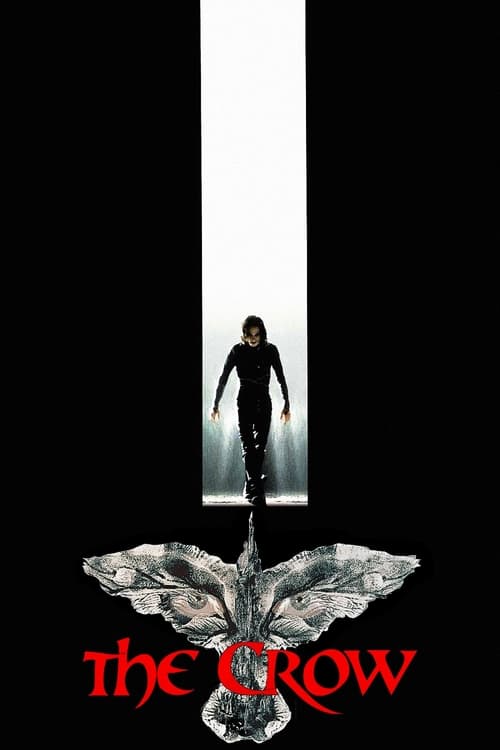
The other comic-book film forced to carry a real death inside its fiction. Brandon Lee's absence haunts every frame the way Boseman's haunts this one, and both films become accidental documents of a question they never asked to answer: what do you owe the dead man on the poster?

The same year's other legacy blockbuster, built on resurrection instead of burial. Maverick brings its past back gleaming; Wakanda Forever digs a grave and stands at it. One film treats time as recoverable and the other tells the truth, and it is genuinely useful to feel that difference in the same week.
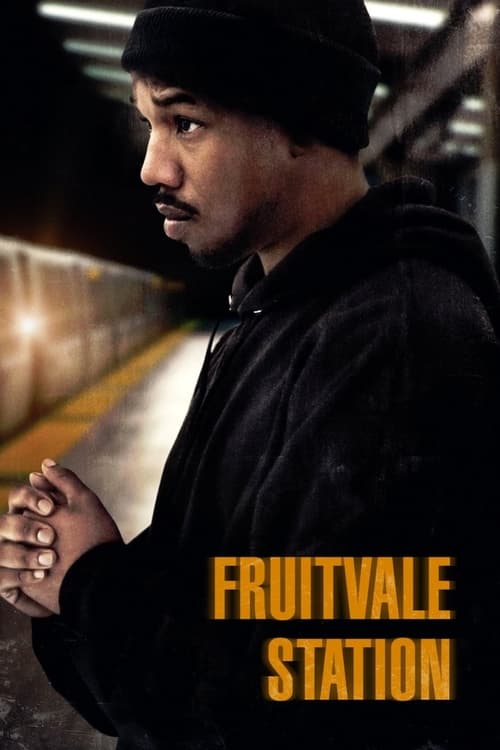
Coogler's debut also opens with a death the audience already knows is real and spends its runtime turning mourning into portraiture. A decade apart, at opposite budget scales, they are the same film: a community assembling itself around a lost Black man, told by the one director who keeps being handed that assignment and keeps meeting it.
More Lunara Film Criticism
Further Reading
 ★★★★
Lunara Film Review
Black Panther — Wakanda Is the Dream; Oakland Is the Bill
The throne room is the plot; the boy on the basketball court is the film.
Updated September 23, 2026
 ★★★★★
Lunara Film Review
Decision to Leave — Surveillance Is the Love Language
Park Chan-wook's detective romance understands the terrible secret of both professions: to investigate someone and to love someone are the same activity.
Updated September 23, 2026
 ★★★★★
Lunara Film Review
Babylon — The Movies Were Never Respectable
Three hours of vomit, jazz, and dying stars, all of it in defense of one heretical idea: the sacred thing was built by the vulgar people.
Updated September 23, 2026
 ★★★★½
Lunara Film Review
All Quiet on the Western Front — The Uniform Outlives the Boy
Edward Berger's war film opens with laundry, and the laundry is the most frightening thing in it.
Updated September 23, 2026
 ★★★★
Lunara Film Review
Triangle of Sadness — Tip the Room, Watch Power Slide
Ostlund's Palme d'Or winner is less a satire than a physics experiment: tilt the deck and see where authority rolls.
Updated September 23, 2026