

Decision to Leave, 2022
Decision to Leave — Surveillance Is the Love Language
Movie Review
Park Chan-wook knows the secret both professions share: to investigate someone and to love someone are the same act.
There is a shot early in Decision to Leave that tells you exactly what kind of film you are in. A detective sits in his car outside a suspect’s apartment, binoculars up, watching her eat dinner alone. Then Park Chan-wook cuts, and the detective is suddenly inside the apartment, standing at her shoulder in his stakeout coat, narrating her routine the way a man describes a painting he loves. He is not really there. The film has simply stopped pretending that watching happens at a distance. It never pretends again.
Everything that follows is built on that collapsed grammar. Hae-jun is Busan’s best homicide detective and its most sleepless, and he is investigating Song Seo-rae, a Chinese immigrant whose husband has just fallen from a mountain he climbed every week. The case proceeds through all the standard instruments. Stakeouts. Interrogations. Phone records. Recorded statements. And one by one the film turns each instrument over in its hands and shows you what it actually is: a courtship technology. He watches her for hours, and you realize that is attention. He memorizes her habits, and that is devotion. He plays her recorded voice to fall asleep at night, and whatever the case file wants to call that, I will call it what it is. A love affair, conducted entirely in evidence.
Tang Wei is the film’s magnetic north, and the genius of the performance is that Seo-rae understands the grammar better than the detective does. Think about her position. A woman with a dead husband and a wiretap on her life has exactly one channel of expression left, so she uses it. She cooks for the surveillance. She sleeps for the surveillance. She exists beautifully for an audience of one. And the film keeps you honestly uncertain, for a long time, about which woman you are watching: a widow flirting, or a killer managing her investigator. The interrogation scenes play like dates with better lighting. Sushi shared across a table, a recorder between them like a chaperone. Her careful, formal Korean, learned, she says, from period dramas, so that every statement lands with the cadence of translated poetry. A phone’s translation app speaking her Chinese heart in a machine’s Korean voice, which is the film’s whole worry made audible. Park shoots their exchanges in strict alternations of gaze, and Kim Ji-yong’s camera keeps threading that gaze through screens, mirrors, and one-way glass, because nobody in this film ever simply looks at anyone. There is always a medium. And the medium is always the confession.
The hinge of the picture is a single word. Cleared of suspicion, or seemingly cleared, Seo-rae stands with Hae-jun in a temple garden while this immaculate professional admits that the case, meaning her, has broken him. The word he reaches for sits somewhere between collapsed, shattered, and ruined. He means it as shame. She files it away as what it actually is, and much later she tells him, in the most devastating line of dialogue I have heard this year, that the moment he said it was the moment his love arrived, because a confession of ruin was the only love language a man like him possessed. By then the film has moved to the fog-bound town of Ipo and started over. A new husband. A new death. The same woman. Park runs the entire first half again as a dark mirror, the detective now investigating whether he was wrong to stop suspecting the thing he loves.
I have to be honest about the Ipo stretch, because this is where the film falls a step short of what it reaches for. The second act stacks complication on complication — a second murder, a swimming turtle, a mother’s mercy killing back in China, an accomplice with his own agenda — until the cleverness briefly outruns the feeling. There is a passage in the second hour where you find yourself admiring the watchwork instead of caring, and on a first viewing the thread of grief gets lost in the thicket of plot. Park is doubling deliberately; every element rhymes with something from the first half. But a rhyme scheme this dense costs some blood, and the film pays it.
Then the beach, and every debt is settled. Seo-rae drives to the coast at low tide, digs a hole in the sand, and lets the sea do what the film has been quietly teaching us the sea does. It erases. Park shoots the sequence with forensic patience — the bucket, the hole, the water rising into her grave ahead of schedule — and then stages the cruelest image of finality I can remember in recent cinema: Hae-jun on the same darkening beach, shouting her name, walking a search grid directly over the spot where she is, holding the phone whose recording she has told him to treat as her final gift. She understood the arithmetic all along. The unsolved case was the one form in which she could remain in his custody forever, wanted the way he wanted her back when wanting was still called investigation. Mahler’s Adagietto rises with the tide. He will look for her for the rest of his life, which is exactly what she wanted, and exactly what he deserves, and the film has the discipline not to tell you which of those clauses it believes more.
Decision to Leave is Park’s most restrained film. No hammers, no eels, barely a drop of blood. It is also his most violent, because its subject is what watching does to the watcher, and it leaves him where every surveillance leaves its operator eventually. Alone with the recordings. At the edge of the frame. In the fog.
Lunara Film Debrief
- Score:★★★★★
- Year:2022
- Where to Watch:

The ancestor text: a detective falling for the woman inside his own case, watching converted to wanting until the two are inseparable. Hitchcock's Scottie remakes the woman to fit the obsession; Park's Seo-rae remakes herself, which is the modern film's colder insight -- the watched party learned to operate the machine.

The detective-suspect affair played as heat instead of attention: interrogation as foreplay, guilt as perfume. Verhoeven's film believes desire is appetite; Park's believes it is focus, and running them together shows how much more dangerous focus is.
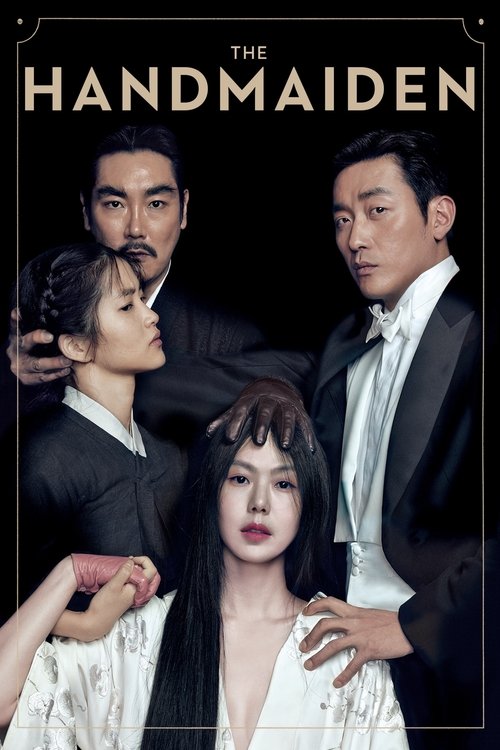
Park's previous film about a woman performing for a hidden audience and seizing the authorship mid-performance. Same production designer, same conviction: in Park's cinema the deceived and the beloved are the same job, and the woman always finishes the story herself.
More Lunara Film Criticism
Further Reading
 ★★★★
Lunara Film Review
No Other Choice — Murder as a Middle-Class Errand
Park Chan-wook builds a serial killer out of a severance package. Two men are talking about paper. Not metaphorical paper: actual stock,...
Updated September 23, 2026
 ★★★½
Lunara Film Review
Black Panther: Wakanda Forever — Stronger as Eulogy Than Entertainment
The first franchise film that had to bury its star before it was allowed to tell a story.
Updated September 23, 2026
 ★★★★★
Lunara Film Review
Babylon — The Movies Were Never Respectable
Three hours of vomit, jazz, and dying stars, all of it in defense of one heretical idea: the sacred thing was built by the vulgar people.
Updated September 23, 2026
 ★★★★½
Lunara Film Review
All Quiet on the Western Front — The Uniform Outlives the Boy
Edward Berger's war film opens with laundry, and the laundry is the most frightening thing in it.
Updated September 23, 2026
 ★★★★
Lunara Film Review
Triangle of Sadness — Tip the Room, Watch Power Slide
Ostlund's Palme d'Or winner is less a satire than a physics experiment: tilt the deck and see where authority rolls.
Updated September 23, 2026