

No Other Choice, 2025. CJ Entertainment (KR) / Neon (US)
No Other Choice — Murder as a Middle-Class Errand
Movie Review
Park Chan-wook builds a serial killer out of a severance package, and the scariest thing about him is how reasonable he sounds.
Two men are talking about paper. Not paper as a symbol of anything. Actual paper: stock weights, grain direction, coating, the release liner on a menstrual pad, the waxed sleeve that keeps an ice cream cone from going soggy in your hand. One of them is You Man-su, who spent twenty-five years at Solar Paper, who was once named the company’s Pulp Man of the Year, and who watched all of it get shredded in a single meeting. The other is Go Sijo, a rival executive who now sells shoes. They meet in the shoe store, and what should be an awkward collision between two casualties of the same dying industry turns into something startlingly close to love. Two craftsmen realize, at the same moment, that the other one also hears poetry in coated stock. Man-su’s eyes shine. It is the warmest scene Park Chan-wook has put on screen in years.
Man-su came to that store to kill him.
That is the whole movie compressed into one encounter. Man-su is a candidate for the last real paper job left in the region. Sijo is the competition. And Park lets the kinship breathe just long enough that when the violence comes, it lands as a betrayal of something true, a friendship strangled in the crib by a job posting. The murder is never the horror here. The horror is that the murderer is the most relatable person in the film.
Park is adapting Donald Westlake’s novel The Ax, working with three co-writers including Don McKellar, and the great surprise is what he has thrown away. The operatic vengeance of his early work is gone. What replaces it is process, and process turns out to be scarier. Man-su does not spiral after his firing. He does not drink. He does not rage or come apart in the driveway at 2 a.m. He takes the factory management principles that made him Pulp Man of the Year and applies them to unemployment. Identify the job you deserve, the opening at Moon Paper. List the rival candidates who would beat you to it. Work through the list. Lee Byung-hun plays him with a restraint so total it amounts to a disappearing act, and he plays every kill the same way, as a task, performed by a man who considers himself, at all times, a fundamentally good person temporarily inconvenienced by circumstance. The title is the film’s running joke at his expense. “No other choice” is what a man says while making the same choice over and over.
Kim Woo-hyung shoots all of this in the flat, cheerful brightness of a suburban Sunday. No noir shadows, no rain-slick alleys, nowhere for a monster to hide, because Park’s point is that this monster does not live in the dark. He lives on a cul-de-sac. The mortgage is due.
The set-piece that will follow this film around for years is staged as a family phone call. Man-su has buried a rival, Choi Sun-chul, vertically in his backyard, head wrapped, still alive, sausages fed down to him through a funnel. His wife video-calls. He angles the phone, puts on the smile, tells her he is at a barbecue. Editor Kim Sang-bum cuts between the suffocating man below the dirt and the domestic pantomime above it with a rhythm built to induce moral seasickness. It is horrifying, absurd, and slapstick inside the same thirty seconds, tonal registers that should annihilate each other made to shake hands instead. A man stands on a buried colleague while performing well-being for his family. That is the corporate ladder made literal, and it is the blackest joke of Park’s career. I laughed, and I did not feel good about laughing, and I am fairly sure that is the exact transaction Park wanted.
Where the film runs thinner than it should is at home. Son Ye-jin gives Miri, the wife, a chilling quiet as she slides from a dental hygienist economizing on tennis lessons to a woman digging a hole for an “apple tree” she knows is no such thing. Her not-asking is the film’s sharpest portrait of complicity, the way a household agrees, wordlessly, not to know where the money comes from. But the script gives her turn less room than it gives any of the rival candidates, so the marriage’s descent runs on assertion while the killings run on proof. A Lady Macbeth this good deserved the screen time the corpses got.
Then Park detonates his ending, and every complaint shrinks. Man-su wins. The rivals are gone, the job is his, and he walks into the Moon Paper factory on his first morning, the vindicated survivor of his own private war. The lights flicker on across a cavernous hall and reveal no one. Robots run the floor. Every name on the kill list, every buried colleague, every abdication his family swallowed, was competition for a position the industry had already automated past meaning. He stands there, the sole human in a cathedral of automation, king of a kingdom that never needed a king.
What stays with you is the last sound. His daughter’s cello, playing Marin Marais, slowly submerged beneath the hum of the factory floor. The final human-made beauty in the movie, drowned, politely, by the thing Man-su killed six people to join. Park has made bleaker films than this one. He has never made one this funny about its own bleakness, and never one whose warning lands this close to the kitchen table: the ladder is real, the climbing costs everything, and nobody told the climbers the building is already empty.
Lunara Film Debrief
- Score:★★★★
- Year:2025
- Where to Watch:
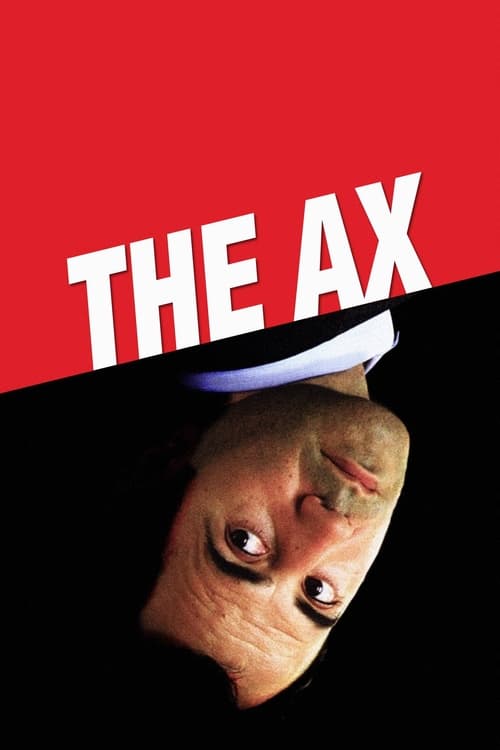
Costa-Gavras adapted the same Westlake novel two decades earlier in France, and the two films agree completely on the diagnosis: employment as identity, murder as job search. Where they differ is temperature. Watching both is a controlled experiment in national styles of despair.

Wenders' Tokyo toilet cleaner finds, in humble work, the dignity Man-su kills six people to avoid accepting. It is the gentlest possible rebuke. One film's nightmare is the other film's practice of peace.

Park's first economic tragedy, where layoffs and desperation grind two decent men into mutual destruction. Twenty-three years later the rage has cooled into administration, which is exactly what makes the new film more frightening.
More Lunara Film Criticism
Further Reading
 ★★★★★
Lunara Film Review
Decision to Leave — Surveillance Is the Love Language
Park Chan-wook's detective romance understands the terrible secret of both professions: to investigate someone and to love someone are the same activity.
Updated September 23, 2026
 ★★★½
Lunara Film Review
Den of Thieves 2: Pantera — Burn the Blueprints
The first one wanted to be Heat; this one would rather be drunk, and it turns out drunk is the more honest condition.
Updated September 23, 2026
 ★★½
Lunara Film Review
Out of Order! — The Reunion the Movie Doesn’t Know It Has
Superman and Jimmy Olsen share frames again after nineteen years, a Broadway scene-stealer plays the farce all by herself, and the screenplay never shows up to...
Updated September 23, 2026
 ★★½
Lunara Film Review
The Gorge — The Distance Was the Movie
Scott Derrickson's two-hander has one of the best premises of the year and the saddest relationship to it -- a film that treats the very...
Updated September 23, 2026
 ★★★
Lunara Film Review
The Monkey — Laughing at the Funeral
Osgood Perkins follows the dread of Longlegs with something that looks like its opposite -- a gleeful splatter comedy about a cursed toy...
Updated September 23, 2026