
Lunara Review
Black Panther — Wakanda Is the Dream; Oakland Is the Bill
The throne room is the plot; the boy on the basketball court is the film.

The throne room is the plot; the boy on the basketball court is the film.
Oakland, 1992. Two boys are playing basketball under sodium lights when one of them looks up and sees a ship hanging over the projects, lit like something out of a story nobody told him. In the apartment above the court, a king has just killed his own brother, and when the ship rises and leaves, it takes the future with it and leaves the body behind. It also leaves the boy. Ryan Coogler opens the most expensive Black-led film ever made in his own hometown, at the exact address the fantasy skipped, and everything that follows is billed to that abandonment. The wonders come later, the sand-table technology and the sunlit throne room and the city like a dream of an unconquered continent. The film never lets you forget who was left on the court watching the lights go.
Black Panther is the most culturally significant film this franchise ever produced, and its significance and its contradiction are the same fact: it makes a revolutionary question legible to the largest possible audience by packaging it inside the most efficient entertainment corporation alive. Coogler came up through Fruitvale Station and Creed, two films that smuggled institutional anger into commercial shapes, and here he attempts the trick at planetary scale, building an actual argument about colonialism, diaspora, and the obligations of power into a February superhero release. That the corporate machine accommodated it as smoothly as it accommodates a post-credits scene is either the trick’s triumph or its ceiling. The film is honest enough to be about that tension, which is more than anyone had a right to expect.
Wakanda itself is the thesis. The question it stages is not rhetorical: what would an African civilization look like if colonialism had never touched it? Coogler and his designers answer with enough specificity that the country works as an accusation rather than a backdrop. Ruth E. Carter’s costumes pull from Maasai, Zulu, Basotho, and Tuareg traditions and fuse them into one living vocabulary; Hannah Beachler’s city grows its towers out of its own past instead of importing someone else’s future. Both women won Academy Awards for it, the first ever given to a superhero film, and the wins were not charity: this is world-building where every surface says the advancement came from the culture, not in place of it. A vision of what was stolen, rendered in vibranium.
Chadwick Boseman plays T’Challa with a stillness that communicates power secure enough that it never needs to perform itself. The voice is measured, the Xhosa-inflected cadence held with total consistency, and the most sophisticated thing in the performance is what he withholds: T’Challa’s doubts never surface as speeches, only as attention, the eyes registering the validity of accusations his throne obligates him to reject. His death in 2020 turned every frame of this into elegy, and the elegy flatters nothing; the work was always this controlled. It is the rare superhero lead built almost entirely out of listening.
What he is listening to is Michael B. Jordan. Killmonger is the best villain this franchise ever produced because his rage is legitimate, his diagnosis is correct, and his cure is monstrous precisely because it mirrors the colonizer he claims to oppose: conquest, in the master’s grammar, with the flags swapped. Jordan plays him as a body forged by American systems of violence, the military bearing, the swagger as armor, the scarification covering his torso like a ledger where every raised mark is a kill. And the film hands him its truest line at the end, refused rescue, watching the sunset his father promised him: “Bury me in the ocean with my ancestors that jumped from ships, ’cause they knew death was better than bondage.” No other film in this franchise would let a villain exit undefeated on the level that matters.
The dramatic peak is not a battle. It is T’Challa on the ancestral plane, telling his dead father to his face that hiding Wakanda was not protection but cowardice, that his generation chose safety over solidarity and produced Killmonger as the invoice. A son indicting his ancestors is old dramatic territory; a Black king indicting them for abandoning the diaspora is not, and Coogler leaves the indictment standing. T’Challa’s eventual policy, outreach centers and open borders of a cautious kind, answers Killmonger only partially, and the film knows it. Letting the wound stay open is its most intellectually honest decision.
Around the throne, the women quietly run the movie. Lupita Nyong’o’s Nakia is the moral compass, arguing for engagement years before her king catches up. Danai Gurira’s Okoye carries the film’s sharpest loyalty problem, a general whose devotion to the institution puts her opposite her own heart, and she makes the spear work read as conviction rather than choreography. Letitia Wright’s Shuri supplies the confidence of a teenager who knows she is the smartest person in every room and has not yet learned to pretend otherwise. Coogler shoots all of them the way he shot Creed, camera close, reactions privileged over spectacle.
Which makes the honest limit hurt more: the third act betrays the first two. The final confrontation is two digital doubles in glowing suits tumbling through a mine shaft, weightless and rubbery exactly where the film most needs mass, and the realest conflict on screen, an idea against an idea, gets settled by rendering software. The seams show at the precise moment the movie needs to be undeniable. It is a deadline problem, not a vision problem, and every frame around it proves the vision was there; but a film this controlled deserved an ending built with the same hands.
It does not sink the picture, because the picture’s power was never located in its fights. The tears in theaters in February 2018 were not about T’Challa defeating Killmonger. They were about seeing Wakanda exist, about a counterfactual made solid enough to stand inside for two hours. Black Panther is not the best film in its franchise. It is the one that proved the franchise could carry weight bigger than its mandate, and the one whose questions are still open because the world’s are.
LUNARA DEBRIEF
- Score: 4 / 5
- Year: 2018
- Where to Watch: Streaming (Disney+) | VOD (major platforms)
- Theme Echo: Do the Right Thing (1989) tt0097216. Lee’s block and Coogler’s kingdom ask the same question at different scales: what does righteous anger demand, and who pays when the answer arrives? Radio Raheem and Killmonger are cousins across three decades, both mourned by films that understand them better than the world did.
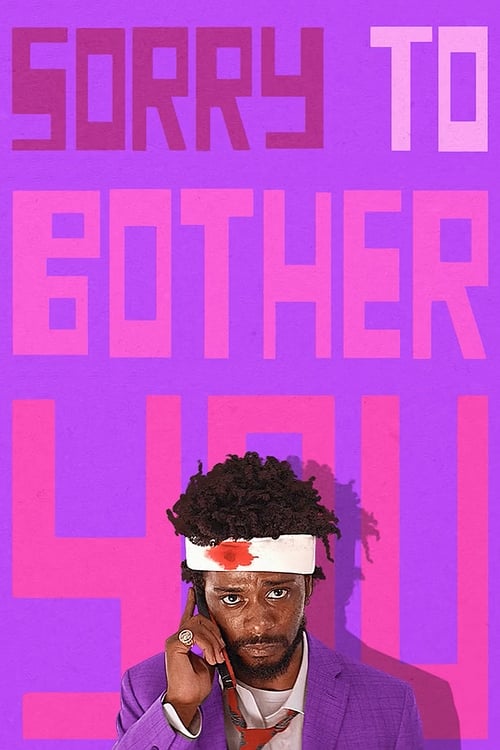
- Counter-Program: Sorry to Bother You (2018) tt5688932. The same year, the same city, the opposite economics: Boots Riley’s Oakland satire says everything about race and capital that a studio tentpole cannot, for a fraction of the cost and none of the permission. Watch them together to see what the corporate frame enables and what it forbids.
- Career Context: Creed (2015) tt3076658. Coogler’s Rocky picture is the rehearsal: inherit a commercial property, find the abandoned son inside it, and make the institution answer to him. Adonis Creed and Erik Stevens are the same argument at two budgets.
LUNARA DEBRIEF
- Score:★★★★
- Oscar Ledger7 nominations • 3 wins
- Year:2018
- Where to Watch:
Pair It With
Three films in conversation with this one.

Theme Echo
Do the Right Thing (1989)
Lee's block and Coogler's kingdom ask the same question at different scales: what does righteous anger demand, and who pays when the answer arrives? Radio Raheem and Killmonger are cousins across three decades, both mourned by films that understand them better than the world did.
Counter-Program
Sorry to Bother You (2018)
The same year, the same city, the opposite economics: Boots Riley's Oakland satire says everything about race and capital that a studio tentpole cannot, for a fraction of the cost and none of the permission. Watch them together to see what the corporate frame enables and what it forbids.

Career Context
Creed (2015)
Coogler's Rocky picture is the rehearsal: inherit a commercial property, find the abandoned son inside it, and make the institution answer to him. Adonis Creed and Erik Stevens are the same argument at two budgets.
Further Reading
More Lunara Criticism
 ★★★½
★★★½
Lunara Review
Black Panther: Wakanda Forever — Stronger as Eulogy Than Entertainment
The first franchise film that had to bury its star before it was allowed to tell a story.
Updated July 25, 2026
 ★★★★½
★★★★½
Lunara Review
Avengers: Infinity War — The Night the Theater Went Silent
The boldest thing a franchise ever did was assemble everyone and then let the villain finish.
Updated July 25, 2026
 ★★½
★★½
Lunara Review
Ant-Man and the Wasp — The Sorbet Course
Two hours of pleasant weightlessness, and thirty seconds after the credits that outweigh all of it.
Updated July 25, 2026
 ★★★★★
★★★★★
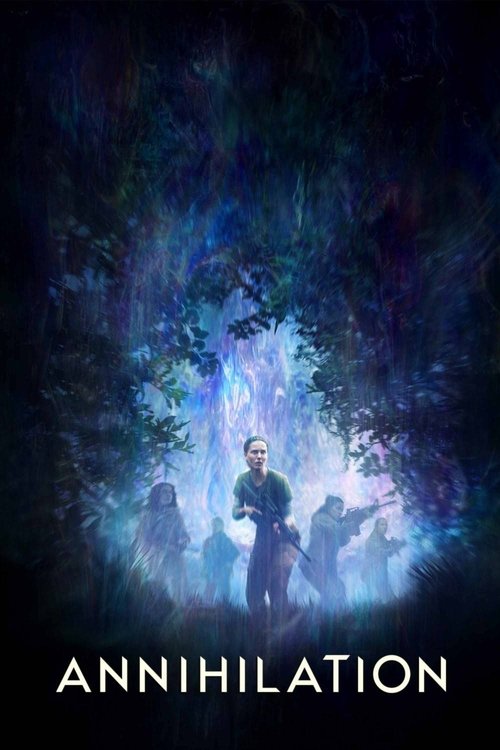
Lunara Review
Annihilation — What Walks Back Out
The scariest thing in Alex Garland's expedition film is not what waits inside the zone; it is what walks back out wearing your name.
Updated July 25, 2026
 ★★★★½
★★★★½
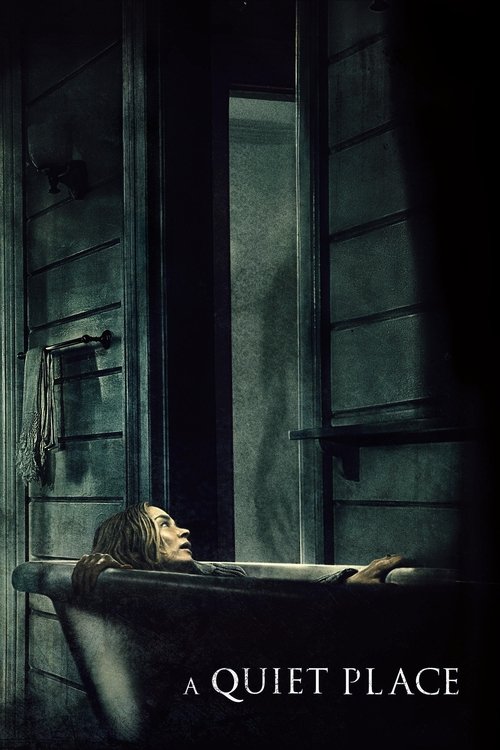
Lunara Review
A Quiet Place — Parenthood at Full Volume
The monsters hunt by sound; this family was already fluent in silence.
Updated July 25, 2026