
Lunara Review
Eternals — The Most Expensive Contemplative Failure
The most beautiful film Marvel ever released, and the stillest; every few minutes it stops to watch the sun go down.

The most beautiful film Marvel ever released, and the stillest; every few minutes it stops to watch the sun go down.
Every few minutes, Eternals stops to watch the sun go down. Real sun, real beaches, real wind moving through real grass, photographed at magic hour by a director who had just won every award the industry gives for finding the transcendent in a parking lot. Nothing else in this franchise looks like it. Chloe Zhao shot on locations with natural light and wide, patient compositions that set her immortals inside landscapes instead of in front of them, and frame by frame the picture is the loveliest thing Marvel has ever put its logo on. Then somebody has to fight a wolf made of pixels, and you can feel both the movie and its maker quietly wishing they were back on the beach.
The ambition was genuine and the failure is instructive, which is why this misfire is worth more attention than most of the franchise’s successes. Zhao arrived with a real question: if beings who cannot die spent seven thousand years among people who can, what would they owe us, and what would we deserve? The premise is Olympian and the itinerary matches it, Mesopotamia to Babylon to Tenochtitlan to a South Dakota homestead, gods scattered across human history like witnesses who have lost the thread of the trial. The reveal at the center is legitimately bleak: the Eternals are not guardians but midwives, protecting humanity the way a farmer protects a crop, so that a Celestial gestating in the planet’s core can hatch and split the Earth like an egg. Whether a species is worth a cosmos’s sacrifice is a real question, asked with a straight face. The film raises it with genuine gravity and then answers it the only way the release calendar allows, with a punch-up on a beach, and you can hear the idea deflate.
The arithmetic is what kills it, and the arithmetic is unforgiving. Ten Eternals, seven millennia, one running time. Each character gets enough footage to establish a trait and not enough to establish a pull, so every scene that deepens one relationship starves eight others, and the audience’s investment spreads across the ensemble at a concentration too thin to bind to anybody. Gemma Chan carries the center with a gentle, serene intelligence, and serenity is precisely the problem: Sersi’s defining quality is her love for humanity, and the film gives that love no urgency, so the protagonist of a story about the end of the world registers as pleasant. Richard Madden gets the one arc with real mythology in it, a true believer choosing the plan over the woman, and his exit, flying into the sun because he cannot live inside his own contradiction, has the shape of Icarus and the grandeur of myth. The shape is earned. The feeling is not, because the film never had the hours to build the love whose loss the image needs.
The margins are where it breathes. Angelina Jolie plays Thena’s deteriorating mind as fractured elegance, centuries of memory bending a warrior toward collapse. Barry Keoghan’s Druig is the most politically interesting figure in the picture, an immortal who watched Tenochtitlan burn and concluded that human free will is a luxury the species cannot afford, now running a mind-controlled commune in the Amazon with the calm of a man who believes his authoritarianism is mercy. His half-spoken thing with Lauren Ridloff’s Makkari, the film’s swiftest and warmest presence, is the relationship you leave wanting a whole movie about. And Kumail Nanjiani’s Kingo, an immortal who became a Bollywood dynasty and decided that enjoying eternity is a legitimate answer to it, keeps walking off with scenes simply by being the only Eternal who seems glad to be here.
The honest limit cuts the other way from most Marvel reviews: this is not a case of no vision, it is a case of two visions canceling. Zhao’s naturalism and the studio’s mandated cosmic climax do not blend, they collide, and the collision is visible in the seams, gray CGI Deviants thrashing through golden-hour light, a director of intimate observation asked to stage the hatching of a god. The strange thing is that the dissonance is also the film’s most honest quality. You are watching the negotiation happen on screen in real time, an art film and a product fighting for the same frames, and neither one wins. The image that survives the wreck is the Celestial Tiamut breaching the Indian Ocean, a being the size of a continent frozen mid-birth, marble-white fingers the length of islands. It is the film in one picture: conceptually enormous, visually staggering, and emotionally unattended, a cathedral built for a congregation that never got introduced to the faith.
Zhao made her previous films with a van, a small crew, and people playing versions of themselves, and found the sublime on a budget that would not cover this production’s catering. Handed vastly more money and ten superheroes, she produced the most expensive contemplative failure in modern studio history, beautiful and inert in equal measure. It deserves to be seen once, at the best resolution available, for the sunsets and the scale and the lesson: hiring a vision is not the same as permitting one.
LUNARA DEBRIEF
- Score: 2 / 5
- Year: 2021
- Where to Watch: Streaming (Disney+) | VOD (major platforms)
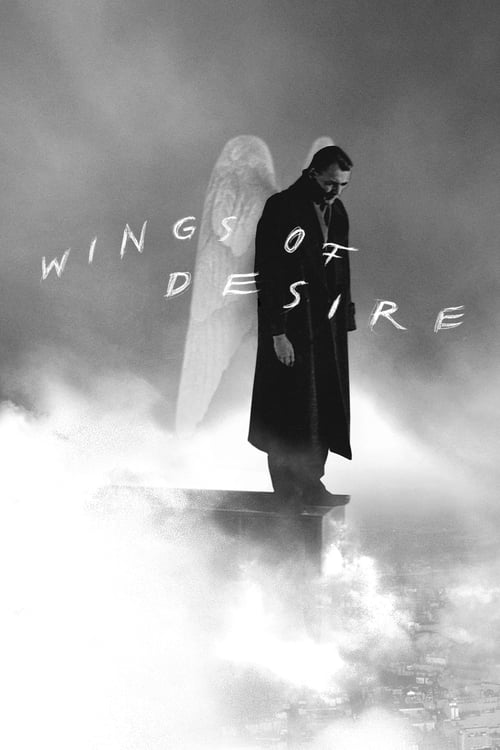
- Theme Echo: Wings of Desire (1987) tt0093191. Wenders’s angels stand outside human time, aching to fall into it; Zhao’s immortals stand inside it, forbidden to intervene. Each film knows what the other’s eternity costs, and Wenders proves the premise never needed a third-act battle.
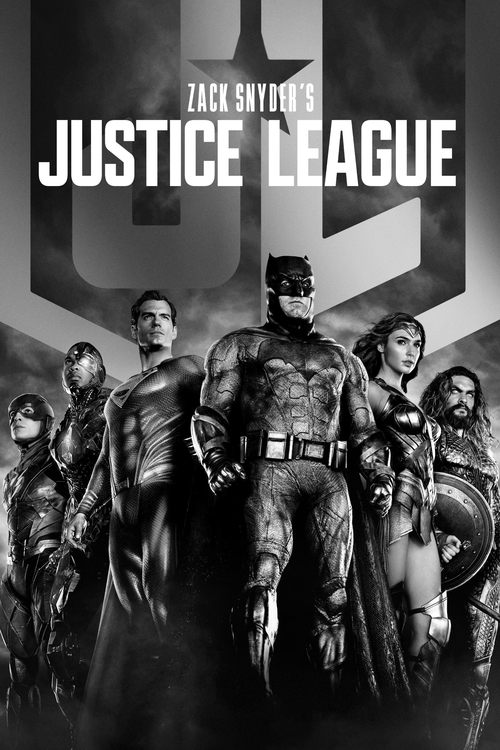
- Counter-Program: Zack Snyder’s Justice League (2021) tt12361974. The same year’s other overpopulated god-team epic, solving the crowding problem with four hours of operatic maximalism instead of ninety-second character beats. The two films fail in exactly opposite directions, and the comparison maps the whole genre’s ceiling.
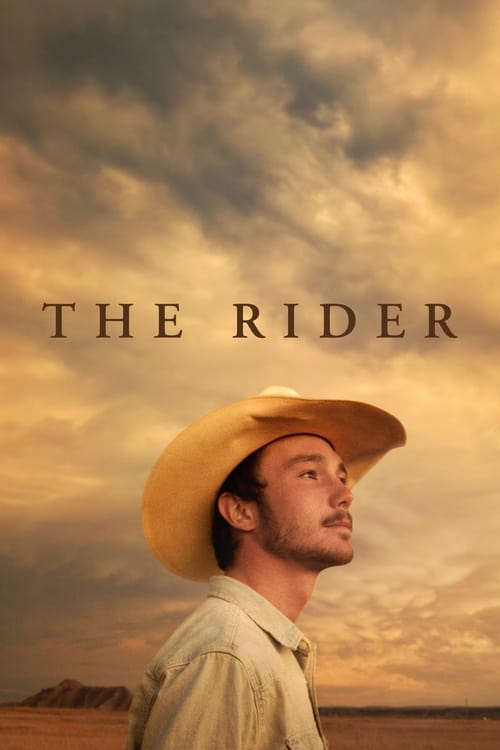
- Career Context: The Rider (2017) tt6217608. Zhao’s second feature: a real cowboy playing himself, real horses, real prairie light, and more felt loss in one stable scene than in all seven millennia here. It is the authenticity Eternals reaches for with a nine-figure budget and cannot buy.
LUNARA DEBRIEF
- Score:★★
- Year:2021
- Where to Watch:
Pair It With
Three films in conversation with this one.
Theme Echo
Wings of Desire (1987)
Wenders's angels stand outside human time, aching to fall into it; Zhao's immortals stand inside it, forbidden to intervene. Each film knows what the other's eternity costs, and Wenders proves the premise never needed a third-act battle.
Counter-Program
Zack Snyder's Justice League (2021)
The same year's other overpopulated god-team epic, solving the crowding problem with four hours of operatic maximalism instead of ninety-second character beats. The two films fail in exactly opposite directions, and the comparison maps the whole genre's ceiling.
Career Context
The Rider (2017)
Zhao's second feature: a real cowboy playing himself, real horses, real prairie light, and more felt loss in one stable scene than in all seven millennia here. It is the authenticity Eternals reaches for with a nine-figure budget and cannot buy.
Further Reading
More Lunara Criticism
 ★★★★½
★★★★½
Lunara Review
Hamnet — What the Greatest Play Cost
Hamlet exists. Hamnet is forgotten. The film insists these are the same fact. Hamnet is the film that asks what you have always declined to...
Updated July 18, 2026
 ★★★★
★★★★
Lunara Review
West Side Story — The Camera Finally Dances
Spielberg waited fifty years to move a camera through a song, and the hunger is visible in every frame.
Updated July 25, 2026
 ★★★★★
★★★★★
Lunara Review
Titane — Family Is a Choice Made in the Dark
Julia Ducournau's Palme d'Or winner is sold as the car movie; it is actually the decade's strangest film about adoption.
Updated July 25, 2026
 ★★★★½
★★★★½
Lunara Review
The Worst Person in the World — The Luxury of Not Deciding
Joachim Trier freezes all of Oslo so one woman can run through it, and then makes her pay for the privilege.
Updated July 25, 2026
 ★★★★★
★★★★★
Lunara Review
The Power of the Dog — The Quietest Person in the Room
A Western where nobody draws a gun, and the deadliest act in it looks exactly like kindness.
Updated July 25, 2026