
Lunara Review
Titane — Family Is a Choice Made in the Dark
Julia Ducournau's Palme d'Or winner is sold as the car movie; it is actually the decade's strangest film about adoption.

Julia Ducournau’s Palme d’Or winner is sold as the car movie; it is actually the decade’s strangest film about adoption.
The mirror scene is the one that separates the tourists from the stayers. Alexia, wanted for a string of killings, stands in a public bathroom and makes herself into someone else’s missing son: hacks her hair, straps her chest flat with bandage wrap, and breaks her own nose against the sink edge, one short, committed blow, no flinch, the camera declining to cut away. Audiences walked out of festival screenings at this scene, and it is worth being precise about why it is there. Nothing in Titane’s notorious first act, not the motor oil, not the chrome, not the kills, is as extreme as this moment of a person demolishing her own face to be allowed into a family, and Julia Ducournau stages it as the film’s true hinge: the horror movie ends at that sink, and something much stranger and more tender crawls out of it wearing the horror movie’s skin.
The setup is the part everyone can recite. Alexia, a titanium plate in her skull from a childhood car crash, works car shows as a dancer, kills with a hairpin the way other people check their phones, and, in the scene that made the film a headline, is impregnated by a Cadillac. Agathe Rousselle, a first-time lead found through open casting, plays all of it with a feral, wordless physicality that turns her body into the film’s actual location: bruised, bound, leaking oil where blood should be, a landscape the movie surveys with more curiosity than pity. Ruben Impens shoots the opening world in slick nightclub neon, all chrome flare and skin, then lets the palette thicken into the sweltering ambers of the film’s second act, because the second act is where Titane reveals what it has been about all along, and it is not machines.
It is about Vincent. A grieving fire captain, played by Vincent Lindon as a monument with a crack running through it, has spent ten years papering the void where his vanished son Adrien used to be, and when the police present him with Alexia-as-Adrien, a silent, bruised stranger who matches nothing but his need, he takes her home. The film’s most devastating line is his warning to the crew: I don’t care who you are, you are my son. He knows. Of course he knows. The not-knowing is a ritual both of them agree to perform, and Ducournau builds the film’s whole second half from the collateral tenderness of that lie: Vincent injecting steroids into his failing body to stay strong enough to be worth impersonating for, Alexia binding tighter as the impossible pregnancy swells, each of them maintaining a fiction of masculinity with medical equipment, each seeing the other’s syringe and saying nothing. Family, the film argues, is not a biological fact. It is a choice made in the dark, renewed nightly, by people who need the story more than the truth, and Titane makes that argument with more force than any respectable drama of its year precisely because it costs its characters everything to keep choosing.
The honest limit is the join between the film’s two bodies. The first act runs on dare logic, kills stacked as escalating punchlines, a spree sequence played for gasps and giggles, victims who exist to be dispatched, and it is joined to the great film that follows by will rather than necessity; you can feel Ducournau enjoying the provocation for its own sake, and viewers who bail in those thirty minutes are responding to something real. Titane before the firehouse is a brilliant stunt. Titane after it is a masterpiece, and the stunt never fully explains why the masterpiece required it at this length.
But the ending fuses everything the film has been holding in its two hands. Alexia’s labor arrives like a crash, chrome showing through split skin, and she dies delivering something new, part flesh, part gleam, into the arms of the man who chose her. Vincent, who has now buried a phantom son and a false one, holds the impossible child and says the only thing he has left, the thing he said all along: I’m here. Ducournau frames it without irony, a nativity in engine grease, and the provocation resolves into sincerity so complete it is almost embarrassing to receive. That is the film’s final trick and its real subject. The metal was never the point. The point is that love, in Titane, is the one force shown to survive every transformation of the body it attaches to, and the fearsome French shock auteur turns out to have made the most radically sentimental film of its year, disguised, like its heroine, as something built to hurt you.
LUNARA DEBRIEF
- Score: 5 / 5
- Year: 2021
- Where to Watch: Streaming (Hulu) | Neon/Criterion disc
- Theme Echo: Crash (1996) tt0115964. Cronenberg’s chrome-and-flesh liturgy is the acknowledged ancestor, but the inheritance is inverted: his characters use machines to escape intimacy, Ducournau’s heroine passes through the machine to finally reach it. Same garage, opposite prayers.
- Counter-Program: Portrait of a Lady on Fire (2019) tt8613070. The other French masterpiece of its era about being truly seen, conducted entirely through stillness and gaze. Sciamma proves the theme needs no blood; Ducournau proves it survives any amount. The pairing is a controlled experiment in temperature.
- Career Context: Raw (2016) tt4954522. Ducournau’s debut: another young woman whose body develops an appetite the world has no category for, another family secret carried in the flesh. Titane is Raw’s thesis scaled from appetite to identity, by a filmmaker who clearly meant it the first time.
LUNARA DEBRIEF
- Score:★★★★★
- Year:2021
- Where to Watch:StreamingHuluAvailabilityNeon/Criterion disc
Pair It With
Three films in conversation with this one.
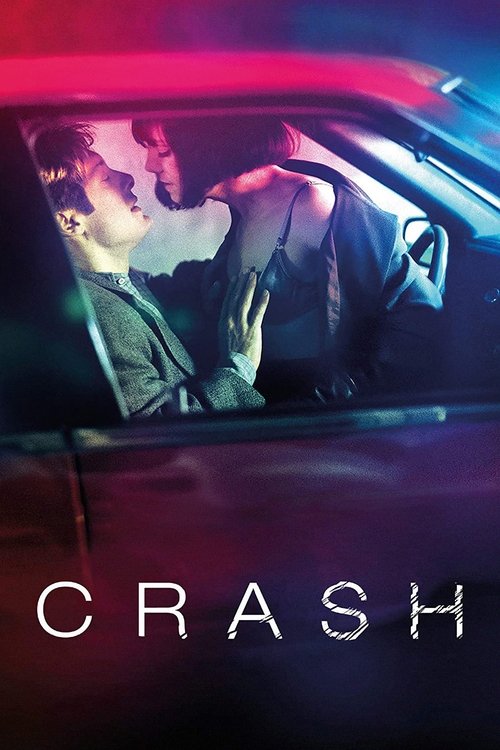
Theme Echo
Crash (1996)
Cronenberg's chrome-and-flesh liturgy is the acknowledged ancestor, but the inheritance is inverted: his characters use machines to escape intimacy, Ducournau's heroine passes through the machine to finally reach it. Same garage, opposite prayers.

Counter-Program
Portrait of a Lady on Fire (2019)
The other French masterpiece of its era about being truly seen, conducted entirely through stillness and gaze. Sciamma proves the theme needs no blood; Ducournau proves it survives any amount. The pairing is a controlled experiment in temperature.

Career Context
Raw (2016)
Ducournau's debut: another young woman whose body develops an appetite the world has no category for, another family secret carried in the flesh. Titane is Raw's thesis scaled from appetite to identity, by a filmmaker who clearly meant it the first time.
Further Reading
More Lunara Criticism
 ★★★★
★★★★
Lunara Review
West Side Story — The Camera Finally Dances
Spielberg waited fifty years to move a camera through a song, and the hunger is visible in every frame.
Updated July 25, 2026
 ★★★★½
★★★★½
Lunara Review
The Worst Person in the World — The Luxury of Not Deciding
Joachim Trier freezes all of Oslo so one woman can run through it, and then makes her pay for the privilege.
Updated July 25, 2026
 ★★★★★
★★★★★
Lunara Review
The Power of the Dog — The Quietest Person in the Room
A Western where nobody draws a gun, and the deadliest act in it looks exactly like kindness.
Updated July 25, 2026
 ★★★★★
★★★★★
Lunara Review
The Green Knight — Honor Is What You Do With No One Watching
David Lowery films the old poem as an ordeal: a man rides for a year toward an axe he agreed to.
Updated July 25, 2026
 ★★★★
★★★★
Lunara Review
Spider-Man: No Way Home — The Machine Has a Heart
The most cynical business plan in franchise history somehow produced a real movie about grief; the tears are genuine even if the till is open.
Updated July 25, 2026