
Lunara Review
West Side Story — The Camera Finally Dances
Spielberg waited fifty years to move a camera through a song, and the hunger is visible in every frame.

Spielberg waited fifty years to move a camera through a song, and the hunger is visible in every frame.
The first shot is the whole thesis. A wrecking ball swings through a demolished block of the Upper West Side, and the camera climbs the rubble until it finds a sign announcing what is coming: Lincoln Center. High culture will be built on the bones of the community it displaces, and every switchblade drawn for the next two and a half hours is a distraction from that fact. Tony Kushner’s smartest addition to a sixty-year-old musical is making gentrification the engine of the entire story. The Jets and the Sharks are fighting over a neighborhood neither will be allowed to keep; their turf war is real to them and already settled above their heads, because the true violence in this San Juan Hill comes not from gangs but from city planners. It is a devastatingly current frame for material everyone assumed was finished, and it is the reason this film is a reclamation rather than a remake.
Steven Spielberg waited his entire career to make a musical, and the wait shows, not as hesitation but as accumulated hunger. Every number is staged with the barely contained joy of a director who has spent fifty years thinking about how to move a camera through a song and is finally allowed to do it. The film’s masterpiece is America, which Justin Peck’s choreography lifts off its traditional rooftop and spills across entire city blocks, up fire escapes, through intersections, across stoops, with Ariana DeBose’s Anita leading it like a one-woman weather system. The number starts as celebration and curdles into argument, Anita and Bernardo debating the American Dream while their bodies contradict the debate, joy in the movement, anger in the lyric, and Spielberg shoots it knowing that the best musical numbers are arguments set to music. This one argues that the dream is real and the dream is a lie, simultaneously, and that the people living inside it hold both truths at once. It is the finest musical sequence of the century so far, and DeBose, electric, furious, funny, finally shattering, took the Oscar it guaranteed.
Janusz Kaminski, in his umpteenth collaboration with Spielberg, does the most romantic work of the partnership: musical numbers bathed in vintage-Technicolor glamour, theatrical pools of light, saturated fabrics, faces burning against darkness, while the dramatic scenes stay grounded in real brick and rubble. His triumph is the rumble. Staged in a salt warehouse under a highway, the fight is lit entirely by simulated head- and brake-lights streaming through high windows, the light intensifying as the violence escalates until the room pulses with moving shadow, and the audience never sees a single car. Only the light. It is filmmaking as controlled hallucination, and it turns the musical’s obligatory knife fight into something closer to myth. Adam Stockhausen’s production design carries the political load the same way: the Jets’ blocks already reduced to craters, the Sharks’ streets still vibrant and painted, the film’s whole argument about erasure built into the set dressing where you absorb it without being told.
The cast around the center is uniformly alive. Rachel Zegler’s debut Maria has a luminous directness that sidesteps the role’s historical passivity; David Alvarez gives Bernardo real bodily authority; Mike Faist’s Riff is the film’s most interesting supporting turn, a young man who can feel his own relevance evaporating as the wrecking balls close in, his violence less about hate than about the desperate need to matter to something before it disappears. And Rita Moreno, Anita in 1961, returns as Valentina to hand the film its conscience and its bruised lullaby of a Somewhere. The honest limit stands at the very center of all this: Ansel Elgort’s Tony is competent where everyone around him is combustible, a hole in the film shaped like a leading man, and the Tony-Maria romance inherits the 1961 version’s fundamental thinness besides. The film’s heart beats everywhere except where the story says it should.
History has a habit of correcting for openings, and this film needed the correction: it arrived in a pandemic December when audiences were not going to theaters for anything without a cape, and it died there. Watching it now, that fate reads as an accident of timing rather than a verdict, because what is on screen is the best Hollywood musical since Cabaret, a film of staggering craft whose limitations register as minor against the sheer voltage of its execution. What lingers is the light. Headlights through warehouse glass, DeBose backlit on a fire escape, Maria’s face in a pool of amber from a bare bulb. Spielberg has always known that light is emotion made visible, and here he sustains the principle for two and a half hours in service of a story about beauty that exists precisely because the thing it celebrates is already being demolished. The wrecking ball swings in the first shot and never really stops. The dancing is what people do in its shadow, and this movie understands that the dancing is not denial. It is the receipt that they were here.
LUNARA DEBRIEF
- Score: 4 / 5
- Year: 2021
- Where to Watch: Streaming [Disney+] | VOD | 4K UHD disc [Kaminski’s colors demand HDR]
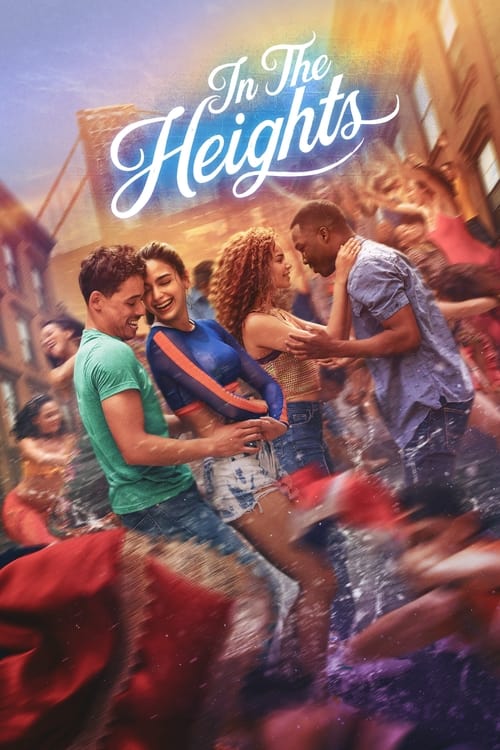
- Theme Echo: In the Heights (2021) tt1321510. Released the same year, Chu’s Washington Heights love letter completes a two-film conversation about displacement and who gets to stay. One neighborhood sings to survive its future; the other sings at the funeral of its past.
- Counter-Program: Cabaret (1972) tt0068327. Fosse’s dark inversion, where the numbers are the lie and the drama is the truth. Spielberg believes the songs; Fosse indicts them; between the two films sits the entire moral range of the American musical.
- Career Context: Close Encounters of the Third Kind (1977) tt0075860. Spielberg’s mothership finale was already a musical number, communication staged as light and tone. West Side Story is that instinct finally given lyrics, and the through-line proves he was never converting to the genre. He was coming home to it.
LUNARA DEBRIEF
- Score:★★★★
- Oscar Ledger7 nominations • 1 wins
- Year:2021
- Where to Watch:
Pair It With
Three films in conversation with this one.
Theme Echo
In the Heights (2021)
Released the same year, Chu's Washington Heights love letter completes a two-film conversation about displacement and who gets to stay. One neighborhood sings to survive its future; the other sings at the funeral of its past.

Counter-Program
Cabaret (1972)
Fosse's dark inversion, where the numbers are the lie and the drama is the truth. Spielberg believes the songs; Fosse indicts them; between the two films sits the entire moral range of the American musical.

Career Context
Close Encounters of the Third Kind (1977)
Spielberg's mothership finale was already a musical number, communication staged as light and tone. West Side Story is that instinct finally given lyrics, and the through-line proves he was never converting to the genre. He was coming home to it.
Further Reading
More Lunara Criticism
 ★★★★★
★★★★★
Lunara Review
Watch trailerA.I. Artificial Intelligence
A.I. Artificial Intelligence is a fairy tale about a machine engineered to love a mother who can return that love only on her species' terms, and…
Updated August 12, 2026
 ★★★★★
★★★★★
Lunara Review
Catch Me If You Can — The Fun Is the Disguise
Spielberg's lightest movie is a divorce picture that learned to sprint.
Updated July 25, 2026
 ★★★★½
★★★★½
Lunara Review
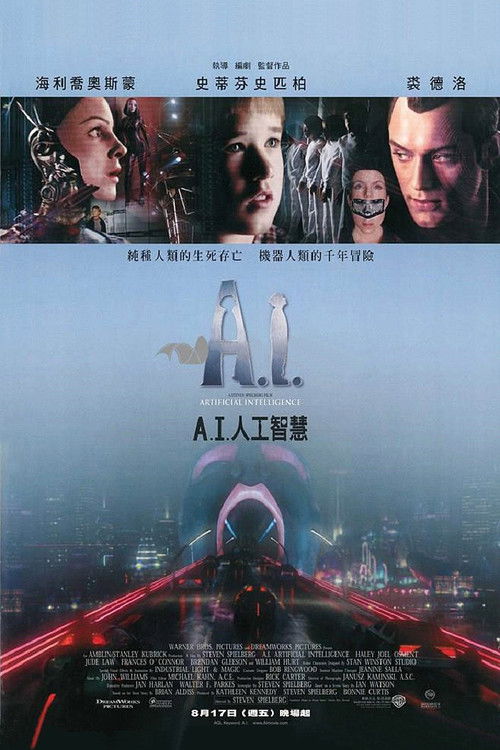
A.I. Artificial Intelligence — The Coldest Thing Spielberg Ever Made
For twenty-five years the official story on A.I. Artificial Intelligence has been that Steven Spielberg took Stanley Kubrick's cold,...
Updated July 14, 2026
 ★★★★
★★★★
Lunara Review
War of the Worlds — His Most Pitiless Film
Steven Spielberg likes to say he never made a horror movie. He is wrong, and this is it. War of the Worlds arrived in the summer of 2005...
Updated July 25, 2026
 ★★★
★★★
Lunara Review
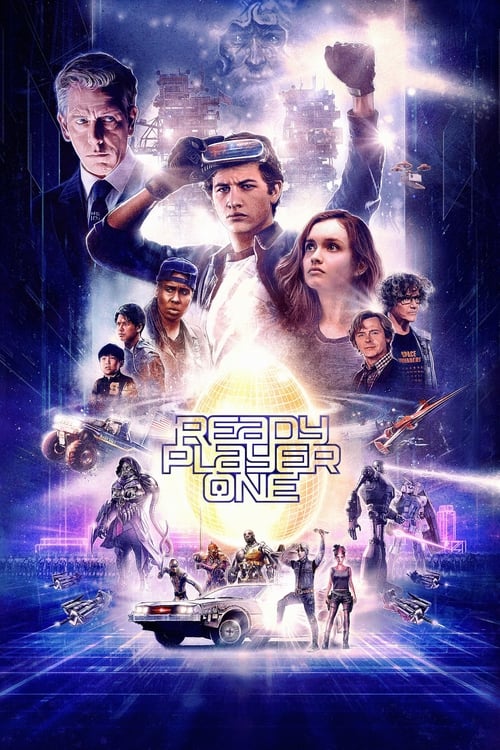
Ready Player One — Spielberg Against Spielberg
Ready Player One is the strangest thing in late Spielberg: a gigantic, exhausting, frequently shallow corporate spectacle that happens to...
Updated July 14, 2026