

War of the Worlds, 2005. Paramount / DreamWorks
War of the Worlds — His Most Pitiless Film
Movie Review
He swears he never made a horror movie. This is the film that makes a liar of him.
The pavement splits first. A crowd in a working-class New Jersey intersection stands there watching the street buckle, faces tipped up in that famous Spielberg awe-stare, and for one heartbeat you think you know the shot, because you have seen it in his movies your whole life. Then the thing rises, the heat ray sweeps, and awe becomes stampede. That heartbeat is the whole film. Steven Spielberg likes to say he never made a horror movie. He is wrong, and War of the Worlds is the proof: a picture that arrived in the summer of 2005 dressed as a Tom Cruise blockbuster and turned out to be the most pitiless, most frightening thing he has ever directed, a 9/11 nightmare with a heat ray, sold to a public that showed up for spectacle and got an ash cloud.
The disguise was the trick. Two of the biggest names in American movies. A beloved Wells property. A holiday-weekend release, a campaign built on the silhouette of the tripods. Every piece of how this film reached you promised the rousing invasion ride, the one where plucky humans rally and win. Spielberg made the opposite of that movie in every register. There is no rally. There is no plan, no resistance worth the name, no speech, no counterattack that matters. There is a divorced dockworker and his two kids running, and running, and running, while a civilization is erased around them for reasons nobody in the film ever learns or is even granted the dignity of understanding. You want to know why they came. So does everyone on screen. The film never says. That silence is the cruelty, and it is deliberate.
Spielberg has been plain about what he was building. The image he could not shake, he said, was everyone in Manhattan fleeing in the shadow of September 11th, Americans attacked for no reason they knew, by someone they could not see. So he built the film out of that footage’s grammar. The ash coating Ray Ferrier after the first attack is the ash of lower Manhattan. The walls papered with photographs of the missing are the walls that went up downtown that fall. The disintegrations, people flashed into drifting powder while their empty clothes flutter down after them, take the unspeakable and render it as science fiction, and somehow that makes it harder to watch, not easier. He released Munich the same year, and the two films are one project split in half. Munich is the politics of terror. This is the other half, the primal half: the raw animal fact of being prey.
And he shoots it with a control the film’s tentpole reputation has spent two decades hiding. The single working car threading a highway of dead ones, swarmed by people who have stopped being people. The ferry, the machines closing from three sides, the water itself no longer safe. Janusz Kaminski drains the palette to an overcast, ashen gray. John Williams scores against catharsis, all dissonance and dread, forever withholding the swell your body keeps bracing for, and the withholding starts to feel like the invasion itself. There is a justly famous shot that circles the interior of the moving car in one unbroken take, the camera prowling the family’s panic like a fourth passenger. None of this is a man phoning in a summer movie. This is a man making the scariest thing he can.
The true center of the picture is a basement. Ray and his daughter hide there with an unraveling stranger while the invaders probe the house above and around them, and for a long stretch the blockbuster simply stops. It is the most Kubrickian passage Spielberg ever shot, a horror film in miniature folded inside the larger one, claustrophobic and morally unbearable, building toward a choice no parent should ever have to make, underscored by a child’s voice trying to sing herself somewhere else. For years people wrote it off as a drag on the momentum. The reappraisal has it right. It is the best thing in the film, the place where the spectacle falls away and the real subject walks to the front: what survival actually costs, and what a person will do to keep a child breathing.
Cruise is the key to how cruel the whole thing is willing to be. Three years after Spielberg cast him as the most competent man in the future in Minority Report, he casts the biggest movie star alive and makes him useless. Ray Ferrier is a deadbeat, an absent father, a man with no special knowledge and no heroism in him, and his entire arc is the bare minimum: keep these two kids alive, fail at it over and over, keep going anyway. There is no version of Ray who saves the world. The film has no interest in the world. It wants to know whether one ordinary, unimpressive man can save the two people directly in front of him, and how little even that is worth against a force that regards him as livestock.
Which brings us to the ending people have argued about for twenty years. The charge: too tidy, too sudden, too merciful after so much despair. Spielberg, faithful to Wells, lets the invaders fall not to human resistance but to the oldest and smallest thing on the planet, then hands his family a reunion the surrounding ruin seems to forbid, and even a sympathetic viewer has to swallow that reunion whole; the swallowing is real work, and the film knows it and asks anyway. But the tidiness is colder than it looks. Humanity does not win this war. It simply is not killed by it. We are spared by an accident of biology we had no hand in, left alive rather than victorious, with no promise that the people who came through are whole. Read for uplift, the ending lets you down. Read for what it actually says, that we are the masters of nothing and live or die at the whim of forces wholly indifferent to us, it is of a piece with every brutal minute before it.
Twenty-one years on, Spielberg has circled back to the same doorway with the same man holding the pen. David Koepp wrote War of the Worlds, and Koepp wrote Disclosure Day, and the two films are two halves of one question asked across a generation: what does it feel like when they come? In 2005 the answer was attack. Annihilation through the pavement, no warning, no explanation, terror in the body. In 2026 the answer inverts: the explanation arrives first, the aliens are withheld, and the dread routes through what we are told and whether we can bear to believe it. Same two hands, opposite fear. War of the Worlds is the scream; Disclosure Day is the silence after. And the scream, two decades later, is still the most frightened, most honest disaster movie an American studio ever let its most beloved director smuggle into the multiplex on a holiday weekend. He told you he never made a horror film. Watch this one again and time how long you can keep breathing.
Lunara Film Debrief
- Score:★★★★
- Oscar Ledger3 nominations • 0 wins
- Year:2005
- Where to Watch:AvailabilityStreamDigitalFind Digital Options

Theme Echo
What is this film really about — and who else has said it?
Disclosure Day (2026)
Same screenwriter, David Koepp; the two Spielberg answers to they're here, twenty-one years apart -- invasion as bodily attack in 2005, invasion as withheld revelation in 2026. The scream and the silence after.

Counter Program
What is the strongest argument against it?
Close Encounters of the Third Kind (1977)
The benevolent-contact film this one photographs as massacre -- watch them together to feel the same director turn his own wonder inside out into terror.

Career Context
Where does this sit in the artist's story?
Minority Report (2002)
Three years earlier Spielberg made Cruise the most competent man in the future; here he makes him useless. The same star, the same director, opposite verdicts on what a man is worth against the machine.
More Lunara Film Criticism
Further Reading
 ★★★★★
Lunara Film Review
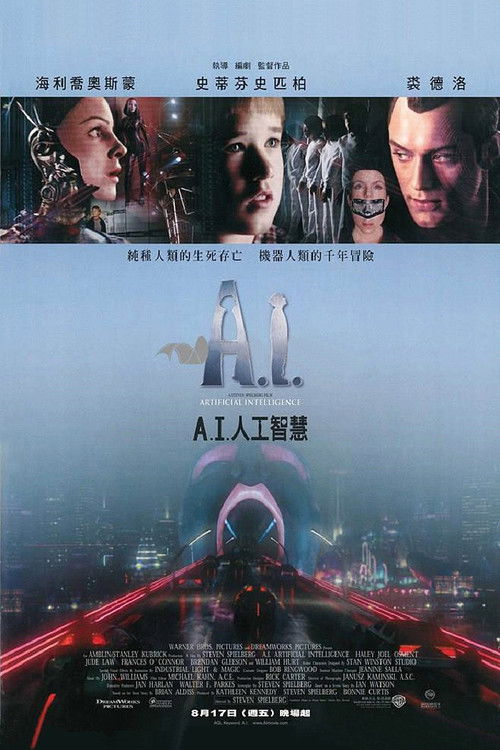
Watch trailerA.I. Artificial Intelligence
Steven Spielberg finishes Stanley Kubrick's orphaned fairy tale and delivers the year's most honest American film about what we owe the things we build to love…
Updated September 23, 2026
 ★★★★
Lunara Film Review
West Side Story — The Camera Finally Dances
Spielberg waited fifty years to move a camera through a song, and the hunger is visible in every frame.
Updated September 23, 2026
 ★★★★★
Lunara Film Review
Catch Me If You Can — The Fun Is the Disguise
Spielberg's lightest movie is a divorce picture that learned to sprint.
Updated September 23, 2026
★★★★½
Lunara Film Review
A.I. Artificial Intelligence — The Coldest Thing Spielberg Ever Made
For twenty-five years the official story on A.I. Artificial Intelligence has been that Steven Spielberg took Stanley Kubrick's cold,...
Updated September 23, 2026
 ★★★
Lunara Film Review
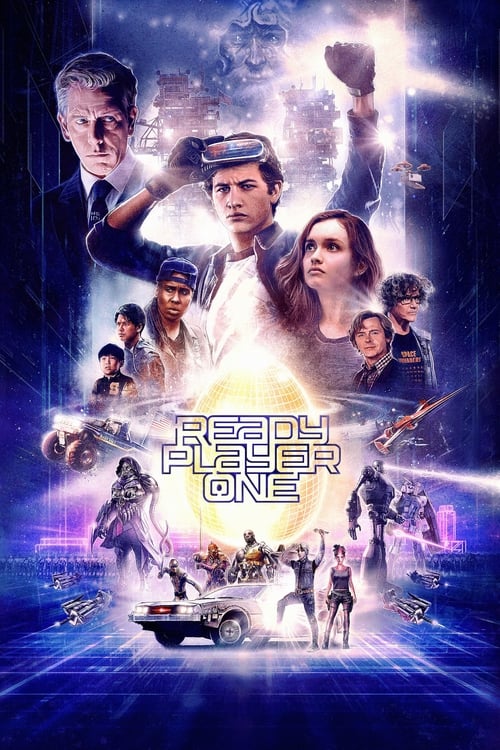
Ready Player One — Spielberg Against Spielberg
Ready Player One is the strangest thing in late Spielberg: a gigantic, exhausting, frequently shallow corporate spectacle that happens to...
Updated September 23, 2026